What to look for in nature in Illinois this November
November is the month Illinois stops being autumn. The clocks fall back on the first, Chicago's sunset jumps to 4:45, and by Thanksgiving the oaks are the only trees still holding leaves. It is also the busiest month of the year on the water and in the air. Ducks reach their fall peak on the Illinois River backwaters, long strings of sandhill cranes bugle over the Chicago suburbs on their way to Indiana, rough-legged hawks come down the Lake Michigan shore from the Arctic, and the first wintering bald eagles settle below the locks and dams. Chicago usually measures its first snow around the middle of the month. The guide below follows the state from the lakefront to the Shawnee, week by week.
Other months in Illinois: October, December.
Start here
- Drive the Illinois River in the duck peak. The Illinois Natural History Survey's mid-November flight in 2025 counted 384,076 ducks on the Illinois River, a little above the long-term average. Emiquon, across the river from Havana, usually has its biggest one-day count in November; pull off along Dickson Mounds Road at sunrise or in the last hour of light.
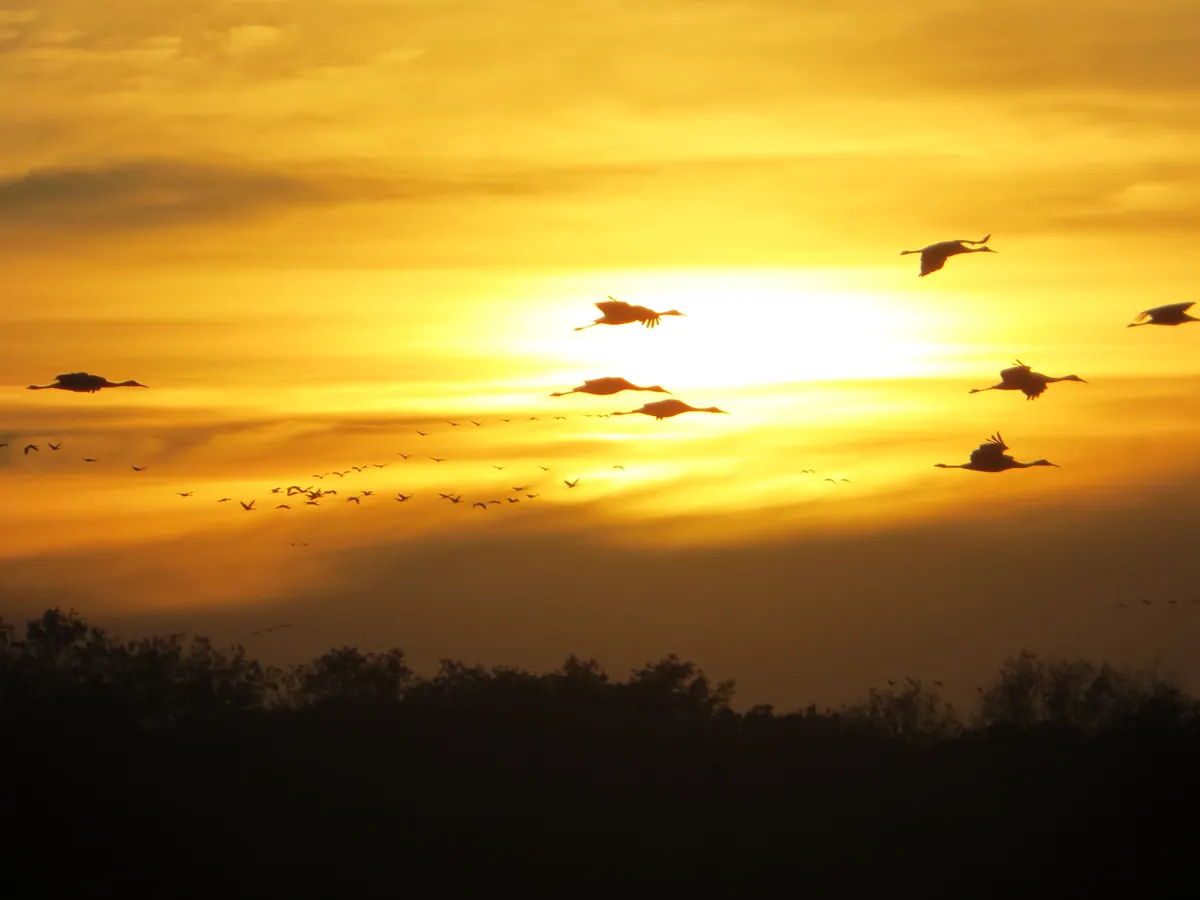
- Listen for cranes on a north wind. Sandhill cranes cross northeastern Illinois all month on their way to Jasper-Pulaski in Indiana, where 2025's count climbed from 3,761 on November 13 to 6,062 by November 25. On a clear, breezy day after a cold front, step outside at midday and listen for the rolling, wooden calls high overhead.
- Get up early for the Beaver Moon and the Leonids. November's full moon, the Beaver Moon, is a slight supermoon, exactly full on the morning of Tuesday the 24th (8:53 CST), so it rises nearly round on Monday evening and again on Tuesday. The Leonids come a week before: set an alarm for the dark hours ahead of dawn on November 18, once the moon is down.
In the Naturalist's Field Journal, put the first rough-legged hawk and the first loon of the season on the birds I have seen list, and add the cranes' calls, with the hour, to a map of sounds. A shingle oak still in its brown leaves belongs on a tree through the seasons, and a buck's rub or a beaver-chewed stump on reading the signs. Write the date and the weather beside every entry.
Regions used below: Chicago and the Lake Michigan shore; Northern Illinois and the Rock River; Central Illinois and the Illinois River valley; Western Illinois and the Mississippi; Southern Illinois and the Shawnee Hills.
When do ducks peak on the Illinois River in November?
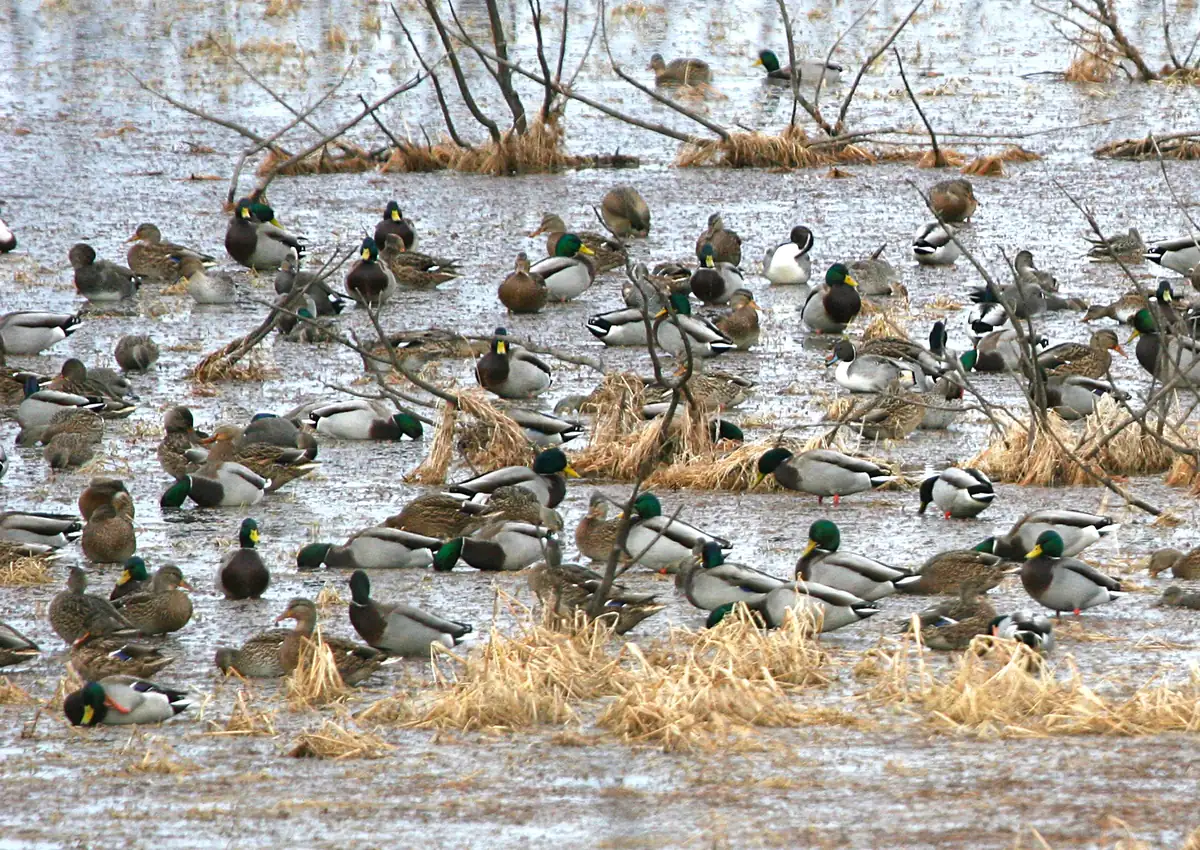
For a duck, the Illinois River valley is one long chain of backwater lakes between Peoria and Grafton, and November is when the most birds are on it. The Illinois Natural History Survey has flown the river and the central Mississippi each fall since 1948, and its biologists post the counts from the Forbes Biological Station near Havana, usually within a few days of each flight. Reading the latest one is the best way to choose a weekend.
-
What a mid-November count looks like
Weekly flights from September into January; the totals usually top out in November · 23 survey sites on the Illinois River and 18 on the Mississippi from Moline to Alton
Last year's flight of November 13 found 384,076 ducks in the Illinois valley, 5 percent over the long-term average. Mallards were the soft spot, about a quarter below normal, but green-winged teal, pintails, gadwalls and shovelers all ran well ahead. On the Mississippi the picture flipped: total ducks were 22 percent below average, yet the divers (redheads, scaup and canvasbacks) held up better there than the dabblers did, and the crew found an unusually large raft of divers on Pool 19, the wide stretch of river above the Keokuk dam.
-
This fall's starting point
Early surveys of 2026 · Illinois River backwaters
The 2026 season opened after a summer flood that set back the moist-soil plants, the smartweeds and millets that dabbling ducks feed on. By mid-September the early pintails, teal and shovelers were arriving anyway. Whether the plants recovered in time will show in the November counts; check the Forbes posts as the month goes on.
-
Emiquon and its neighbors
November, especially at first and last light · Emiquon National Wildlife Refuge and The Nature Conservancy's Emiquon Preserve, between Havana and Lewistown
The Fish and Wildlife Service puts Emiquon's average one-day peak at 71,450 ducks, with historic peaks near 1.5 million across the wider area, and says fall migration there usually crests in November. Part of the refuge stays closed as a sanctuary until January 31, but the North and South Globe units can be scanned from pull-offs on Dickson Mounds Road. Northern harriers quarter low over the marsh edges into December.
A spotting scope turns a gray raft into canvasbacks and ring-necks. Note the wind with each visit; big arrivals tend to follow the first hard north winds.
When do sandhill cranes fly over Chicago?
Eastern sandhill cranes from the upper Great Lakes funnel around the south end of Lake Michigan on their way to Florida, and their main stopover is the Jasper-Pulaski Fish and Wildlife Area, an Indiana state property about 35 miles south of Valparaiso. To get there, many flocks pass over Chicago and its southern and western suburbs. October brings a few early groups; November brings the crowds.
-
How the numbers build
Through November, peaking late November or early December · Overhead across Cook, Will, Kankakee and Lake counties, flying southeast
Indiana's weekly counts in 2025 went from 2,718 on November 4 to 3,761 on the 13th, 5,774 on the 18th and 6,062 on the 25th, then leapt to 16,400 on December 2 before the birds moved on. In other years the top count has come earlier: about 33,000 on November 28, 2023. Cranes travel by day, and the busiest afternoons often come once a cold front has passed and the wind swings around to the northwest, carrying flock after flock over the city. One Hyde Park resident counted 400 in five minutes during the Thanksgiving flight of 2024.
-
Sandhill Crane Saturdays in Indiana
Saturdays from October 17 to December 19, 5:30 to 7:30 p.m. Eastern (4:30 to 6:30 Central), except Halloween and Thanksgiving weekends · Jasper-Pulaski observation tower, near Medaryville, Indiana
International Crane Foundation staff are on the tower to answer questions while the cranes fly in to roost; Indiana DNR says flocks start gliding into the marsh from all directions about an hour before sunset. It is a two-hour drive from the Loop and worth it at least once.
The calls carry before you can see the birds. Mark the date, time and direction on a map of sounds, then count the V's when they come into view.
What birds come down the Lake Michigan shore in late fall?
After the songbirds have gone, the lake shore turns into a corridor for big, tough birds. Hawks from the boreal forest and tundra follow the coast south, loons and diving ducks gather offshore before the inland lakes freeze, and the first white-winged gulls from the Arctic appear at the harbors.
-
The last weeks of the Illinois Beach hawk watch
Counts continue to November 25; rough-legged hawks peak in mid-November · Illinois Beach State Park, Zion; the first pavilion past the Sand Prairie Day Use Area sign
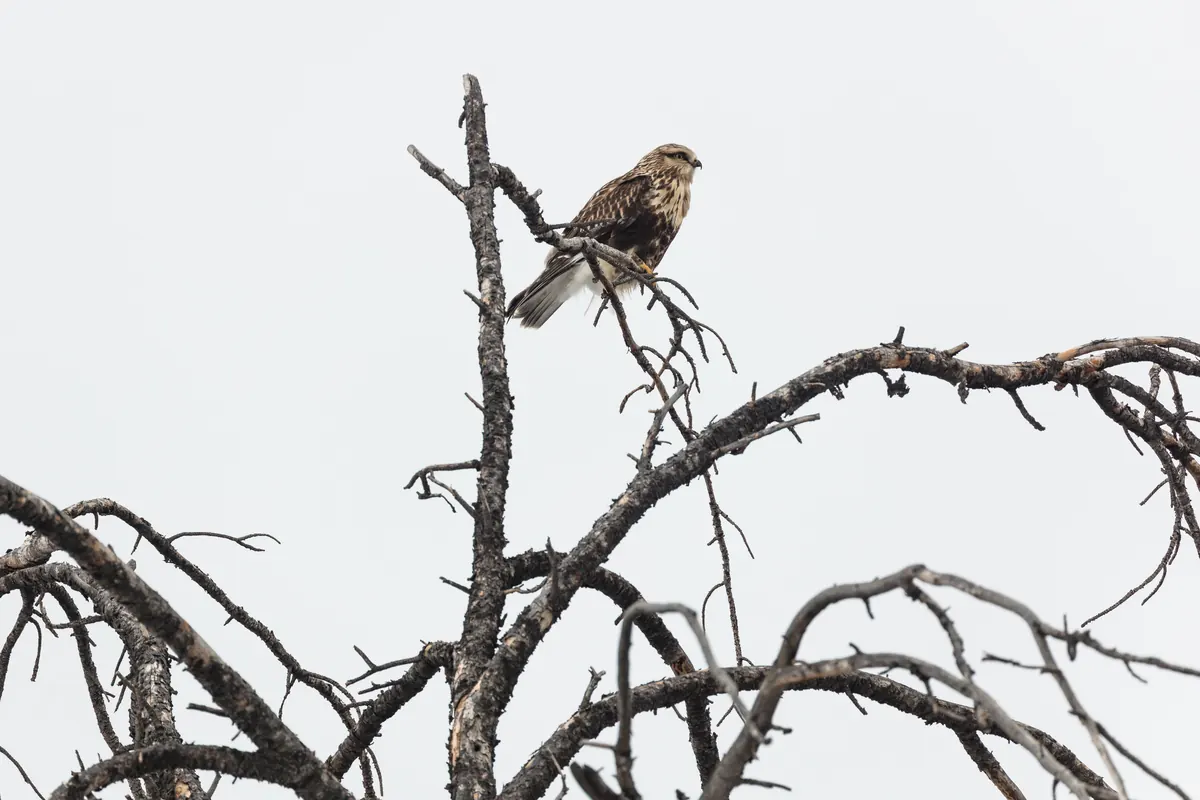
Red-tailed hawks are the main event in November, and on the best days the counters have tallied more than 400. Mixed in are the late specialists: rough-legged hawks from the Arctic, with dark belly bands and wrist patches, averaging 37 a season with as many as 44 on a single mid-November day; a handful of American goshawks; and, in a good fall, three or four golden eagles. Bald eagles move along the shore here from mid-October into November, up to 35 in a day.
-
Loons on the move
October and November · Lake Michigan off Zion, Waukegan and Montrose; inland at Carlyle Lake and other big reservoirs
IDNR lists the common loon as a common migrant that usually travels at night and turns up on large lakes and rivers in the fall. A U.S. Geological Survey tracking study of more than a hundred adult loons from the upper Midwest found that most staged on Lake Michigan before heading to the Gulf of Mexico. Downstate, St. Louis Audubon notes that Carlyle Lake, east of St. Louis, can hold scores of loons at a time in October and November; by midwinter they are rare.
-
Arctic gulls and red-throated loons at the harbors
Late November into winter · Montrose Harbor and Point, Waukegan harbor, the beaches at Illinois Beach State Park
Audubon's Illinois birding guide says red-throated loons and the pale Arctic gulls (Iceland and glaucous) are seen with some regularity at Montrose in winter, and the late November shoreline is where the first of them show up.
Dress for the wind off the lake: the hawk watch sits in the open, and November there can feel ten degrees colder than a mile inland.
When do bald eagles arrive in Illinois for the winter?
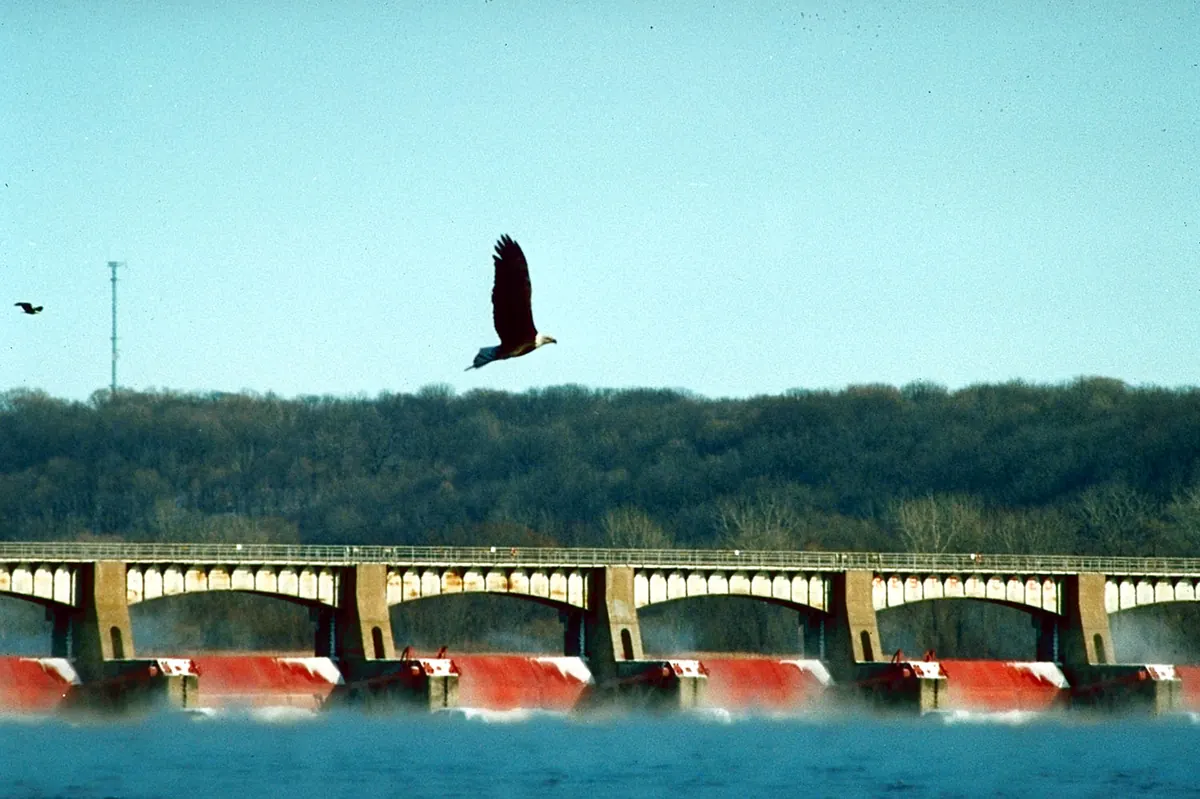
Around 3,000 bald eagles spend the winter in Illinois, by the state tourism office's count. They come down from the north as lakes there freeze, following open water and fish to the big rivers. Sources differ on when: the Great River Road byway says they converge from mid-November, while Enjoy Illinois says December through March, with the best viewing in January and February. Both are right in a sense: the first arrivals show up in late November, and the crowds build after the hard freezes.
-
Below the locks and dams
First birds in late November; numbers build in December · Locks and dams on the Mississippi from the Quad Cities to Alton, and on the Illinois River at Starved Rock and Peoria
The churning water below each dam stays open when backwaters freeze, and it stuns fish that eagles can pick off the surface. Dawn is the best hour, when the birds leave their roost trees to feed; late afternoon is second best. The state's eagle site also lists the I&M Canal, the Sanitary and Ship Canal, the Fox and Du Page rivers, and the Rock River at Lowden State Park near Oregon.
-
Crab Orchard and the southern lakes
Late fall and winter · Crab Orchard National Wildlife Refuge, between Carbondale and Marion; look from the Wolf Creek Causeway or Route 148
The refuge has about six resident nesting pairs and gains many migrants in winter as they follow the ducks south. The Fish and Wildlife Service says the colder and snowier the weather up north, the better the chance of seeing them, along with the Canada geese that gather on the ice and shores of Crab Orchard Lake.
-
Plan the winter trips now
Reservations opened November 15 last season; check this year's date · Pere Marquette State Park, Grafton
The state's eagle-watching calendar has listed reservations opening on November 15 for Pere Marquette's Bald Eagle Days, which begin in December. Confirm this year's dates with the park before you plan around them.
Stay in your car or well back from roost trees; a flushed eagle burns energy it needs for a cold night.
What are Illinois deer, beavers and other mammals doing in November?
November is the high point of the white-tailed deer's year and the last busy month for animals that must store up food before winter.
-
The rut peaks
Breeding from October through January; the peak is mid-November · Woods edges, fencerows and creek bottoms statewide
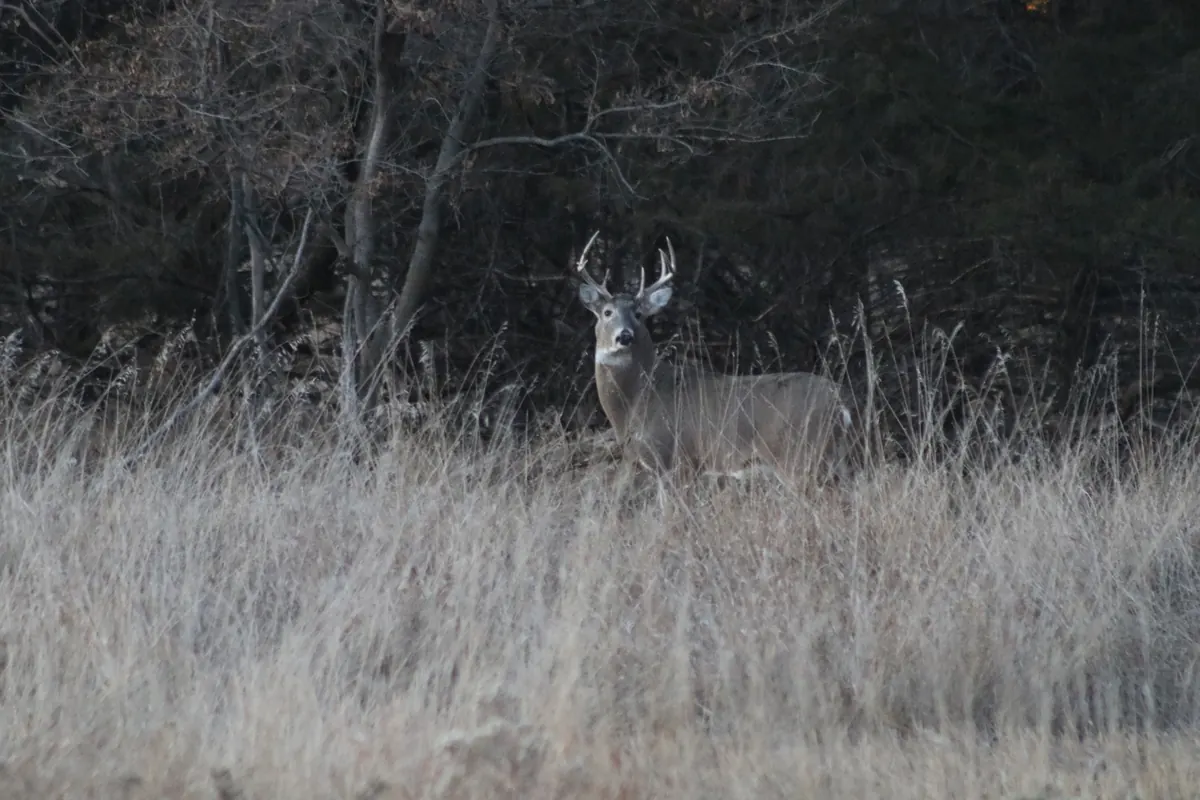
IDNR's Wildlife Illinois says mating peaks in the middle of November. Bucks travel far and carelessly now, following does across roads in daylight, and you may see one chasing another or standing with its neck swollen. Look for fresh rubs, where a buck has stripped the bark from a sapling between knee and waist height, and for scrapes, bare patches pawed out under a low branch. Some bucks begin to shed their antlers as early as December.
-
Beavers stock the pantry
Late fall, before ice · Streams, ponds and backwaters in every county
The Beaver Moon fits Illinois well. Beavers, nearly gone from the state a century ago, are common again everywhere, and because they do not hibernate they spend late fall cutting small trees and limbs and sinking them in a pile near the burrow or lodge entrance to feed on under the ice. Most Illinois beavers live in bank burrows rather than lodges. They are often out in daylight this time of year; watch a quiet backwater at dusk for a V-shaped wake.
Sit at a field edge for the last half hour of light and log what moves on the dusk and dawn watch plate.
Which Illinois trees hold their leaves into winter?
By early November the maples, ashes and hickories are bare across the north, and by late month most of the south has followed. What is left tells you a lot about the woods.
-
Oaks that keep their brown leaves
Through November and, in some trees, all winter · Upland woods, savannas and older neighborhoods
Many young oaks, and some older ones, hold their dead leaves long after the rest of the woods is bare, a habit called marcescence. The Morton Arboretum notes that the shingle oak, native to Illinois with long, unlobed leaves, turns yellow-brown to russet in fall and keeps its leaves through the entire winter. A stand of rattling tan oak leaves in a December snow is a good bet for shingle, pin or young white oak.
-
Bald cypress in the Cache River swamps
Needles turn rusty orange and drop in November · Cache River State Natural Area, Heron Pond and Section 8 Woods
Bald cypress is a conifer that sheds its needles, and in the Cache River wetlands, a Ramsar Wetland of International Importance, it is among the last trees in Illinois to color. Some of these trees are more than 1,000 years old. When the needles are down, the knees and swollen bases stand out against the dark water.
-
Seed heads on the prairies
All month · Nachusa Grasslands, Midewin, and any restored prairie
With the color gone, the tallgrass prairies turn copper and tan, and goldfinches and juncos work the seed heads of coneflowers and compass plants. Midewin's volunteers harvest seed for restoration through the fall; the Forest Service lists workdays.
Choose one oak near home for your tree through the seasons page, and write down the week it finally drops its last leaves, if it ever does before spring.
Will winter finches come to Illinois this year?
Whether siskins and grosbeaks reach Illinois depends on spruce cones, birch catkins and mountain-ash berries a thousand miles north, and the Finch Research Network surveys those crops every year to make its call. The 28th forecast, posted September 27, 2026, says crops are poor across much of the central boreal but good in the east, so many finches are likely to move into the Great Lakes and the Northeast and then stay in the conifer woods rather than at feeders.
-
What the forecast means for Illinois
From November · Feeders and conifer plantings, especially in the north
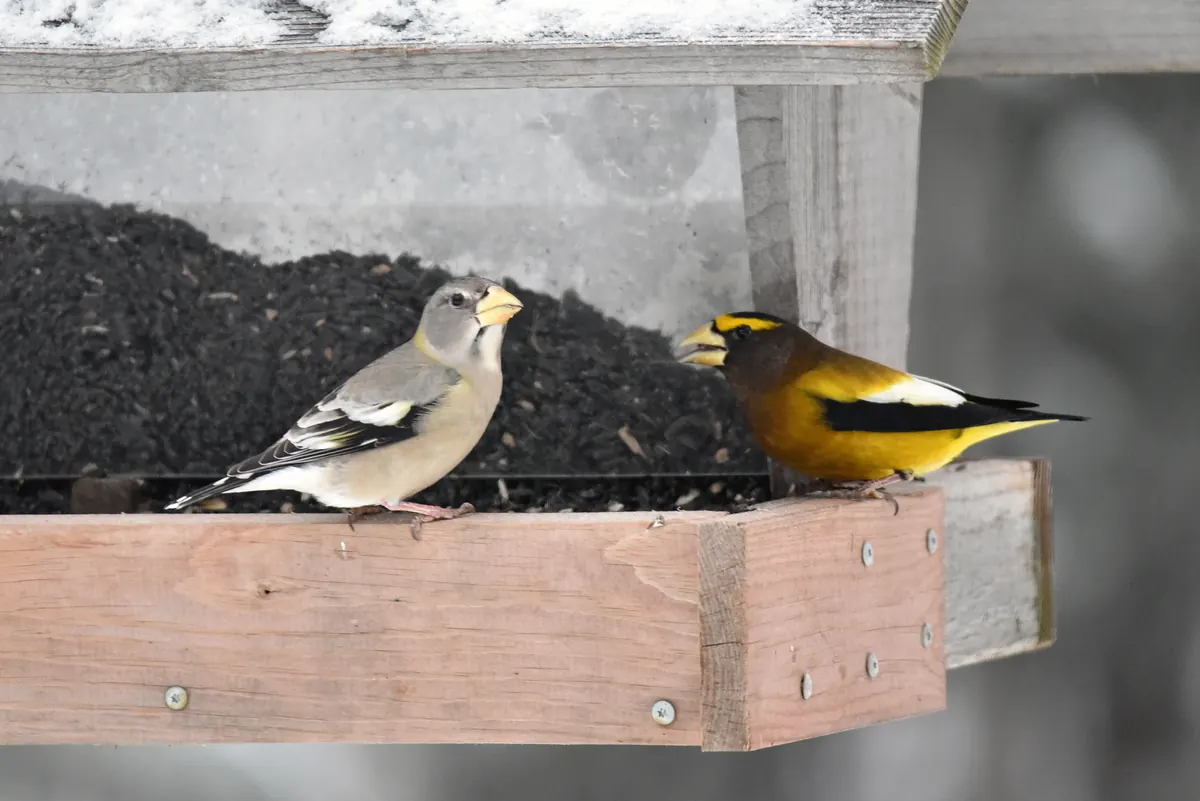
Illinois sits at the southern edge of the Great Lakes region, so expect a modest year. The forecast calls for good numbers of red crossbills across the Great Lakes and small to medium flocks of evening grosbeaks in the region; a small redpoll movement is possible in the western Great Lakes. It expects purple finches and red-breasted nuthatches mostly to stay north. Pine siskins are forecast to irrupt into the Northeast, with a smaller flight possible farther south. Check spruce and pine plantings in arboretums and cemeteries for crossbills, and keep black oil sunflower in the feeder for grosbeaks.
-
Project FeederWatch begins
November 1 through April 30 · Any backyard, balcony or schoolyard
Cornell Lab's FeederWatch works in pairs of days, at most weekly. Your tally for a species is simply the largest number of it you saw in one glance. The results show which winter birds are rising or falling across the continent. A feeder that draws only juncos, chickadees and cardinals still adds useful data.
Dark-eyed juncos, the slate-gray snowbirds, are often back in Illinois yards by November and stay until spring. Log the first one on the birds I have seen page.
When are the first freeze and the first snow in Illinois?
Usually, yes. Every median in the table below falls in October, from October 17 at Rockford and Champaign to October 31 at Midway and Cairo, which means that by Halloween an ordinary year has brought at least one 32-degree night to every corner of Illinois. The places still waiting in a warm fall are the lakefront and the far south. In one year in ten, O'Hare has not frozen by November 11, Cairo by November 13 and Midway by November 14, while at Peoria the late date is November 3 and at Springfield and Carbondale November 1. The Lake Michigan water, still warm from summer, holds off the freeze along the shore, and the Cairo station sits low between two big rivers.
| Station | One year in ten | Median | Nine years in ten |
|---|---|---|---|
| Rockford Gtr Rockford Airport (Rockford) | Oct 2 | Oct 17 | Oct 30 |
| Moline Quad City International Airport (Quad Cities) | Oct 4 | Oct 18 | Oct 28 |
| Chicago Ohare International Airport (Chicago) | Oct 15 | Oct 28 | Nov 11 |
| Chicago Midway Airport (Chicago) | Oct 20 | Oct 31 | Nov 14 |
| Peoria Gtr Peoria Airport (Peoria) | Oct 9 | Oct 23 | Nov 3 |
| Champaign Willard Airport (Champaign-Urbana) | Oct 3 | Oct 17 | Oct 31 |
| Springfield Capital Airport (Springfield) | Oct 5 | Oct 20 | Nov 1 |
| Carbondale Southern Il Airport (Carbondale) | Oct 8 | Oct 22 | Nov 1 |
| Cairo 3 N (Cairo) | Oct 18 | Oct 31 | Nov 13 |
The other medians are October 18 at Moline, October 20 at Springfield, October 22 at Carbondale, October 23 at Peoria and October 28 at O'Hare. Our Illinois frost dates page covers dozens more stations, spring and fall. After the first hard freeze, drain and store garden hoses and empty clay pots so they don't crack.
November in Illinois swings from mild, gray days to the first true cold. NOAA's 1991–2020 normals give average highs of 47 °F at Rockford, 48 °F at O'Hare, 51 °F at Peoria, 53 °F at Springfield, 56 °F at Carbondale and 58 °F at Cairo, with average lows from about 31 °F at Rockford to 37 °F at Cairo. Precipitation is about 2.3 inches in the north and more than 4 inches at Cairo. Normal November snow is about 2.3 inches at Rockford, 1.8 at O'Hare and 1.2 at Springfield.
The National Weather Service office for Chicago puts the city's average date for its first measurable snowfall, at least 0.1 inch, at November 16, with the first flakes of any amount around October 30. It has come as early as October 12 (2006) and as late as December 20 (2012). Last November was a reminder of the early side. A lake-effect band on November 9 and 10 dropped as much as a foot in places, and on Saturday, November 29, O'Hare recorded 8.4 inches, a record for any November day. By December 7, Rockford had 17.1 inches for the season, its snowiest start since reliable records began in 1905. The state climatologist's office found November totals ranging from nearly 18 inches in the far northeast to none in much of southern Illinois.
This winter starts from a different place. The Climate Prediction Center's September 10 discussion puts the chance that a very strong El Niño lasts through the winter above 90 percent. The Illinois State Water Survey's El Niño summary says such winters tend to be warmer and drier in Illinois, with below-average snowfall and lower heating bills, while warning that each event plays out differently. In September, State Climatologist Trent Ford added a useful twist: a mild January or February can leave temperatures hovering near freezing, which in some El Niño years has delivered more snow, not less. When NOAA posts its official winter outlook in mid-October, Illinois readers will find the maps under the Climate Prediction Center's 90-day outlooks. Our local forecast page covers the coming week for any Illinois town.
How fast are the days getting shorter in Illinois in November?
The month opens with the clock change: at 2 a.m. on Sunday, November 1, Illinois returns to central standard time, and Chicago's sunset moves from 5:46 p.m. on Halloween to 4:45 p.m. on November 1. The loss of light itself slows as the month goes on. Chicago's sunset reaches 4:21 by November 30, only a couple of minutes from its earliest of the year, 4:19 p.m. around December 8. Mornings keep getting darker into January.
| City | Nov 1 | Nov 30 | Lost | Per day |
|---|---|---|---|---|
| Rockford | 10 h 20 m | 9 h 20 m | 60 min | 2.1 min |
| Chicago | 10 h 22 m | 9 h 23 m | 59 min | 2.0 min |
| Moline | 10 h 23 m | 9 h 25 m | 58 min | 2.0 min |
| Peoria | 10 h 26 m | 9 h 30 m | 56 min | 1.9 min |
| Champaign | 10 h 28 m | 9 h 33 m | 55 min | 1.9 min |
| Springfield | 10 h 29 m | 9 h 35 m | 54 min | 1.9 min |
| Carbondale | 10 h 36 m | 9 h 46 m | 50 min | 1.7 min |
| Cairo | 10 h 38 m | 9 h 50 m | 48 min | 1.7 min |
Our daylight calculator gives the exact minutes for any address, twilight included.
What is in the Illinois night sky in November 2026?
-
The Leonids
Active November 6 to 30; best before dawn on Wednesday, November 18, and the mornings on either side · Anywhere dark; the radiant in Leo rises in the east near midnight
The International Meteor Organization puts the maximum near 5:45 p.m. CST on November 17 and expects no outburst this year, so plan on about 15 an hour at best from a truly dark site. The first-quarter moon goes down around midnight; watch from then until twilight, when Leo stands high in the southeast. Leonids are swift and often leave glowing trails.
-
The Taurids and their fireballs
South Taurids plateau around November 5; North Taurids around November 12 · Taurus, high in the east by late evening
Both streams come from the debris of Comet Encke. Expect only a handful an hour, yet Taurids drift slowly across the sky and now and then flare into fireballs. With the new moon on the 9th, the nights between the two peaks are moonless.
-
The Beaver Moon, a supermoon
Exactly full Tuesday, November 24, at 8:53 a.m. CST; nearly round after dusk on both the 23rd and the 24th · Rising in the east-northeast around sunset
Perigee follows full moon by roughly thirty hours, so this counts as one of 2026's supermoons, if only barely; December's full moon will come nearer still. Overnight from Monday the 23rd into Tuesday, the bright disk slides by the Pleiades and all but drowns that small star cluster in its glare.
-
Planets before dawn
All month; Mars and Jupiter closest on the mornings of November 15 and 16 · East and south in the hour before sunrise
Venus is now a morning object, gaining height week by week and shining its brightest of this apparition around Thanksgiving. Jupiter and dimmer, ruddy Mars keep company in Leo; at mid-month only a little more than a degree separates them. Mercury joins the group, low toward the east-southeast, for about a week centered on its greatest western elongation of November 20. In the evening only Saturn is up, a steady yellowish point in the south after dusk.
| Phase | Date | Time |
|---|---|---|
| Last quarter | Sunday, Nov 1 | 2:28 p.m. CST |
| New moon | Monday, Nov 9 | 1:02 a.m. CST |
| First quarter | Tuesday, Nov 17 | 5:48 a.m. CST |
| Full moon, the Beaver Moon | Tuesday, Nov 24 | 8:53 a.m. CST (looks full the evenings of Nov 23 and 24) |
| Last quarter | Tuesday, Dec 1 | 12:08 a.m. CST |
Cloud forecasts for tonight are on our cloud cover map, and moonrise and moonset for any Illinois town are in the moon calendar.
What can Illinois families do outdoors in November?
- Every Saturday, November 7 to 28: Wooded Island bird walks in Jackson Park with Chicago Bird Alliance, 8 to 10 a.m., free and open to all, about two miles through Wooded Island and Bobolink Meadow.
- Wednesdays, November 4, 11 and 18: North Pond bird walks in Lincoln Park with the Chicago Ornithological Society, 7 to 9 a.m., from the casting pier on Cannon Drive. The calendar does not yet list a walk for Thanksgiving week.
- Friday, November 6: an evening owl prowl at Giant City State Park, near Makanda, 5:30 to 7 p.m. That Sunday, November 8, the park offers a Glaciers End hike (10 a.m. to 12:30 p.m.) and a Best of Illinois Nature 2026 talk (2 to 3 p.m.); an accessible birding hike follows on Saturday, November 14 (9:30 to 11:30 a.m.), and a Christmas Bird Count workshop with University of Illinois Extension on Sunday, November 15 (1 to 3 p.m.). All are free, and most need registration with the visitor center.
- Saturdays at Jasper-Pulaski, in Indiana about 35 miles south of Valparaiso: crane-watching with the International Crane Foundation, 4:30 to 6:30 p.m. Central, except Thanksgiving weekend.
- Saturday, November 28: a Thanksgiving-weekend hike with the naturalist at Starved Rock State Park, 8 a.m. from the visitor center, registration on Eventbrite from October 28. On the day after Thanksgiving, nothing stops you going out anyway: IDNR charges no entrance fee at any state park.
- Count for science. Start a Project FeederWatch season on November 1, enter bird lists in eBird after every walk, and report cranes and early eagles. Check the Forest Preserves of Cook County calendar at fpdcc.com for naturalist-led walks nearer home.
Browse other states and months from the nature guides index. Each of these outings has a page waiting in the Naturalist's Field Journal.
Safety notes for November in Illinois
- Firearm deer weekend, November 20–22. The first statewide shotgun deer season runs Friday through Sunday, November 20 to 22, with a second segment December 3 to 6. In counties that have a firearm season, archery deer and archery turkey close for those three days and reopen on November 23, and squirrel, coyote and furbearer hunting also close. Cook, DuPage, Lake and eastern Kane counties have no firearm season, and archery deer runs straight through there.
- Other seasons open this month. Pheasant, quail, Hungarian partridge and rabbit open November 7; furbearer hunting and trapping open November 10; woodcock runs to November 30. Duck season is open in the North and Central zones from October 31; the South Zone has its youth day on November 7 and opens November 14.
- Wear blaze orange or pink. IDNR rules say anyone hunting deer with a firearm must have on a solid blaze orange or pink hat plus an upper garment showing at least 400 square inches of that color. Pheasant, quail and rabbit hunters must meet the same rule on IDNR land, and on private land they need the cap at minimum. Hikers on state fish and wildlife areas, in the Shawnee and at Crab Orchard should wear a bright hat and jacket all month, and an orange vest on the dog, especially November 20 to 22.
- Deer on the roads. According to IDNR, October through December is the worst stretch for deer collisions, with most crashes between 5 and 10 in the evening or 5 and 8 in the morning. With the clock change, the evening rush now falls in that dusk window. Watch for eyeshine, use high beams where you can, and when one deer crosses, expect another behind it. Do not swerve.
- Early ice and cold water. November ice on ponds and backwaters is thin and uneven; stay off it. Lake Michigan and the rivers are cold enough to cause cold shock within minutes, and November gales throw waves over the Chicago breakwalls, so keep off the piers in a blow. Anyone in a canoe or kayak should have a life jacket on, not stowed.
- Short days on the trail. Quincy's sunset slips under 5 p.m. by November 5, and Chicago's is already 4:45 on the 1st. Start long hikes in the morning, and pack a light, an extra layer and a charged phone.
Sources
- Illinois Natural History Survey, Forbes Biological Station: waterfowl aerial inventories
- INHS Forbes Biological Station: Week 6 aerial survey, November 13, 2025
- INHS Forbes Biological Station: Week 3 aerial survey, September 17, 2026
- U.S. Fish and Wildlife Service: Emiquon National Wildlife Refuge, species and seasons
- U.S. Fish and Wildlife Service: Emiquon National Wildlife Refuge, visit us (sanctuary closure and viewing)
- Indiana DNR: sandhill cranes at Jasper-Pulaski Fish and Wildlife Area (2025 weekly counts and 2026 Crane Saturdays)
- WTTW: sandhill crane migration thrills Chicagoans, November 27, 2024
- HMANA HawkCount: Illinois Beach State Park Hawk Watch, site profile and species timing
- IDNR Wild About Illinois Birds: common loon
- U.S. Geological Survey: migration patterns and wintering distribution of common loons breeding in the upper Midwest
- St. Louis Audubon Society: bird of the week, common loon
- National Audubon Society: birding in Illinois
- Great River Road Illinois: eagle watching
- Enjoy Illinois: see Illinois' bald eagles in winter
- State of Illinois, Eagles in Illinois: eagle watching sites and events
- U.S. Fish and Wildlife Service: Crab Orchard National Wildlife Refuge, species
- Wildlife Illinois (IDNR): white-tailed deer
- Wildlife Illinois (IDNR): deer–vehicle accidents
- Wildlife Illinois (IDNR): beaver
- The Morton Arboretum: shingle oak
- IDNR: Cache River State Natural Area
- USDA Forest Service, Midewin National Tallgrass Prairie: native seed production
- Finch Research Network: Winter Finch Forecast 2026–2027, September 27, 2026
- Project FeederWatch: how to participate
- NOAA NCEI: U.S. Climate Normals 1991–2020, monthly normals for Illinois stations (data API)
- National Weather Service Chicago: Chicago precipitation and snowfall records (first snow dates)
- National Weather Service Chicago: November–December 2025 snow summary
- Illinois State Climatologist: fall ended and winter really began in November, December 3, 2025
- WTTW: weekend storm set a Chicago record for November snowfall (NWS Chicago figures), December 1, 2025
- National Weather Service Chicago: 2025–26 winter events (November 9–10 lake-effect snow)
- eBird (Cornell Lab of Ornithology): submit checklists
- Climate Prediction Center: ENSO diagnostic discussion, September 10, 2026
- Climate Prediction Center: seasonal (90-day) outlooks
- Illinois State Water Survey, State Climatologist Office: El Niño and La Niña in Illinois
- Block Club Chicago: El Niño could mean a milder Chicago winter (Trent Ford), September 2, 2026
- U.S. Naval Observatory: moon phases (data API)
- U.S. Naval Observatory: sunrise and sunset, Chicago, December 8, 2026 (data API)
- International Meteor Organization: 2026 meteor shower calendar
- EarthSky: what is a supermoon? (2026 full supermoons)
- EarthSky: Mercury before sunrise, greatest western elongation
- Star Walk: planetary conjunctions 2026 (Mars and Jupiter, November 16)
- IDNR: 2026–27 Illinois Digest of Hunting and Trapping Regulations, season dates card
- Hunt Illinois (IDNR): deer seasons and blaze orange or pink requirement
- Hunt Illinois (IDNR): upland and small game, blaze orange or pink rules
- Chicago Bird Alliance: upcoming events, November 2026
- Chicago Ornithological Society: events, November 2026
- IDNR calendar: Finding Thankfulness in Nature, guided hike at Starved Rock State Park, November 28, 2026
- IDNR: Giant City State Park 2026 calendar of events
- IDNR: camping at Illinois state parks (no entrance fee on state land)
- National Weather Service: cold water safety
- Photos via Wikimedia Commons; licenses and photographers are credited under each picture