What to look for in nature in Illinois this May
May is the month Illinois fills up. Warblers drop into the Magic Hedge at Montrose Point after a night of south wind, piping plovers either sit on eggs on the Chicago dunes or leave the beach empty, and scarlet tanagers, indigo buntings and nighthawks settle in to nest. Woodland wildflowers hit their climax in the first days of the month, prairie flowers just begin at the end of it, and bison calves follow their mothers across Nachusa. Tornado season peaks, the Eta Aquariid meteors arrive at new moon, and a Flower Moon that doubles as a seasonal Blue Moon rises on May 19. The sections run from the Chicago shore to the cypress swamps of the far south.
Other months in Illinois: October, November, December, January, February, March, April.
Start here

- Check BirdCast, then go out at sunrise. Open BirdCast the evening before, and if a big flight is forecast, walk a lakefront park, river-bottom woods or a hedgerow at dawn with binoculars. Write down every warbler you can name.
- Watch Montrose from the line. See whether the Chicago Piping Plovers site reports birds on the dunes and, if it does, watch from outside the enclosure with a long lens or binoculars.
- Crouch in an early-May woods. Find a rich woodland in the first week of May and look for Jack-in-the-pulpit, Solomon's seal and trillium before the canopy closes. Stay on the path.
Use birds I have seen for each warbler wave and your first tanager, bunting and nighthawk; put frog nights on a map of sounds; photograph one trillium or wild geranium patch at both ends of the month on the same place twice plate; list any nest you find under nest observed; and spend the evening of May 19 on a dusk and dawn watch.
Regions used below: Chicago and the Lake Michigan shore; Northern Illinois and the Rock River; Central Illinois and the Illinois River valley; Western Illinois and the Mississippi; Southern Illinois and the Shawnee Hills.
Are piping plovers nesting on Chicago's Montrose Beach in May?
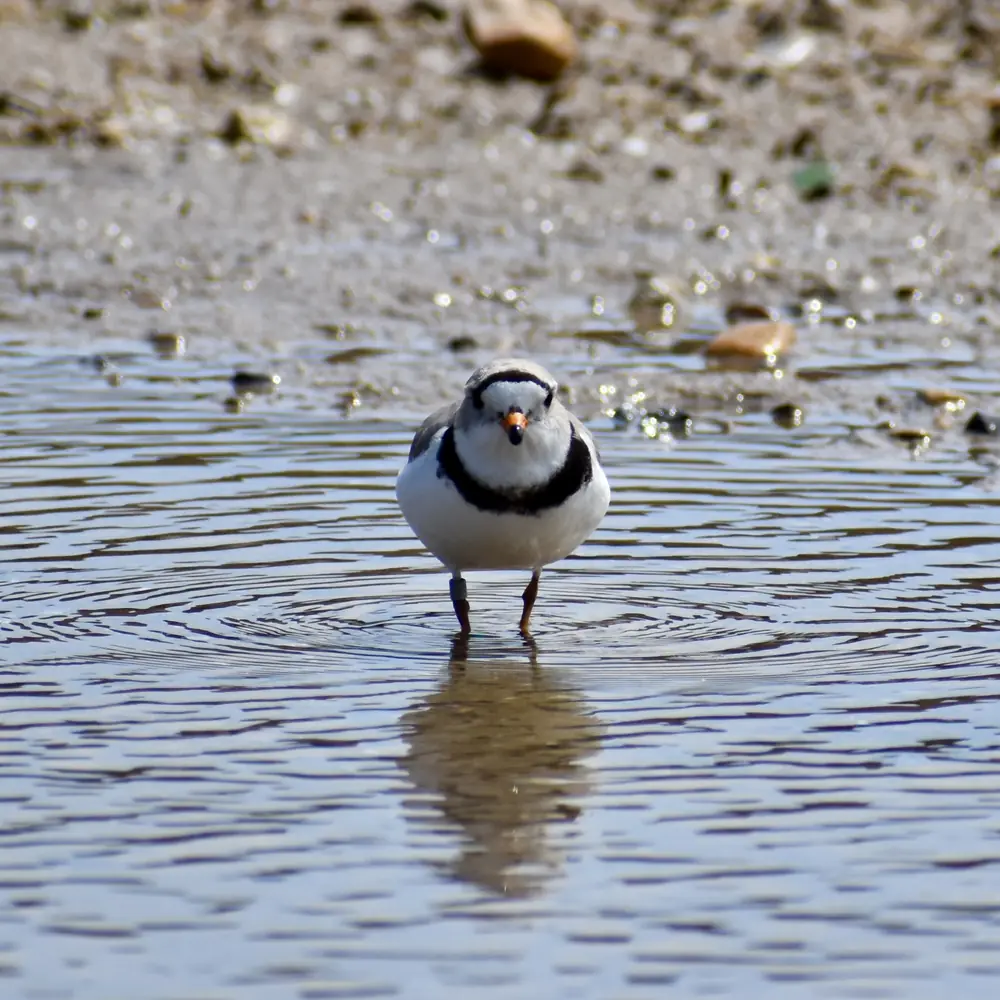
On the Chicago lakefront, the most closely watched birds of May are either sitting on eggs or missing from the beach. Great Lakes piping plovers are endangered, and the fenced dunes at Montrose are one of the few places in Illinois where the species has nested in modern times. Whether a pair settles in 2027 will not be known until spring, so treat everything below as the pattern, not a promise.
-
The nesting calendar
Courtship and nest scrapes from mid-to-late April; eggs hatch from late May to early June; chicks fledge 25 to 35 days after hatching · Sandy Great Lakes beaches, including the Montrose Beach Dunes in Chicago
According to federal wildlife biologists, plovers reach their breeding grounds in early April, begin courting and nesting in mid-to-late April, and share incubation duty for 25 to 28 days. Add those numbers together and a nest started in late April hatches around the last week of May or the first week of June, then the downy chicks run and feed on their own for a month or so before they can fly. The Great Lakes population was listed as endangered on December 11, 1985.
-
What Chicago has seen so far
Past years vary from one fledged chick to none · Montrose Beach and its fenced dunes
The Chicago Piping Plovers partnership keeps a year-by-year record. Chicago's first nest in decades produced two fledged chicks in 2019, followed by three in 2020 and two in 2021. In 2022 one of the adults did not return from Florida and the other, Monty, died on May 13. No nesting was reported in 2022 or 2023, and in 2024 a new pair fledged one chick. The partnership's site is the place to find out which birds, if any, are on the beach in 2027.
-
Sharing the beach
Whenever birds are present, from April into July · Chicago's fenced dunes and other Lake Michigan nesting beaches
The partnership asks only that people give the plovers the space they need to nest and raise chicks. In practice that means staying outside the posted enclosure, keeping dogs far away, taking photos with a long lens, and never walking toward a bird that runs or fakes an injury. A chick no bigger than a cotton ball can vanish into a footprint.
Log each visit on the nest observed plate even if you only watch from the sidewalk. The April page has the arrival story: Illinois in April.
When is warbler migration at its peak in Illinois, and where should you look?
The second half of the month belongs to the warblers. The Illinois lists of migrating songbirds are longest in May, and the birds are at their most visible when a night of south wind puts a fresh wave of them into the trees at first light. Staff at the Fish and Wildlife Service's Chautauqua refuge name April and May as the months for craning your neck and listening for migrating warblers. Nobody can name the best morning in advance, which is why a forecast tool beats a calendar.
-
Montrose Point and the Magic Hedge
May, especially the mornings after overnight flights · Montrose Point Bird Sanctuary, Lincoln Park, Chicago
The sanctuary juts into Lake Michigan, and migrants that have crossed or followed the shore drop into its thickets to feed. The Chicago Park District counts over 300 bird species at the sanctuary and the adjoining dunes. Its best-known patch is the Magic Hedge, a roughly 150-yard stretch of shrubs where the Army planted honeysuckle to screen its barracks. The barracks are gone and the birds still use the cover. Walk slowly, look low as well as high, and keep to the paths.
-
Read the migration before you go
BirdCast's migration tools run March 1 to June 15 · Online, with live and forecast maps
Cornell Lab's BirdCast offers forecast maps that show how much migration to expect and when, and live maps that show it in progress, with arrows for flight direction. BirdCast adds that over four in five North American migratory species fly by night, which is why a heavy flight overhead can mean a hedge full of warblers the next morning, even in a city park.
-
World Migratory Bird Day
Held in May each year; the 2026 date was May 9 · Local bird walks and counts nationwide
The organizers' site gave May 9 and October 10 for 2026 and showed no 2027 date yet. Expect a May date, and look for walks from the Illinois Audubon Society, forest preserve districts and Chicago-area bird groups, whose May programs are typically announced in spring. Check each organizer's page for time and place.
-
Lights out for night migrants
Spring and fall migration · Cities and towns across Illinois
BirdCast reminds readers that artificial light and glass are dangerous to birds flying at night. Chicago Bird Alliance has long pushed for a bird-friendly building ordinance and says it needs more City Council support. At home, turning off decorative outdoor lights and closing blinds at night costs nothing.
Keep a birds I have seen plate for the month, and when a wave comes through, write the date and the weather beside the list. The cloud forecast helps with timing: clearing skies after a front often bring birds down.
Which summer birds arrive and start nesting in Illinois in May?
By early May the arrivals who came in April have settled, and the later travelers join them. The Illinois Department of Natural Resources (IDNR) species pages give the timing, and they agree on one theme: arrival in April, nesting from May.
-
Scarlet tanagers
Arrive in late April; breeding runs May through August · Upland and bottomland forests, mainly across the northern part of Illinois
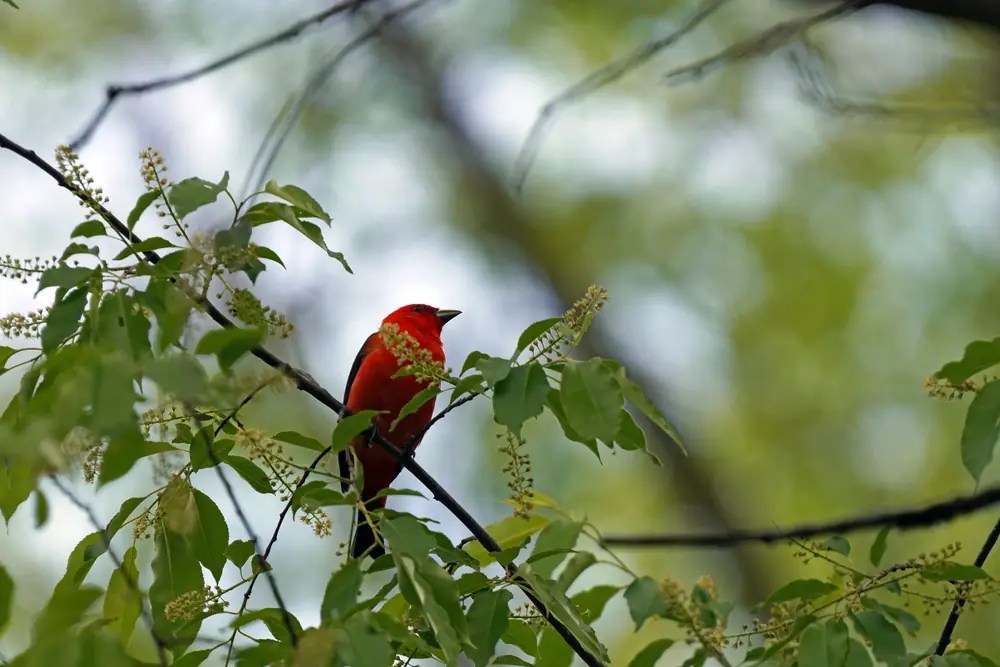
IDNR says the female builds her nest on a horizontal branch, often in an oak or hickory, anywhere from 8 to 75 feet up, and lays three to five green-blue eggs that she incubates for 13 to 14 days. You will hear the male first: his song resembles a robin's, with a burrier edge, and his call is a chip-burr. Look in the high leaves of mature woods.
-
Indigo buntings
Males arrive before females in April; breeding from May to mid-August · Edges of bottomland forest, shrub prairie, old fields and roadsides
The male sings through the day with paired notes, often written as sweet-sweet. The female builds a cup nest low in dense vegetation, may weave in a piece of shed snakeskin, lays three or four pale-blue eggs and incubates them alone for 12 to 13 days. IDNR notes that pairs can raise two broods in a year and that cowbirds sometimes lay in their nests.
-
Common nighthawks
Return from April; the nesting season runs May through July · Open ground and flat gravel rooftops in towns and cities
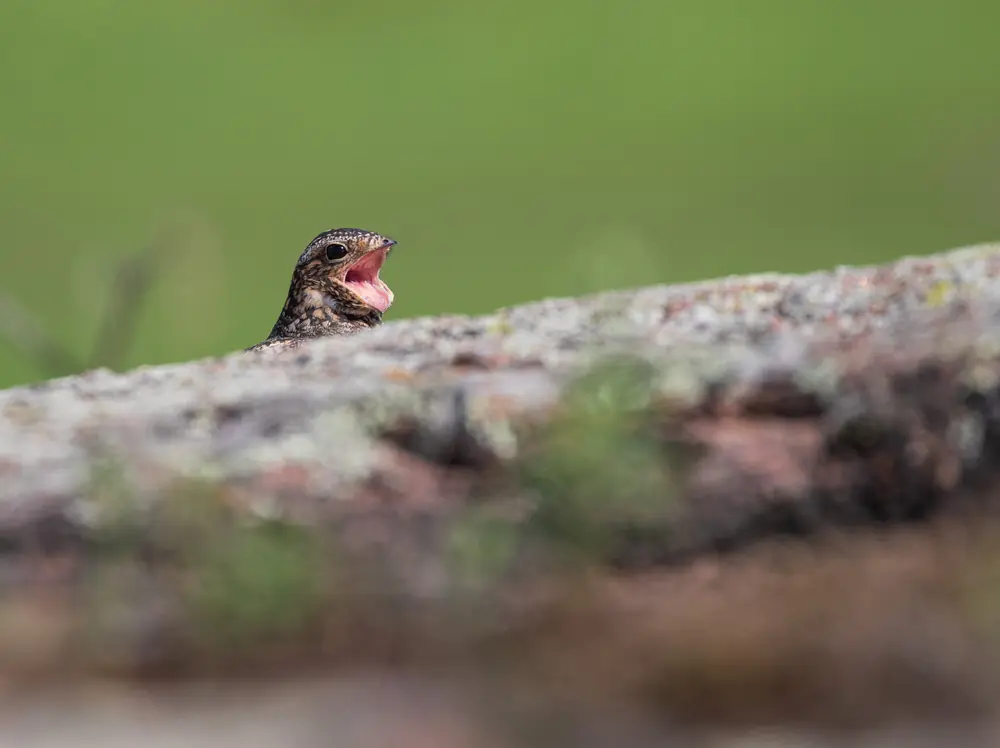
IDNR lists the nighthawk as a common migrant and summer resident, and says it builds no nest: the female lays two eggs on bare ground or a flat roof and incubates them alone for 19 days. Look up at dusk for slim, long-winged birds with white wing patches, flapping erratically over streetlights and ball fields.
A nest you find belongs on the nest observed plate. Watch from a distance, keep your visits short, and leave if the adults call or flush.
What lives in Illinois wetlands and swamps in May, from pelicans to bullfrogs?
Water changes the May map. Backwaters of the Illinois River hold shorebirds and pelicans, the cypress swamps of the far south hold nesting warblers, and every pond with a muddy margin turns into a night chorus.
-
Shorebirds, pelicans and ibis on the Illinois River
May is one of the two best shorebird months; ibis late May to early June · Chautauqua National Wildlife Refuge near Havana; Emiquon Preserve near Lewistown
The refuge says May and August can be the best times to see many shorebird species, especially sandpipers, with gulls and terns, and that commotions of American coots arrive in late spring. Late May to early June, ibis may be spotted. American white pelicans, which IDNR calls a migrant through most of Illinois, often dominate the landscape there in summer. Check refuge water levels before driving: mudflats come and go with the river.
-
Cypress swamps and prothonotary warblers
Warblers return from April; nesting May through June · Cache River wetlands in Pulaski and Johnson counties, including Cypress Creek National Wildlife Refuge
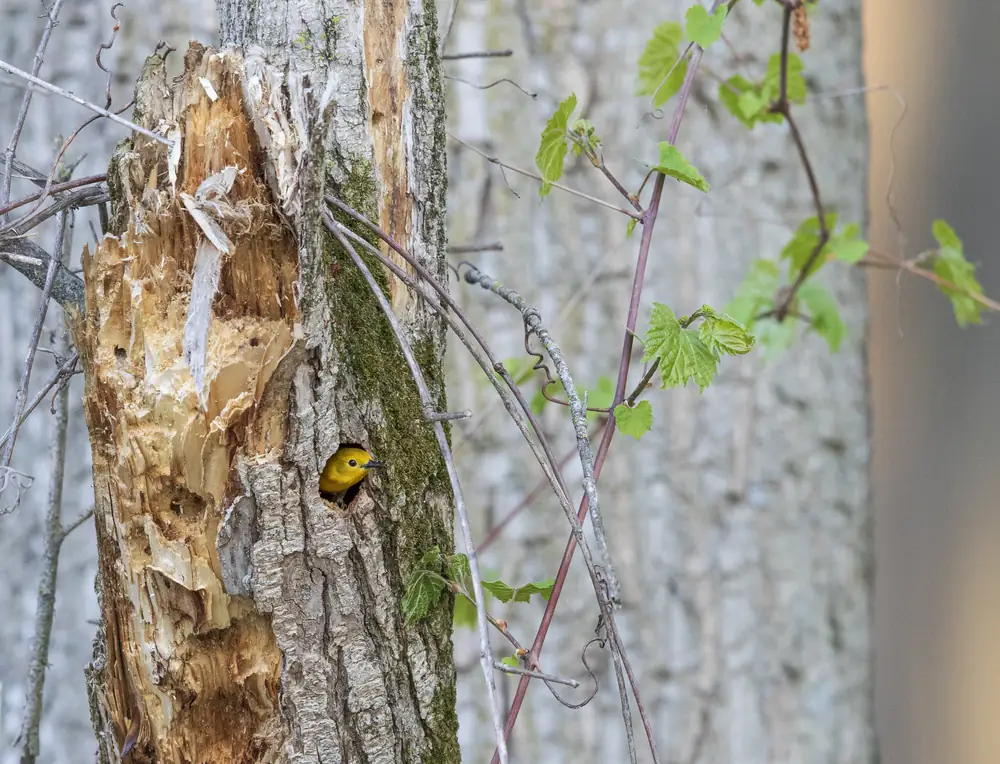
IDNR calls the prothonotary warbler a common migrant and summer resident of southern Illinois, living in swamps and bottomland forests and nesting in tree holes, nest boxes or under bridges, with clutches of three to eight eggs. The Cypress Creek refuge says bald cypress and water tupelo grow along its waterways, that canoeing is the best way to see the swamps, and that summer visitors may find many songbirds, including prothonotary warblers. Indiana bats, an endangered species, use the refuge as well.
-
Snake Road reopens to foot traffic
Closed to vehicles March 15 through May 15 in the Forest Service’s 2025 notice; confirm the 2027 dates · Shawnee National Forest, LaRue-Pine Hills area, on Road 345
The Forest Service closes the road each spring and fall so that snakes and amphibians can cross between limestone bluffs and LaRue Swamp. The Forest Service’s March 2025 notice gives March 15 through May 15 for the spring closure, and we did not find a 2027 notice, so confirm the dates with the forest. In that notice the road is closed to vehicles but open to people on foot. The Forest Service says collecting or handling these animals is prohibited, and some are threatened or endangered, so look and photograph only.
-
American bullfrogs
Breeding runs late April through August · Lakes, rivers, marshes, ponds and creeks statewide
IDNR describes the bullfrog's call as a jug-o-rum, with males defending territory against rivals. A female lays about 20,000 eggs in water, the eggs hatch in under a week, and tadpoles take about 14 months to transform, growing to more than six inches. A big green tadpole in a pond in May is likely last year's.
-
Fireflies
Adults begin flashing as spring turns to summer; Xerces gives no Illinois date · Edges of ponds, wet meadows and woods
The Xerces Society says about one in three assessed North American firefly species may be at risk of extinction, citing habitat loss, light pollution, pesticides, climate change and poor water quality. Its advice: turn off outdoor lights at night, protect and restore good habitat, and join community-science projects that track where fireflies occur. Note the date of your first flash and send it to a tracking project.
Put each frog and toad night on the map of sounds plate. For Cache River trips, bring a map, because cell service is spotty.
Which woodland wildflowers bloom in Illinois in May?
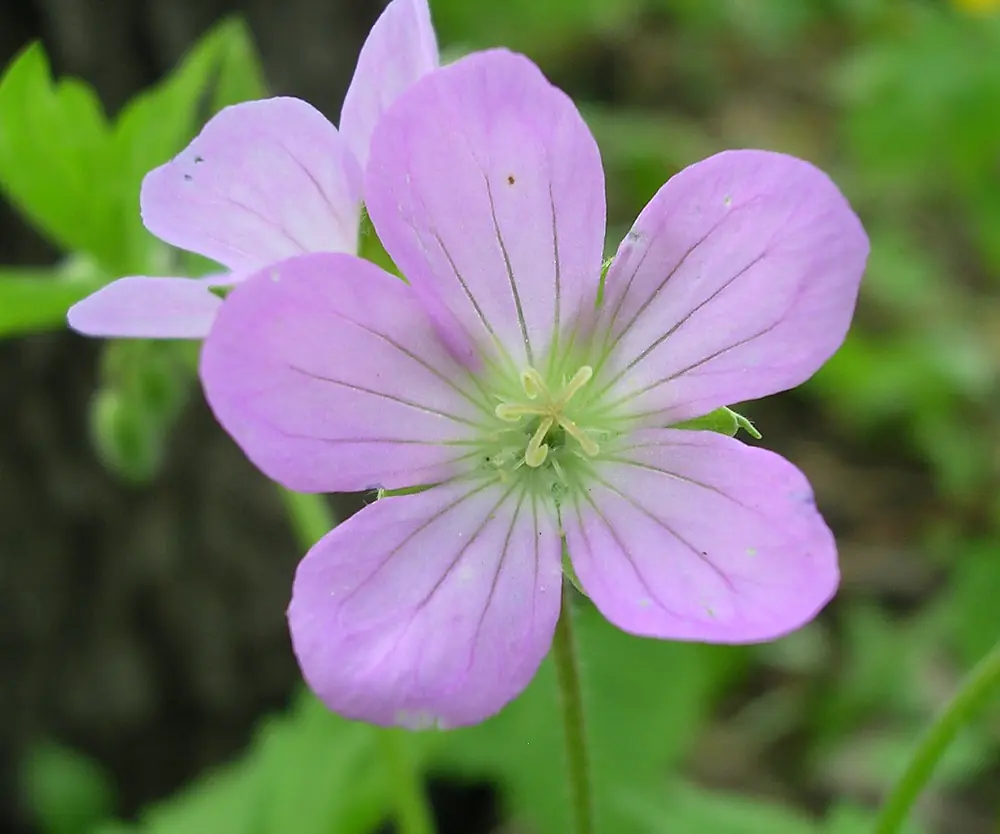
An Illinois Public Media naturalist describes early May as the high point of the woodland show, with a dozen or more species possibly flowering together. In bottomland forests, Virginia bluebells carpet the ground. The sources below are from past years, so shift your expectations by a week or two for a cool or warm spring.
-
Early May woodland peak
Early May, the climax of the show · Allerton Park near Monticello and similar rich woods
The naturalist names Solomon's seal, Jack-in-the-pulpit and blue-eyed Mary among the species in flower and says Virginia bluebells are still carpeting bottomland forests in May. Jack-in-the-pulpit has a hooded flower on a short stalk, easy to miss until you crouch.
-
What blooms at The Morton Arboretum in May
Mid-May, according to the 2026 weekly reports · The Morton Arboretum, Lisle, DuPage County
The arboretum's final 2026 bloom report, on May 13, listed Korean lilacs near the Visitor Center, buckeyes, black locusts in full white bloom, blue woodland phlox and pink wild geranium lingering in woods and glades, and great white trillium on the south side of Lake Marmo. The May 6 report added pawpaw trees with dark maroon flowers and American bladdernut. The 2027 reports have not been posted; the arboretum usually publishes them on Wednesdays through spring.
-
When the first prairie flowers open
Late May through August · Nachusa Grasslands, Markham Shkode Prairies and Midewin National Tallgrass Prairie
The Nature Conservancy says the state's showy prairie wildflowers thrive from late May through August, naming purple coneflower, wild lupine and bergamot. That means the bloom is only beginning in the last days of May.
Photograph a single trillium or geranium patch at both ends of May and keep the pair for your same place twice plate. Leave every flower where it grows.
Can you still see bison calves and prairie birds in May?
Yes. The prairie is at its quietest and most rewarding in the weeks before the summer heat. Calves are on the ground, grassland birds are setting up territories, and the booming grounds at Prairie Ridge stay active into early June.
-
Bison calves at Nachusa
Calves are born April through June · Nachusa Grasslands near Dixon, Lee and Ogle counties
Friends of Nachusa say newborns weigh about 50 pounds and wear a rusty-orange coat. They keep up with the herd within hours, nurse for about seven months and are weaned at about a year. The Nature Conservancy puts the herd at about 100 animals roaming roughly 1,500 acres. The Friends advise staying at least 100 feet back, using the pull-offs, and never entering the unit on foot. Cows are fiercely protective of calves.
-
Grassland birds at Midewin
Late spring and early summer · Midewin National Tallgrass Prairie near Wilmington
The Forest Service lists upland sandpipers, dickcissels, bobolinks, grasshopper sparrows and Henslow's sparrows among the nesters, with loggerhead shrikes in shrubby trees along the edges. Staff monitor grass height in late spring and early summer, because short, grazed grass suits some species and tall grass suits others. Owls and harriers hunt voles in the southeast bison pasture late in the afternoon and in the early evening.
-
Prairie-chickens at Prairie Ridge
Booming season runs into early June · Jasper and Marion counties, at the Prairie Ridge natural area
IDNR's 2022 account describes the booming season as running from April through early June. Dawn is the time. Stay in your vehicle or at the viewing area and never walk onto a booming ground.
The Nature Conservancy lists Nachusa, Markham Shkode and Midewin together as places to see prairie flowers, which makes them a good loop for one weekend.
What is May weather like in Illinois, and when do tornadoes peak?
Spring turns warm and wet in May. Looking at NOAA's 1991–2020 normals, the typical May afternoon reaches 70.5 °F at Chicago O'Hare, 71.2 °F at Rockford, 75.7 °F at Springfield and 79.0 °F at Anna. Lows run from about 50 °F in the north to 56 °F in the south. Precipitation averages 4.18 inches at Rockford, 4.49 at O'Hare and 5.93 at Anna, and snow is zero at every station in the table. For what is expected ahead, see NOAA's latest 90-day outlook from the Climate Prediction Center.
-
Tornadoes and hail
Tornadoes are most frequent in May and June; hail peaks in May and June · Northern Illinois, per the Chicago forecast office; the whole state is exposed
The National Weather Service in Chicago says tornadoes are most frequent in May and June, and damaging hail peaks in May and June, averaging two to three days per month with at least one report in 2005–2024. Damaging wind peaks later, in June and July. Its tornado-report average for the past decade is 26 per year, against 19 for 2005–2024 and 11 for 1950–2024, a difference that reflects better reporting as well as weather.
-
Flash flooding
May rain, especially on saturated ground · Creeks and low roads statewide
Rain is heaviest in the south, with 5.18 inches normal at Carbondale and 5.93 at Anna. Turn around when water covers a road, and keep clear of swollen streams below bluffs and waterfalls.
| Station | Average high | Average low | Precipitation | Snowfall |
|---|---|---|---|---|
| Rockford (Greater Rockford Airport) | 71.2 | 49.5 | 4.18 | 0.0 |
| Moline (Quad City Airport) | 73.9 | 51.1 | 4.67 | 0.0 |
| Chicago O'Hare | 70.5 | 50.6 | 4.49 | 0.0 |
| Peoria (Greater Peoria Airport) | 74.2 | 52.8 | 4.69 | 0.0 |
| Springfield (Capital Airport) | 75.7 | 54.4 | 4.52 | 0.0 |
| Carbondale (sewage plant station) | 76.6 | 55.1 | 5.18 | 0.0 |
| Anna (2 NNE) | 79.0 | 56.1 | 5.93 | 0.0 |
Your town's forecast is a click away in our weather tool.
When is the last spring freeze in Illinois?
By May the question has mostly been answered. Median last freezes in NOAA's 1991–2020 normals run from April 2 at Cairo to April 24 in the Rockford and Quad Cities area. Even up north, nine of ten springs have had their last freeze by May 9. Still, one spring in ten can bring a freeze after that, so frost-tender tomatoes and peppers in northern Illinois are safest planted after the second week of May. Find your own town on the Illinois frost page.
| Station | One year in ten | Median | Nine years in ten |
|---|---|---|---|
| Rockford | Apr 10 | Apr 24 | May 8 |
| Quad Cities | Apr 9 | Apr 24 | May 9 |
| Chicago O'Hare | Apr 3 | Apr 16 | May 1 |
| Peoria | Apr 2 | Apr 16 | May 4 |
| Champaign-Urbana | Apr 6 | Apr 19 | May 5 |
| Springfield | Apr 1 | Apr 14 | Apr 29 |
| Carbondale | Mar 25 | Apr 9 | Apr 25 |
| Cairo | Mar 19 | Apr 2 | Apr 17 |
These are normals, not forecasts. Watch the forecast low on planting day.
How much daylight does Illinois gain in May?
Daylight keeps growing, but the gains are slowing as the June solstice approaches.
| City | May 1 | May 31 | Gained | Per day |
|---|---|---|---|---|
| Rockford | 14 h 04 m | 15 h 03 m | 59 min | 2.0 min |
| Chicago | 14 h 02 m | 14 h 59 m | 57 min | 1.9 min |
| Moline | 14 h 01 m | 14 h 58 m | 57 min | 1.9 min |
| Peoria | 13 h 57 m | 14 h 53 m | 56 min | 1.9 min |
| Champaign | 13 h 55 m | 14 h 49 m | 54 min | 1.8 min |
| Springfield | 13 h 54 m | 14 h 47 m | 53 min | 1.8 min |
| Carbondale | 13 h 46 m | 14 h 35 m | 49 min | 1.6 min |
| Cairo | 13 h 43 m | 14 h 31 m | 48 min | 1.6 min |
Look up sunrise and sunset where you live with the daylight page.
What can you see in the Illinois night sky in May 2027?
Illinois skies in May bring meteors without moonlight, a Flower Moon with a second title, and a good evening for finding Mercury. Times below are central daylight time.
-
Eta Aquariid meteors without moonlight
Active from late April; the best mornings are around May 5 to 7 · Face east to southeast in the final hours of darkness
The Moon is new on May 6, which leaves the sky unspoiled for meteor watching. SeaSky calls the Eta Aquariids an above-average shower, able to produce up to 60 meteors an hour at the peak, with Northern Hemisphere rates nearer 30. Illinois is at the northern edge of the good viewing, because Aquarius, where the meteors seem to originate, clears the horizon late, so plan on roughly ten to thirty meteors an hour from a country site, and fewer in the north.
-
The Flower Moon and a seasonal Blue Moon
Exactly full at 5:59 a.m. CDT on Thursday, May 20, so watch the rise on Wednesday evening, May 19 · Chicago moonrise is about 7:54 p.m. that evening, low in the east-southeast
The Moon is full in the dawn hours of May 20, so the evening before is the one to watch it rise. Four full moons fall between the March equinox and the June solstice, and SeaSky counts this one as number three, so under the older seasonal definition it earns the Blue Moon label. By the calendar-month rule there is no Blue Moon in 2027. It still looks like any full moon.
-
Mercury in the evening
Good views from mid-May into early June, with greatest eastern elongation on May 28 · Low over the western horizon roughly an hour after sunset
SeaSky lists the greatest eastern elongation on May 28, at 22.9 degrees from the Sun. Our own figures for the Midwest have Mercury setting about an hour and a half after the Sun in mid-May, which would make this the best evening view of the year. Find a flat horizon and use binoculars if needed.
-
Jupiter, Mars and a quarter moon
May 12 and 13 · High in the south-southwest in the evening
Our own figures put the first-quarter Moon close beside Jupiter in the evening of May 12, and a few degrees from Mars the next day. Both planets stay in the evening sky all month.
-
Venus and Saturn before dawn
Closest on the morning of May 7, near each other May 6 to 8 · Just above the eastern horizon in early dawn
In our own figures, Venus and Saturn pass within about 0.6 degrees on May 7 and within a degree on the mornings either side, yet both hug the horizon. Treat it as a challenge for binoculars and an open view east.
-
Milky Way mornings
Moonless pre-dawn windows: the first two weeks of May and again May 25 to 31 · Low in the southern sky before dawn, far from city glow
From a latitude near 40 degrees, our calculations give up to roughly three and a half hours of moonless pre-dawn darkness with the galactic center up, at the beginning and end of the month. A dark site far from Chicago helps.
| Phase | Date | Time |
|---|---|---|
| New moon | Thursday, May 6 | 5:58 a.m. CDT |
| First quarter | Wednesday, May 12 | 11:44 p.m. CDT |
| Full moon, the Flower Moon | Thursday, May 20 | 5:59 a.m. CDT |
| Last quarter | Friday, May 28 | 8:58 a.m. CDT |
Check the cloud forecast for clear skies, and see your own moonrise on the moon phase tool.
What can Illinois families do outside in May?
- Go to a bird walk. World Migratory Bird Day falls in May; the organizers' site showed no 2027 date yet, so ask your local forest preserve or Audubon group.
- Check BirdCast before breakfast. The live map shows whether a flight came through overnight.
- Join NestWatch. Cornell Lab's project teaches how to find and monitor nests and record them in an app.
- Report hummingbirds and monarchs. Journey North takes sightings of hummingbirds, monarchs and other migrants.
- Visit a prairie with bison calves. Nachusa's viewing spots include the visitor center and pull-offs on Lowden, Naylor and Stone Barn roads.
- Note your first firefly. Write the date and place on your field log.
- Turn off a light. Switch off outdoor lights on migration nights.
The April page has bluebells, morels and trout: Illinois in April. Earlier months are on the March page, and everything else is on the nature index.
Safety notes for May in Illinois
- Spring turkey season. The state's 2027 spring turkey program has these seasons reaching into May. In the South Zone the fifth season runs April 29 to May 6. In the North Zone the fourth runs April 29 to May 5 and the fifth May 6 to 13. The pages we read do not state hunting hours or a clothing rule, so read the IDNR hunting digest before walking in woods.
- Ticks. State health officials note that immature deer ticks are only pinhead sized. Wear long sleeves and pants tucked into socks, use repellent, stay in the middle of the trail, check yourself every few hours and pull any tick straight out with tweezers.
- Mosquitoes. Empty buckets and saucers of standing water at home, and wear long sleeves at dusk near swamps.
- Baby animals. Fawns and fledglings are often left alone on purpose, so keep your distance and keep dogs away.
- Bison and plovers. Stay well back from bison with calves and outside plover enclosures.
- Storms and floods. Know your shelter, and turn around where water covers a road.
- Starved Rock. The park said some trails may be closed or limited during a trail improvement project throughout 2026. Check the park page for what applies in May.
Keep dogs leashed on trails and beaches.
Sources (37)
- NOAA NCEI: U.S. Climate Normals 1991–2020, monthly normals for Illinois stations (data API)
- Climate Prediction Center: 90-day seasonal outlooks
- National Weather Service Chicago: severe weather climatology
- U.S. Fish and Wildlife Service: piping plover
- Chicago Piping Plovers: about the Chicago plovers
- BirdCast (Cornell Lab of Ornithology and partners)
- World Migratory Bird Day
- IDNR: 2027 spring turkey program
- IDNR: turkey hunting
- Chicago Park District: Montrose Point Bird Sanctuary
- U.S. Fish and Wildlife Service: Chautauqua National Wildlife Refuge, seasons of wildlife
- U.S. Fish and Wildlife Service: Cypress Creek National Wildlife Refuge
- IDNR Wild About Illinois Birds: index
- IDNR Wild About Illinois Birds: prothonotary warbler
- IDNR Wild About Illinois Birds: indigo bunting
- IDNR Wild About Illinois Birds: scarlet tanager
- IDNR Wild About Illinois Birds: common nighthawk
- IDNR Wild About Illinois Birds: American white pelican
- IDNR Wild About Illinois Frogs: American bullfrog
- Illinois Public Media Environmental Almanac: woodland wildflower show in Illinois
- The Morton Arboretum: spring bloom report
- U.S. Forest Service, Shawnee National Forest: Snake Road closes for spring migration
- Friends of Nachusa Grasslands: bison viewing
- The Nature Conservancy: Nachusa Grasslands bison FAQs
- The Nature Conservancy: Illinois nature through the seasons
- U.S. Forest Service: Midewin National Tallgrass Prairie, animals
- Xerces Society: fireflies
- Illinois Department of Public Health: Lyme disease
- Chicago Bird Alliance
- Illinois Audubon Society
- IDNR: Starved Rock State Park
- NestWatch (Cornell Lab of Ornithology)
- Journey North: tracking migrations and seasons
- U.S. Naval Observatory: moon phases 2027 (data API)
- Sea and Sky: astronomy calendar of celestial events, 2027
- U.S. Naval Observatory: Chicago sun and moon times, May 19, 2027
- Photos via Wikimedia Commons; licenses and photographers are credited under each picture