What to look for in nature in Illinois this March
In Illinois, March is the month the state wakes up, a few warm rainy nights at a time. Sandhill cranes bugle over Nygren Wetland, and the great white clouds of snow geese along the Illinois River begin to thin as ducks pour in behind them. After dark, spotted salamanders and wood frogs head for woodland pools, woodcock spiral over brushy fields at dusk, and the last syrup boils in the Funks Grove sugarhouse as the maples bud. Skunk cabbage opens in wet woods, hepatica follows, and a handful of greater prairie-chickens start up their booming at Prairie Ridge. Daylight saving time begins March 14, the equinox lands on March 20, and the Worm Moon climbs out of the east on the evening of March 21. The sections below range across the whole state, from the lakefront to the Cache River bottoms.
Other months in Illinois: October, November, December, January, February, April.
Start here

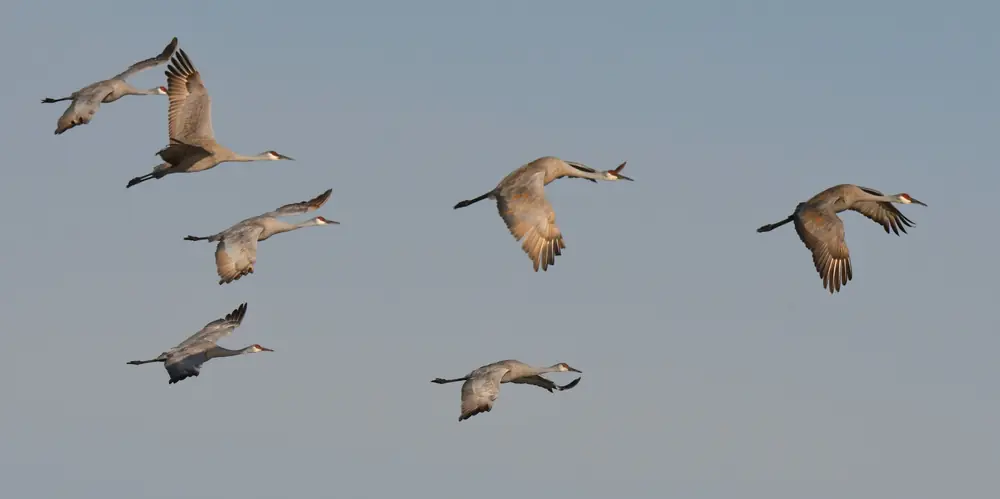
- Listen for cranes over the Rock River valley. On a mild day, tilt your head back and listen for a rattling, trumpeting call from high overhead, then scan for ragged lines of big gray birds with their legs trailing. For a closer view, try the overlook at Nygren Wetland Preserve in Rockton, open daily from sunrise to sunset.
- Go out on the first warm, rainy night. When a March rain arrives and the temperature stays near 50 °F, go to a woodland pond or a quiet road and listen for wood frogs, chorus frogs and the first spring peepers. Walk slowly, carry a dim red light and leave the animals alone.
- Watch a woodcock at dusk. Find a brushy field next to moist woods about 15 minutes after sunset, listen for a buzzy "peent" on the ground, and look up for the male's spiral flight against the last light. Do it more than once, because the performance shifts with the weather.
For the Naturalist's Field Journal: write the first dates for crane, woodcock, phoebe and red-winged blackbird on birds I have seen, mark the nights you hear chorus frogs and wood frogs on a map of sounds, and photograph one skunk cabbage patch or hepatica clump at the beginning and again at the end of March, same spot both times. On the dusk and dawn watch, log sunset on March 13 and again on March 14 to see the clock change show up in your own notes.
Regions used below: Chicago and the Lake Michigan shore; Northern Illinois and the Rock River; Central Illinois and the Illinois River valley; Western Illinois and the Mississippi; Southern Illinois and the Shawnee Hills.
When do sandhill cranes pass through Illinois in March?
March is the month when sandhill cranes become a routine sound in northern Illinois. The Illinois Department of Natural Resources (IDNR) says their spring flights begin in late February and run on favorable weather days, and a naturalist with the Forest Preserve District of Will County describes late February into March as the stretch when they are seen and heard with regularity. Hundreds of thousands of cranes travel from wintering grounds in New Mexico and Texas, and flocks can sometimes reach the thousands, although much smaller groups are more common. You will usually hear them first: the bugling call carries as far as two and a half miles, and the birds fly with neck and legs fully extended, in loose lines and V's. Cranes also nest here now. IDNR dates the first Illinois nesting grounds to 1979 and gives an incubation period of 31 to 32 days.
-
Nygren Wetland Preserve overlook
Late February through March; early arrivals have appeared by mid-February in some years · Rockton, Winnebago County, north of Rockford
The Natural Land Institute manages this 721-acre restored wetland and keeps it open daily from sunrise to sunset. A parking lot and a wildlife overlook sit at the public entrance on West Rockton Road, and the Dianne Nora Nature Trail starts from the overlook and runs east or west. In 2024 the first crane of the year was reported here on February 11, so a mild late winter can bring birds well before the calendar says spring.
-
Prairie stopovers near Chicago
March · Nachusa Grasslands near Dixon, Markham Shkode Prairies on the south side of the Chicago region, and Midewin National Tallgrass Prairie near Wilmington
The Nature Conservancy's Illinois seasonal guide names these prairies as March stopping points where migrating cranes stop to refuel, and says early migrants such as eastern bluebirds and turkey vultures also return to Nachusa Grasslands to claim territory. Check each site's rules before you go.
Cranes are wary at nesting sites and roosts. Watch from the overlook, a road shoulder or a trail, keep dogs leashed, and never walk toward a flock to make it fly.
Where are the snow geese, ducks and pelicans in Illinois in March?
The snow goose spectacle on the Illinois River peaks in late winter, and by March it is a departure watch. IDNR says snow geese start heading north in late January and keep going through February, bound for tundra nesting grounds, so the great white flocks are slowly moving out even as the first ducks pile in behind them. At Chautauqua, a second wave of ducks arrives as the backwater ice breaks up in mid-March, per the refuge's wildlife guide. The refuge adds that more than 100,000 ducks can crowd its seasonal wetlands during spring and fall migration.
-
Snow geese at Emiquon and Chautauqua
Late winter into March, thinning as the month goes on · Emiquon Preserve and National Wildlife Refuge near Lewistown, and Chautauqua National Wildlife Refuge near Havana, both on the Illinois River
The Nature Conservancy says the snow goose is the most recognizable migratory visitor at Emiquon and that flocks of up to 100,000 are not uncommon. Light geese rise together, so the first sign is often the roar of wings rather than a flock. The Conservancy also runs a live migration camera for Emiquon, which is a handy way to check before you drive.
-
Ducks as the ice goes out
Mid-March, once the backwaters open · Chautauqua refuge pools; Cache River wetlands in the far south
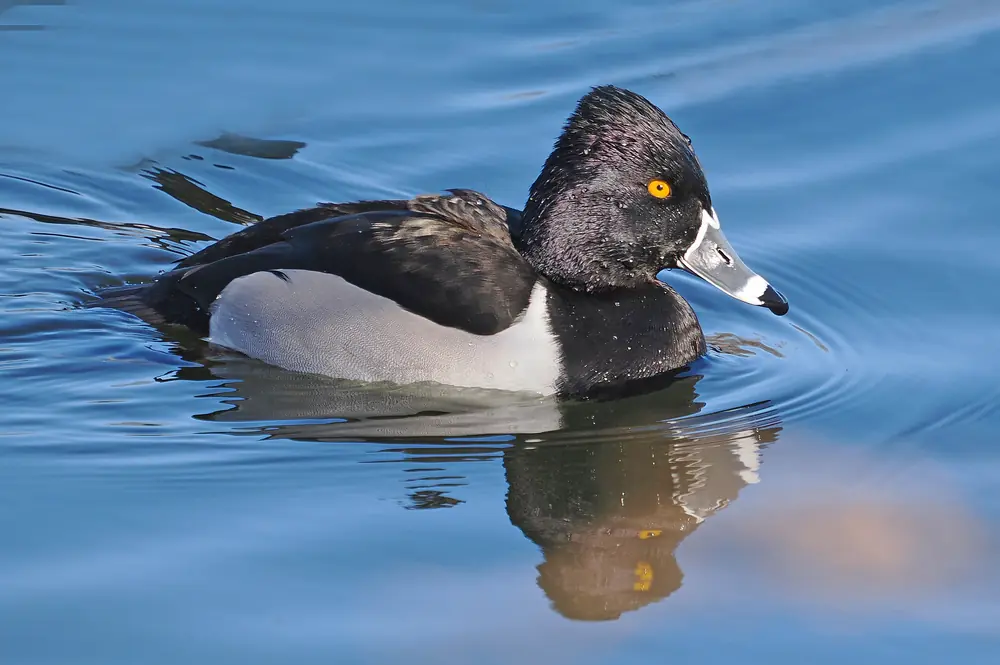
The refuge lists green-winged teal, northern pintails, northern shovelers, canvasbacks, redheads and mergansers among the diving and dabbling ducks that appear as the ice breaks up. In the far south, the Conservancy says mallards, common mergansers and ring-necked ducks start using the Cache River wetlands again in March. Wood ducks are the early nesters: IDNR gives March through July as their nesting season, and females begin looking for tree cavities above the water.
-
American white pelicans
March into April, as flocks pass · Rivers, lakes and marshes in most of the state, with Emiquon a favorite
IDNR calls the white pelican a migrant through most of Illinois, one that winters along the Gulf of Mexico and nests in the northern plains and Canada. The Conservancy lists pelicans among the March sights at its preserves. Look for long lines of white birds with black wingtips.
An active light-goose hunting season runs through April 30, so see the safety notes before visiting open fields or refuge edges near dawn and dusk.
Which salamanders and frogs move first in Illinois in March?
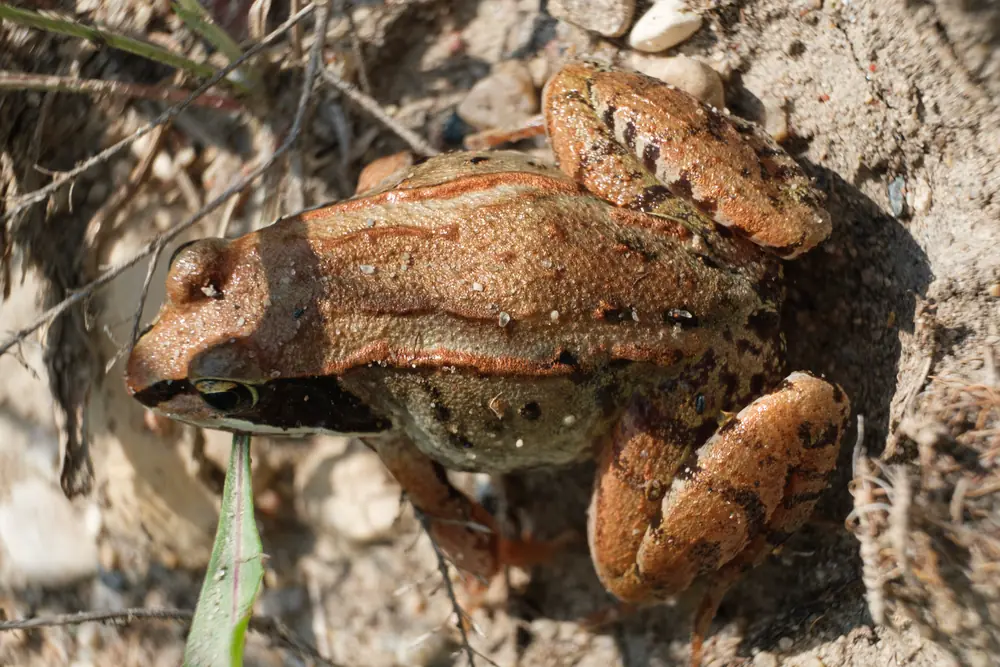
The first warm, rainy nights of March set off one of Illinois's most dramatic events, and most people miss it because it happens in the dark. The Illinois Natural History Survey (INHS) says mole salamanders move to breeding ponds with the first warm rains, about 50 degrees Fahrenheit, and hundreds of animals may enter a pond on one night. Frogs follow the same signals. IDNR gives February or March for wood frogs, late February into April for several chorus frogs, and early March for spring peepers, so the sound of the season runs ahead of the leaves.
-
Spotted and blue-spotted salamanders
Warm rainy nights in March and April · Woodland ponds in the south, the east-central border, the northeast and the far northwest (spotted); the northeast and north-central border counties (blue-spotted)
IDNR says spotted salamanders hide under rocks and logs by day and move across the forest floor at night to breed in woodland ponds, where females lay egg clusters on submerged debris. A green alga often grows inside the clumps. Blue-spotted salamanders spend most of the year underground, coming up for only a few days to breed in March or April. A cold, wet night is the only time you will see them.
-
Wood frogs
February and March, a breeding burst of a week or two after the first warm rain · Woodland pools in the northwest, northeast, east-central, southern and southeastern parts of the state
The wood frog's call is described by IDNR as somewhat like the clucking of a duck. Females lay 500 to 3,000 eggs in a round mass and the eggs hatch within two weeks.
-
Chorus frogs and spring peepers
Boreal chorus frogs late February through April; spring peepers early March to early June; Illinois chorus frogs February through April; western chorus frogs March through May · Shallow ponds, ditches and flooded fields; peepers statewide; Illinois chorus frogs in sand prairie and sandy floodplain
The boreal chorus frog lives across all of Illinois except the southeastern quarter and calls "prreep, prreep," like running a thumbnail along a comb. Western chorus frogs breed between Interstate 70 and Route 13 in south-central Illinois, and upland chorus frogs in the southern tip. The Illinois chorus frog is state threatened because it depends on sandy habitat, and it is best left to be heard from the road. Spring peepers whistle statewide from early March.
-
Snake Road closes to cars
March 15 through May 15 each spring; the U.S. Forest Service has closed it earlier in warm years · Forest Service Road 345 in the LaRue-Pine Hills area, Shawnee National Forest, Union County
The Forest Service closes this 2.5-mile road to vehicles so snakes and amphibians can cross from limestone bluffs to LaRue Swamp. The agency says roughly two-thirds of the amphibians and nearly 60 percent of the reptiles known from Illinois occur in the area, and INHS counts about 50 species along the road. The road stays open on foot. Collecting and handling are prohibited in the Research Natural Area, and the rules are posted at both ends. March is early for snakes, so expect more salamanders and frogs than serpents.
On a warm rainy night, drive slowly past woods and ponds, and carry a dim red light if you walk.
Which birds return to Illinois in March, and where can you see a woodcock or a prairie-chicken display?
By March the back-and-forth of spring migration is audible even in a suburban yard. IDNR notes that red-winged blackbird males begin arriving as early as January and females follow in March and April, that eastern phoebes return in March, and that killdeer migrants start arriving in February and nest from March through June. Robins begin their spring movement in mid-January, and turkey vultures arrive from February. This month adds two more dramatic displays: the woodcock's spiral flight at dusk, and the booming of the state's last prairie-chickens.
-
American woodcock sky dance
Late February and March, at dusk and again at dawn · Brushy fields next to moist woods; forest preserves in Champaign, Cook and elsewhere hold guided walks
IDNR says the woodcock lives in wet thickets, moist woods and brushy swamps, and makes a spiral flight at dusk and dawn during the breeding season. The Environmental Almanac on Illinois Public Media calls the woodcock's return one of the early highlights of central Illinois birding and quotes Aldo Leopold's description of the performance, which can last half an hour. Stand at the edge of an old field at dusk and watch the sky. The Champaign County Forest Preserve District has run woodcock walks before. Ask the organizer about 2027.
-
Greater prairie-chickens at Prairie Ridge
Males display on booming grounds from late winter; the main season runs April through early June, with females visiting in highest numbers near April 10 in a 2022 account · Prairie Ridge State Natural Area, Jasper and Marion counties
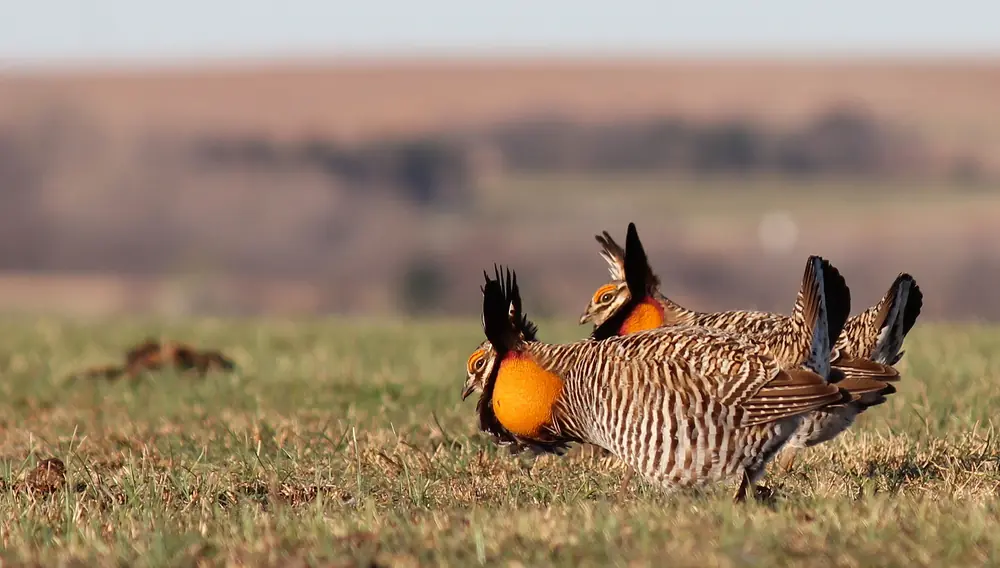
IDNR lists the greater prairie-chicken as state endangered and says it survives only in Jasper and Marion counties. The call, "booming," sounds like blowing across the top of an empty bottle. The state's Natural Heritage division says the site has limited public access but the birds can be seen from public roads, and viewings can be arranged with the site manager. In a May 2022 article the site manager estimated about 52 males on the Jasper County unit and about 18 on the Marion County unit, which gives a sense of how few are left. Watch from the roadside, keep voices down and stay out of the closed areas.
-
Returning songbirds and a few early nesters
March · Streams, bridges, marshes, parks and backyards statewide
Listen for the "phoe-be" of an eastern phoebe on a stream bank or under a bridge, and the "konk-la-reeee" of male red-winged blackbirds in cattails. Killdeer run across lawns and gravel. According to IDNR, great horned owls nest as early as January, making them one of the first birds on eggs, while bald eagles lay two or three eggs in March or April.
Log your first date for each species in the Naturalist's Field Journal, then repeat the walk a week later. March numbers change fast.
When does maple syrup season end in Illinois?
In central Illinois, maple season runs from the late-winter freeze-thaw cycle until the buds swell. Funks Grove Pure Maple Sirup, near Shirley on old Route 66, explains that the flow of sap happens when temperatures rise above freezing by day and drop below freezing at night, a cycle it says usually begins in mid to late February and lasts until the middle of March. The sap flows to nourish the developing leaf buds, and the family says it avoids sap from other seasons because it is less sweet. A warm spell that swells the buds can therefore end the run early in any given year.
-
Why sap quits
Early to mid-March in the central part of the state · Sugar maple groves, from Funks Grove in McLean County to forest preserves in the north
Depending on how sweet the sap is, the family boils between 35 and 50 gallons for each finished gallon. It taps a maple only once the trunk is around 14 inches wide, which takes roughly four decades, and it adds a second tap only on a larger tree.
-
Sirup season at Funks Grove
Syrup usually available from March through August · 5257 Old Route 66, Shirley
The family says sirup is usually available March through August, but the shop's posted hours have been by chance or appointment, so call ahead at 309-874-3360 or check the farm's Facebook page before driving out. The process page explains each step.
If you tap your own maple, watch the weather rather than the calendar. Warm days and freezing nights are the signal, and swelling buds are the signal to stop.
Which wildflowers bloom first in Illinois in March?
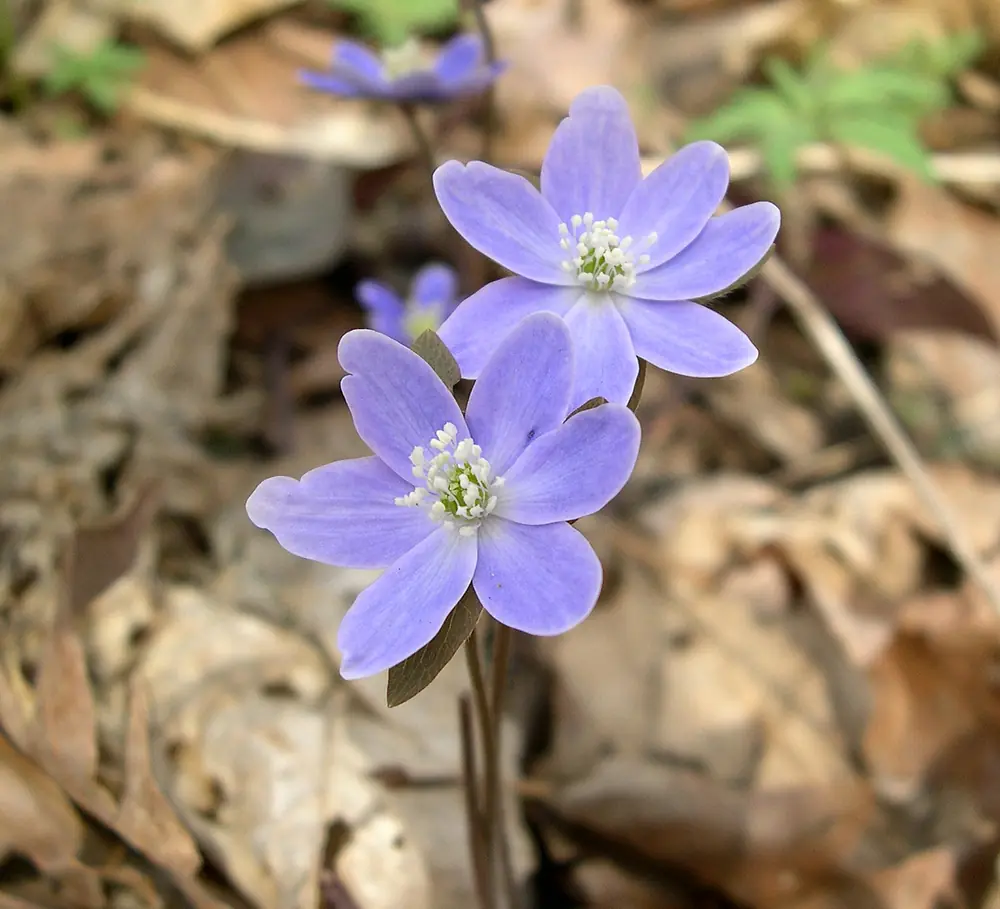
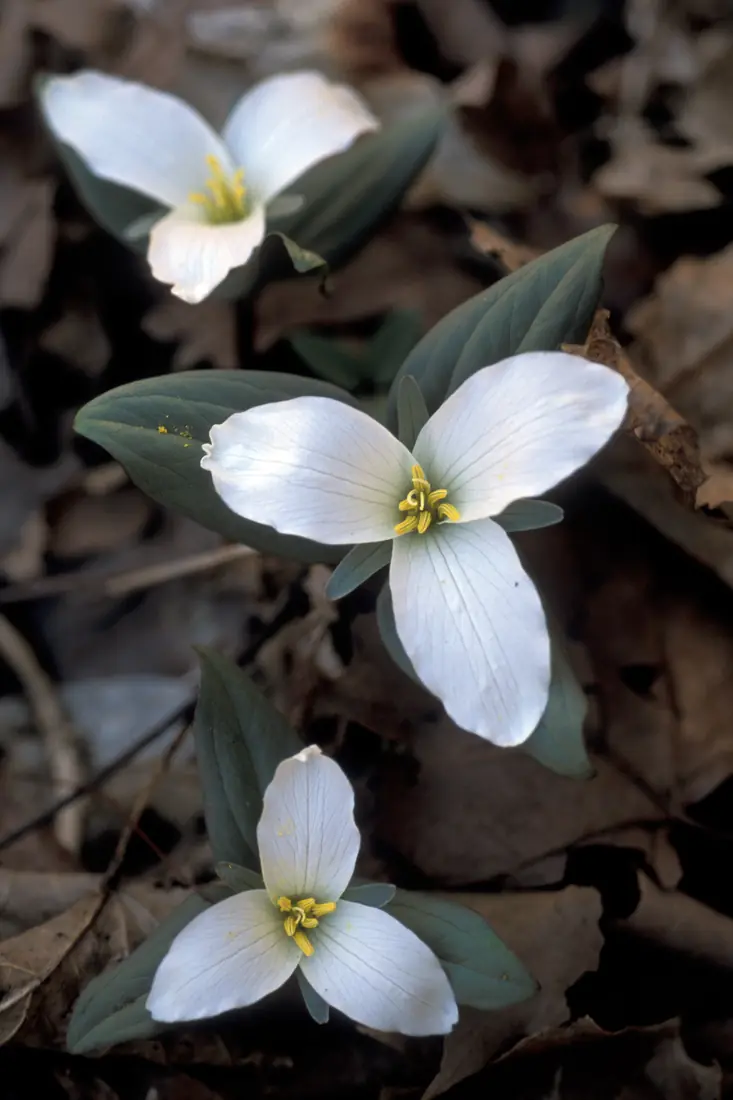
The Illinois woodland wildflower show starts quietly. An Illinois Public Media naturalist describes it as a prelude of skunk cabbage in February, gathering momentum in March with snow trillium and sharp-lobed hepatica, and then blooming in earnest through April, when bloodroot, Dutchman's breeches and spring beauty arrive, before a climax in early May. Timing varies from year to year with the weather. In the far south, spring arrives weeks earlier than in the north.
-
Skunk cabbage
Early March, sometimes earlier · Wet woods, seeps and floodplain springs statewide, such as the McDonald Woods at the Chicago Botanic Garden
The Chicago Botanic Garden calls skunk cabbage the first native wildflower of a Chicago spring and says its appearance means that trilliums and bloodroot are not far behind. Look for claw-like maroon hoods, called spathes, around a knob of tiny flowers, and a single curl of green leaves a few weeks later. The plant produces its own heat.
-
Harbinger-of-spring
Mid-February to early March in southern Illinois; early March is the more reliable time to look · Rich woods, coves and well-drained bottomlands
University of Illinois Extension describes this tiny plant as less than 5 inches tall, with clusters of small white flowers whose dark red anthers turn black, earning the nickname salt-and-pepper plant. It often grows with bloodroot, yellow fumewort and false rue anemone, and because it is sensitive to disturbance it is regarded as a sign of an intact woodland.
-
Hepatica and snow trillium
March into early April · Hillside woods, ravines and muddy wooded seeps
Sharp-lobed hepatica pops against the brown leaf litter; its alternate name, liverleaf, refers to the reddish brown color its leaves keep through winter. Snow trillium sometimes appears through the snow.
Stay on trails. Spring ephemerals grow from fragile bulbs and rhizomes, and trampled soil can wipe out a patch that took decades to establish.
What is March weather like in Illinois?
March in Illinois swings between lingering winter and early spring. NOAA's 1991–2020 normals put the average March afternoon high at 46.5 °F in Rockford and 47.0 °F at Chicago O'Hare, climbing to 53.1 °F at Springfield and 60.8 °F at Anna in the far south. March is also the last month with real snow in the north: O'Hare averages 5.5 inches and Rockford 4.9, while Carbondale's normal is 1.3 inches and Anna's 0.9. Precipitation climbs southward from about 2.4 inches in the north to nearly 5 inches in the south. Look up the Climate Prediction Center's three-month outlook maps for the latest NOAA forecast; we do not repeat them here because they are updated every month.
-
Severe weather season begins
Often a preparedness week and statewide tornado drill in the first week of March · Statewide; the National Weather Service Central Illinois and Chicago offices
This year's preparedness week ran March 2 to 6, 2026, according to the National Weather Service in central Illinois, which paired it with the Illinois Emergency Management Agency and put the annual drill at 10 a.m. on Tuesday, March 3. The office asked everyone to behave as if the drill were a genuine warning. Nothing has been announced for 2027 yet, so look for notices from your local forecast office in late February.
| Station | Average high | Average low | Precipitation | Snowfall |
|---|---|---|---|---|
| Rockford (Greater Rockford Airport) | 46.5 | 28.1 | 2.40 | 4.9 |
| Moline (Quad City Airport) | 49.9 | 29.6 | 2.62 | 4.4 |
| Chicago O'Hare | 47.0 | 31.0 | 2.45 | 5.5 |
| Peoria (Greater Peoria Airport) | 51.2 | 31.6 | 2.69 | 3.3 |
| Springfield (Capital Airport) | 53.1 | 33.2 | 2.76 | 3.1 |
| Carbondale (sewage plant station) | 56.1 | 34.5 | 4.52 | 1.3 |
| Anna | 60.8 | 37.0 | 4.82 | 0.9 |
For your own town's weather this week, see our weather tool.
When is the last spring freeze in Illinois?
The last 32 °F reading of spring arrives earliest at the bottom of the state. The NOAA station normals below put the median last freeze at Cairo on April 2 and at Carbondale on April 9, at Springfield on April 14, at O'Hare and Peoria on April 16, at Champaign-Urbana on April 19, and at Rockford and the Quad Cities on April 24. The table also shows the range: in the earliest tenth of years, Cairo has seen its last freeze by March 19, but in nine out of ten springs the northern stations are not clear until May 8 or 9. The date for your town is on our Illinois frost dates page.
| Station | One year in ten | Median | Nine years in ten |
|---|---|---|---|
| Rockford | Apr 10 | Apr 24 | May 8 |
| Quad Cities | Apr 9 | Apr 24 | May 9 |
| Chicago O'Hare | Apr 3 | Apr 16 | May 1 |
| Peoria | Apr 2 | Apr 16 | May 4 |
| Champaign-Urbana | Apr 6 | Apr 19 | May 5 |
| Springfield | Apr 1 | Apr 14 | Apr 29 |
| Carbondale | Mar 24 | Apr 9 | Apr 25 |
| Cairo | Mar 19 | Apr 2 | Apr 17 |
These are climate normals, not forecasts. Watch the NWS forecast for freeze warnings in April and early May as well.
How much daylight does Illinois gain in March?
March is the month when Illinois gains daylight fastest. Chicago's day grows from 11 hours 15 minutes on March 1 to 12 hours 40 minutes on March 31, a gain of 85 minutes. On March 1, U.S. Naval Observatory (USNO) data put Chicago sunrise at 6:26 a.m. and sunset at 5:41 p.m. central standard time. On Saturday, March 13, the sun comes up at 6:06 a.m. and sets at 5:55 p.m. standard time. At 2 a.m. on Sunday, March 14, the clocks move ahead an hour, and that day the sun rises at 7:04 a.m. and sets at 6:56 p.m. central daylight time. By March 31 sunrise is 6:35 a.m. and sunset 7:15 p.m. daylight time. Chicago's first sunset at or after 7 p.m. comes on March 18, by our calculation. The equinox arrives Saturday, March 20, at 3:25 p.m. CDT, the moment the sun crosses the equator, and day and night are very close to equal that week.
| City | Mar 1 | Mar 31 | Gained | Per day |
|---|---|---|---|---|
| Rockford | 11 h 14 m | 12 h 40 m | 86 min | 2.9 min |
| Chicago | 11 h 15 m | 12 h 40 m | 85 min | 2.8 min |
| Moline | 11 h 16 m | 12 h 39 m | 83 min | 2.8 min |
| Peoria | 11 h 17 m | 12 h 38 m | 81 min | 2.7 min |
| Champaign | 11 h 18 m | 12 h 37 m | 79 min | 2.6 min |
| Springfield | 11 h 18 m | 12 h 38 m | 80 min | 2.7 min |
| Carbondale | 11 h 21 m | 12 h 35 m | 74 min | 2.5 min |
| Cairo | 11 h 23 m | 12 h 34 m | 71 min | 2.4 min |
Clock times before and after March 14 are not directly comparable, but day length is. Our daylight tool has sunrise and sunset for any address.
What can you see in the Illinois night sky in March 2027?
March has a morning Mercury, a Worm Moon that rises on the evening before it is full, and a pair of bright planets that dominate the evening sky. All times below are central standard time through March 13 and central daylight time from March 14. Planet positions come from our own calculations and the Sea and Sky calendar.
-
Mercury at its best in the morning sky
Best from about March 8 to 25; greatest western elongation late on March 16 CDT (12:20 a.m. EDT March 17) · Low in the east-southeast before sunrise
The planet stands farthest from the sun, 27.6 degrees west of it, on March 17 by Universal Time, which is late on the evening of March 16 in Illinois. Look low toward the east-southeast about an hour before sunrise, from a spot with nothing blocking the horizon, because the spring track is a shallow one. Dazzling Venus, up roughly two hours before sunrise on March 1, sits far above it.
-
Jupiter and Mars in the evening
All month; the pair is 4.3 degrees apart on the evening of March 30 · High in the east to south after dark
Jupiter shines at about magnitude -2.5 in the evening sky and is up for most of the night early in the month. Mars, magnitude about -1.1, is farther along in its fade after February's opposition. The bright Moon passes about a degree from Jupiter around March 18 and 19, by our calculation, and Jupiter and Mars finish the month 4.3 degrees apart on March 30.
-
Saturn's last evening views
Early March · Low in the west after sunset
Saturn is still setting well after dusk on March 1 (about 155 minutes after sunset) but only about 93 minutes after sunset by March 15, and then it slips into the evening glow. It is in conjunction with the sun on April 7 and returns to the morning sky in late April.
-
The Worm Moon
Full at 5:44 a.m. CDT on Monday, March 22; the best evening for a full-looking moonrise is Sunday, March 21 · Rising in the east around 6:33 p.m. CDT in Chicago on March 21
The Sea and Sky calendar says the Worm Moon name goes back to the season when thawing soil brings earthworms up. Because this full moon peaks before sunrise on the 22nd, it already looks full when it rises on the evening of March 21, and it still does the evening after.
| Phase | Date | Time |
|---|---|---|
| New moon | Monday, Mar 8 | 3:29 a.m. CST |
| First quarter | Monday, Mar 15 | 11:25 a.m. CDT |
| Full moon, the Worm Moon | Monday, Mar 22 | 5:44 a.m. CDT |
| Last quarter | Monday, Mar 29 | 7:54 p.m. CDT |
The darkest evenings follow the March 8 new moon. Check the cloud forecast first, and use the moon phase calendar for local moonrise.
What can Illinois families do outside in March?
- All month: sandhill crane watching at Nygren Wetland Preserve. Open daily from sunrise to sunset, with a wildlife overlook next to the parking lot.
- Early March (usually): Severe Weather Preparedness Week. The NWS and Illinois Emergency Management Agency hold a statewide tornado drill, and it is a good chance to practice a family shelter plan. The 2027 dates were not posted at press time.
- Dusk walks for woodcock. Forest preserve districts and nature centers hold guided walks in March; the Champaign County Forest Preserve District has done so at Homer Lake and Buffalo Trace Prairie in past years. Check with your local district, and see our Naturalist's Field Journal for a place to log the date you first hear one.
- Sunday, March 14: clocks spring forward. Sunset moves to nearly 7 p.m. in Chicago and stays light for evening walks.
- Saturday, March 20: the equinox at 3:25 p.m. CDT. Day and night are nearly equal; mark sunrise and sunset with a stick in the ground or a sketch.
- March 27 and 28, and April 3 and 4: youth spring turkey season. Open to hunters under 18 with a permit; see the safety notes for others on the trail.
- All month: NestWatch, eBird and Journey North. NestWatch from the Cornell Lab of Ornithology takes your nest box observations; eBird takes checklists; Journey North takes sightings of first robins and other signs of spring.
Eagle watches and Groundhog Day are covered in the Illinois February page; the full set of months and states lives on the nature index.
Safety notes for March in Illinois
- Youth turkey season. IDNR's 2026–27 season card gives March 27 and 28 and April 3 and 4, 2027, for the youth spring turkey hunt, with shooting hours from a half hour before sunrise to 1 p.m. The regular spring turkey seasons begin in April: April 5 to 9 in the south zone and April 12 to 16 in the north zone for the first segment. Wear bright clothing on public hunting areas, and check the IDNR digest and the site rules for any blaze orange requirement.
- Light goose conservation order. The statewide season on snow and Ross's geese runs until April 30, 2027, with hours from a half hour before sunrise to a half hour after sunset and no bag limit. Expect gunfire near goose fields and refuges at dawn and dusk.
- Trout opener. IDNR's spring trout season has opened in April in recent years, with a catch-and-release period before it; no 2027 dates were posted when we wrote this, so confirm rules and sites at ifishillinois.org, and note that an inland trout stamp is required unless exempt.
- Amphibian nights. Slow down on rainy nights near woods and ponds. At Snake Road, the road is closed to vehicles from March 15, and the Forest Service prohibits collecting and handling animals.
- Ticks. The Illinois Department of Public Health says deer ticks, also called blacklegged ticks, transmit Lyme disease, that immature ticks can be the size of a pinhead, and that a bull's-eye rash appears in roughly 70 to 80 percent of cases. Check yourself after a hike on a mild March day.
- Severe weather. Carry phone alerts or a weather radio, decide ahead of time where you would shelter, and do not count on sirens: the NWS points out that they are not built to be heard indoors by everyone.
- High water. After heavy rain, creeks and the Illinois, Mississippi and Ohio river bottoms rise quickly. Do not drive across a flooded road.
- Nesting birds. Keep a good distance from eagle nests and crane roosts. Great horned owls and killdeer are already on eggs.
Sources (56)
- NOAA NCEI: U.S. Climate Normals 1991–2020, monthly normals for Illinois stations (data API)
- Climate Prediction Center: 90-day seasonal outlooks
- National Weather Service Central Illinois: Severe Weather Preparedness Week information (2026)
- National Weather Service Central Illinois: severe weather preparedness information
- Forest Preserve District of Will County: sandhill crane migration has begun
- IDNR Wild About Illinois Birds: sandhill crane
- Natural Land Institute: sandhill cranes return in February
- The Nature Conservancy: Illinois nature through the seasons
- U.S. Fish and Wildlife Service: Chautauqua National Wildlife Refuge, seasons of wildlife
- U.S. Fish and Wildlife Service: visit Chautauqua National Wildlife Refuge
- IDNR Wild About Illinois Birds: snow goose
- IDNR Wild About Illinois Birds: wood duck
- IDNR Wild About Illinois Birds: American white pelican
- IDNR Wild About Illinois Birds: turkey vulture
- IDNR Wild About Illinois Salamanders: spotted salamander
- IDNR Wild About Illinois Salamanders: blue-spotted salamander
- IDNR Wild About Illinois Frogs: wood frog
- IDNR Wild About Illinois Frogs: spring peeper
- IDNR Wild About Illinois Frogs: boreal chorus frog
- IDNR Wild About Illinois Frogs: Illinois chorus frog
- IDNR Wild About Illinois Frogs: western chorus frog
- IDNR Wild About Illinois Frogs: upland chorus frog
- IDNR Wild About Illinois Frogs: northern leopard frog
- IDNR Wild About Illinois Frogs: American toad
- Illinois Natural History Survey: reptile and amphibian migration
- U.S. Forest Service, Shawnee National Forest: Snake Road closes for spring migration
- IDNR Wild About Illinois Birds: American woodcock
- Illinois Public Media Environmental Almanac: return of the American woodcock
- IDNR Wild About Illinois Birds: greater prairie-chicken
- IDNR Natural Heritage: greater prairie-chicken at Prairie Ridge
- Outdoor Illinois Journal (IDNR): status of the greater prairie-chicken in Illinois, May 2, 2022
- Hunt Illinois (IDNR): Prairie Ridge State Natural Area
- IDNR Wild About Illinois Birds: eastern phoebe
- IDNR Wild About Illinois Birds: red-winged blackbird
- IDNR Wild About Illinois Birds: killdeer
- IDNR Wild About Illinois Birds: American robin
- IDNR Wild About Illinois Birds: great horned owl
- IDNR Wild About Illinois Birds: bald eagle
- IDNR Wild About Illinois Birds: wild turkey
- Funks Grove Pure Maple Sirup: how sirup is made
- Funks Grove Pure Maple Sirup: home and visitor information
- Illinois Public Media Environmental Almanac: woodland wildflower show in Illinois
- Chicago Botanic Garden: skunk cabbage, gross and cool herald of spring in Chicago
- University of Illinois Extension: species profile, harbinger-of-spring
- IDNR: 2027 spring turkey program
- IDNR: youth turkey information
- IDNR: 2026–27 Illinois Digest of Hunting and Trapping Regulations, season dates card
- Illinois DNR iFish: trout stocking and spring trout season
- Illinois Department of Public Health: Lyme disease
- Journey North: tracking migrations and seasons
- NestWatch (Cornell Lab of Ornithology)
- U.S. Naval Observatory: moon phases 2027 (data API)
- U.S. Naval Observatory: Earth's seasons, 2027 (data API)
- U.S. Naval Observatory: sunrise and sunset, Chicago, March 13 and 14, 2027 (data API)
- Sea and Sky: astronomy calendar of celestial events, 2027
- Photos via Wikimedia Commons; licenses and photographers are credited under each picture