What to look for in nature in Nebraska this May
May is when Nebraska is full of birds that are only passing through. In the first three weeks, warblers pour up the Missouri bluffs. In the second week, buff-breasted sandpipers crowd the farm fields of the eastern Rainwater Basin, a stop that Game and Parks says holds most of the world’s population. Least terns come back to the river sand late in the month, lark buntings fill the Panhandle, and spadefoot toads call the moment a heavy rain fills a pool. The weather is not finished with the state: a hard freeze can still reach the Pine Ridge in the middle of the month, and storms are common. The sky is generous too, with moonless Eta Aquariid mornings from May 5 to 7, then the Flower Moon on May 20 under a seasonal Blue Moon label.
Other months in Nebraska: October, November, December, January, February, March, April.
Start here
- Spend a morning at a mudflat. Find a public Rainwater Basin wetland or sandpit shoreline in the second week of May. Sit quietly with binoculars, write down every shorebird, and photograph the ones you cannot name.
- Learn three warbler songs. Pick a woodlot near you in the second week of May and listen for American redstarts and Tennessee warblers. Try to match what you hear to a recording.
- Go out after the first big rain. After a warm rain, step out at dark beside a flooded field or roadside pool and listen for spadefoots and Woodhouse’s toads. Keep your light dim, and write down the date, temperature and place.
You will want several plates from the Naturalist’s Field Journal this month. Every warbler and sandpiper goes on “birds I have seen,” the toad chorus and the nighthawk’s peent fit “a map of sounds,” and an Eta Aquariid morning belongs on “dusk and dawn watch.” “Nest observed” fits a plover, tern or kingbird seen from a safe distance, and “mammal watch” suits a coyote den or a bison herd. With “the same place twice,” you can set one wetland’s first week of May beside its last.
Regions used below: The Panhandle and Pine Ridge; The Sandhills and Niobrara valley; Southwest Nebraska and the Republican valley; The central Platte and Rainwater Basin; Northeast Nebraska and the Missouri bluffs; Lincoln, Omaha and the southeast.
Which warblers, orioles and other migrants peak in Nebraska in May?
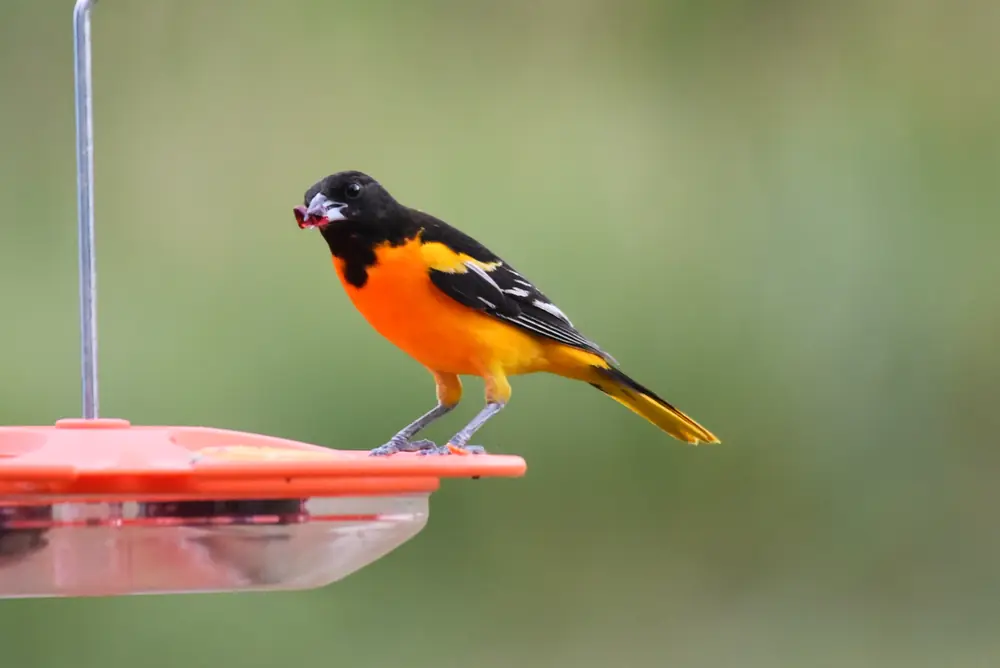
May is the busiest songbird month of the year in the east. The Audubon Society of Omaha’s migration notes for May name a long run of warblers, along with scarlet tanagers, rose-breasted grosbeaks and both Baltimore and orchard orioles. The notes put the best warbler viewing in the opening three weeks of the month. Arrival dates shift with the weather, so a cold front that stalls the flow can empty a woodlot one day and fill it the next.
The Birds of Nebraska account for each species, kept by Nebraska Game and Parks, supplies the numbers below. Most of its high counts are single days at famous spots, so treat them as a ceiling and not as an everyday expectation.
-
Warblers in the river woods
First three weeks of May; mid-May is the peak for Tennessee warblers · Fontenelle Forest and Indian Cave State Park along the Missouri, Wilderness Park in Lincoln, and cottonwood groves along the Platte (Central time)
American redstarts pass through in late April and May, and the state account lists 150 at Fontenelle Forest on May 13, 2021. Tennessee warblers move from late April to early June with their numbers peaking in mid-May, and the account records 112 in Sarpy County on May 11, 2000. Blackpoll warblers are fairly common in spring and nearly absent in fall, because most head east to the Atlantic coast before the autumn crossing; one count reached 95 at Wilderness Park on May 11, 2018. Look for them in the canopy, and listen first: many of these songs are thin and high.
-
Orioles, grosbeaks, tanagers and buntings
Baltimore orioles arrive in late April in the east, about three weeks later in the west; most others arrive in the first half of May · Wooded edges, shelterbelts and yards, with the most species in the Missouri valley (Central time)
A banding study in a Hall County yard estimated 164 Baltimore orioles passing through between May 14 and June 15, 2015, yet the most the observer ever saw at once was seven. That is a good reminder that a quiet yard can still be busy. Orchard orioles are common statewide, rose-breasted grosbeaks are common in the east and uncommon in the west, and scarlet tanagers are uncommon in the east: the account lists nine at Indian Cave State Park on May 12, 2004. Indigo buntings reach 40 at Fontenelle Forest on a good day, and the western Bullock’s oriole shows up in the Panhandle from early May.
-
Ruby-throated hummingbirds
Migration is mostly in May · Mostly the Missouri and lower Platte valleys; rare in the Panhandle (Central and Mountain time)
The state account says ruby-throated hummingbirds arrive in the east in late April, with most of the movement in May, and that they breed mostly in the Missouri and lower Platte valleys. West of there they are scarce, and a female in a Dawes County yard in late May 2014 was notable enough to be recorded. If you hang a feeder, keep the sugar water fresh and note your first visitor on the Journey North map.
The April page has the early arrivals; in May the same birds are singing, and the late migrants fill in behind them.
Where do shorebirds stop in Nebraska in May?
Nebraska Game and Parks calls May the peak of spring shorebird migration, naming long-billed curlews, marbled godwits, and upland, buff-breasted and Baird’s sandpipers, greater yellowlegs and willets on wetlands and shorelines across the state. The Fish and Wildlife Service adds that the best viewing in the Rainwater Basin comes in May, when drying wetlands expose mudflats rich in insects and plants. How much habitat there is depends on spring rain, and wet and dry years look very different.
-
The Rainwater Basin mudflats
Peak viewing in May · South-central Nebraska, including the Harvard, Funk and Waco Waterfowl Production Areas (Central time)
The Fish and Wildlife Service lists greater and lesser yellowlegs, dowitchers, Wilson’s phalaropes, pectoral sandpipers, Wilson’s snipe and the small “peeps” as common here. Go with a spotting scope if you have one, stay on public land, and scan slowly: shorebirds can stand motionless against the mud.
-
Buff-breasted sandpipers at their peak
Largest numbers during May 9 to 18 · Fields in the eastern Rainwater Basin, especially Clay and Seward Counties (Central time)
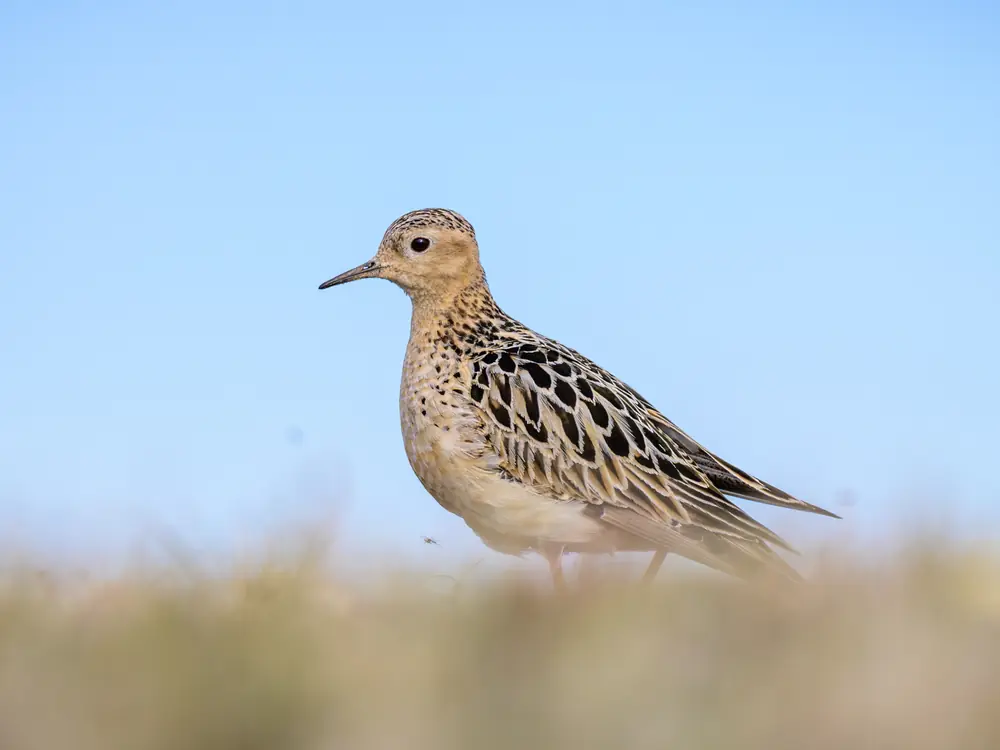
These small, buff-colored sandpipers feed in farm fields more than in wetlands. The state account says they prefer fields that grew soybeans the year before, visit wetlands only briefly in late afternoon to bathe and rest, and may stop for as little as a day. Surveys estimated average stopovers of 76,000 birds in 2004 and 34,000 in 2005, and Game and Parks says more than 90 percent of the world’s population stages in the eastern basin. Those fields belong to farmers, so use a road shoulder and a scope, and never step in after the flock.
-
White-rumped sandpipers and other peeps
Numbers build to a peak in mid-May; flocks last into June · Mudflats from the Rainwater Basin to the Platte valley and the Panhandle (Central and Mountain time)
White-rumped sandpipers are the last of the regular shorebirds to come through. The first arrive around the end of April, and in late May the small-sandpiper flocks are mostly this species and semipalmated sandpipers. A single count in the eastern basin reached 7,000 on May 18 to 20, 2005. They are hard to separate from their cousins; look for the long wingtips that extend past the tail and the white patch above it when they fly.
-
Godwits, willets and curlews
Hudsonian godwits can still be present in May; marbled godwits and willets peak earlier, in April · Rainwater Basin and Sandhills lakes; long-billed curlews on western and north-central grassland (Central and Mountain time)
The Rainwater Basin is the main spring stop for Hudsonian godwits, and the state account counted 1,139 there on May 15 and 16, 2005. Marbled godwits peak from April 22 to 30, so May birds are stragglers, and willets peak in the last week of April, but willets that breed in the north-central and western parts of the state lay eggs from about May 9. Long-billed curlews arrive by the end of March and nest on pastures in the north-central and western parts of the state.
Our April page covers the avocets, phalaropes and snipe that arrive first; for May, the Game and Parks timeline is the best single reference for what is moving.
Where do least terns and piping plovers nest in Nebraska, and how do you watch them?
Two small, pale birds nest on bare sand along Nebraska’s big rivers, and both are protected. The piping plover is listed as threatened at the state and federal levels, and the least tern is listed as endangered by the state. Their nests are shallow scrapes, with eggs the color of the sand, and a person walking by can step on one before seeing it.
-
Piping plovers
Back since mid-April; eggs laid between April 21 and August 1 in the state’s records · Platte, Missouri, Elkhorn, lower Loup and lower Niobrara river systems, plus sand and gravel pits and the shores of Lake McConaughy (Central and Mountain time)
Plovers arrive after a non-stop flight from the Gulf Coast, with numbers peaking in the second half of April and early May. By May they are on territory and the state account gives May 14 as the earliest date for dependent young. They nest on sparse sand beside water: sandbars, reservoir beaches, mines and even lakeshore subdivisions. A count of 11 at Lake McConaughy on May 14, 2024 shows how few there are in one place.
-
Least terns
Arrival is typically in the second half of May; eggs from May 19 · Missouri River below Gavins Point Dam, the Platte, and sand pits such as Bassway Gravel Ponds in Buffalo County (Central time)
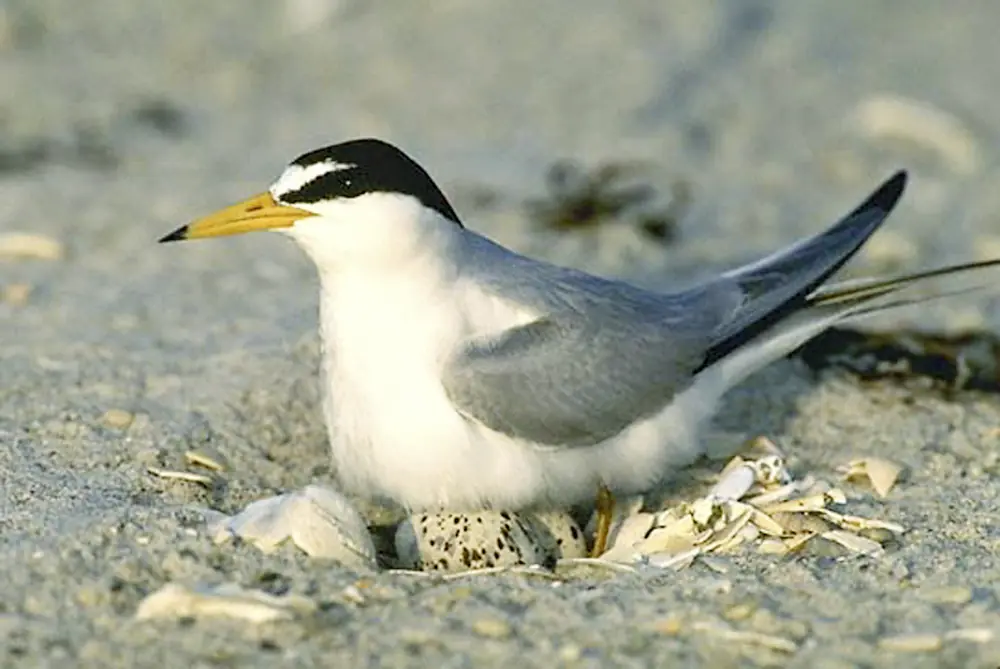
Least terns are late: the earliest typical dates cluster around May 8, although the main arrival is usually in the latter half of May. The Audubon Society of Omaha lists the species as a summer resident in the mid-May notes, and the account records 35 at Bassway Gravel Ponds in Buffalo County on May 24, 2024. Dams and channels have cut the number of natural sandbars, so many terns now nest on mined sand and engineered islands. Watch for the hovering and plunging flight over the water.
Stay back from marked nesting areas and keep dogs on leashes near sand and gravel. If a bird flies up, cries out or pretends to be injured, you are too close; walk away along the way you came. A spotting scope or a long lens lets you watch without causing a nest to fail.
Which grassland and western birds return to Nebraska in late May?
The prairie fills in late. Many of the state’s grassland birds are on territory by early May, but the last arrivals come in the final two weeks, especially in the Panhandle and the Sandhills.
-
Lark buntings in the Panhandle
Early May at first, with peak numbers in late May · Kimball, Banner and Perkins Counties in the west and southwest (Mountain and Central time)
Male lark buntings are black with white wing patches, and in song flight they hang in the air above short grass. The state account calls them abundant in the west and records “thousands” in Kimball County on May 30, 2011. Numbers are erratic and rise in dry years, when flocks may stray east, so counts vary a lot from one spring to the next.
-
Bobolinks and dickcissels
Both arrive in late April; singing males are everywhere by mid-May · Sandhills meadows, northern and northeastern hayfields, and tallgrass prairie such as Spring Creek Prairie (Central time)
Bobolinks nest in moist meadows and hayfields. A tracked male crossed the Gulf in mid-May and arrived at a Nebraska nest site on May 20, and the state account notes that mowing before the young fledge hurts nesting success, with delaying haying until mid-July an effective help. Dickcissels enter through the southeast; the account records 100 at Spring Creek Prairie on May 30, 2022.
-
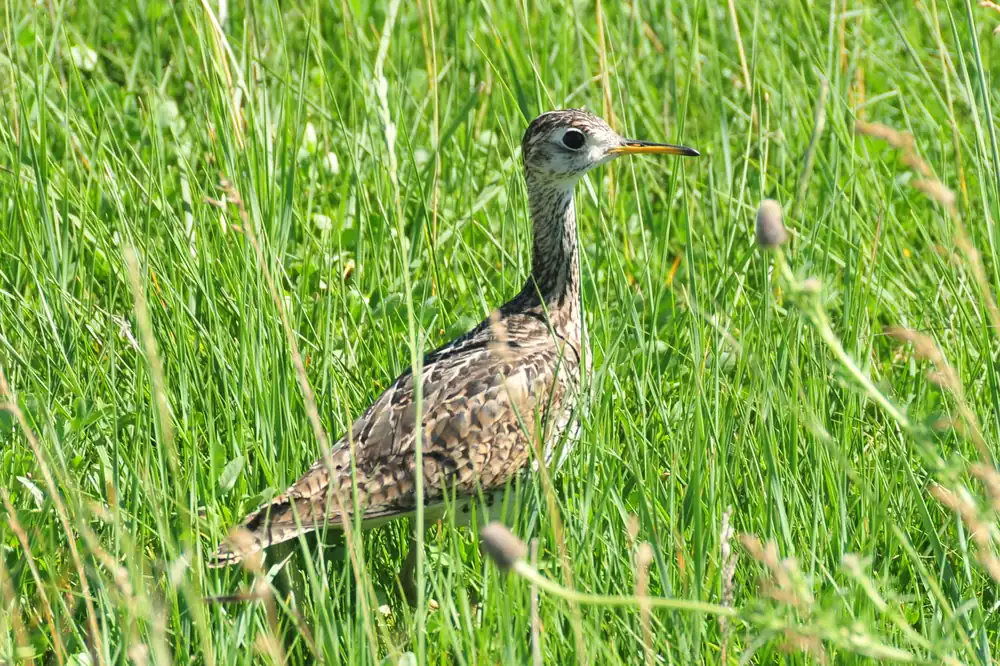
Upland sandpipers and burrowing owls
Upland sandpiper migration peaks in early to mid-May; burrowing owl courtship and early nestlings are recorded from mid-May · Sandhills pastures, Crescent Lake National Wildlife Refuge, and prairie dog towns in the west (Central and Mountain time)
Upland sandpipers perch on fence posts and give a long, wolf-whistle call. The account lists the earliest young on May 27. Burrowing owls live in the burrows that prairie dogs dig, and the state lists courtship on May 12 and nestlings from May 18. Bring binoculars and stay in the car or well back, since owls bob and call when someone gets too close.
-
Kingbirds and nighthawks
Western kingbird migration peaks in mid to late May; common nighthawks reach the east about May 1, the center May 7 to 9 and the west May 15 or 16 · Statewide, over fields, towns and ballparks at dusk (Central and Mountain time)
The state accounts give these dates as typical first arrivals, and they show how spring moves west: nighthawks reach the Panhandle about two weeks after the eastern counties. At dusk, listen for the nasal “peent” and look for white wing bars on a bird flapping like a bat.
Grassland birds nest on the ground, so stay on trails, and follow any county rule about mowing. The nature guide has other states’ pages for readers who travel.
Which frogs, toads and turtles are active in Nebraska in May?
Nebraska Game and Parks has marked Amphibian Week in early May (May 4 to 10 in 2025), when it puts the spotlight on the state’s frogs, toads and salamanders. No 2027 week had been announced by early October 2026, so watch the agency’s page for it. Either way, May nights are the main chorus time, and the University of Nebraska–Lincoln’s species accounts give the seasons.
-
Cope’s gray treefrog
Breeding from late April through July · Wooded streams and groves in the east, with the most in the southeast (Central time)
This is the only true tree-climbing frog in the state. Its call is a short, birdlike trill that often comes from high in the branches, and the agency says its range is slowly growing as prairie streams grow into woodland. It can be gray, green or tan, and has bright orange on the inside of the thighs.
-
Blanchard’s cricket frog
Breeding from late March to late July · Pond and stream edges, with limestone outcrops in the southeast (Central time)
Its call is likened to two pebbles tapped together. This small frog stays on the ground, along the edges of water, and in fall may be found farther from water, especially around limestone outcrops in the southeast.
-
American, Woodhouse’s and Great Plains toads
Active from April; breeding seasons run through summer · American toads in the far east counties; Woodhouse’s toads in grassland, woodland edges, yards and parks (Central and Mountain time)
American toads trill for about half a minute, live mainly in the east, and are listed as a species in need of conservation. Woodhouse’s toad has a nasal call that the agency compares to a sheep, and the same sound is credited to toads at Crescent Lake in summer. Both feed on insects at night, so look near lights where insects gather. The university lists Great Plains toads as active from late March and breeding from April to September.
-
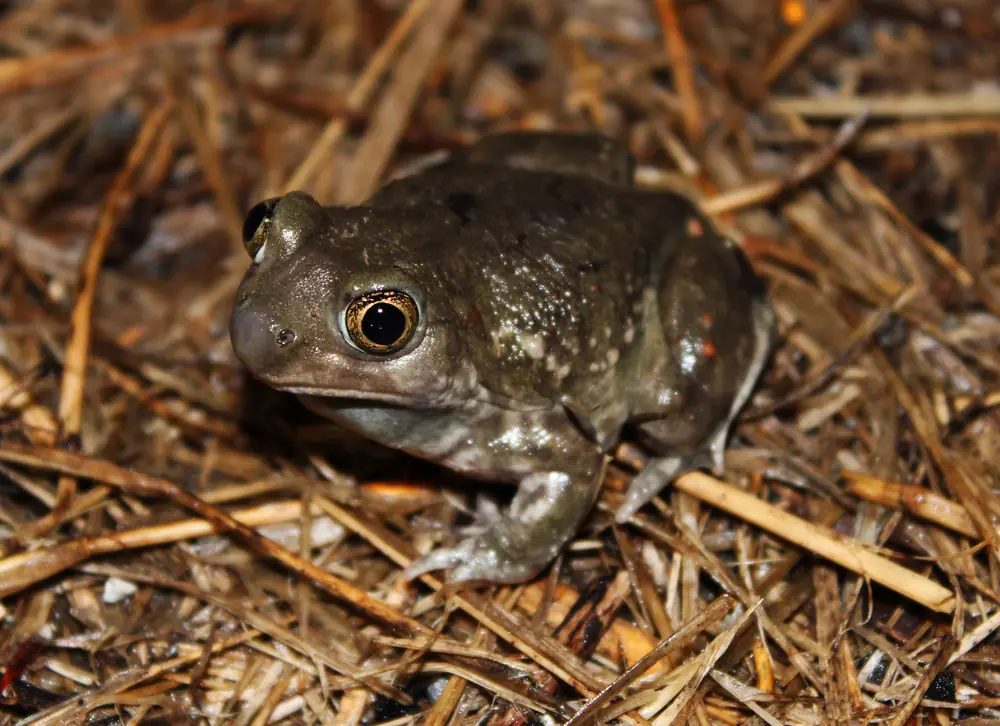
Plains spadefoots
Active April to July; they breed right after enough rain makes temporary pools · Loose soils on prairies and farmland (Central and Mountain time)
The university describes the breeding as explosive: the toads emerge at night after rain and breed right away in the temporary pools. That makes them easy to miss unless you are out on the right wet night.
-
Ornate box turtles and bullsnakes
Ornate box turtles are active April to October and breed May to September; bullsnakes are active May to October · Short, mixed and tallgrass prairie on sandy or loamy soil for the turtle; grassland, farmland and rocky outcrops for the snake (Central and Mountain time)
Ornate box turtles are active by day and have bright yellow markings on a dark shell; males have red eyes. Bullsnakes eat small mammals, birds and eggs, and are nonvenomous, although they hiss and coil when cornered. Let both go on their way; a turtle in a road should be moved only in the direction it was heading.
The tiger salamander is a prairie dog town resident in the west, according to the same Game and Parks article. Leave all of these animals where you found them, wash your hands after touching any, and use the iNaturalist app to log what you hear.
What are the signs of green-up and new life in Nebraska in May?
Most of Nebraska greens up in May, though what flowers depends on where you stand. The Fish and Wildlife Service’s seasonal list for Crescent Lake National Wildlife Refuge in the Sandhills says willows are the first trees to green up in spring, goslings appear in late April and snakes and turtles become active. Spiderwort, yucca, prickly pear and the endangered blowout penstemon bloom in June, so most of the prairie flowers are still a few weeks away.
-
Willows, cottonwoods and the green-up
Willows leaf first; the rest of the river woods follow in May · River bottoms and lake edges statewide (Central and Mountain time)
Keep a small phenology log of your own. Brad Kindler of PlantNebraska records the first dates he sees for blooms and insects each year, and his notes include pawpaw flowers on May 1, 2019 and a first monarch on May 15, 2020. Those are single-observer, single-year dates, not norms, but they show how to build a record of your own.
-
Yucca, prickly pear and a rare penstemon
Mostly June; look for buds and rosettes in May · Scotts Bluff National Monument in the Panhandle; Crescent Lake National Wildlife Refuge in the Sandhills (Mountain and Central time)
Scotts Bluff National Monument counts 452 plant species, with soapweed yucca and plains prickly pear among the common ones. Blowout penstemon is endangered, and the Fish and Wildlife Service says transplanting helped it recover from 329 plants in 2006 to more than 3,600 by 2018. Visit in June for flowers, and in May for the first green.
-
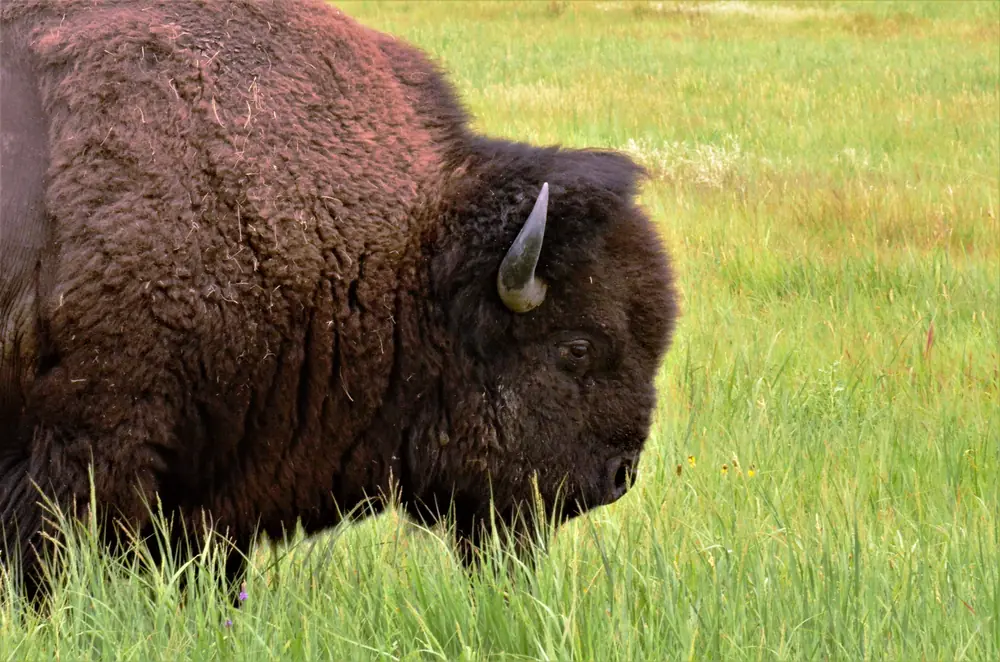
Pups, young birds and the bison herd
Coyote pups are raised in dens through spring; most pronghorn and fawn births are listed under summer · Valentine National Wildlife Refuge and Fort Niobrara National Wildlife Refuge, near Valentine (Central time)
The refuge says coyotes dig dens on sandy hillsides in the spring to raise their pups, and that Blanding’s turtles walk from wetlands to sandy hills to nest. It has built special fences to keep them off US Highway 83, so drive slowly where you see them. Fort Niobrara keeps a herd of roughly 350 bison; watch them from a car and never approach on foot.
Young animals are usually left alone for good reason. Do not pick up a fawn, a nestling or a pup, because the mother is often nearby and feeding.
How warm is May in Nebraska, and what weather hazards come with it?
By NOAA’s 1991–2020 normals, an average May afternoon reaches the low 70s in the west and 75 °F at Omaha and Lincoln. Lows range from the low 40s in the west to the low 50s in the southeast. Omaha, Lincoln and Grand Island each average more than 4.6 inches of precipitation in May, while Scottsbluff, the driest of the six, averages about 2.8 inches. A late snowfall is still possible in the Panhandle.
| Station | Average high | Average low | Precipitation | Snowfall |
|---|---|---|---|---|
| Omaha Eppley Airfield | 74.6 °F | 52.7 °F | 4.66 in | 0.1 in |
| Lincoln Municipal Airport | 75.0 °F | 51.2 °F | 4.91 in | 0.1 in |
| Grand Island Airport | 73.4 °F | 50.5 °F | 4.70 in | 0.0 in |
| North Platte Regional Airport | 72.8 °F | 44.2 °F | 3.35 in | 0.0 in |
| Valentine Miller Field | 72.0 °F | 44.2 °F | 3.52 in | 0.1 in |
| Scottsbluff Heilig Airport | 71.9 °F | 43.5 °F | 2.78 in | 0.9 in |
Severe storms: the State Climate Office’s summary of May 2026 describes multiple tornadoes on the afternoon and evening of May 17, with the St. Libory tornado killing 42 cattle and damaging homes, winds near 90 mph at Fairbury the night before and large hail near the Kansas border. Rain that month reached 8.77 inches at one station near Johnson. Spring is the time to learn the warning signs, decide where you would shelter and keep alerts turned on.
Wet and cold Mays: the Weather Service in Hastings recalls May 2019 as a wet, cool month with rainfall 130 to 220 percent of normal across its area, widespread flooding late in the month, temperatures mostly 3 to 5 degrees below normal and eight confirmed tornadoes. Low spots, creek crossings and river trails can flood quickly.
Late freezes and heat: in May 2026 the north saw sub-freezing air on May 6, the month’s lowest reading was 17 °F at Harrison, and Beaver City climbed to 100 °F. Cover tender plants when a clear, calm night is forecast.
NOAA posts fresh long-range maps every month, and they live on the Climate Prediction Center’s 90-day page. For turning a forecast into a plan, try our weather guide, and for spotting a storm building overhead, the cloud guide.
When does the last freeze of spring come to Nebraska gardens?
By May the freeze season is over in the southeast and nearly over elsewhere. Omaha’s median last freeze is in the middle of April, while the Pine Ridge at Chadron does not see its median until May 14, and nine springs in ten there are not frost-free until May 27. That is why a warm early May in the west can be followed by a night that blackens tomatoes and fruit blossoms.
| Station | One year in ten | Median | Nine years in ten |
|---|---|---|---|
| Chadron Municipal Airport (Pine Ridge) | May 2 | May 14 | May 27 |
| Scottsbluff Heilig Airport (Panhandle) | Apr 25 | May 5 | May 18 |
| Valentine Miller Field (northern Sandhills) | Apr 30 | May 12 | May 25 |
| North Platte Regional Airport (west-central) | Apr 30 | May 11 | May 26 |
| McCook Municipal Airport (southwest) | Apr 17 | May 1 | May 15 |
| Norfolk Karl Stefan Airport (northeast) | Apr 16 | Apr 30 | May 14 |
| Grand Island Airport (central Platte) | Apr 9 | Apr 23 | May 6 |
| Lincoln Municipal Airport (southeast) | Apr 10 | Apr 24 | May 7 |
| Omaha Eppley Airfield (Omaha) | Apr 5 | Apr 18 | Apr 30 |
Use the table to judge risk, not to promise a date: even the “nine in ten” column leaves one spring in ten with a later freeze. The Nebraska frost page lists more towns.
How much daylight does Nebraska gain in May?
Nebraska’s days keep stretching through May, though the pace has eased to about 1.8 to 2.0 minutes a day, roughly two thirds of the late-March rate. Over the month Omaha’s day grows from 14 hours to 14 hours 56 minutes, while Valentine, farther north, gains 59 minutes and ends at 15 hours 6 minutes. Norfolk and Scottsbluff also cross the 15-hour mark by May 31. The Panhandle and far southwest run on Mountain time, where clocks read one hour less than in the rest of the state, though day length does not depend on the zone. The clock change came on March 14, and May stays on daylight time throughout.
| City | May 1 | May 31 | Gained | Per day |
|---|---|---|---|---|
| Omaha | 14 h 00 m | 14 h 56 m | 56 min | 1.9 min |
| Lincoln | 13 h 58 m | 14 h 53 m | 55 min | 1.8 min |
| Norfolk | 14 h 03 m | 15 h 01 m | 58 min | 1.9 min |
| Grand Island | 13 h 58 m | 14 h 54 m | 56 min | 1.9 min |
| McCook | 13 h 56 m | 14 h 49 m | 53 min | 1.8 min |
| North Platte | 13 h 59 m | 14 h 56 m | 57 min | 1.9 min |
| Valentine | 14 h 07 m | 15 h 06 m | 59 min | 2.0 min |
| Scottsbluff | 14 h 02 m | 15 h 00 m | 58 min | 1.9 min |
Longer days drive nesting and migration alike. For sunrise and sunset in any Nebraska town, use our daylight guide.
What can you see in the Nebraska night sky in May 2027?
Unless marked otherwise, times are Central, and times in parentheses are Mountain, for the Panhandle and the southwest corner. Moon dates and meteor dates come from the Naval Observatory and SeaSky. The planet and Moon-pairing notes are our own computations, made for central Nebraska, and are rough guides, not exact predictions.
-
The Eta Aquariid meteors, in a dark sky
Best mornings May 5, 6 and 7, before dawn; active about April 19 to May 28 · Look toward the east and southeast in the last two hours of the night
SeaSky counts 2027 a favorable year for these meteors, with no Moon in the sky on the peak mornings: it is new on May 6. The shower favors the Southern Hemisphere, and SeaSky puts northern rates near 30 an hour at best. Aquarius, the shower’s home, does not rise here until the last hour or two of darkness, so counts stay modest, but the swift meteors with long trails are worth the early alarm.
-
The Flower Moon, a seasonal Blue Moon
Full on Thursday, May 20, at 5:59 a.m. CDT (4:59 a.m. MDT); looks full on Wednesday evening, May 19 · Statewide; the Moon rises in the east in the early evening
SeaSky’s calendar labels May 20 with the Blue Moon name by the old seasonal rule: count the full Moons from the March equinox, and this is number three of four before summer begins. That is the older meaning of the term, not the modern calendar-month one, and no calendar month from March to September has two full Moons in 2027. The exact moment arrives before sunrise, so go out on Wednesday evening, May 19, when the Moon rises around 8 to 8:30 p.m. in Central time by our calculation.
-
Mercury low in the evening
Greatest eastern elongation 8:14 a.m. CDT on May 28 (7:14 a.m. MDT), so the evenings of May 27 and 28 are the best; the good window runs about May 12 to June 5 · Low in the west-northwest, roughly 45 to 90 minutes after sunset
By our figures for central Nebraska, Mercury trails the setting Sun by about 97 minutes in mid-May and about 105 minutes on June 1. It is brightest in mid-May and fades after that. SeaSky puts the greatest elongation at 22.9 degrees from the Sun. Find a flat western horizon and use binoculars if needed.
-
Jupiter, Mars and the Moon
The first-quarter Moon is near Jupiter on the evening of May 12 and close to Mars on May 13 · High in the south-southwest and west in the evening
In early May our figures have Jupiter, in Leo, and much fainter, orange Mars both setting after midnight, close to seven hours behind the Sun. At about 4:52 p.m. CDT on May 12, still in daylight, the first-quarter Moon passes roughly a degree from Jupiter, so look after dark that evening and the next one.
-
Venus and Saturn before dawn
Venus and Saturn are about a degree apart on the mornings of May 6 to 8, closest on May 7 · Very low in the east, about 30 minutes before sunrise
Half an hour before sunrise, both hug the eastern horizon by our own calculation, barely clearing rooftops, so only a flat view and binoculars will do. In early May Venus is up about an hour before sunrise and Saturn about 40 minutes before.
-
The Milky Way before dawn
Windows around May 1 to 14 and May 25 to 31 when the Moon is down · A dark southern horizon, away from town lights
For 40° north our calculations give up to roughly four hours with the bright galactic core in a dark sky at the best of these windows. The Sandhills and the Pine Ridge are among the darkest places in the state.
| Phase | Date | Time |
|---|---|---|
| New moon | Thursday, May 6 | 5:58 a.m. CDT (4:58 a.m. MDT) |
| First quarter | Wednesday, May 12 | 11:44 p.m. CDT (10:44 p.m. MDT) |
| Full moon, the Flower Moon | Thursday, May 20 | 5:59 a.m. CDT (4:59 a.m. MDT) |
| Last quarter | Friday, May 28 | 8:58 a.m. CDT (7:58 a.m. MDT) |
May brings no eclipses. For moonrise in your own town, open the moon phase page; for a clear-sky forecast, the cloud guide.
What can Nebraska families do outdoors in May 2027?
Most May 2027 programs had not been posted by early October 2026, so this list sticks to dates that organizers have already put on their own pages. For everything else, ask the host.
- City Nature Challenge: the organizer’s 2027 plan has a four-day collecting window from April 30 to May 3, May 4 to 16 for sorting out identifications, and results on May 20. Observations are shared through iNaturalist or the city’s chosen platform, in cities that sign up.
- World Migratory Bird Day: observed in May and October each year. The organizer’s page showed only the 2026 date (May 9) when this was written, so look for the 2027 dates there before planning an event.
- Amphibian Week: held in early May in 2025; check Game and Parks for 2027.
- Memorial Day: Monday, May 31, 2027, the last Monday of the month, a good day for a family bird walk.
- Audubon Society of Omaha: publishes monthly migration notes, with a May note on its calendar for May 1, 2027, and the group’s own field trips are listed there.
- Spring Creek Prairie Audubon Center: five miles of mowed trails through 1,160 acres of tallgrass prairie.
- Fort Niobrara National Wildlife Refuge: daily use is free, and anyone floating the river must buy a wristband at the launch.
- Journey North: report hummingbirds, orioles and monarchs as they arrive.
- A shorebird morning: pick a public Rainwater Basin wetland, bring a notebook, and count the species you can name.
Our April page covers the month before, and the whole nature guide is a click away.
Safety notes for May in Nebraska
- Spring turkey season: The agency’s 2027 spring dates were still unposted in early October 2026. For reference, the 2026 calendar ran archery from March 25 to May 31, with youth shotgun opening April 11 and shotgun April 18, both closing May 31. Look up the 2027 dates and permit rules before you head out.
- Orange in spring: the agency’s 2025 turkey guide calls hunter orange recommended in spring and required in fall during the November firearm deer season. A bright hat or vest is wise on public land in May, since someone in camouflage may be calling nearby.
- Ticks: Nebraska’s health department says spotted fever illnesses, carried by American dog ticks, are the most commonly reported tick-borne disease in the state, averaging 26 cases a year since 2016, with about nine tularemia cases and about six ehrlichiosis cases a year. Use repellent, check your skin, and see a doctor if a fever or rash follows a bite.
- Storms: May is a month for tornadoes, hail and flash floods. Leave the trail when thunder is heard.
- Nesting birds: keep away from sandbars, beaches and gravel pits where plovers and terns are nesting, and walk only on the paths of wildlife areas.
- Snakes: bullsnakes and other species are active from May. Look before you step and reach.
- Bison and young animals: never approach bison, and do not touch a fawn, a nestling or a pup.
- High water: spring rivers can be cold, fast and full of debris. Wear a life jacket.
- Roads at night: toads, turtles and snakes cross wet roads in May. Slow down and watch for them.
Sources (57)
- Birds of Nebraska Online (Nebraska Game and Parks): least tern (archived copy)
- Birds of Nebraska Online: piping plover (archived copy)
- Birds of Nebraska Online: buff-breasted sandpiper (archived copy)
- Birds of Nebraska Online: Hudsonian godwit (archived copy)
- Birds of Nebraska Online: white-rumped sandpiper (archived copy)
- Birds of Nebraska Online: marbled godwit (archived copy)
- Birds of Nebraska Online: willet (archived copy)
- Birds of Nebraska Online: long-billed curlew (archived copy)
- Birds of Nebraska Online: upland sandpiper (archived copy)
- Birds of Nebraska Online: burrowing owl (archived copy)
- Birds of Nebraska Online: lark bunting (archived copy)
- Birds of Nebraska Online: bobolink (archived copy)
- Birds of Nebraska Online: dickcissel (archived copy)
- Birds of Nebraska Online: western kingbird (archived copy)
- Birds of Nebraska Online: common nighthawk (archived copy)
- Birds of Nebraska Online: American redstart (archived copy)
- Birds of Nebraska Online: Tennessee warbler (archived copy)
- Birds of Nebraska Online: blackpoll warbler (archived copy)
- Birds of Nebraska Online: Baltimore oriole (archived copy)
- Birds of Nebraska Online: orchard oriole (archived copy)
- Birds of Nebraska Online: Bullock’s oriole (archived copy)
- Birds of Nebraska Online: rose-breasted grosbeak (archived copy)
- Birds of Nebraska Online: scarlet tanager (archived copy)
- Birds of Nebraska Online: indigo bunting (archived copy)
- Birds of Nebraska Online: ruby-throated hummingbird (archived copy)
- UNL School of Natural Resources: Cope’s gray treefrog
- UNL School of Natural Resources: Blanchard’s cricket frog
- UNL School of Natural Resources: American toad
- UNL School of Natural Resources: Woodhouse’s toad
- UNL School of Natural Resources: Great Plains toad
- UNL School of Natural Resources: plains spadefoot toad
- UNL School of Natural Resources: ornate box turtle
- UNL School of Natural Resources: bullsnake
- Nebraskaland Magazine: Hopping into Amphibian Week, May 6, 2025 (archived copy)
- Nebraska Game and Parks: wildlife viewing timeline (archived copy)
- U.S. Fish and Wildlife Service: Rainwater Basin Wetland Management District, species
- U.S. Fish and Wildlife Service: Crescent Lake National Wildlife Refuge, species and seasons
- U.S. Fish and Wildlife Service: Valentine National Wildlife Refuge, species
- U.S. Fish and Wildlife Service: Fort Niobrara National Wildlife Refuge, visit
- U.S. Fish and Wildlife Service: Fort Niobrara National Wildlife Refuge, species
- National Park Service: Scotts Bluff National Monument, plants
- Audubon Society of Omaha: migration calendar, May 2027
- Audubon: Spring Creek Prairie Audubon Center, explore
- Plant Nebraska: the science of phenology (Brad Kindler)
- Journey North
- World Migratory Bird Day
- City Nature Challenge
- NOAA NCEI: 1991–2020 monthly normals for Omaha, Lincoln, North Platte, Valentine, Scottsbluff and Grand Island
- Nebraska State Climate Office: May 2026 monthly climate summary
- National Weather Service Hastings: May 2019 weather and climate review
- NOAA Climate Prediction Center: seasonal (90-day) outlooks
- Nebraska Game and Parks: hunting seasons 2026–27 (archived copy)
- Nebraska Game and Parks: 2025 turkey guide (spring and fall seasons)
- Nebraska Department of Health and Human Services: tick-borne diseases in Nebraska (2021)
- U.S. Naval Observatory: moon phases, 2027
- SeaSky: astronomy calendar 2027
- Photos via Wikimedia Commons; licenses and photographers are credited under each picture
.jpg)