What to look for in nature in North Dakota this May
May is when North Dakota's grass starts to talk. The birds that need big blocks of native prairie (chestnut-collared longspurs, Sprague's pipits, bobolinks, upland sandpipers) are on territory, long-billed curlews are laying eggs in short pastures, and the marshes fill with grebes, phalaropes and terns. In the badlands the last bison calves arrive and bighorn lambs follow, moose calves arrive in the Turtle Mountains from mid-month, and the first fawns turn up at the very end. Winter has not quite let go: a May station can still average nearly six nights at or below freezing, tornado season opens, and grass fires are possible while fields are dry. After dark, the Eta Aquariid meteors streak across the pre-dawn sky around the May 6 new moon, and the full Flower Moon of May 20 carries a second, older title as a seasonal Blue Moon.
Other months in North Dakota: October, November, December, January, February, March, April.
Start here
- Stand at a fence line at dawn. Choose a gravel road with a native pasture on one side and stop the car. Switch off the engine, listen for five minutes, and write down every song you can pin to a bird on a post.
- Watch a wetland margin. Pick one marsh or prairie pothole and visit it weekly. Note which grebes, terns and phalaropes appear, and the date the first one is on a nest.
- Look for the Moon on May 19. On the evening before the full Flower Moon, the Moon clears the eastern horizon within minutes of sunset by our calculation. Find an open view and watch it climb.
This month the Naturalist’s Field Journal earns its keep in a few places: “birds I have seen” for each newcomer (longspur, pipit, bobolink, upland sandpiper, black tern), “a map of sounds” for one fence line at dawn, “nest observed” for any nest watched from a safe distance, and “mammal watch” for the first calf, lamb or fawn. Add “the same place twice” for one marsh seen on both ends of the month, and “dusk and dawn watch” for the meteors and the Flower Moon.
Regions used below: Red River Valley; Devils Lake and the Turtle Mountains; Drift Prairie and the James River valley; Missouri Coteau and Bismarck–Mandan; Lake Sakakawea and the northwest; Badlands and the southwest (Mountain time).
Which prairie songbirds are singing over North Dakota grassland in May?
May is when the native pastures and hayfields of the state get loud. Four species are worth learning, and all four are birds the state's wildlife agency flags as declining across their range. Each comes with the habitat the department says it needs, so you can look for the right kind of field.
-
Chestnut-collared longspur
On the breeding grounds since late March; peak nesting early May to early August · Large native pastures with short grass, most reliably over 250 acres
The male is easy to know once the light is right: a chestnut patch on the nape, a black belly and pale outer tail feathers that show in flight. Game and Fish says the species perches on rocks, fences and stiff stems and nests on the ground, often beside a cowpie or under a clump of grass. The department reports that its numbers have fallen 85 percent since 1970, and that North Dakota holds about 19 percent of the global breeding population, second among six states. The agency calls it uncommon in cropland and hayland.
-
Sprague’s pipit
Present from early April; first nesting period late April to early June · Big blocks of native prairie, ideally over 470 acres, with intermediate grass height
This streaky, shy bird is a specialist of idle and lightly grazed prairie and avoids woody vegetation and deep litter. The department lists a 75 percent decline since 1970 and ranks North Dakota second of three states for its share of the breeding population. The U.S. Fish and Wildlife Service names Sprague’s pipit and Baird’s sparrow as the rare grassland birds Lostwood National Wildlife Refuge protects. Stand still and let it settle.
-
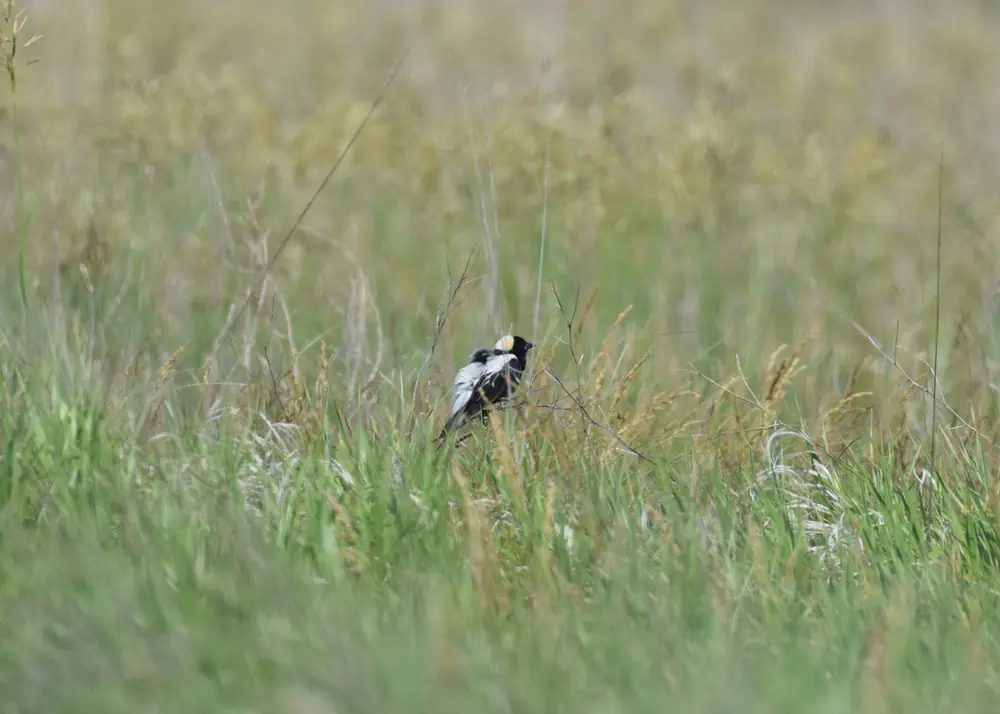
Bobolink
Arrives in early May; peak nesting early June to late August · Moderately tall, dense hayfields, pastures and wet meadows away from tree lines
Males arrive in black and white with a straw-colored nape, perch on stems and fence posts, and sing in a bubbling burst. Game and Fish says the bird prefers vegetation of moderate height and density more than any particular plant mix, and that cowbirds parasitize its nests moderately to heavily. Its numbers are down about 60 percent since 1970, yet North Dakota holds about 19 percent of the world’s nesting bobolinks, first among 32 states. The Grassland Trail at J. Clark Salyer National Wildlife Refuge is a good place to look.
-
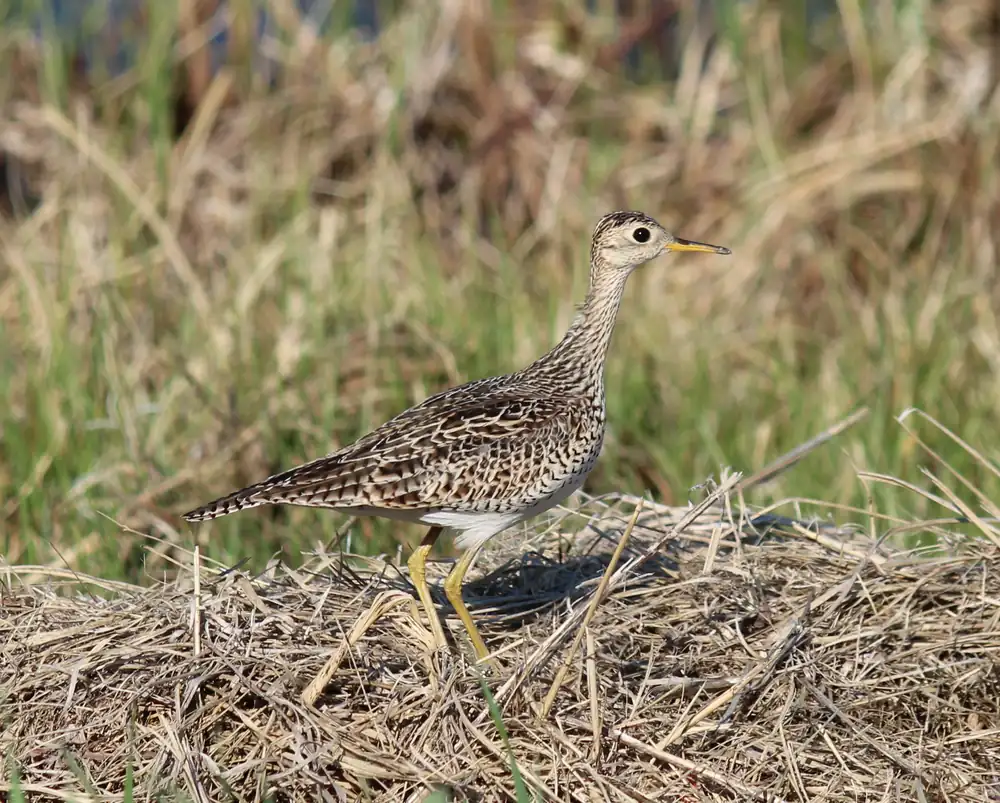
Upland sandpiper
Here from mid-April; peak nesting mid-May to mid-July · Pastures, hayland and roadsides with fence posts to perch on
A shorebird that has given up the shore. The department notes it is almost never seen near water, needs posts, rocks or other display perches, and feeds on small invertebrates in short grass, including fields just after a burn. Early mowing is named as one of its main threats, because it can destroy nests or kill nesting females. The state hosts roughly 15 percent of the global nesting population, second among 22 states. Watch the tops of fence posts along gravel roads in the morning.
All four nest on the ground, so stay on the road or marked trail and keep dogs leashed.
When do curlews, godwits and piping plovers nest in North Dakota?
April brought the shorebirds back. In May they get down to business, laying eggs on the ground in places that look empty to us. A bird that stands a long way from you and calls sharply, or one that limps away from a spot as if hurt, is trying to lead you off a nest. Game and Fish says the Central Flyway pattern still holds in May: ducks and Canada geese are still moving north through mid-May even as the local nesters settle in.
-
Long-billed curlew
Eggs laid in early May; hatching late May to early June · Short, open pasture, often on level or gently rolling ground
The department's natural history calendar puts egg laying in early May and hatching from late May into early June. Nests are shallow scrapes, often near cow dung or another object that breaks up the outline. Game and Fish says grazing is best held off until late May or late June so birds can settle, and that early mowing and ordinary farm work can destroy nests or kill incubating adults. The species is declining and its North Dakota range has contracted a lot. If you spot one on a fence post, enjoy it from the car.
-
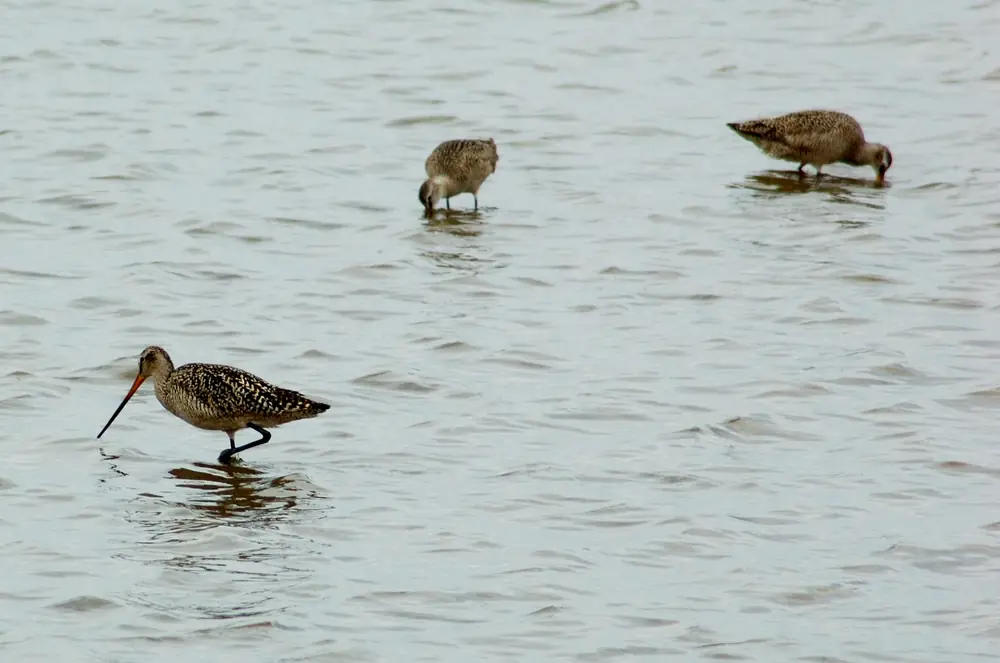
Marbled godwit
Peak nesting mid-April to mid-June · Grassland uplands and wet meadows; feeds in shallow wetlands and along roadsides
A large, tawny shorebird with a long, slightly upturned bill. North Dakota has the highest share of the global breeding population among 15 states, about 15 percent according to the department, which also says the population is declining steeply. Nesting success depends on wide stretches of grass and plenty of wetlands, and, as with curlews, an early hay crop can wipe out a nest.
-
Piping plover
Present from mid-April; peak nesting late May to mid-July · Bare sand, gravel and alkali shores of lakes and rivers
The Northern Great Plains population has been federally listed as threatened since 1985, and North Dakota lists the plover as threatened too. A nest is a slight hollow in sand or gravel, usually next to a clump, rock or log, and never in heavy vegetation. The state asks boaters and walkers to avoid nesting sites and to keep dogs leashed on sandbars and shores where plovers nest. The department says people on sandbars can destroy nests, and projects the species could lose more than half its current range by 2050.
One test covers all three: a bird that stops feeding, scolds you or feigns an injury means you have come too close. Back off slowly and watch through binoculars.
Which waterbirds, frogs and toads fill North Dakota's wetlands in May?
By the second half of May the potholes, lakes and marshes carry nesting colonies as well as passing flocks. Water levels decide how many birds each wetland holds, so a year of full potholes can look very different from a dry one.
-
Western grebes
Here from early April; peak nesting late May to late August · Medium to large lakes and marshes with beds of cattails, bulrush and open water
Western grebes nest in colonies on floating platforms of plant stems, sometimes mixed with eared grebes, and a colony can reach hundreds of nests. The state hosts about a quarter of the world’s nesting western grebes, first among 16 states. The last colonial waterbird inventory, in 2014 and 2015, found 75 colonies with about 2,556 breeding pairs.
-
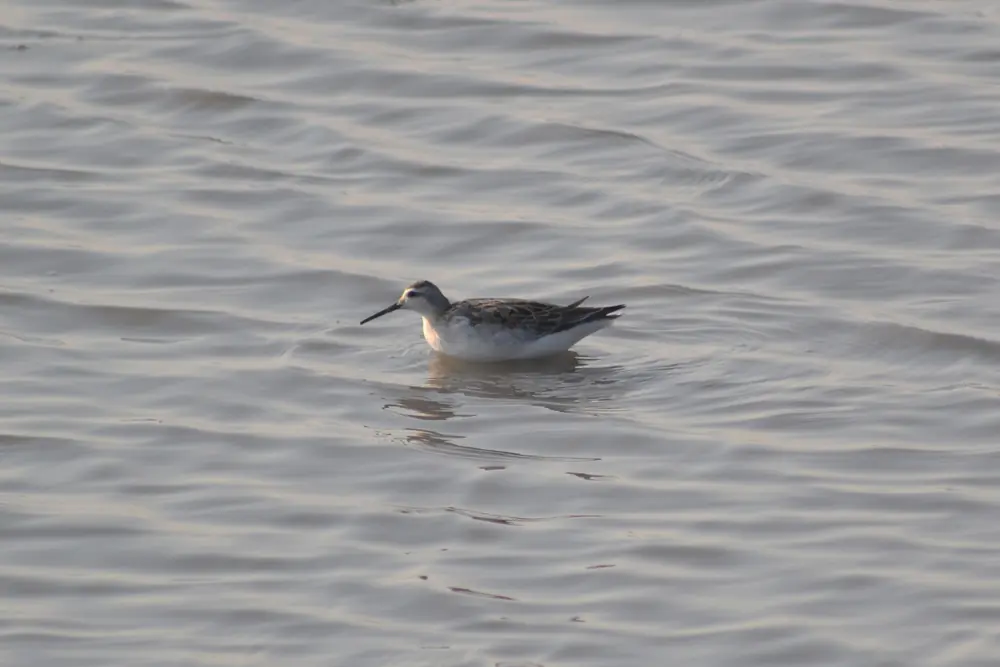
Wilson’s phalarope
Arrives mid-April; peak nesting late May to early July · Fresh and alkaline wetlands with open water and a wide margin of low prairie or wet meadow
These small, quick shorebirds spin on the water to stir up insects. Game and Fish says they nest in wet meadow or grassland usually within about 100 meters of the shore, a spot that floods easily. The state holds about 1.7 percent of the global breeding population, ranking second of 18 states, and a 2024 petition asks for federal listing because of drying saline lakes elsewhere in the species' range.
-
Black tern
Arrives in early May; peak nesting early June to mid-July · Shallow marshes with about equal parts open water and emergent plants
Black terns hawk insects over the water in a loose, swooping flight and nest on floating mats of old vegetation. In the 2014 and 2015 colonial waterbird survey, North Dakota had 18 colonies with an estimated 107 breeding pairs, though the survey did not cover all habitat. The state hosts about 8 percent of all nesting black terns, first among 23 states, and the species is declining.
-
Frogs and toads
Singing begins as ice leaves ponds; the main chorus fades as breeding ends · Ponds, ditches and marsh edges across the state
Prairie Public’s Natural North Dakota series lists four frogs and five toads for the state: gray treefrog, northern leopard frog, western chorus frog and wood frog, plus American, Canadian, Great Plains and Woodhouse’s toads and the plains spadefoot. The leopard frog and chorus frog range across the whole state, and the wood frog lives north and east of the Missouri River. The program gives no species-by-species dates, so on a warm evening this month, listen from a quiet shore and note what you hear.
-
Three refuges to try
Best at dawn on a calm morning · Arrowwood, J. Clark Salyer and Chase Lake
Arrowwood National Wildlife Refuge near Pingree has recorded more than 250 bird species, and the Service says large numbers of waterfowl and shorebirds use it at the peaks of spring and fall migration. Its wildlife drive closed for the winter on November 6, 2026, with no reopening date listed. J. Clark Salyer National Wildlife Refuge near Upham also lists more than 250 species and names the black tern. At Chase Lake the pelican colony fluctuates between 4,000 and 35,000 birds and nearly all of the refuge is designated wilderness, so watch from adjacent county and township roads and call the Chase Lake district office at 701-752-4218 about road conditions.
Which North Dakota animals have young in May, and what should you do if you meet one?
The birth season runs from the last of the bison calves in mid-spring to the first fawns at the very end of the month. Game and Fish dates it in its calendar, and the rule for all of it is the same: look from a distance and leave the young alone.
-
Bison calves
Mid-April through late May · Theodore Roosevelt National Park
The calving window closes in the last week of May. Cows and calves stay close, and the park asks for at least 25 yards from all wildlife, and a cow with a calf is the case where more is wiser.
-
Bighorn lambs
Usually born early May; range mid-April to mid-June · Steep badlands along the Little Missouri River
Unlike fawns, lambs do not lie hidden: within a few days they trail the ewe, and groups of ten or more are common. The department says a newborn may tuck beneath its mother’s belly to avoid golden eagles. Scan the rims with binoculars rather than climbing toward them.
-
Moose calves
Mid-May to mid-June · Turtle Mountains and forested rivers across the northern third
Game and Fish places moose mainly in the Turtle Mountains and along wooded rivers in the north, and asks people to keep at least 100 yards away. Its warning signs are a raised hump, pinned ears, lip-licking (a sign you are much too close), or a slow walk in your direction. A cow with a new calf deserves the widest berth.
-
Elk calves
Late May to early June · Little Missouri National Grasslands, Killdeer Mountain and northeastern Cavalier County
One calf, rarely two, with a reddish coat spotted with white. Cows travel in groups of ten or more and are most active at dawn and dusk.
-
White-tailed deer, mule deer and pronghorn fawns
Late May through late June · Statewide; pronghorn mainly in the southwest, Bowman and Slope counties
The first fawns arrive just before June. If you find one alone, do not touch it: the doe is usually nearby. Game and Fish’s species pages give no handling advice and point questions to the department at 701-328-6300.
-
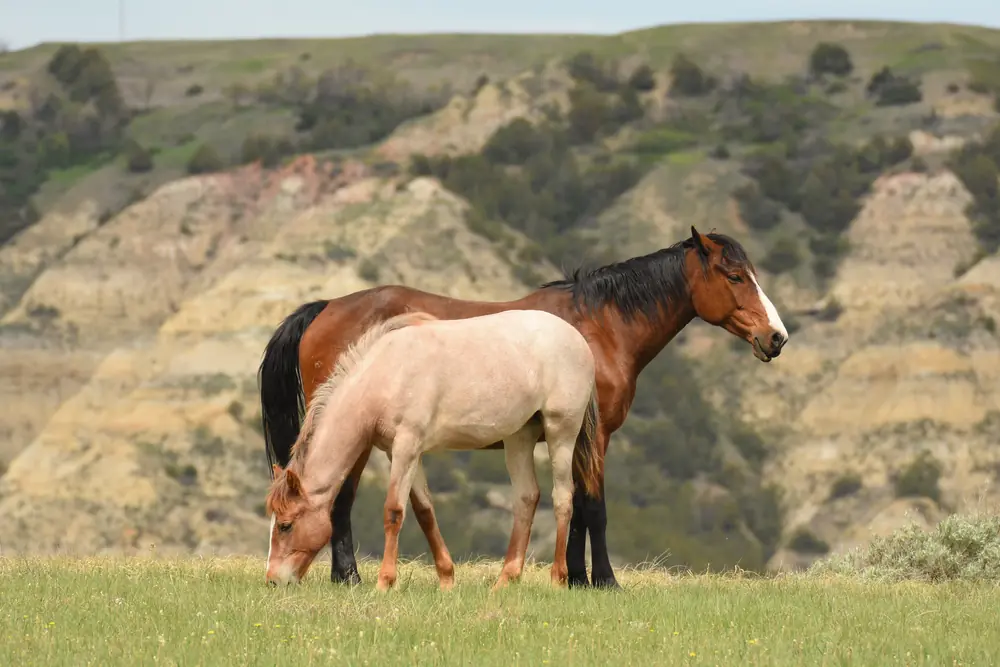
Prairie dog pups and wild horse foals
Pups underground for about six weeks after birth · Theodore Roosevelt National Park (South Unit)
The park says prairie dog litters are born after about a month of gestation and the pups stay in the burrow for roughly six weeks, so the first pups above ground arrive in the weeks after the births. Never feed prairie dogs; the park warns that their fleas can carry bubonic plague. The park’s wildlife page says feral horses are often visible from the Scenic Loop Drive and that rangers can tell you about foals and pups.
Is paddlefish snagging open in May, and what else stirs in North Dakota's waters?
Anglers talk about a brief, intense paddlefish season on the Yellowstone and the Missouri below Williston, and it is the one fishing event of the month that has a record behind it.
-
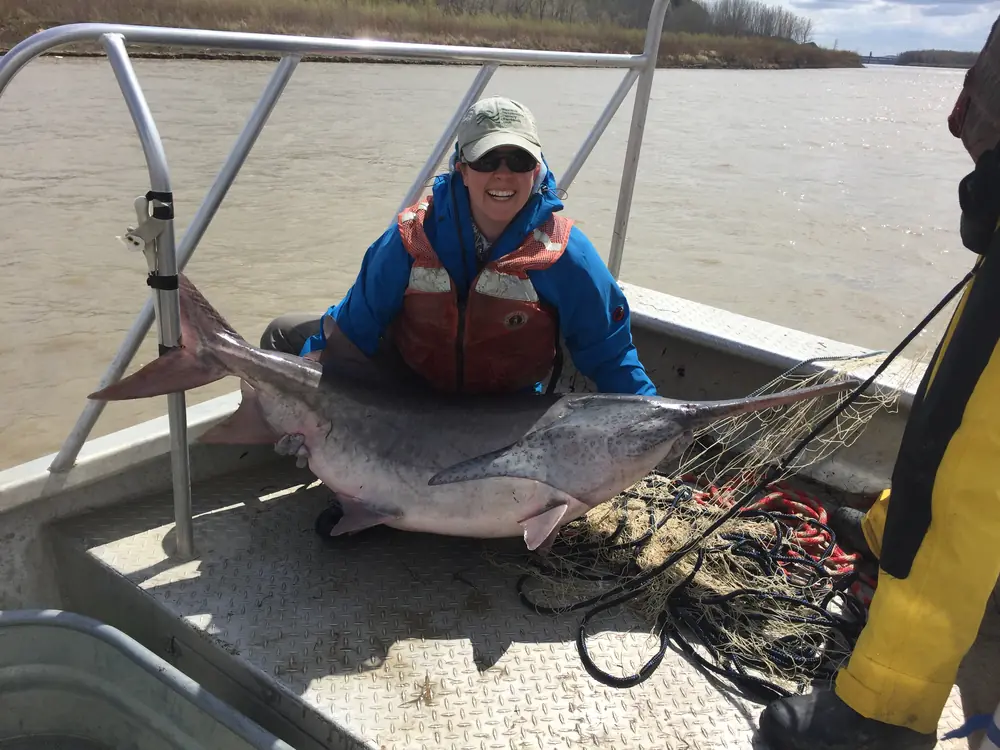
Paddlefish snagging
2026: May 1 to May 21 scheduled; 2027 dates not yet posted · Yellowstone River and the Missouri River west of the U.S. Highway 85 bridge to the Montana border
In 2026 snagging was legal May 1 through May 21 for anglers with a tag, from 7 a.m. to 7 p.m. Central time, and the harvest closed early, on May 8 at 7 p.m. Central, followed by a snag-and-release period. The department had not posted 2027 dates when I read its page in October 2026, so check the Game and Fish paddlefish page for the season and tag rules.
-
Bluegill spawning
Late May into June, when water nears 71.6 °F · Warm bays and shallows
The department’s calendar lists bluegill spawning from late May through June at a water temperature of about 22 °C. A shallow bowl in the sand near shore, guarded by a male, is the sign.
What is leafing out and blooming in North Dakota in May?
This is the part of the month the agencies date least precisely, so treat what follows as a frame for your own log. Theodore Roosevelt National Park says the pasqueflower is the first bloom, in April, that a broad range of flowers appear from May through September, and that June and July are the peak months for flower viewing. The Dakota Gardener column from NDSU Extension lists trees starting to bud among the state’s signs of spring.
-
Tree and shrub leaf-out
Varies by year and place; keep your own dates · Shelterbelts, river bottoms and coulees
NDSU Extension describes juneberry (serviceberry) as a hardy, suckering shrub native to prairie hillsides and woody draws. Pick one tree or shrub near home and record the day its buds open and the day its leaves reach full size.
-
Arbor Day
Friday, May 7, 2027 · Schools, towns and park districts
North Dakota law (Century Code section 1-03-07) designates the first Friday in May of each year as Arbor Day. In 2027 the first Friday is May 7. Local observances vary, so check with your city forester or park board.
-
Monarchs
Reach North Dakota in late May · Gardens, prairie edges and roadsides
The Game and Fish calendar lists late May for monarch butterflies reaching North Dakota. Journey North takes reports of monarchs and hummingbirds, so your first sighting helps map the spring wave.
How warm is May in North Dakota, and what weather should you watch?
By the 1991 to 2020 normals, May means afternoons in the upper 60s, nights from the upper 30s to the mid 40s, and about 2.5 to 3.3 inches of moisture across the six stations. The last column deserves a second look: every station still averages some nights at or below freezing, and Dickinson averages the most.
| Station | Average high / low | Average precipitation | Days with a low at or below 32 °F |
|---|---|---|---|
| Grand Forks (Red River Valley) | 66.9 / 41.4 °F | 2.80 in | 4.3 |
| Fargo (Red River Valley) | 68.7 / 44.4 °F | 3.09 in | 2.8 |
| Jamestown (James River valley) | 66.7 / 42.7 °F | 3.26 in | 3.7 |
| Minot (north central) | 68.9 / 43.3 °F | 2.73 in | 3.8 |
| Bismarck (Missouri River) | 68.3 / 42.4 °F | 2.50 in | 4.4 |
| Theodore Roosevelt Airport (Dickinson) | 66.1 / 39.7 °F | 2.55 in | 5.9 |
Three hazards define the month. Severe storms: an NWS Grand Forks study of tornadoes in eastern North Dakota and the northwest corner of Minnesota for 1996 through 2019 puts the season from May to about mid-September, with June (12.9 a year on average) and July (10.5) the peak months. Bismarck’s office calls a thunderstorm severe once gusts reach 58 mph or hail reaches an inch. The 2026 severe summer weather awareness week ran April 27 through May 1, so the safety planning comes before the season. Late freezes: see the freeze table below, and the page for your own town. Grass fire: In March 2025 North Dakota Response warned of an earlier and longer spring fire season, with dry grass, low humidity and wind as the drivers, and urged people to check burn restrictions before lighting anything and keep vehicles off dry grass. For the national seasonal outlook, see the Climate Prediction Center’s 90-day outlooks, which the center updates once a month, usually near mid-month. Our weather page and clouds page help you read the sky before a storm.
How much daylight does North Dakota gain in May?
The gain per day is shrinking as the solstice nears, but the days are already long. Daylight time began March 14 and holds through May; most of the state keeps Central time, and the southwest, Dickinson included, keeps Mountain time. Day length is unaffected by the clocks. Our daylight page has more cities.
| City | May 1 | May 31 | Gained | Per day |
|---|---|---|---|---|
| Fargo | 14 h 25 m | 15 h 36 m | 71 min | 2.4 min |
| Grand Forks | 14 h 31 m | 15 h 44 m | 73 min | 2.4 min |
| Jamestown | 14 h 25 m | 15 h 36 m | 71 min | 2.4 min |
| Devils Lake | 14 h 32 m | 15 h 46 m | 74 min | 2.5 min |
| Bismarck | 14 h 25 m | 15 h 36 m | 71 min | 2.4 min |
| Minot | 14 h 32 m | 15 h 47 m | 75 min | 2.5 min |
| Williston | 14 h 32 m | 15 h 47 m | 75 min | 2.5 min |
| Dickinson | 14 h 25 m | 15 h 36 m | 71 min | 2.4 min |
When is the last spring freeze in North Dakota?
The median last freeze at these stations falls between May 6 and May 21, and at Williston nine springs in ten are not done until early June. The earliest dates are no promise, since only one spring in ten ends that soon. Cool-season crops tolerate the cold, while tomatoes, peppers and bedding annuals should wait for a run of mild nights. The stations above are airports, so look up the frost dates page for a closer match to your yard.
| Station | One year in ten | Median | Nine years in ten |
|---|---|---|---|
| Fargo | Apr 27 | May 10 | May 23 |
| Grand Forks | May 3 | May 16 | May 31 |
| Devils Lake | Apr 23 | May 6 | May 19 |
| Jamestown (James River valley) | Apr 28 | May 11 | May 24 |
| Bismarck | May 1 | May 14 | May 27 |
| Minot | Apr 27 | May 10 | May 22 |
| Williston | May 8 | May 21 | Jun 3 |
| Dickinson (Theodore Roosevelt Airport) | May 6 | May 18 | May 31 |
Orchard owners worry about the reverse problem: a warm spell that opens blossoms early, then a hard freeze that kills them.
What can you see in the North Dakota night sky in May?
Central daylight time is used below, with Mountain time in parentheses for the southwest corner, which runs an hour behind. The first quarter lands late in the evening of May 12 here, early on May 13 by Greenwich time.
-
The Flower Moon, a seasonal Blue Moon
Full at dawn on Thursday, May 20; best evening is Wednesday, May 19 · Rising in the east after sunset
Folk almanacs call the May full moon the Flower Moon. Its peak arrives at 5:59 a.m. Central (4:59 a.m. Mountain), after the Moon has already set across the eastern half of the state (about 5:15 a.m. at Fargo by our calculation), so the round Moon that climbs out of the prairie on the evening of Wednesday, May 19 is the best view, with Thursday evening close behind. By our calculation the Moon rises about 8:55 p.m. at Fargo and about 9:10 p.m. at Bismarck that evening, within minutes of sunset. May 20 also earns a second name. Spring is usually given three full moons, yet this one holds four, counting from the equinox in March to the solstice in June. March 22 and April 20 come first, May 20 is the third, and June 19 the fourth. Almanac tradition gives the third of four the title Blue Moon, and SeaSky’s 2027 calendar labels it so. The modern test, a pair of full moons in a single calendar month, is never met in 2027. Dates and times are on the moon phases page.
-
Eta Aquariid meteors
Best mornings Wednesday, May 5, Thursday, May 6 and Friday, May 7, before dawn · Low in the east, away from town lights
These are bits of Halley’s Comet burning up. With the Moon new on May 6, nothing washes out the faint ones in 2027. SeaSky quotes up to about 60 an hour from the Southern Hemisphere and about 30 from the Northern. North Dakota sits far enough north that the shower’s point of origin, in Aquarius, has barely cleared the horizon when twilight begins, which holds the count below those figures. Dress warmly, lie flat facing east, and give your eyes a good quarter hour in the dark before you judge the sky.
-
Mercury in the evening
Greatest eastern elongation Friday, May 28; look about May 12 to June 5 · Low in the west-northwest, roughly 45 to 90 minutes after sunset
For the northern states, this is the best twilight appearance of the innermost planet in 2027. On May 28 it reaches its widest separation from the Sun, 22.9 degrees (SeaSky), and Mercury sits nearly as far out on the evenings before and after the peak. The planet is at its brightest around the middle of the month and dims quickly in early June. A flat, open western horizon is the requirement; binoculars make the first sighting easier. The timing above comes from calculations for the middle of the country, so shift it a little for your town.
-
Venus, Saturn, Jupiter and Mars
Venus and Saturn close before dawn on May 7; Moon beside Jupiter on May 12 · Venus and Saturn low in the east before sunrise; Jupiter and Mars high in the south and southwest in the evening
By our calculation, before sunrise on Friday, May 7, the brilliant Venus and dimmer Saturn lie within about a degree of each other, hugging the eastern horizon; a clear low horizon and binoculars are essential, and it is a modest sight. In the evening, Jupiter has been up since dusk all spring, and by our calculation the half-lit Moon sits next to it on Wednesday, May 12.
-
Dark skies: Milky Way, noctilucent clouds and aurora
Milky Way core windows May 1 to 11 and May 28 to 31; noctilucent clouds start late in the month · A dark site with a clear southern horizon
In May the galactic core hangs low in the southern sky in the small hours. By our calculation for a spot near 48 degrees north, the Moon-free dark windows run May 1 to 11 and May 28 to 31, and each gives under two hours because the nights are shrinking. Noctilucent clouds, thin electric-blue streaks lit by the hidden Sun, can show in the northern tier from about the end of May; look low in the north 60 to 120 minutes after sunset (this timing is a general expectation, not an agency forecast). For aurora, the Space Weather Prediction Center’s 30-minute forecast looks roughly half an hour to an hour and a half ahead; nobody can say months in advance whether a storm will come.
| Phase | Date | Time |
|---|---|---|
| New moon | Thursday, May 6 | 5:58 a.m. CDT (4:58 a.m. MDT) |
| First quarter | Wednesday, May 12 | 11:44 p.m. CDT (10:44 p.m. MDT) |
| Full moon, the Flower Moon | Thursday, May 20 | 5:59 a.m. CDT (4:59 a.m. MDT) |
| Last quarter | Friday, May 28 | 8:58 a.m. CDT (7:58 a.m. MDT) |
| New moon | Friday, June 4 | 2:40 p.m. CDT (1:40 p.m. MDT) |
A running log of what you saw and when makes the sky section of the journal worth rereading next year.
What can North Dakota families do outdoors in May 2027?
This page was written in October 2026, when the state parks events listing ended on January 9, 2027. No recurring spring event is dated here; ask each organizer.
- World Migratory Bird Day. This observance runs twice a year, in spring and autumn. Its 2026 days were May 9 and October 10, and 2027 days were not yet listed when this page was written. Look at worldmigratorybirdday.org and ask your local refuge or bird club.
- May 5 to 7: Eta Aquariid mornings. Set an alarm for the last stretch of darkness and bring a blanket.
- Friday, May 7: Arbor Day. Plant a tree, or tag an existing one to follow all year.
- Sunday, May 9: Mother’s Day. A picnic at the edge of a wetland makes a quiet bird walk.
- Wednesday, May 19: the Flower Moon rises. Find an eastern horizon without trees, such as a lakeshore or a section-line road.
- Thursday, May 20: full Flower Moon at 5:59 a.m. Central. The Moon has set across most of the state by then, so look on the evenings of May 19 and 20.
- Monday, May 31: Memorial Day. Parks and refuges draw crowds on the holiday weekend, so go early.
- Count nests safely. NestWatch, a Cornell Lab project, asks volunteers to read its code of conduct before they check a nest. Journey North takes reports of monarchs and hummingbirds from backyards.
- Watch the night migration. The Cornell Lab’s BirdCast uses weather radar to map and forecast birds migrating overhead at night; the spring tools are active March 1 through June 15.
- Visit a refuge. Arrowwood, J. Clark Salyer, Lostwood and Chase Lake change their road and trail access with weather and water, so call first.
Browse the nature index for neighboring months, and keep your sightings in the Naturalist’s Field Journal.
Safety notes for May in North Dakota
- Spring turkey. Regular and youth seasons both ran April 11 to May 17 in 2026. The department’s turkey page in October 2026 showed no 2027 dates and mentioned no orange requirement, so look for the proclamation, and wear something bright in woods where callers may be set up.
- Light geese. A 2026 conservation order allowed taking from February 21 until May 10 with no daily limit, and no 2027 order had been announced. Legal shooting light is a half hour either side of sunrise and sunset, so expect gunfire near large flocks around dawn and dusk.
- Paddlefish. The 2027 snagging season and tag rules were unposted; check the department’s paddlefish page before you go.
- Ticks. State health officials say ticks are active whenever it is above freezing; the 2025 April-to-July surveillance turned up 616 American dog ticks, plus a lone deer tick. Stay in the center of trails, wear an EPA-registered repellent, inspect yourself and your pets, and see a provider about a rash, fever or joint pain within 30 days of a bite.
- Animals with young. Keep 25 yards from park wildlife and 100 yards from moose, and give bison cows with calves extra room. Never feed prairie dogs, whose fleas can carry plague. Leash dogs near plover shores and curlew pastures.
- Severe storms. Tornado season opens this month. Know where the nearest sturdy shelter is on every outing, and get off open water and high ground at the first thunder.
- Fire. Look up burn restrictions before lighting anything, keep your vehicle on bare ground, and phone in smoke quickly.
- Cold snaps. A cold snap can still catch a May outing, so pack layers.
Sources (48)
- North Dakota Game and Fish: natural history calendar (May entries)
- North Dakota Game and Fish: spring turkey
- North Dakota Game and Fish: paddlefish snagging
- North Dakota Game and Fish: hunting season dates
- North Dakota Game and Fish: spring light goose season
- North Dakota Game and Fish: chestnut-collared longspur
- North Dakota Game and Fish: Sprague's pipit
- North Dakota Game and Fish: bobolink
- North Dakota Game and Fish: upland sandpiper
- North Dakota Game and Fish: long-billed curlew
- North Dakota Game and Fish: marbled godwit
- North Dakota Game and Fish: piping plover
- North Dakota Game and Fish: western grebe
- North Dakota Game and Fish: Wilson's phalarope
- North Dakota Game and Fish: black tern
- North Dakota Game and Fish: pronghorn
- North Dakota Game and Fish: bighorn sheep
- North Dakota Game and Fish: moose
- North Dakota Game and Fish: elk
- North Dakota Game and Fish: white-tailed deer
- U.S. Fish and Wildlife Service: Lostwood National Wildlife Refuge
- U.S. Fish and Wildlife Service: Chase Lake National Wildlife Refuge
- U.S. Fish and Wildlife Service: Arrowwood National Wildlife Refuge
- U.S. Fish and Wildlife Service: J. Clark Salyer National Wildlife Refuge
- National Park Service, Theodore Roosevelt National Park: wildlife viewing
- National Park Service, Theodore Roosevelt National Park: prairie dogs
- National Park Service, Theodore Roosevelt National Park: plants
- National Park Service, Theodore Roosevelt National Park: current conditions
- Prairie Public, Natural North Dakota: Frog and toad spring concerts
- North Dakota Century Code chapter 1-03: Arbor Day (section 1-03-07)
- Prairie Public, Plains Folk: The Pasque
- NDSU Extension, Dakota Gardener: Signs of spring
- NDSU Extension: juneberry (saskatoon or serviceberry), North Dakota Tree Selector
- NOAA NCEI: 1991–2020 monthly normals, station files (Fargo, Grand Forks, Jamestown, Minot, Bismarck, Dickinson)
- NWS Grand Forks: miscellaneous severe weather statistics
- NWS Bismarck: North Dakota severe summer weather awareness week
- North Dakota Response: earlier and longer spring fire season
- North Dakota Health and Human Services: preventing ticks and tickborne diseases
- NOAA Climate Prediction Center: 90-day outlooks
- NOAA Space Weather Prediction Center: aurora 30-minute forecast
- U.S. Naval Observatory: moon phases
- SeaSky: astronomy calendar 2027
- World Migratory Bird Day
- Cornell Lab of Ornithology: BirdCast
- Cornell Lab of Ornithology: NestWatch
- Journey North
- North Dakota Parks and Recreation: events
- Photos via Wikimedia Commons; licenses and photographers are listed with each file
