What to look for in nature in Texas this April
April is when Texas is busiest. Weary songbirds drop out of the sky onto the Gulf coast after a night over open water, while a few miles away spoonbills and egrets are building nests on a small island. In the hills the bluebonnets reach their height with red Indian paintbrush beside them, and in East Texas yellow pitcher plants flower in a wet pine bog. A rare warbler comes back to a high canyon in Big Bend, bison calves appear on the Caprock, and turtles lay eggs in daylight on a barrier island. The same warmth brings storm season, so this guide also covers the weather. It runs from the Panhandle to the Rio Grande.
Other months in Texas: October, November, December, January, February, March.
Start here
- Spend a morning at the coast after a front. If a cold front with a north wind and rain crosses the upper coast overnight in mid or late April, go to a wooded sanctuary at first light. Tired warblers, tanagers, orioles and buntings may be feeding in every tree. Move slowly, keep to the paths and leave the birds room to refuel.
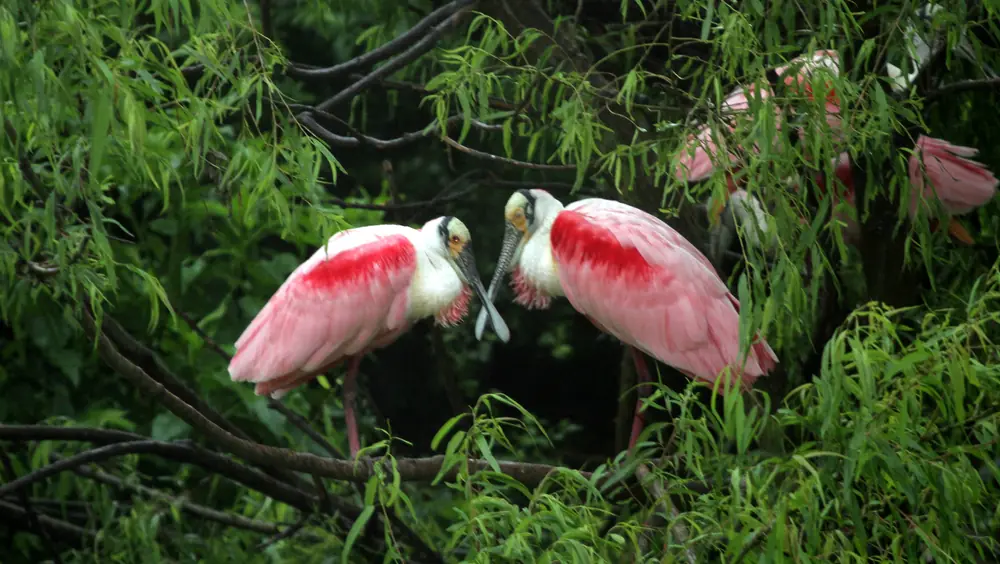
- Visit a rookery near sunset. Spoonbills, egrets and herons are building nests and hatching chicks on an island at High Island. The hour before dark is when the birds stream in to roost, and it is a good time to bring binoculars and children.
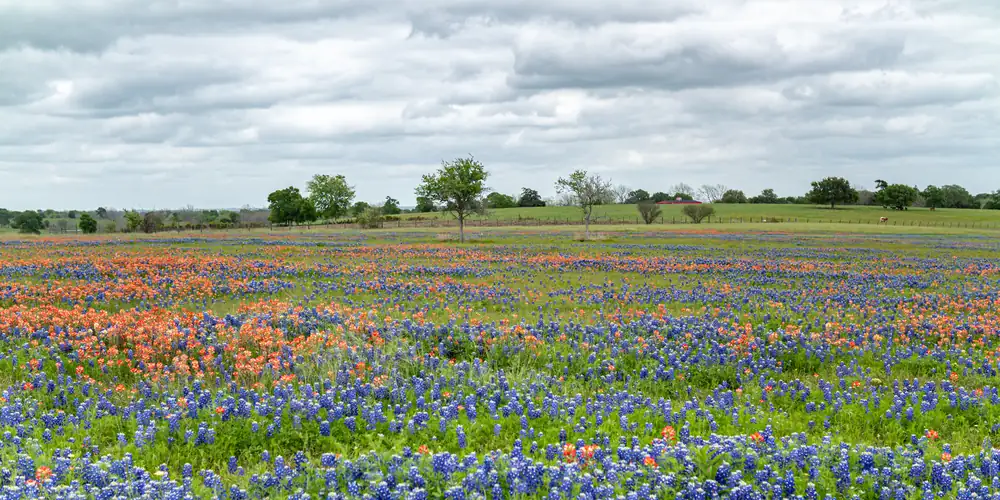
- Look beside the bluebonnets. Peak bluebonnet season is early April in Central and East Texas. Look for the red spikes of Indian paintbrush among them, then for the first seed pods as the flowers fade, and log the date you saw each one.
In the Naturalist’s Field Journal, a coast morning after a front is a fine “daily field log” entry, with the wind direction and the number of species. The evening roost at a rookery goes on “nest observed.” Bluebonnets, paintbrush and the pitcher plant’s yellow flower make a “colours of the day” page, a painted bunting goes on “birds I have seen,” and a bison calf or a turtle track belongs on “mammal watch” or “reading the signs.” A weather note for each storm day fits “reading the signs,” and the spot you sketched in March can go on “the same place twice.”
Regions used below: Panhandle and North Texas; Central Texas and the Hill Country; East Texas and the Piney Woods; Gulf Coast; South Texas and the Rio Grande Valley; Trans-Pecos and Big Bend.
Is April the best month for birds on the Texas coast?
For most birders, yes. Houston Audubon says the peak week of spring migration at High Island is traditionally the last week of April, with good days in early April and early May as well. The birds are Neotropical migrants that spent the winter in Mexico, Central America and South America, and many cross the Gulf of Mexico in one long flight after dark. What they find when they reach land depends on the weather.
-
Fallouts after a front
Early March to mid-May, most often in April · Wooded sanctuaries on the upper coast, including High Island, and groves along the Gulf shore
Houston Audubon explains that a fallout needs a strong, fast-moving cold front that crosses the coast and moves out over the Gulf in the middle of the day. Birds that left Mexico near sunset meet turbulent north winds and rain at the end of a crossing that takes roughly 18 hours in good conditions, and they drop into the first trees they find. On those mornings a small sanctuary can hold more species than a large forest inland, but the birds are exhausted. Stay on the paths, keep voices low and do not play recordings to draw them out. On a calm day with a south wind the same birds can fly over the coast and land far inland, so a fallout is a matter of luck.
-
What arrives when
Mid-April to mid-May for many of the showiest species · Woodlands and thickets across the eastern half of the state
The Texas Parks and Wildlife migration calendar gives windows by species. Yellow-billed cuckoos, golden-winged warblers and cerulean warblers are listed from mid-April to the beginning or middle of May, while ruby-throated hummingbirds run from late March to mid-May and black-and-white warblers from early March to late April. Eastern wood-pewees and magnolia, Blackburnian and bay-breasted warblers do not appear until late April and run into mid-May, so the best of the colorful warblers is a late-April and May story. Hudsonian godwits and buff-breasted sandpipers, birds of wet fields and short grass, are listed from mid-April to the beginning of May.
-
A bird count to join
Annually, with a tournament that has run April 15 to May 15 · Statewide, with teams choosing their own routes
The Great Texas Birding Classic is a long-running tournament that raises money for habitat. Its 2026 dates were April 15 to May 15, and the organizer’s page did not yet show 2027 dates when we read it, so check with Texas Parks and Wildlife before planning around it. You do not have to compete to benefit; a family can simply keep a list.
What is nesting on the Texas coast and in East Texas in April?
Spring migration is only half of April on the coast. Many other birds are not passing through, because they are here to raise young.
-
Spoonbills and egrets at Smith Oaks
March through May; Houston Audubon says by mid-April eggs are hatching and nest building is in full swing · Smith Oaks Bird Sanctuary rookery, High Island
Houston Audubon describes a U-shaped island in Claybottom Pond where roseate spoonbills, great, snowy and cattle egrets, tricolored and little blue herons, white ibis and neotropic cormorants nest, safe from ground predators. Great egrets arrive in March to display, and the colony has grown from 50 nests in July 1995 to 1,083 pairs by 2003, the sanctuary’s own figures. The sanctuary is open from dawn to dusk every day of the year, and the best viewing, it says, is the last hour before dark when birds come in to roost. Watch from the paths, use binoculars, and leave the island alone.
-
Swallow-tailed kites over the bottomlands
Most arrive from mid-March to early May · River bottomlands and swamps of far southeast Texas, such as the lower Sabine River and the Trinity River
The Texas Breeding Bird Atlas calls the swallow-tailed kite a rare to locally uncommon summer resident, now restricted to a small area in the southeast corner of the state, with nesting from late February to early July. It is a graceful black-and-white raptor with a long forked tail. Houston Audubon names the Trinity River, the Wallisville Lake area and Anahuac National Wildlife Refuge as places to look and says the birds are uncommon on the upper coast. Do not expect one, but scan the sky above tall trees.
-
Painted buntings return
Arrivals run March 5 to May 22, mostly April to mid-May · Brushy edges, roadsides and streamsides across much of the state
The Texas Breeding Bird Atlas says the state appears to hold more nesting painted buntings than any other, and that most birds arrive from April to mid-May. The male is red below, green above and blue-headed, but Texas Parks and Wildlife notes the bird stays in dense cover and rarely visits feeders, except when a male sings at dawn. Listen for the song from a thicket at first light, and expect the female to build her nest low in a bush, using spider silk to bind it.
Is early April the peak for bluebonnets, and what blooms with them?
Yes, in Central and East Texas. The Lady Bird Johnson Wildflower Center says to look for peak bluebonnet season in early April, with bloom typically running from late March into mid or late April. Cool weather delays it and warmth hurries it along, so the exact week changes from year to year. The Wildflower Center posts updates on its social media pages.
-
Indian paintbrush
March, April and May, with the best color in April · Prairies, roadsides and open hills, often beside bluebonnets
A Wildflower Center expert explains that paintbrush blooms in March, April and May with the bluebonnets. It is a hemiparasite: it makes some of its own food, but its roots attach to a host plant, often a grass, and without a host it stays stunted and never flowers. That is why paintbrush moved to a garden often dies. The center lists winecup, plains coreopsis, firewheel, blackfoot daisy and Texas bluebells as plants that bloom alongside it.
-
Roadside flowers and mowing
Through April, as flowers go to seed · Highway right-of-way statewide
The Wildflower Center says the Texas Department of Transportation times its roadside mowing so that bluebonnets and other wildflowers can set seed for the next year. If a field looks untidy in May, it is probably working. Pick nothing from a road shoulder that is not yours, and keep clear of private land. Many of the best fields are behind fences.
-
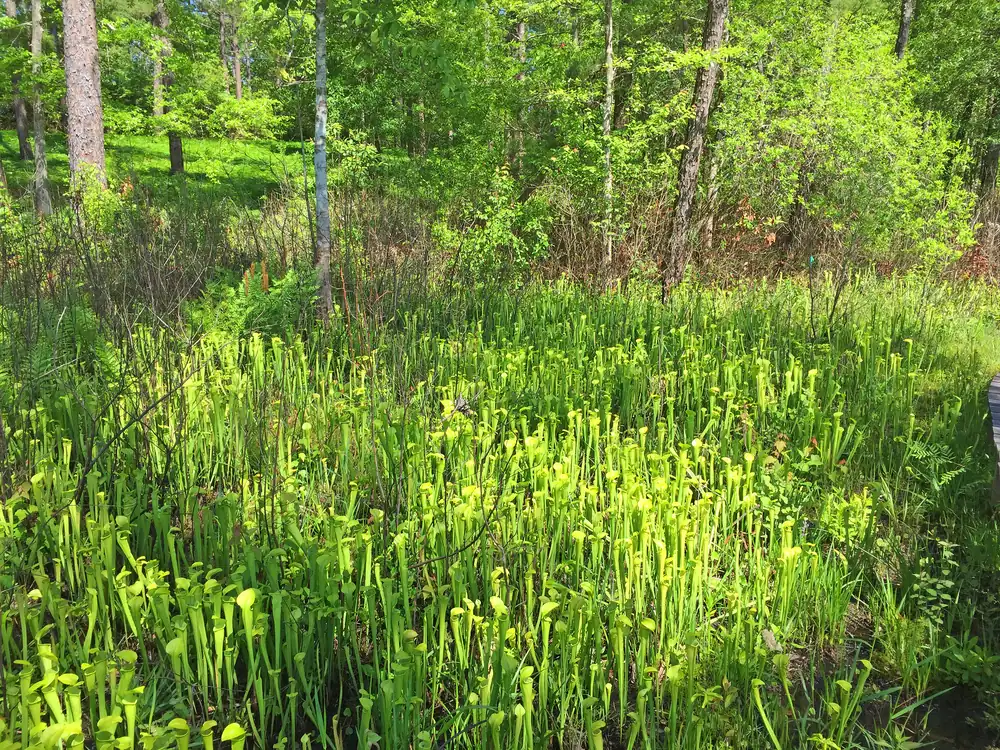
Pitcher plants in a wet pine bog
Large yellow flowers in late March and April · Pitcher Plant Trail, Turkey Creek Unit of Big Thicket National Preserve, near Warren
The National Park Service says the pitcher plants’ flowers appear in late March and April, while the plants themselves are small in spring and reach their peak size in summer and early fall. The trail is a one-mile round trip, with the first quarter mile on pavement and boardwalk through the bog and the rest on a dirt path that can be muddy after rain. The preserve holds four of the six kinds of carnivorous plant found in North America: pitcher plants, sundews, bladderworts and butterworts. Rangers offer free guided walks in spring and summer; call the preserve at 409-951-6700 for times. Stay on the boardwalk, because bog plants are fragile and slow to recover.
If you want the whole story of the season’s bloom, the Texas March page covers where flowers begin, and our frost dates page shows when tender plants are safe in your own town.
When does the Colima warbler return to Big Bend?
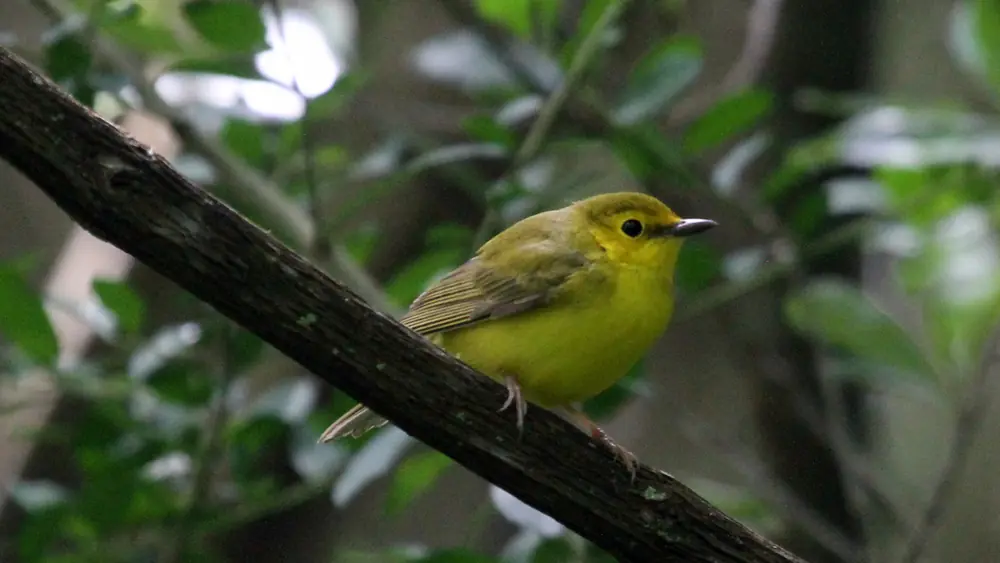
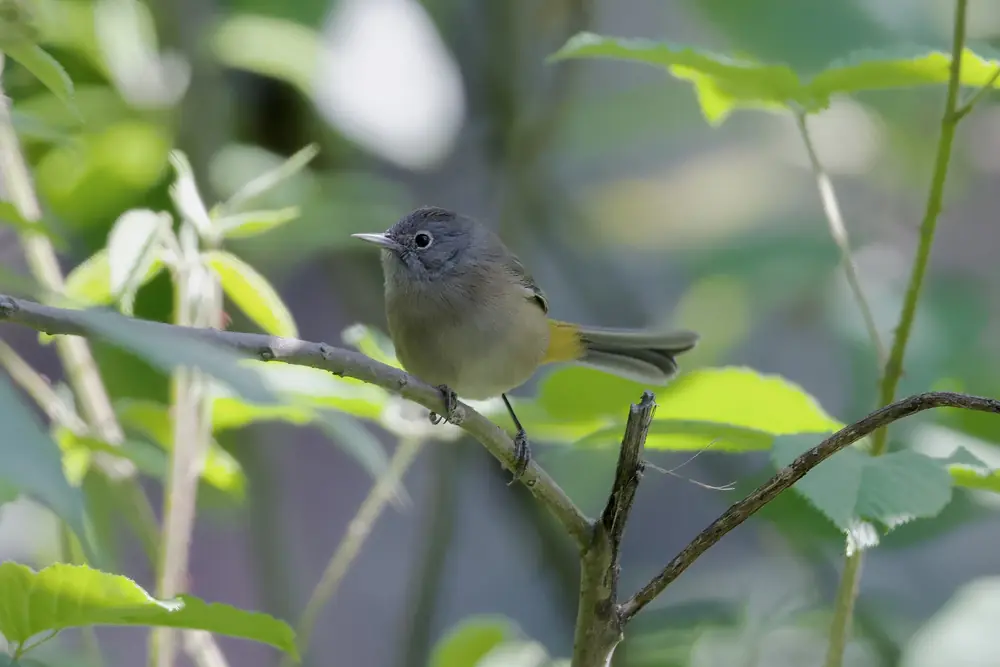
Big Bend National Park reports 450 bird species, but only 56 live there all year, which is why spring is a good time to visit. One of the rarest to look for is a small gray warbler that nests nowhere else in the United States.
-
A Mexican warbler in a Texas canyon
Usually begins to arrive in late April and is gone by August · The oak woods of the high Chisos Mountains, around Boot Canyon and along the Laguna Meadows trail
The National Park Service says Colima warblers are found only in Big Bend National Park, mainly in the high Chisos. They usually start to arrive in late April, so the first weeks of the month are early. Boot Canyon is reached by 4.5 miles of steep, rugged trail, and the park suggests bringing plenty of water and considering an overnight campsite. Citizen scientists have surveyed territories from Green Gulch to Boot Canyon every five years since 1967. Ask at the visitor center about recent sightings, since birders gather there in late April hoping for news of the first arrivals.
-
Birding the lower elevations
All month · River corridor, desert springs, grasslands and woodlands
The park advises visiting every habitat, not only one, since riparian corridors, desert springs, open desert, grasslands and pinyon, oak and juniper woods each hold different birds. Early morning is the best time at low elevations. Carry water, wear a hat and check conditions at a visitor center before a long hike.
What is being born, hatching or spawning in Texas in April?
Spring is the season of young animals. Remember that a calf, fawn or hatchling that seems alone almost never is.
-
Bison calves at Caprock Canyons
Calving usually runs March through May · Caprock Canyons State Park and Trailway, near Quitaque
Caprock Canyons holds the official Texas State Bison Herd, which Texas Parks and Wildlife describes as more than 300 strong. The newborn calves are reddish-brown and weigh 30 to 60 pounds, and park officials recommend staying at least 50 yards from the bison. Texas Parks and Wildlife reminds visitors that bison are wild animals and posts safety advice on its herd page. The park also hosts a colony of Brazilian free-tailed bats in Clarity Tunnel in the warmer months.
-
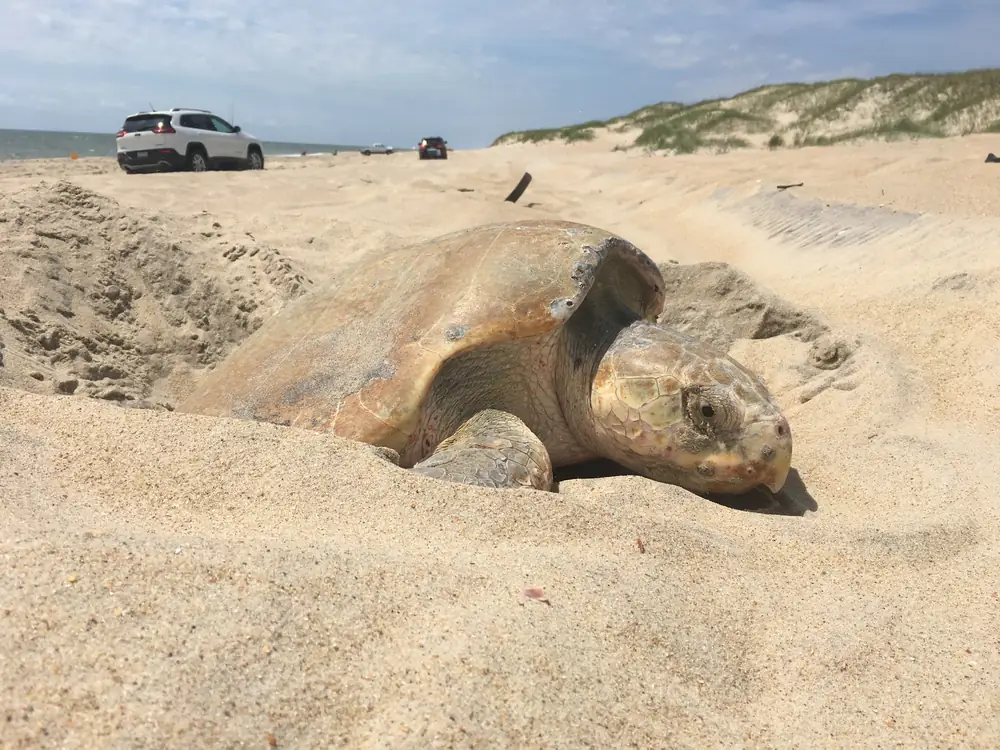
Kemp’s ridley turtles nesting by day
Mid-March through August · Padre Island National Seashore and other Gulf beaches
The National Park Service says Kemp’s ridleys are the only sea turtles that nest mostly in daylight, perhaps because it helps protect eggs from raccoons and other night hunters. It estimates about 55 females nest in Texas each year, after the species’ nests peaked near 20,000 across Texas and Mexico combined in 2009, a number that fell in 2010 and has not recovered. If you see a turtle on a beach, stay well back and report it through the seashore’s website, or call the Malaquite Visitor Center at 361-949-8068. Hatchling releases follow later in the season, and dates are posted by the park.
-
Monarchs of the new generation
Spring, as the first offspring develop · Anywhere native milkweed is up, such as antelope horn milkweed
Texas Parks and Wildlife says the monarchs that crossed from Mexico lay eggs on emerging milkweed, and that their offspring continue north, leaving most of Texas behind. So in April the caterpillars on a milkweed in your yard may be the first generation of the year. Journey North takes sighting reports, and the iNaturalist project called Texas Milkweeds and Monarchs maps where the plants grow.
-
White bass in the rivers
Texas Parks and Wildlife gives February to May for the run in the Llano River arm of Lake LBJ · River arms above Hill Country lakes, such as the Llano and Colorado rivers
White bass leave the lakes and push up the rivers to spawn, and the timing depends on rain and water temperature. April is late in the run for some rivers and still in it for others. Check Texas Parks and Wildlife’s fishing reports and regulations for the water you plan to fish, and learn the license rules before you go.
How warm is April in Texas, and is this the start of tornado season?
April makes the whole state warm. The table below, from NOAA’s 1991 to 2020 normals, gives an April afternoon high of 72 °F in Amarillo and 80 °F or more everywhere from Midland to Brownsville, where it reaches 85.7 °F. The average overnight low is 42.5 °F in Amarillo and 67.7 °F in Brownsville, and snow is almost gone, with an average of 0.5 inch in Amarillo and a trace elsewhere. The contrast is in rainfall: El Paso averages 0.17 inch for the month and Houston 3.95 inches.
For the forecast area of the Fort Worth weather office, covering North and Central Texas, the tornado tally for 1950 through 2025 is 555 in April and 525 in May, roughly seven a year in each. That makes April and May the heart of the season there, and Dallas–Fort Worth’s average April rainfall of 3.22 inches arrives largely in storms.
| Station | Average high | Average low | Snowfall | Precipitation |
|---|---|---|---|---|
| Amarillo | 72.4 °F | 42.5 °F | 0.5 in | 1.45 in |
| Lubbock | 76.0 °F | 46.3 °F | 0.1 in | 1.33 in |
| El Paso | 80.0 °F | 53.3 °F | 0.0 in | 0.17 in |
| Midland | 80.5 °F | 51.8 °F | 0.1 in | 0.70 in |
| Dallas–Fort Worth | 76.1 °F | 55.2 °F | 0.0 in | 3.22 in |
| Austin (Camp Mabry) | 80.3 °F | 58.9 °F | 0.0 in | 2.42 in |
| San Antonio | 80.3 °F | 58.4 °F | 0.0 in | 2.42 in |
| Houston (IAH) | 80.1 °F | 59.8 °F | 0.0 in | 3.95 in |
| Corpus Christi | 82.6 °F | 64.2 °F | 0.0 in | 2.04 in |
| Brownsville | 85.7 °F | 67.7 °F | 0.0 in | 1.47 in |
Texas Department of Transportation calls flash flooding the leading cause of weather-related deaths in the state, and says as little as six inches of fast-moving water can make a driver lose control. Never drive through a flooded crossing, and remember that creeks you want to wade can rise after rain miles upstream. Each month NOAA’s Climate Prediction Center issues a fresh seasonal outlook, which you can read on its three-month outlook page. Check the local weather forecast before heading out, and learn from the cloud guide how towering cumulus can become afternoon storms.
Can Texas still get a freeze in April?
Rarely, and only in the north and west. The NOAA normals below give an early date for the last 32 °F night, the median, and a late date that marks when roughly nine of every ten springs have stopped freezing. Amarillo’s median last freeze is April 13 and the late date is April 29, so a cold night after the bluebonnets and the first peach blossoms is still possible on the High Plains. Midland’s late date is April 8. For Austin, San Antonio, Houston and Brownsville the late dates have already passed by March 17.
| Station | One year in ten | Median | Nine years in ten |
|---|---|---|---|
| Amarillo | Mar 29 | Apr 13 | Apr 29 |
| El Paso | Feb 12 | Mar 2 | Mar 19 |
| Midland | Feb 28 | Mar 18 | Apr 8 |
| Dallas–Fort Worth | Feb 17 | Mar 8 | Mar 26 |
| Austin (Camp Mabry) | Jan 23 | Feb 20 | Mar 14 |
| San Antonio | Jan 29 | Feb 26 | Mar 17 |
| Houston (IAH) | Jan 12 | Feb 13 | Mar 12 |
| Brownsville | Dec 11 | Jan 6 | Feb 1 |
Treat these dates as odds. Gardeners on the Panhandle usually wait until after the late date for tender transplants, and everywhere else a clear, still night after a front is the one to watch. Our Texas frost dates page has the numbers for your own town.
How much daylight do Texas cities gain in April?
April adds 41 minutes of daylight in Brownsville and 60 in Amarillo, as the table shows for April 1 and April 30. These are day lengths, sunrise to sunset, and the clock change that began on March 14 does not alter them; clock times for sunrise and sunset now are daylight time everywhere in Texas.
| City | Apr 1 | Apr 30 | Gained | Per day |
|---|---|---|---|---|
| Amarillo | 12 h 35 m | 13 h 35 m | 60 min | 2.1 min |
| Lubbock | 12 h 33 m | 13 h 30 m | 57 min | 2.0 min |
| Dallas | 12 h 32 m | 13 h 27 m | 55 min | 1.9 min |
| El Paso | 12 h 30 m | 13 h 24 m | 54 min | 1.9 min |
| Austin | 12 h 30 m | 13 h 19 m | 49 min | 1.7 min |
| Houston | 12 h 29 m | 13 h 18 m | 49 min | 1.7 min |
| Corpus Christi | 12 h 27 m | 13 h 12 m | 45 min | 1.6 min |
| Brownsville | 12 h 26 m | 13 h 07 m | 41 min | 1.4 min |
Daylight keeps lengthening until the June solstice. Our daylight tool shows sunrise and sunset for your own town.
What is in the Texas night sky in April 2027?
April nights are mild. The planets are mostly in the evening or the dark before dawn, the Moon is a poor friend of the month’s meteor shower, and the Milky Way’s core begins to clear the horizon again. The moon phases tool gives times for any town.
-
Venus before dawn, with a crescent moon
Venus all month; the thin Moon passes it on the mornings of April 3 and 4 · Low in the east before sunrise
Venus keeps shining in the dawn, but it is slipping toward the Sun, rising about an hour and a quarter ahead of it on the first day of the month. A slim waning crescent, roughly nine percent lit, hangs a few degrees from the planet in the dawn sky on both April 3 and April 4. Saturn is out of sight all month, since it lines up with the far side of the Sun on April 7.
-
Jupiter and Mars in the evening
The Moon joins Jupiter on the evenings of April 14 and 15 · High in the south and southwest after dark
Jupiter, brilliant in Leo, stays up until nearly dawn at the start of the month, setting some nine hours after the Sun. The waxing Moon, about two-thirds lit, passes just one degree from it as darkness falls on April 14 and again on April 15. By the 15th it also stands roughly three degrees from Mars, a steady orange point now fading to about magnitude zero. Both pairings fit in one phone photograph on a tripod.
-
The Pink Moon
Full at 5:27 p.m. CDT on Tuesday, April 20 (4:27 p.m. MDT in El Paso) · Rising in the east at dusk
The Pink Moon is the April full moon, a name tied to spring flowers; it is also called the Sprouting Grass Moon, according to Sea and Sky. It is full in the late afternoon, so the best evening is April 20, when it rises at about 7:58 p.m. in Houston. The pink in the name is not a color in the sky.
-
The Lyrid meteors, spoiled by the Moon
Active about April 14 to 30; peak about 8:41 p.m. CDT on Thursday, April 22 · Look away from the Moon, toward the north and east
A bright, nearly full Moon comes up around 10 p.m. in Houston that night. Before it rises the sky is dark, though the shower’s radiant, in the constellation Lyra, is then still low toward the northeast. Sea and Sky says the Moon will wash out most of the fainter meteors this year. Expect a handful an hour at best, and treat any bright streak as a bonus. The shower occasionally surprises observers, but nobody can predict when.
-
The Milky Way before dawn
April 1 to 15 and April 27 to 30 in the southern half of the state · Dark sites such as Big Bend and the Hill Country
Near Austin and Houston (about 30 degrees north) our own calculation finds the Milky Way’s bright core at least 10 degrees above the horizon, with no moon in the sky, for as long as 2.4 hours before sunrise on those mornings. The new moon on April 6 sits in the middle of the first window. Step outside well before first light, and give your eyes a good while to adjust.
| Phase | Date | Time |
|---|---|---|
| New moon | Tuesday, Apr 6 | 6:51 p.m. CDT (5:51 p.m. MDT) |
| First quarter | Tuesday, Apr 13 | 5:56 p.m. CDT (4:56 p.m. MDT) |
| Full moon, the Pink Moon | Tuesday, Apr 20 | 5:27 p.m. CDT (4:27 p.m. MDT) |
| Last quarter | Wednesday, Apr 28 | 3:18 p.m. CDT (2:18 p.m. MDT) |
Earth Day falls on Thursday, April 22, which is also the Lyrid peak night, so a lights-out evening makes a good family excuse to look up.
What can Texas families do outdoors in April 2027?
- Count species in a day. The Great Texas Birding Classic is an annual spring tournament; its 2026 dates were April 15 to May 15, and 2027 dates were not posted when we read the page. Check with Texas Parks and Wildlife before planning around it.
- Join the City Nature Challenge. Organizers post April 30 to May 3, 2027, for taking photographs and May 4 to 16 for naming them. Photograph any wild plant or animal with iNaturalist and see whether your city is taking part.
- Watch a rookery at dusk. Smith Oaks at High Island is open from dawn to dusk every day, and the evening roost is the show. Bring binoculars and a quiet voice.
- Walk the Pitcher Plant Trail. The one-mile loop in the Big Thicket is flat and partly boardwalk, and rangers lead free walks in spring and summer.
- Celebrate Earth Day on April 22. The EPA marks the day each year on that date; a backyard bird count, a native plant or a litter walk all count.
- Check the park calendar. State parks often hold wildflower hikes and bird walks in April, but the 2027 listings are not posted yet, so look at the Texas Parks and Wildlife calendar nearer the date.
- Walk Santa Ana. In the Rio Grande Valley, the refuge’s nature tram runs November through March, but the trails stay open every day from sunrise to sunset, and the refuge highlights malachite butterflies and noisy chachalacas at dawn.
- Report a sighting. Journey North takes monarch reports, and iNaturalist’s milkweed project shows where the plants grow.
Listings change, so confirm any event shortly before you go. The Naturalist’s Field Journal has plates for a spring list or a first-bloom log. For the month before, see the Texas March page; the nature guides index links all states and months.
Safety notes for April in Texas
- Spring turkey (Texas Parks and Wildlife, 2027). In the South Zone the season is March 20 to May 2. The North Zone season runs April 3 to May 16, with a youth-only weekend on March 27 and 28 and another on May 22 and 23. The one-turkey counties are open April 1 to 30, and the East Zone runs April 22 to May 14. Confirm counties and bag limits on the department’s page.
- Hunter orange. The department requires 400 square inches of orange, with orange headgear and 144 square inches showing on the chest and back, for people on public hunting land in the daylight hours when firearm hunting is allowed. Hunters of turkey, migratory birds, alligators and desert bighorn sheep are exempt from it, so anyone walking public hunting land in turkey season may still want orange, since camouflaged hunters could be calling nearby.
- Storms and flash floods. Decide where you would shelter before the sky darkens, and keep alerts on. Do not cross a flooded road or low-water crossing, since six inches of fast water can sweep a vehicle off the road.
- Ticks. Texas A&M AgriLife says tick numbers rise with the warm months and typically peak in summer. Wear light clothing with pants tucked into socks, check yourself and pets after a walk, and pull a tick out by grasping it close to the head. Lone star tick bites can trigger a red-meat allergy called alpha-gal syndrome.
- Bison and other young animals. Stay at least 50 yards from bison at Caprock Canyons, and leave fawns, calves and nestlings where they are.
- Beaches and turtles. Keep well back from a nesting sea turtle and call the Padre Island visitor center if you find one.
- Wet trails. The boardwalk at the Pitcher Plant Trail ends in dirt that gets muddy after rain, and the Boot Canyon trail in Big Bend is steep. Carry water on both.
- Roadside flowers and private land. Park completely off the pavement to photograph flowers, respect fences, and look before stepping into tall grass.
Sources (39)
- Houston Audubon: spring migration on the upper Texas coast
- Houston Audubon: spring coastal migration and fallouts
- Texas Parks and Wildlife: bird migration times in Texas
- Houston Audubon: Smith Oaks Rookery, High Island
- Texas Breeding Bird Atlas (Texas A&M): swallow-tailed kite
- Houston Audubon: swallow-tailed kite
- Texas Breeding Bird Atlas (Texas A&M): painted bunting
- Texas Parks and Wildlife: painted bunting
- Lady Bird Johnson Wildflower Center: bluebonnet FAQ
- Lady Bird Johnson Wildflower Center: Indian paintbrush, expert answer
- Texas Department of Transportation: bluebonnets and wildflowers
- National Park Service: Pitcher Plant Trail, Big Thicket
- National Park Service: hike the Pitcher Plant Trail
- National Park Service: carnivorous plants of Big Thicket
- National Park Service, Big Bend: in search of the Colima warbler
- National Park Service, Big Bend: birds
- Texas Parks and Wildlife: Caprock Canyons State Park and Trailway
- Texas Parks and Wildlife: the Texas State Bison Herd story
- NewsChannel 10: Caprock Canyons welcomes a newborn red bison calf (March 2026)
- National Park Service: Kemp’s ridley sea turtles at Padre Island National Seashore
- Texas Parks and Wildlife: Lake LBJ fishing guide (white bass run)
- Texas Parks and Wildlife: Texas Monarch Watch
- Journey North: monarch butterflies
- NOAA NCEI: 1991–2020 monthly climate normals, April (data API)
- National Weather Service Fort Worth: tornadoes by month, 1950–2025
- Texas Department of Transportation: flash floods
- Climate Prediction Center: official 90-day outlooks
- Amphibian Publishing: Texas frost dates (NOAA 1991–2020 normals)
- NOAA Global Monitoring Laboratory: solar calculator (the equations behind the daylight table)
- U.S. Naval Observatory: moon phases, 2027 (data API)
- Sea and Sky: astronomy calendar of celestial events, 2027
- Texas Parks and Wildlife: 2026–27 hunting season dates (spring turkey 2027)
- Texas Parks and Wildlife: hunter orange requirements
- Texas Parks and Wildlife: Great Texas Birding Classic, dates and deadlines
- City Nature Challenge
- U.S. Environmental Protection Agency: Earth Day
- Texas A&M AgriLife Today: keep your family safe from ticks
- U.S. Fish and Wildlife Service: visiting Santa Ana National Wildlife Refuge
- Photos via Wikimedia Commons; licenses and photographers are credited under each picture