What to look for in nature in Texas this February
Meteorological winter ends with February, yet for a surprising number of Texas animals this is already the first month of spring. On the coastal prairie west of Houston, the rarest grouse in the country gathers at dawn to stamp and boom. In East Texas clearings, woodcock spiral into the dusk, and in the pine woods near Bastrop an endangered toad trills on warm, wet nights. Cranes lift off from the Panhandle lakes, purple martins pour back in, and in Big Bend the tallest bluebonnets in the state begin to open. A blue norther can still bring ice or snow. This guide follows the month from the Llano Estacado to the Rio Grande.
Other months in Texas: October, November, December, January.
Start here
- Stand at a clearing at dusk. On a calm, mild evening, find the edge of a young pine stand or an overgrown field in East Texas and wait as the light fades. A nasal “peent” from the ground, then a twittering spiral overhead, means a male woodcock is displaying.
- Count birds for four days. Bird counters worldwide tally for four days, Friday, February 12, to Presidents’ Day. A quarter hour of counting from a porch or a park bench, logged through eBird or Merlin, counts as a full checklist.
- Find the two bright planets. Both bright planets of Leo reach opposition this month: Jupiter on Wednesday, February 10, and Mars on Friday, February 19. After dark in the east, Jupiter is the dazzling one; Mars is the steady orange point nearby.
In the Naturalist’s Field Journal, give an evening of woodcock display its own “dusk and dawn watch” page, noting the minute the first peent sounded and when the last flight ended. Trilling toads or frogs on a warm rainy night can go on “a map of sounds,” noting which direction each chorus came from. Use “colours of the day” for a roadside of Big Bend bluebonnets or a yellow agarita in bloom, and enter your Great Backyard Bird Count lists on “birds I have seen.” If you sketched a bluebonnet rosette in January, February is the time for your second visit on “the same place twice.”
Regions used below: Panhandle and North Texas; Central Texas and the Hill Country; East Texas and the Piney Woods; Gulf Coast; South Texas and the Rio Grande Valley; Trans-Pecos and Big Bend.
When do Attwater’s prairie-chickens start booming?
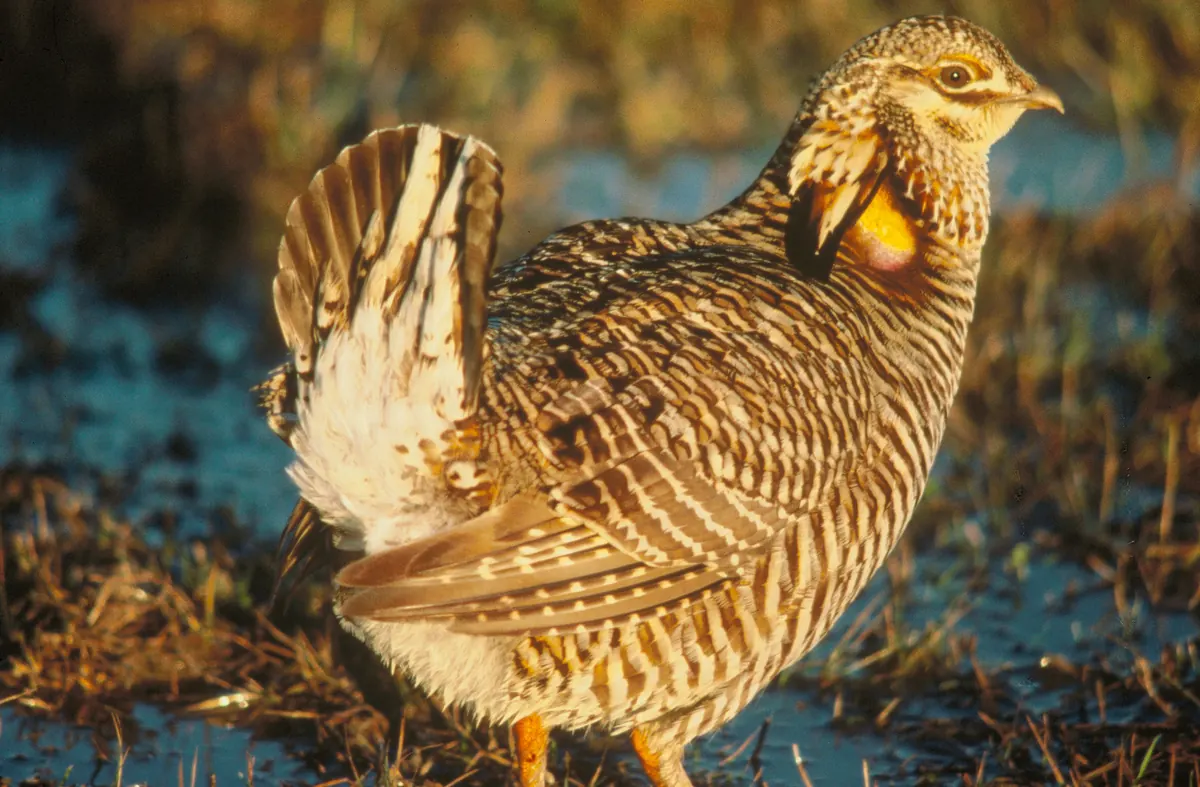
Late in winter, on a few patches of native coastal prairie, a grouse that came close to vanishing begins its spring display. The Attwater’s prairie-chicken is a small, brown-barred grouse that once lived on some six million acres of coastal tallgrass prairie. The U.S. Fish and Wildlife Service says less than 1 percent of that habitat remains, and only two wild populations survive: one on Attwater Prairie Chicken National Wildlife Refuge, near Eagle Lake in Colorado County, and one on private ranchland in Goliad County.
-
Males gathering on the booming grounds
Gathering from late January; displays February to May · Short-grass openings on the coastal prairie, mainly Attwater Prairie Chicken National Wildlife Refuge
The Service says males start collecting on their display sites from late January into February and keep dancing from February to May. Each spot is called a booming ground, or lek. At first light every male claims a small patch of it, raises his tail, droops his wings and lowers his head, then inflates the bright yellow air sacs on the sides of his neck and lets out a low, hollow boom while stamping his feet very fast. The sound can carry about half a mile across flat grass. The refuge describes the main mating season as late February through early April, so a February visit catches the start rather than the height.
-
How to see them
Sunrise to sunset; the birds are most active early in the morning · Refuge auto tour loop and guided van tours
The refuge’s trails and auto tour loop stay open daily between sunrise and sunset; from November through May the visitor center keeps 8 a.m. to 3:30 p.m. hours, Tuesday through Saturday. Staff advise a slow drive and a close look at spots where the grass is short or the ground bare, early in the day. Guided van tours of about 90 minutes usually run on the first Saturday of the month from May through February, and on the first and third Saturdays in March and April, by reservation up to three months ahead. No 2027 tour dates were online yet in early October, so ask the refuge before planning a trip.
-
Raised birds, released birds
Year-round effort · Captive breeding facilities and the two release sites
The wild flock depends on people. Fewer than 200 birds are kept for breeding at four facilities, and the Service says a little more than 300 young birds are released each year on average. Besides lost and broken-up prairie, invasive red imported fire ants have cut the supply of insects that chicks need in their first weeks.
At dawn, watch from your car.
Where can I see a woodcock sky dance in Texas?
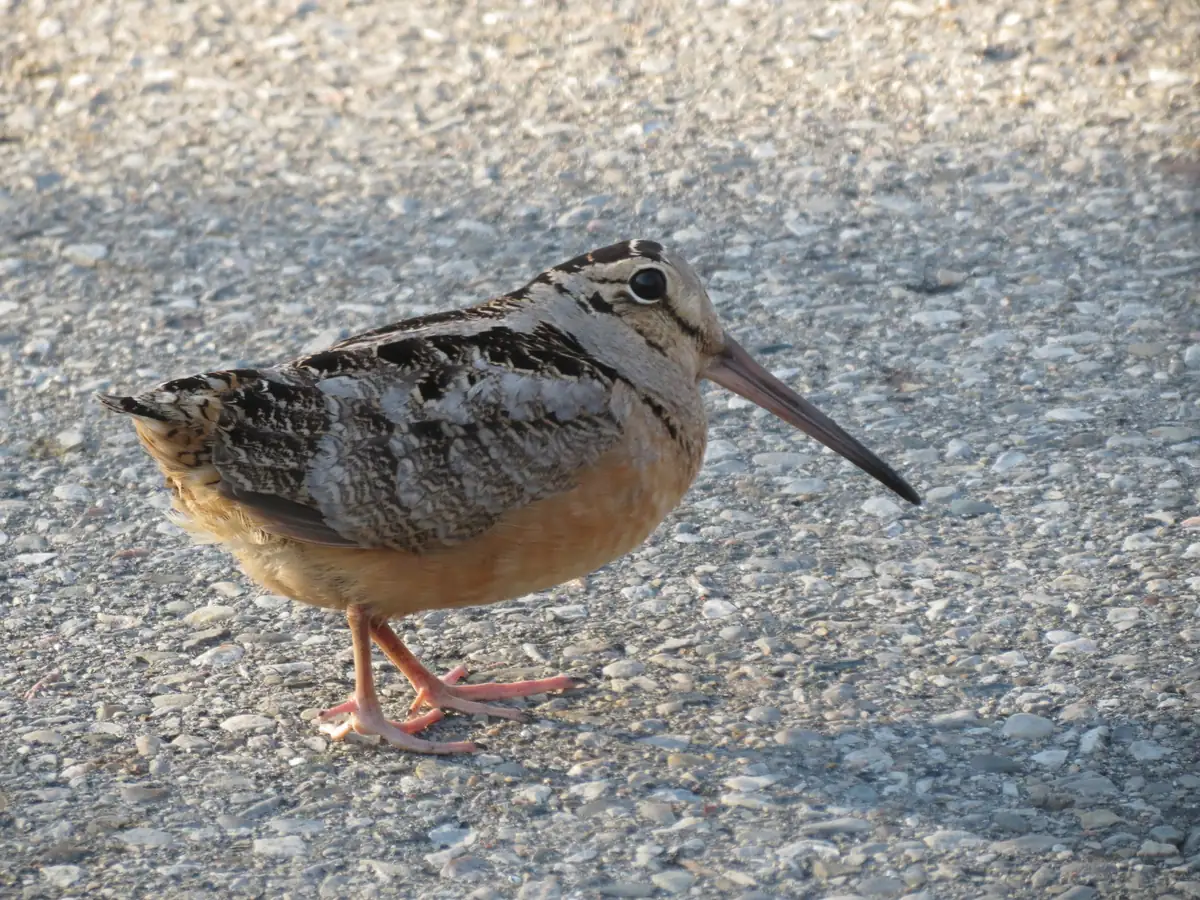
The American woodcock is a plump, long-billed bird of damp woods that spends the day hidden among young pines and briars. Most Texans never see one. Yet in February, East Texas holds one of the oddest courtship displays of any American bird, and it happens at dusk in places anyone can reach.
-
Peenting and spiral flights
Dusk on calm, mild evenings, all month; courtship begins earlier in winter · Clearings, young pine plantations, overgrown pastures, firebreaks and woods roads in the Pineywoods
According to the Texas Breeding Bird Atlas, woodcock courtship flights in Texas begin in December, and by the middle of January the males hold territories. Every male displays from an opening: a very young pine plantation, an old field going back to brush, a road or a clearing in mature timber. Just after sunset he walks out into the open and calls a buzzy, nasal “peent,” which Texas Parks and Wildlife magazine compared to a finger running along the teeth of a comb. Then he springs into the air and climbs in widening circles, his wings twittering, Texas Parks and Wildlife magazine describes a narrowing corkscrew that can top out as high as 350 feet, then a fluttering drop with a liquid, chirping song, ending near where he started. Wait quietly beside the clearing; he usually flies again within minutes.
-
Nests on the ground
Most nests begun in February; chicks possible by late February · The Pineywoods, with records in the Post Oak Savannah and along the coast
The atlas notes that most Texas woodcock nests are started in February, a few as early as January, and with incubation of 20 to 22 days, chicks can be out by the end of the month. Eggs and chicks are found most often in the Pineywoods, and they have been recorded in Brazos County and along the Gulf Coast as well. The hen sits tight on a shallow scrape among dead leaves, and her mottled back is nearly impossible to see; keep dogs leashed in woodcock country this month. Texas’s woodcock hunting season now closes on January 31, before most nesting begins.
Bring a flashlight for the walk out, but keep it off while you listen. Note the minute of the first call each evening; it slips later as the days lengthen.
When do Houston toads call, and where do they live?
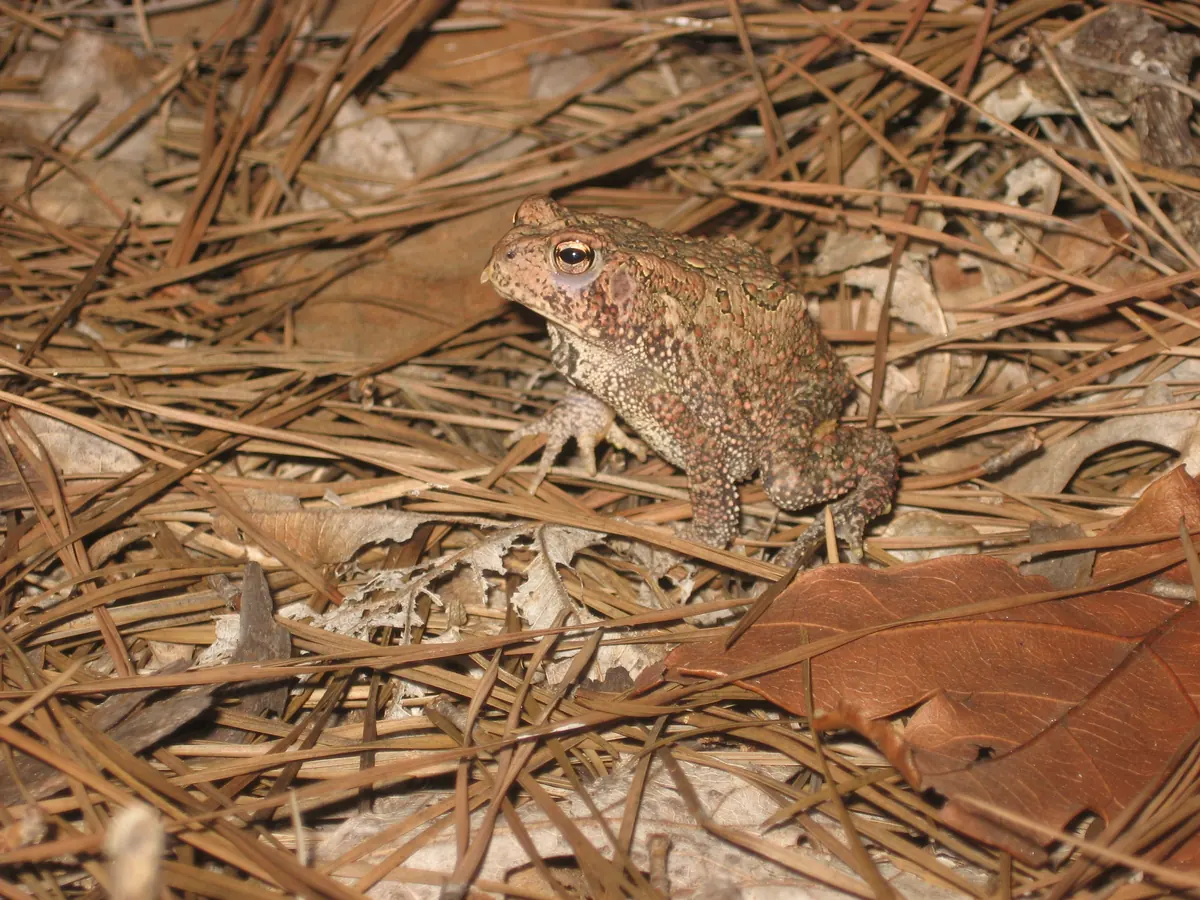
The Houston toad is a federally endangered species, and despite its name it had not been seen in Houston since the 1970s, according to the Houston Zoo. Today the U.S. Fish and Wildlife Service has detected it in nine counties of east-central Texas, among them Bastrop, Lee, Milam, Robertson, Leon, Burleson, Austin, Colorado and Lavaca, where it lives in mature pine and oak forest with shaded breeding pools. February is when its short breeding nights usually begin.
-
Trills like small bells
Late January to June; most breeding in February and March · Shallow, shaded ponds in the pine and oak woods of Bastrop County and nearby counties
Bastrop County’s habitat plan puts the breeding season from January to June, with a peak in February and March. Males gather at a pond for just a few nights at a time and call in a group, or chorus. The call is a high, clear trill that the county likens to the tinkling of small bells. The Service says choruses seem to be set off by rain and warm nights, and it adds a curious detail: studies have found the toads generally stay quiet in the seven to ten days before a full moon. With the Snow Moon full on February 20, the darker, waxing nights early in the month and the waning nights after the full moon are the likelier times to hear one.
-
A million eggs a year
February through spring · Houston Zoo breeding program and release ponds in Bastrop County
The Houston Zoo starts pairing its captive toads in February. Each strand it collects holds 4,000 to 10,000 eggs, and staff carry the strands to ponds in Bastrop County to hatch in the wild; in 2019 alone, the zoo released 985,000 eggs. The Service lists broken-up habitat, drought, feral hogs and invasive fire ants among the threats, and the zoo reported in 2020 that wild choruses were being recorded and egg strands found in the wild again, a hopeful sign.
Elsewhere in East and Central Texas, the frogs of January keep calling on mild wet nights. TPWD’s Texas Amphibian Watch has recordings of every Texas frog and toad, the Houston toad included, so you can match what you hear.
Which birds leave Texas in February, and which come back?
February is a hinge month for Texas birds. Wintering flocks begin pulling north, the first true spring migrants arrive, and owls that laid eggs in the cold are now feeding chicks.
-
Sandhill cranes lifting off the Panhandle lakes
Peak lasts until about mid-February, then numbers fall · Muleshoe National Wildlife Refuge and the saline lakes and playas of the South Plains
Muleshoe National Wildlife Refuge, on the South Plains near the New Mexico line, has three salt lakes where sandhill cranes roost through the winter. The Handbook of Texas, published by the Texas State Historical Association, says crane numbers there peak between December and mid-February, often at 100,000 or more, and that a record 250,000 were counted in February 1981. After the middle of the month the flocks thin as birds head toward their northern breeding grounds. At dawn the cranes leave the roost lakes in long, rattling lines to feed in nearby fields. The lakes are often only partly full, so check conditions with the refuge before a long drive.
-
Purple martins coming in
Mid-February to early March · Martin houses and gourd racks statewide, earliest in the south and east
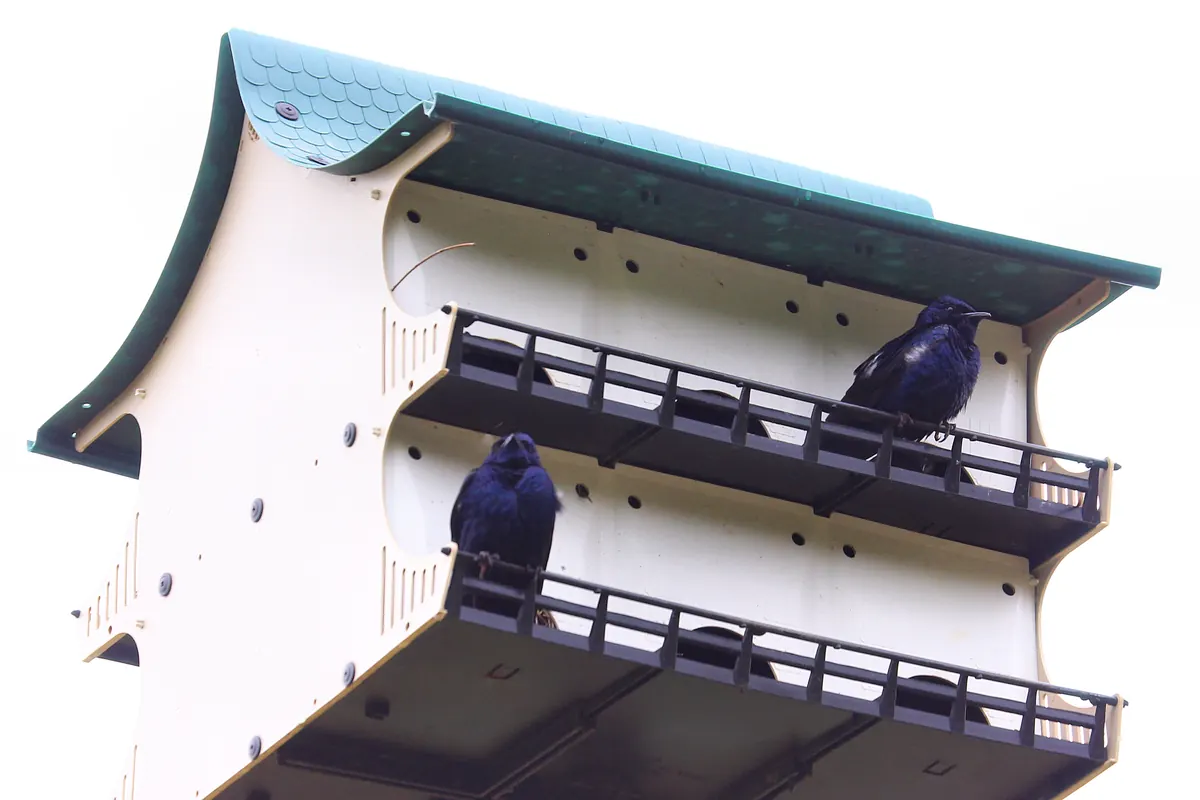
The few scouts that turned up in January were the advance trickle. TPWD’s bird migration calendar gives mid-February to early March as the main arrival time for purple martins in Texas. Landlords who have been waiting should have clean houses up and the entrance holes open now. A martin colony is noisy: listen for liquid, gurgling chatter from birds circling high over town in the late afternoon.
-
Owlets in old nests
Young in nests from about the start of February · Statewide, in borrowed stick nests, tree cavities and ledges
Winter clutches have hatched: the Texas Breeding Bird Atlas has found young in Texas nests from January 31 on. Downy white owlets peer over the rim of an old hawk nest while a parent roosts close by, often in the next tree. Keep your distance; a great horned owl defending young is fierce.
The whooping cranes stay on the coast a while longer before heading north in spring; the Port Aransas Whooping Crane Festival, listed with the family events below, catches them in their last weeks here.
When do bluebonnets bloom in Big Bend?
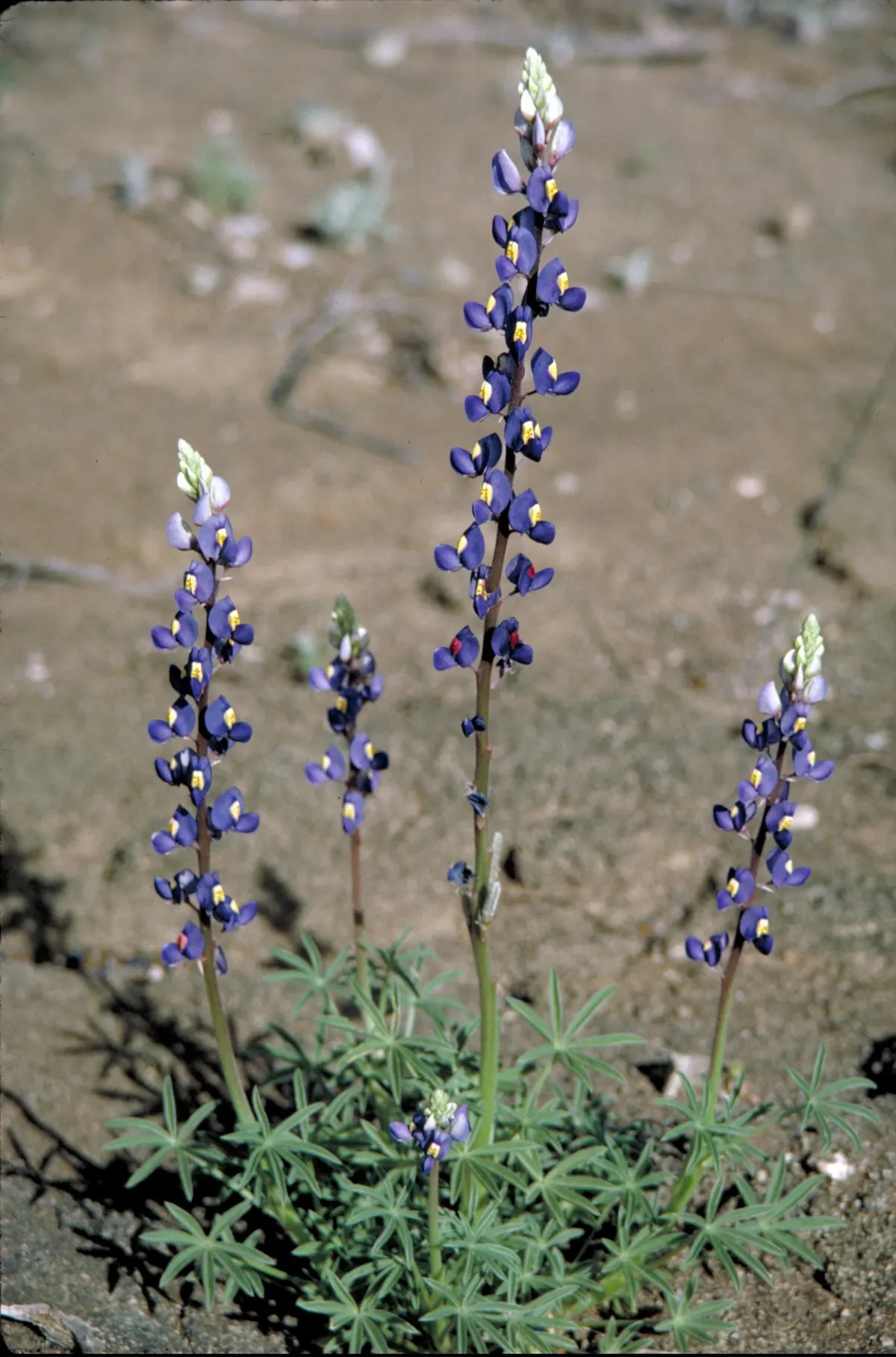
Most of Texas waits until March and April for bluebonnets. In the Chihuahuan Desert of Big Bend National Park, a different and much taller species blooms first. The National Park Service lists the Big Bend bluebonnet, Lupinus havardii, as the tallest of the Texas bluebonnets and gives its bloom season as February through March.
-
Big Bend bluebonnets along the park roads
February and March; best years follow a wet winter · Big Bend National Park, especially along the paved roads
The Park Service says this species grows thickly along the park’s paved roads, and in a superbloom year it turns whole hillsides blue. How good the show is depends on winter rain. The park notes that a rainy winter can set up a spectacular early-spring bloom, while even in a dry year the dependable spring bloomers, bluebonnets among them, still put on some color.
The park also lists feather dalea and snapdragon vine, two smaller purple bloomers, as starting in February.
Back east, last fall’s bluebonnet rosettes are still flat on the ground. The Wildflower Center gives their main bloom as March through May, so February is the month to watch the rosettes fatten.
Which Texas trees and shrubs flower in February?
The Lady Bird Johnson Wildflower Center lists several native woody plants that start flowering in February, often on bare twigs, and they give bees some of the year’s first nectar.
-
Agarita
Blooms February to April · Rocky hills, limestone slopes and open woods from the Hill Country and coastal South Texas west through the Trans-Pecos
Agarita is a stiff, gray-green evergreen shrub whose leaves, each split into three spiny leaflets, look like small holly leaves. In late winter it covers itself with small yellow flowers, and the Wildflower Center notes their fragrance can fill the air where the shrubs are thick. Bees work them hard, and the plant is known as a good honey source. Pea-sized red berries follow from May to July and are eaten by songbirds; quail and small mammals shelter under the prickly branches.
-
Mexican plum
Blooms February to April, before the leaves · Woodland edges and prairies in North Central and Northeast Texas; widely planted
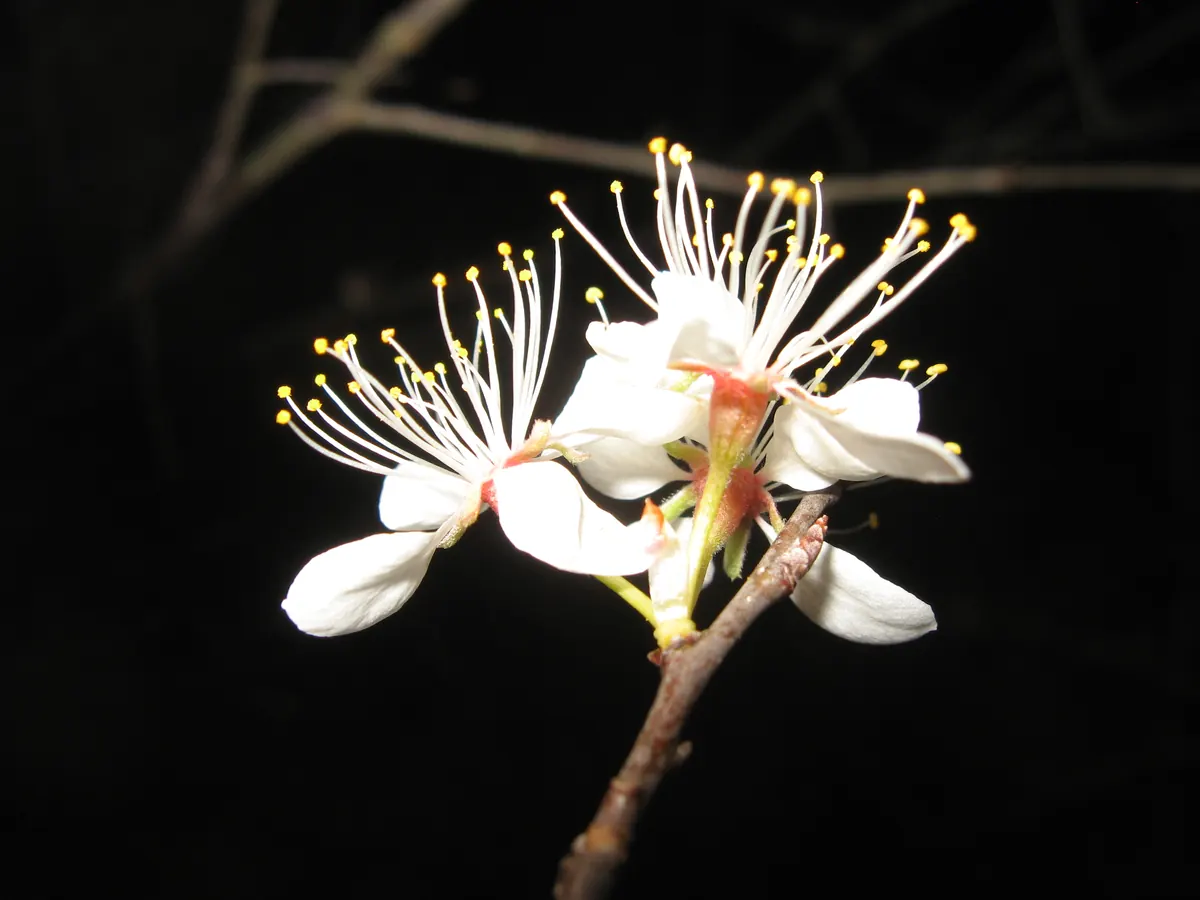
The common wild plum of the boundary between forest and prairie, Mexican plum is a small tree. From February on, its bare branches fill with fragrant white flowers, sometimes tinged pink, and on a sunny afternoon the tree hums with bees. Later the fruit feeds birds and mammals, and the leaves host the caterpillars of eastern tiger swallowtails.
-
Red maple in the swamps
Flowers February to April · Moist woods and swamps of Southeast Texas and the Piney Woods
The Drummond red maple of East Texas bottomlands flowers early. Its small red flowers and then its red winged seeds tint the bare crowns a dull crimson across a swamp in late winter, one of the first real colors after the gray of January.
Note which neighborhood tree flowers first, and the date; after a few years the list shows early and late springs.
Does it snow in Texas in February, and what will El Niño do?
February in Texas is a contest between the season that is ending and the one that is coming. The NOAA normals for 1991 to 2020 show afternoons a few degrees warmer than January’s at every station in the table below, but February still carries real winter weather. At Dallas–Fort Worth, February is actually the snowiest month of the year on average, with 1.0 inch, against 0.1 inch in January and 0.3 inch in March. Amarillo averages 3.5 inches in February.
The great reminder is February 2021. In the National Weather Service’s account, Winter Storm Warnings covered every part of Texas on February 14. DFW Airport fell to −2 °F on the morning of the 16th, after five inches of snow, and stayed below freezing for 139 hours; Waco went 205 hours below freezing, a record. In the Rio Grande Valley it was the first widespread killing freeze since December 1989, and the Brownsville forecast office reports that about 3.8 million fish died in the Laguna Madre and more than 10,000 cold-stunned sea turtles were rescued along the Texas coast. Freezes that severe are rare; a few icy days somewhere in Texas are not.
| Station | Average high | Average low | Snowfall | Precipitation |
|---|---|---|---|---|
| Amarillo | 56.1 °F | 27.5 °F | 3.5 in | 0.53 in |
| Lubbock | 59.7 °F | 30.6 °F | 1.4 in | 0.65 in |
| El Paso | 64.1 °F | 38.9 °F | 0.2 in | 0.40 in |
| Midland | 63.6 °F | 36.7 °F | 0.7 in | 0.58 in |
| Dallas–Fort Worth | 60.9 °F | 40.1 °F | 1.0 in | 2.76 in |
| Austin (Camp Mabry) | 66.5 °F | 45.8 °F | 0.2 in | 1.89 in |
| San Antonio | 67.5 °F | 45.1 °F | 0.1 in | 1.74 in |
| Houston (IAH) | 67.8 °F | 47.6 °F | 0.0 in | 2.97 in |
| Brownsville | 76.2 °F | 56.9 °F | 0.0 in | 1.03 in |
This February sits late in a warm Pacific event; NOAA forecasters rated it, in mid-September 2026, a better than nine-in-ten bet to reach the very strong class. Two Texas forecast offices have looked at what such winters have meant late in the season. A study by the National Weather Service in San Angelo found that Abilene’s average seasonal snowfall nearly doubled in El Niño winters, from 3.8 to 7.4 inches, and that San Angelo’s record January and February snowfalls both came in El Niño winters; the strong event of 1972–73 gave both cities more than a foot of snow. Farther south, the Brownsville office cautions that single months stay unpredictable even in strong events: in the Lower Rio Grande Valley, February rain ranged from 1.72 inches in 1998 to 4.74 inches in 1973. The odds lean cool, damp and now and then snowy, with no guarantees. NOAA refreshes its seasonal outlooks monthly, and the current set is posted on NOAA’s three-month outlook maps. For the days ahead, use our local weather forecast, and before you set out spring transplants, see the typical last freeze for your area on the Texas frost dates page.
How much daylight do Texas cities gain in February?
February is when the returning light really picks up speed. In the eight table cities, days stretch by 38 to 55 minutes between February 1 and February 28, and the gain is fastest in the north: Amarillo adds about 2 minutes of daylight a day, Brownsville about 1.4. This month sunrise moves earlier too. Houston’s sunrise comes 23 minutes sooner over the month, 7:11 a.m. on February 1 and 6:48 a.m. on February 28, and its sunset shifts later, 5:59 p.m. to 6:20 p.m. Amarillo’s sunset slides from 6:16 to 6:42 p.m., and El Paso’s, on Mountain time, from 5:40 to 6:03 p.m.
Groundhog Day, Tuesday, February 2, is the folk midpoint of winter, but astronomically the season’s halfway point comes on February 3–4, a day or two after the groundhog. Once clocks move ahead on March 14, a Sunday, most Texas sunsets land after 7 p.m.
| City | Feb 1 | Feb 28 | Gained | Per day |
|---|---|---|---|---|
| Amarillo | 10 h 29 m | 11 h 24 m | 55 min | 2.0 min |
| Lubbock | 10 h 35 m | 11 h 26 m | 51 min | 1.9 min |
| Dallas | 10 h 38 m | 11 h 28 m | 50 min | 1.9 min |
| El Paso | 10 h 41 m | 11 h 29 m | 48 min | 1.8 min |
| Austin | 10 h 46 m | 11 h 31 m | 45 min | 1.7 min |
| Houston | 10 h 48 m | 11 h 32 m | 44 min | 1.6 min |
| Corpus Christi | 10 h 54 m | 11 h 34 m | 40 min | 1.5 min |
| Brownsville | 10 h 59 m | 11 h 37 m | 38 min | 1.4 min |
Type any Texas town into our daylight calculator for its daily sunrise, sunset and twilight.
What is in the Texas night sky in February 2027?
All times here are Central Standard Time; subtract an hour in El Paso and Hudspeth counties, which run on Mountain time. Two planets reach opposition this month, eight days apart, and both are in the constellation Leo.
-
Mercury low in the evening twilight
Late January to about February 10; farthest from the sun February 2–3 · Low in the west-southwest, 30 to 45 minutes after sunset
Mercury puts on its best evening showing of the winter now. It stands farthest from the sun, about 18 degrees, at midnight as February 2 turns into February 3. Look for a small, steady point low over the west-southwestern horizon in the twilight. On Sunday evening, February 7, the moon, barely a day old, appears just beside the planet; bring binoculars and find an open western view.
-
Jupiter at opposition
Wednesday, February 10 · Rising in the east at sunset, up all night
Jupiter is directly opposite the sun at 6:21 p.m. on February 10, so it comes up in the east around sunset and is still in the sky at dawn. Only the moon and Venus outshine it, and it does not twinkle like a star. Braced binoculars reveal Galileo’s moons, up to four pinpricks flanking the planet, reshuffled nightly.
-
Mars at opposition
Friday, February 19; closest to Earth February 20 · East after dark, in Leo
Mars is opposite the sun on Friday morning, February 19, and the two planets are closest on Saturday, roughly 63 million miles apart. That is distant for a Mars opposition, with the red planet running wide of the sun on its oval path; telescopes will show a modest disk. Without optics you will see a bright, steady, rust-orange point, as bright as it gets all year.
-
The Snow Moon among the planets
Full at 5:23 p.m. on Saturday, February 20 · Rising in the east around sunset
February’s full moon, the Snow Moon, is full in the late afternoon of the 20th and rises in the east at about sunset that evening, between roughly 6:14 p.m. in Houston and 6:36 p.m. in Amarillo. Some almanacs call it a supermoon, while other lists count only January’s, so think of it as a near-supermoon. Late on Friday the 19th, Jupiter and a moon one day short of full sit almost touching, and by the 20th it has joined Jupiter, Mars and Regulus, Leo’s brightest star, in one corner of the sky. That evening a faint penumbral eclipse is technically under way, but by moonrise in Texas it is already past its deepest point and fades out by 7:13 p.m. (in El Paso, by 6:13 p.m. MST, just minutes after the moon rises). At most a little gray shading on one edge of a low moon in bright twilight; most people will not notice anything. The annular solar eclipse of February 6 can be seen only from parts of the Southern Hemisphere and Africa; none of it is visible from Texas.
| Phase | Date | Time |
|---|---|---|
| New moon | Saturday, Feb 6 | 9:56 a.m. (8:56 a.m. MST) |
| First quarter | Sunday, Feb 14 | 1:58 a.m. (12:58 a.m. MST) |
| Full moon, the Snow Moon | Saturday, Feb 20 | 5:23 p.m. (4:23 p.m. MST) |
| Last quarter | Saturday, Feb 27 | 11:16 p.m. (10:16 p.m. MST) |
Evenings without moonlight run from roughly the 2nd through the 11th, the best stretch for faint stars. Check our moon phase calendar for moonrise and moonset in your town, and look at the cloud forecast before you drive out to a dark-sky park. Saturn, low in the southwest at dusk, is slipping into the sun’s glare, and Venus still blazes before dawn.
What can Texas families do outdoors in February 2027?
- Tally birds for science, February 12–15. Audubon gives the 2027 count as February 12–15, a Friday through Presidents’ Day. Any spot works; watch for 15 minutes or more, as many times as you like, and submit through eBird or Merlin. Many state parks have led a count walk on the weekend in past years; look at the TPWD calendar as the date approaches.
- Go to the Whooping Crane Festival, February 25 to 28. Port Aransas has announced its 2027 festival dates. The festival is built around the cranes in their last weeks on the coast near Aransas National Wildlife Refuge; see the festival site for the schedule of tours and talks once it is posted.
- Ride the prairie at Attwater. The refuge’s van tours need a reservation, and February has usually been the last month of the once-a-month schedule; check the tour page for 2027 dates.
- Walk the Brazos bottomland. Stephen F. Austin State Park near San Felipe has a guided First Saturday Hike on February 6, 10 to 11 a.m., an easy one-hour forest walk, open to all ages, that meets at the RV loop restroom.
- Meet a snake. Lake Brownwood State Park’s Reptiles with a Ranger, also on Saturday, February 6, from 2:30 to 3:45 p.m. in the group dining hall, lets children see and touch live, harmless snakes such as a Texas indigo snake and a speckled kingsnake.
- Listen at dusk. Take older children to an East Texas clearing for woodcock, or to a pond on a warm, rainy night for frogs, and match the calls to TPWD’s recordings.
- Keep counting feeder birds. Project FeederWatch keeps going through April, and purple martin landlords can log their first arrival in the Purple Martin Conservation Association’s Scout-Arrival Study.
Programs change, so look at each listing a few days before you go. State park entry costs nothing for anyone 12 or younger. Our Naturalist’s Field Journal has pages for a family bird list or a log of first flowers. To see what January brought, visit the Texas January page, and the nature guides index has every state and month.
Safety notes for February in Texas
- Hunting seasons still open in February (TPWD, 2026–27). Deer seasons are over. Quail stays open statewide through February 28, as do javelina in the North Zone (the South Zone is open year-round), squirrels in East Texas, chachalaca in Cameron, Hidalgo, Starr and Willacy counties, and the fall turkey season in Brooks, Kenedy, Kleberg and Willacy counties. Light and dark geese close February 7 in the West Zone, and light geese close February 19 in the East Zone. Snipe runs through February 21. Rabbits and hares have no closed season. Spring turkey in the South Zone waits until March 20.
- Hunter orange. TPWD requires everyone on public hunting lands (state-owned land, national forests and national grasslands) during daylight, whenever firearm hunting is permitted, to wear 400 square inches or more of orange plus orange headgear, 144 square inches of it visible from the front and 144 from the back. People hunting turkey or migratory birds are exempt. Hikers in a wildlife management area or an East Texas national forest during quail or squirrel season should put on orange too.
- Ice and snow. February can still bring freezing rain, sleet and snow, as far south as the Rio Grande in 2021. When ice is forecast, stay off the roads, protect pipes and pets, and check on neighbors.
- Fire weather. Late winter is a dangerous time for grass fires in the Panhandle and West Texas, when dormant grass, low humidity and strong winds come together. The Smokehouse Creek Fire, which started in Hutchinson County on February 26, 2024, became the largest wildfire in Texas history, burning more than a million acres in Texas and Oklahoma. Obey burn bans, never park on dry grass, and secure trailer chains so they do not throw sparks.
- Cold water. Lakes and bays are still cold in February. Put on a life jacket in a canoe, kayak or johnboat, and pick clothes for a February swim, not a February afternoon.
- Nesting birds. Eagles, owls, woodcock and prairie-chickens are all nesting or displaying this month. Keep well back, keep dogs leashed, and never use calls or playback near a nest or a lek.
Sources
- U.S. Fish and Wildlife Service: Attwater Prairie Chicken National Wildlife Refuge
- U.S. Fish and Wildlife Service: Attwater Prairie Chicken National Wildlife Refuge, tours
- U.S. Fish and Wildlife Service: Attwater’s greater prairie-chicken species profile
- Texas Breeding Bird Atlas (Texas A&M): American woodcock
- Texas Parks and Wildlife magazine: Winter Woodcock (November 2005)
- U.S. Fish and Wildlife Service: Houston toad species profile
- Bastrop County: Houston toad (Lost Pines Habitat Conservation Plan)
- Houston Zoo: Conservation Corner, Houston toad breeding season
- TPWD Texas Nature Trackers: Texas Amphibian Watch frogs and toads, with calls
- Texas State Historical Association, Handbook of Texas: Muleshoe National Wildlife Refuge
- U.S. Fish and Wildlife Service: Muleshoe National Wildlife Refuge
- TPWD: bird migration times in Texas
- Purple Martin Conservation Association: Scout-Arrival Study
- Texas Breeding Bird Atlas (Texas A&M): great horned owl
- National Park Service, Big Bend: blue to purple wildflowers
- National Park Service, Big Bend: plants of Big Bend
- Lady Bird Johnson Wildflower Center: Texas bluebonnet (Lupinus texensis)
- Lady Bird Johnson Wildflower Center: agarita (Mahonia trifoliolata)
- Lady Bird Johnson Wildflower Center: Mexican plum (Prunus mexicana)
- Lady Bird Johnson Wildflower Center: Drummond red maple (Acer rubrum var. drummondii)
- NOAA NCEI: 1991–2020 monthly climate normals (data API)
- National Weather Service Fort Worth: February 2021 historic winter storm and arctic outbreak
- National Weather Service Brownsville: February 2021 freeze in the Rio Grande Valley
- National Weather Service Houston/Galveston: Valentine’s Week winter outbreak 2021
- National Weather Service San Angelo: West Central Texas during El Niño, a look at snowfall (PDF)
- National Weather Service Brownsville: El Niño and rain potential in the Lower Rio Grande Valley
- Climate Prediction Center: ENSO diagnostic discussion, September 10, 2026
- Climate Prediction Center: official 90-day outlooks
- NOAA Global Monitoring Laboratory: solar calculator (the equations behind the daylight table)
- U.S. Naval Observatory: moon phases (data API)
- U.S. Naval Observatory: rise and set times for February 20, 2027 (data API)
- U.S. Naval Observatory: Earth’s seasons and apsides, 2027
- Fred Espenak: Sky Event Almanac 2027
- NASA: lunar eclipses of 2021–2030
- NASA: solar eclipses of 2021–2030
- EarthSky: Jupiter at opposition
- SEDS: Mars at opposition, 2027
- Sea and Sky: astronomy calendar of celestial events, 2027
- Old Farmer’s Almanac: eclipses
- National Audubon Society: Great Backyard Bird Count
- Port Aransas: Whooping Crane Festival
- TPWD calendar: First Saturday Hike, Stephen F. Austin State Park, February 6, 2027
- TPWD calendar: Reptiles with a Ranger, Lake Brownwood State Park, February 6, 2027
- Project FeederWatch: how to participate
- TPWD: 2026–27 hunting season dates
- TPWD: hunter orange requirements
- Texas A&M Forest Service: as the largest wildfire in Texas history burns (February 28, 2024)
- Photos via Wikimedia Commons; licenses and photographers are credited under each picture
