What to look for in nature in Texas this October
October is the month Texas turns. The first real cold fronts arrive, monarchs pour through in a 300-mile-wide river, the bats leave Austin, and the Panhandle sees its first freeze while the coast is still swimming. Here is what to watch for, region by region, with dates.
Start here

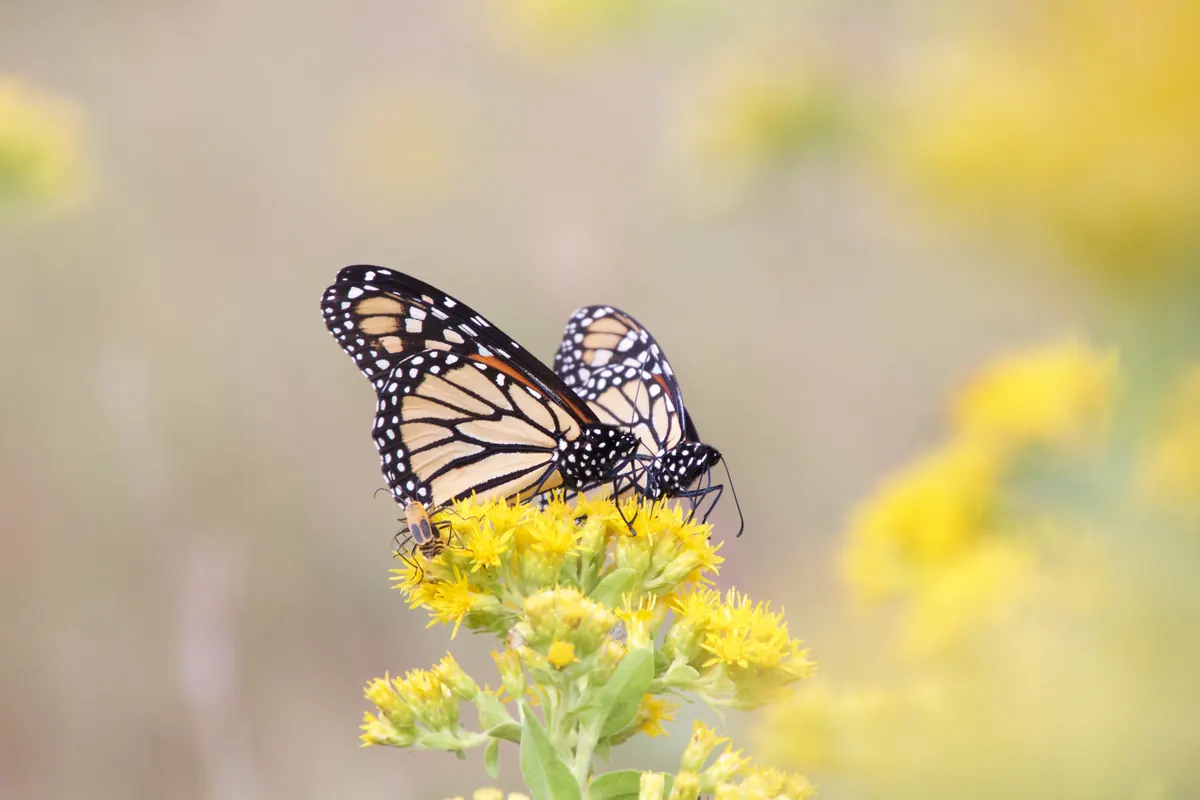
- Monarchs. The main flyway crosses Texas from Wichita Falls to Eagle Pass, and the peak moves south through the month: North Texas in the first week, Austin and San Antonio around October 10–22, the Valley by Halloween. Look for them nectaring on frostweed and mistflower in the afternoon and roosting in trees at dusk.
- The first big front. A “blue norther” can drop temperatures thirty degrees in a day. Every strong front is a trigger: geese arrive behind it, dragonflies and monarchs ride the north wind, and the bats under Austin’s bridges start to leave.
- The Hunter’s Moon and the Orionids. The full Hunter’s Moon rises the evening of Sunday, October 25 (full at 11:12 p.m. Central). The Orionid meteors peak in the hours before dawn on October 21 and 22, once the moon has set.
Record it: the Naturalist’s Field Journal has a pollinator watch plate for the monarchs, a “birds I have seen” list for the arrivals, and a tree-through-the-seasons page for the first color. One observation at a time.
Regions used below: Panhandle and North Texas; Central Texas and the Hill Country; East Texas and the Piney Woods; Gulf Coast; South Texas and the Rio Grande Valley; Trans-Pecos and Big Bend.
When do monarchs migrate through Texas?
Texas Parks and Wildlife describes two fall flyways. The central one “traverses Texas in a 300-mile wide path stretching from Wichita Falls to Eagle Pass”; monarchs enter it “during the last days of September,” and “by early November, most have passed through into Mexico.” A second, coastal flyway runs from the third week of October to the middle of November. Monarch Watch gives the peak window by latitude, which maps onto the state like this:
| Region | Reference cities | Peak window |
|---|---|---|
| Panhandle | Amarillo | Sept 24 – Oct 6 |
| North Texas and the South Plains | Lubbock, Wichita Falls, Dallas–Fort Worth | Sept 29 – Oct 11 |
| Central Texas and the Permian Basin | Waco, San Angelo, Midland | Oct 4 – 16 |
| Hill Country, Houston and the border | Austin, San Antonio, Houston, Del Rio | Oct 10 – 22 |
| Coastal Bend and Laredo | Corpus Christi, Kingsville, Laredo | Oct 15 – 27 |
| Rio Grande Valley | McAllen, Brownsville | Oct 20 – Nov 1 |
The best hours are the warm afternoon, when monarchs feed on goldenrod, frostweed and mistflower, and dusk, when they gather in roost trees, often pecans and live oaks along creeks. Journey North wants fall sightings and especially roost reports, and Monarch Watch tags are for exactly this migration; south of 35° N the tagging season is late September into October. Queens, the monarch’s darker cousin, crowd Gregg’s mistflower in impressive numbers in fall across Central, South and West Texas. The Texas Pollinator BioBlitz runs October 16 to November 1, 2026: photograph anything on a flower and add it to the iNaturalist project.
When do hummingbirds leave Texas?
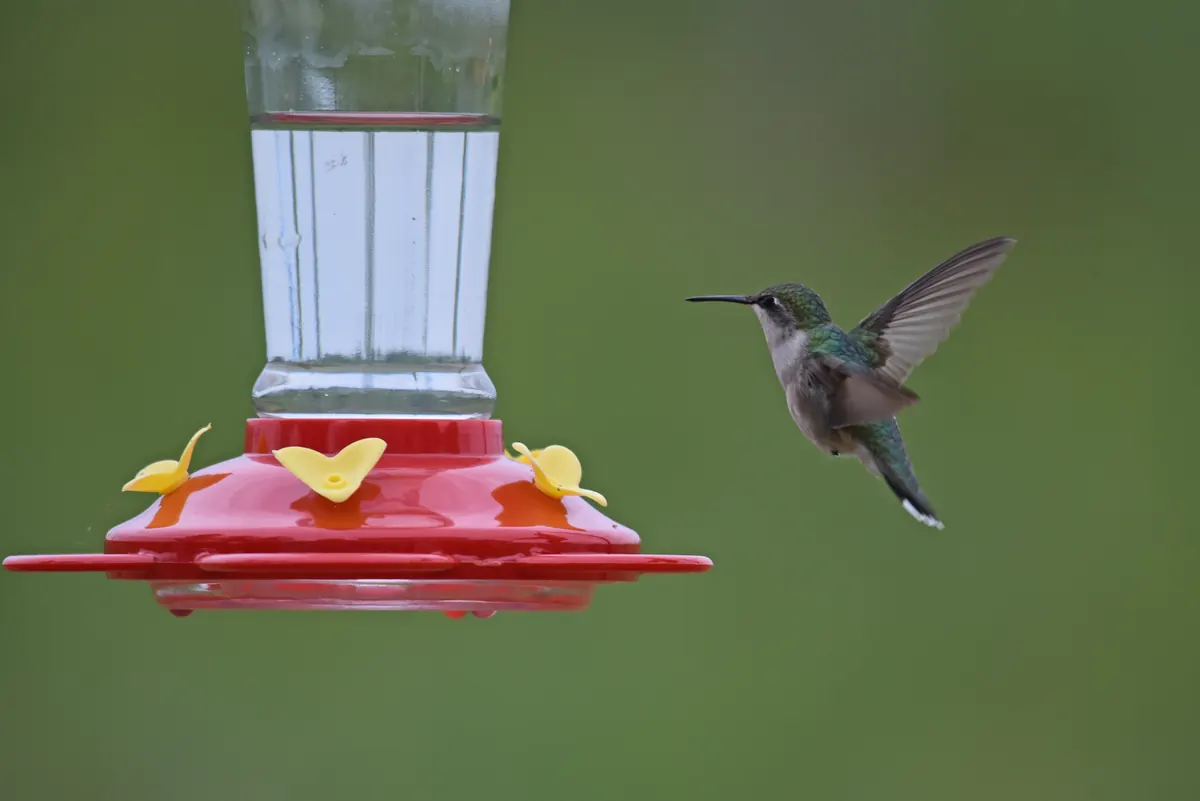
Ruby-throated hummingbirds are “particularly common during fall and spring migration (August–October)” on the upper coast, and their numbers fall away through October; a few linger into winter. Rufous hummingbirds arrive as they go, in small numbers from October to March, and black-chinned hummingbirds winter on the coast too. Texas Parks and Wildlife’s advice: leaving a feeder up “will not stall their migration,” so keep it up until two weeks after you have seen the last bird, and keep it clean and full if you carry it past October, because the winter birds depend on it. A last-sighting date in the journal is a small piece of real data; it is what the Texas Hummingbird Roundup has collected for decades.
What other birds arrive or pass through in October?
-
Broad-winged hawks and the Corpus Christi HawkWatch
Count runs to Nov 15 · Hazel Bazemore County Park, Coastal Bend
The last three weeks of September are the broad-wing peak, and seasons there run from 445,000 to more than a million raptors. By October the big kettles are mostly past, but the count continues daily through November 15 and the first days of October can still be large.
-
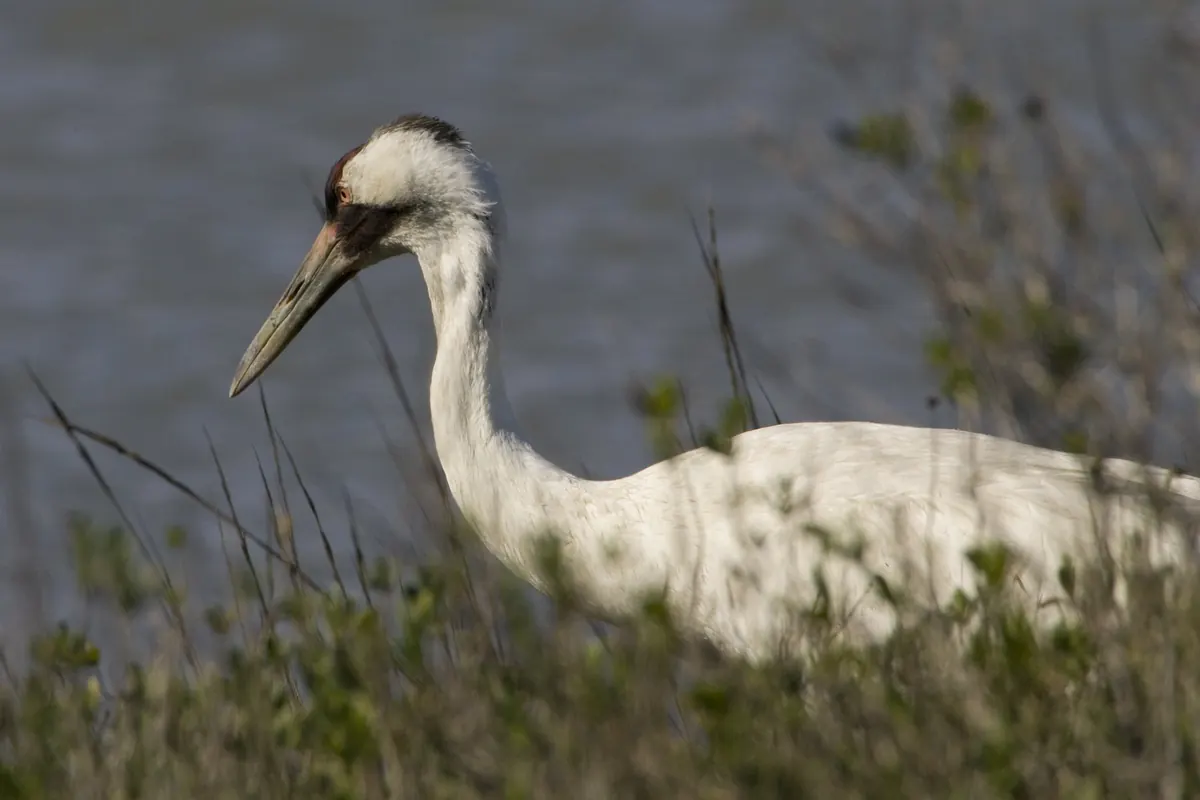
Whooping cranes
Late October · Aransas National Wildlife Refuge, Gulf Coast
The refuge’s most famous migrants typically arrive in late October and stay until mid-April. The wild flock winters nowhere else.
-
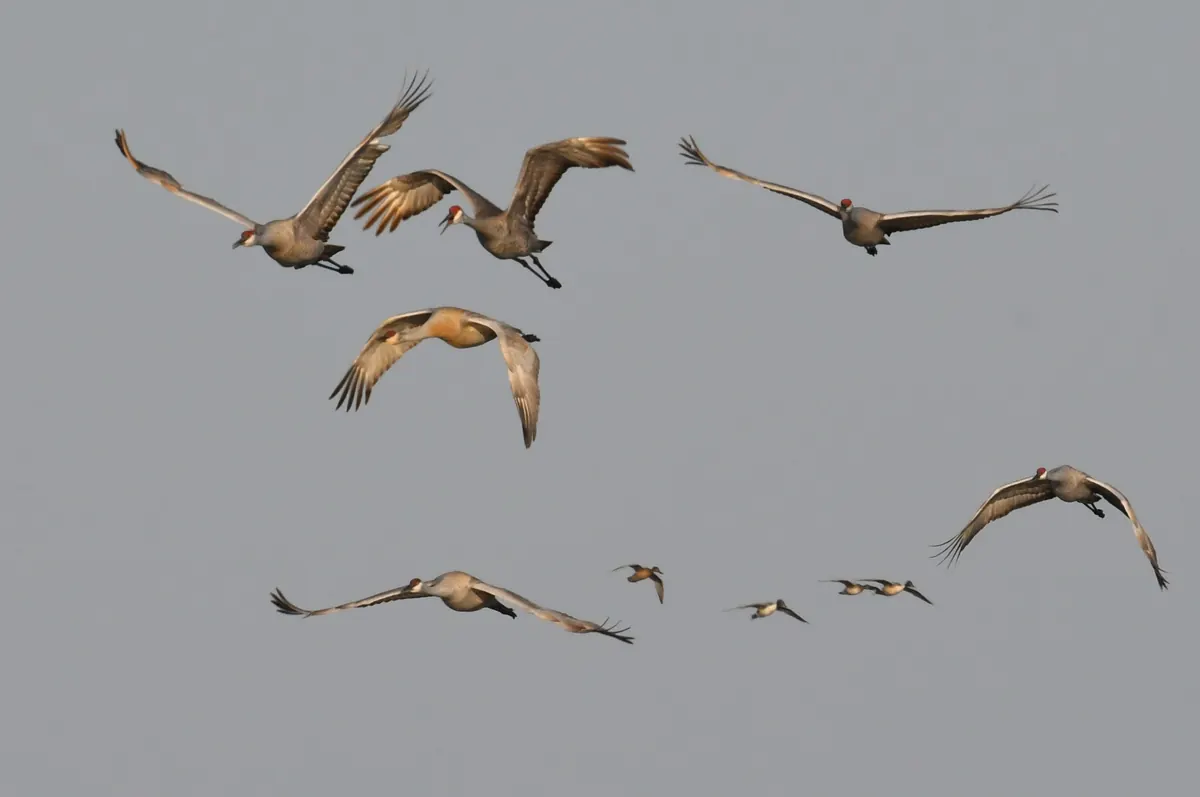
Sandhill cranes
Arriving from October; peak Dec – Feb · Panhandle playas and the coast
Sandhills start south from Canada and the northern states in October. Roughly 700,000 winter in Texas, split between the coast and the Panhandle, where Muleshoe National Wildlife Refuge can hold more than 100,000 in midwinter. Listen for the rolling call overhead before you see them.
-
Geese behind the fronts
With the first strong cold front · Statewide, most on the coast and Panhandle
TPWD’s migration guide puts it plainly: the first cold front of the fall usually brings flocks of migrating geese with it. The morning after a norther is the morning to look up.
-
Winter residents settling in
Mid-September to November · Statewide
Ruby-crowned kinglets have been arriving since mid-September. Yellow-rumped warblers become abundant on the upper coast from mid-October. Juncos, kestrels and the winter sparrows arrive on the October fronts and are common by November; those last dates are general, not Texas-specific.
-
Teal and the first ducks
September into November · Coast and Panhandle wetlands
Blue-winged teal lead the way, and a large share of the population winters no farther south than the Texas coast. Each cold front pushes more waterfowl into the state.
An honest note about “fallouts”: the dramatic groundings of exhausted migrants on the coast are a spring event. Fall has more birds spread over more weeks, with fewer fireworks. The day after a front is your best day.
When does the first cold front and the first freeze come?
A blue norther, in the Handbook of Texas, is “a rapidly moving autumnal cold front that causes temperatures to drop quickly and that often brings with it precipitation followed by a period of blue skies and cold weather.” No weather office keeps a normal date for the first one, but the first freeze is well measured. A freeze in October is a normal event only in the Panhandle. Everywhere else it is unusual: Dallas–Fort Worth’s early-risk date is November 7, and Austin’s earliest freeze on record is October 26, 1924. Heat has not finished either; Austin reached 101 °F on October 13, 2024.
| Station | One year in ten | Median | Nine years in ten |
|---|---|---|---|
| Amarillo | Oct 8 | Oct 24 | Nov 5 |
| Lubbock | Oct 18 | Nov 2 | Nov 14 |
| Wichita Falls | Oct 26 | Nov 10 | Nov 26 |
| El Paso | Oct 31 | Nov 14 | Nov 28 |
| Midland | Oct 28 | Nov 10 | Nov 24 |
| Dallas–Fort Worth | Nov 7 | Nov 25 | Dec 11 |
| Waco | Nov 2 | Nov 21 | Dec 8 |
| Austin (Camp Mabry) | Nov 19 | Dec 6 | Dec 30 |
| San Antonio | Nov 11 | Dec 1 | Dec 20 |
| Houston (IAH) | Nov 19 | Dec 8 | Jan 5 |
| Corpus Christi | Nov 30 | Dec 19 | Jan 19 |
| Brownsville | Dec 7 | Dec 30 | Feb 3 |
Your own town is on the Texas frost dates page, with 458 stations. In the Panhandle, October is the month to bring in the tender plants and note the first frost in the journal; in the Hill Country and on the coast, it is the month to plant the cool-season garden.
How much daylight does Texas lose in October?
About an hour, and more the farther north you are. Daylight shortens by roughly two minutes a day in the Panhandle and a minute and a half a day in the Valley. Sunrise in Dallas slips from 7:21 to 7:44 a.m. and sunset from 7:12 to 6:37 p.m. across the month. Then the clocks fall back at 2:00 a.m. on Sunday, November 1.
| City | Oct 1 | Oct 31 | Lost | Per day |
|---|---|---|---|---|
| Amarillo | 11 h 51 m | 10 h 48 m | 64 min | 2.1 min |
| Dallas | 11 h 53 m | 10 h 55 m | 58 min | 1.9 min |
| El Paso | 11 h 53 m | 10 h 57 m | 56 min | 1.9 min |
| Austin | 11 h 54 m | 11 h 01 m | 53 min | 1.8 min |
| San Antonio | 11 h 54 m | 11 h 03 m | 51 min | 1.7 min |
| Houston | 11 h 54 m | 11 h 03 m | 51 min | 1.7 min |
| Brownsville | 11 h 56 m | 11 h 12 m | 44 min | 1.5 min |
The Field almanac gives sunrise, sunset and twilight for your exact spot, and the minutes lost this week.
Is October a wet month in Texas, and what about El Niño?
For much of the state, yes. October is the second-wettest month of the year at Dallas–Fort Worth (4.4 in), Waco (4.4), Austin (3.9), Houston (5.5) and Brownsville (3.8), and the National Weather Service ranks Austin’s wettest months as May, October and June, in that order, in a region it calls Flash Flood Alley. It is not a wet month in the Panhandle, the Trans-Pecos or the Coastal Bend, where October ranks fourth to sixth. Never drive through water on a road.
Hurricane season runs to November 30. October landfalls on the Texas coast are rare because fall fronts steer Gulf storms northeast; the last was Hurricane Jerry at Galveston in October 1989. North-Central and Southeast Texas have a modest second severe-weather season: the Fort Worth office has logged 145 October tornadoes since 1950, more than double September or November, though far behind April and May. The Panhandle and far West Texas do not share it.
El Niño is the story of the coming winter. On September 10 the Climate Prediction Center gave a greater than 90 percent chance of a very strong event for fall and winter 2026–27. Its historical signature in Texas is a wetter, cooler October-to-March along the Gulf Coast, with rain 30 to 40 percent above normal in some South-Central Texas winters, though no two events are alike, and October itself is only weakly affected. NOAA’s official winter outlook comes on October 15; we will translate it into plain language when it lands.
What is in the sky over Texas this October?
-
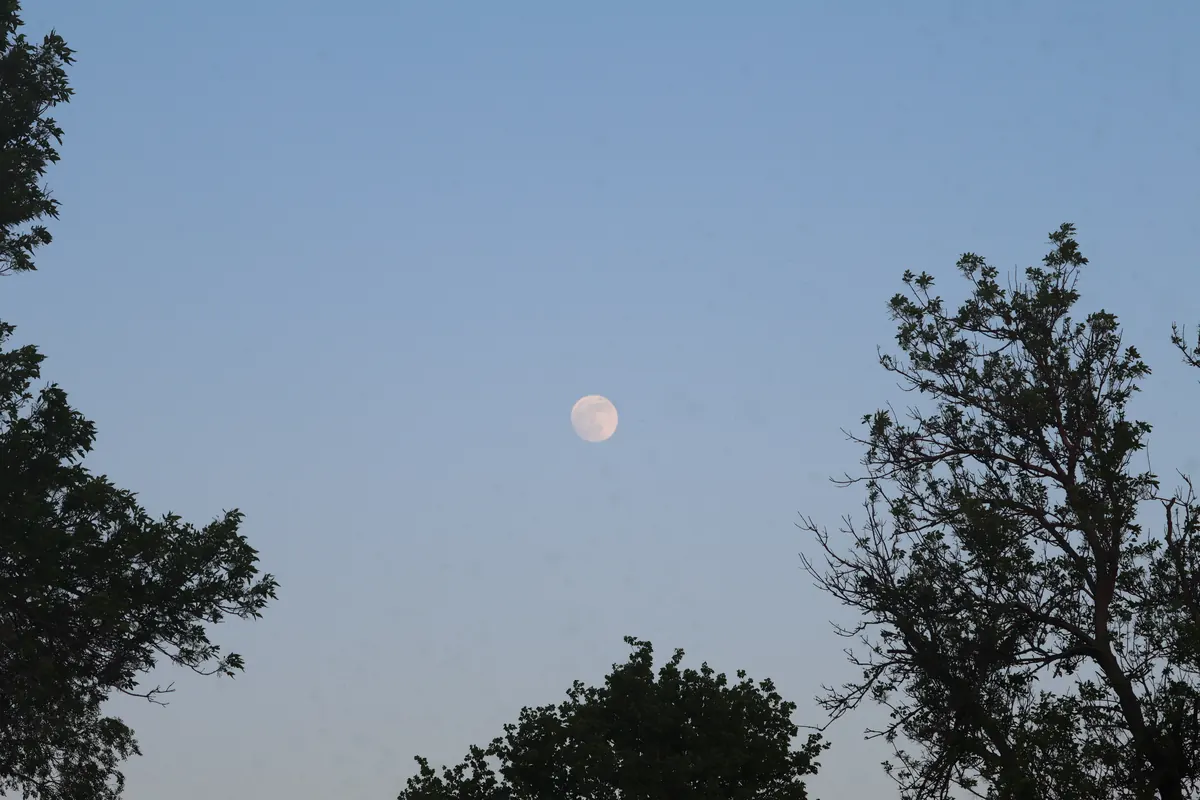
The Hunter’s Moon
Sunday, October 25, rising at sunset · Everywhere; find a low eastern horizon
The full moon after the Harvest Moon. Watch it rise in the east around sunset on October 25 and again, a little later, on the 26th. Some almanacs call it a supermoon; by the strict perigee definition it is not, so we do not.
-
Orionid meteors
Pre-dawn, October 21 and 22 · Anywhere dark; face southeast
Active from October 2 to November 7 with a broad peak around October 21–22 and typical rates of 10–20 an hour. The waxing gibbous moon sets at about 2:54 a.m. on the 21st and 3:54 a.m. on the 22nd in Dallas, which leaves a dark window from roughly 4:00 to 6:30 a.m. By the 23rd the moon does not set until about 4:55 a.m., so the window shrinks.
-
Draconid meteors
Evening of Thursday, October 8 · Look north after dark
A slow, sparse shower, five to ten an hour at best, but it favors the evening rather than the small hours, and there is no moon to spoil it. Good for children.
-
Saturn all night
Opposition October 4; Moon beside it Oct 23–24 · Rising in the east at sunset
Saturn is at its closest and brightest for the year on October 4, rising as the sun sets and visible all night as the brightest “star” in a dim patch of sky between Pisces and Cetus. The bright moon sits beside it on the nights of October 23 and 24.
-
Venus leaves, Jupiter and Mars take the morning
Venus gone after the first week; Jupiter and Mars before dawn · West at dusk; east at dawn
Venus is low in the western twilight and, from Texas latitudes, visible only into the first week of October before passing between Earth and the sun on the 23rd. Jupiter shines high in the east at dawn with Mars above it and the star Regulus below; Mars slips past the Beehive star cluster on the morning of October 11.
-
The moon hides Jupiter
About 4:06–4:12 a.m. CDT, Tuesday, October 6 · Very low in the east; needs a flat horizon
The thin waning crescent rises with Jupiter already behind it, and Jupiter reappears from the dark edge at about 4:06 a.m. in Brownsville, 4:09 in San Antonio, 4:10 in Austin and Houston, 4:11 in Dallas and 4:12 in Amarillo (3:10 a.m. Mountain time in El Paso), with the moon only seven to eleven degrees up. Binoculars help. It is a rare thing to see and worth the alarm clock if you have an open eastern view.
-
Star parties
October 3 and 10 · State parks and Big Bend
Both dates fall in dark-moon windows. Enchanted Rock hosts the Central Texas Astronomers on Saturday, October 3, 7:25–9:10 p.m.; Copper Breaks holds a StarWalk on Saturday, October 10, at 7:30 p.m.; Big Bend Ranch has a Star Party in the Borderlands on October 10 (reservations required; confirm the start time with the park) and a night hike on October 30. Big Bend National Park runs free ranger night-sky programs on a weekly schedule.
| Phase | Date | Time |
|---|---|---|
| Last quarter | Saturday, Oct 3 | 8:25 a.m. |
| New moon | Saturday, Oct 10 | 10:50 a.m. |
| First quarter | Sunday, Oct 18 | 11:12 a.m. |
| Full moon, the Hunter’s Moon | Sunday, Oct 25 | 11:12 p.m. (looks full Oct 25 and 26) |
| Last quarter | Sunday, Nov 1 | 2:28 p.m. CST |
Tonight’s cloud cover for your town is on the Today’s sky page, and the moon page gives moonrise where you are.
What is blooming, turning and dropping?
-
Fall wildflowers
Through October, some to November · Roadsides, prairies, creek banks
Tall goldenrod, Maximilian sunflower and dotted gayfeather bloom August through October or November; small palafox on limestone and sand; cowpen daisy on disturbed ground in the drier parts of the state; blue mistflower and Gregg’s mistflower, the butterfly magnets, into November. Snow-on-the-prairie can whiten whole fields, but its milky sap irritates skin and eyes, so look and do not pick. Frostweed is blooming now; its famous ice ribbons come with the first hard freeze, which for most of Texas means November or later.
-
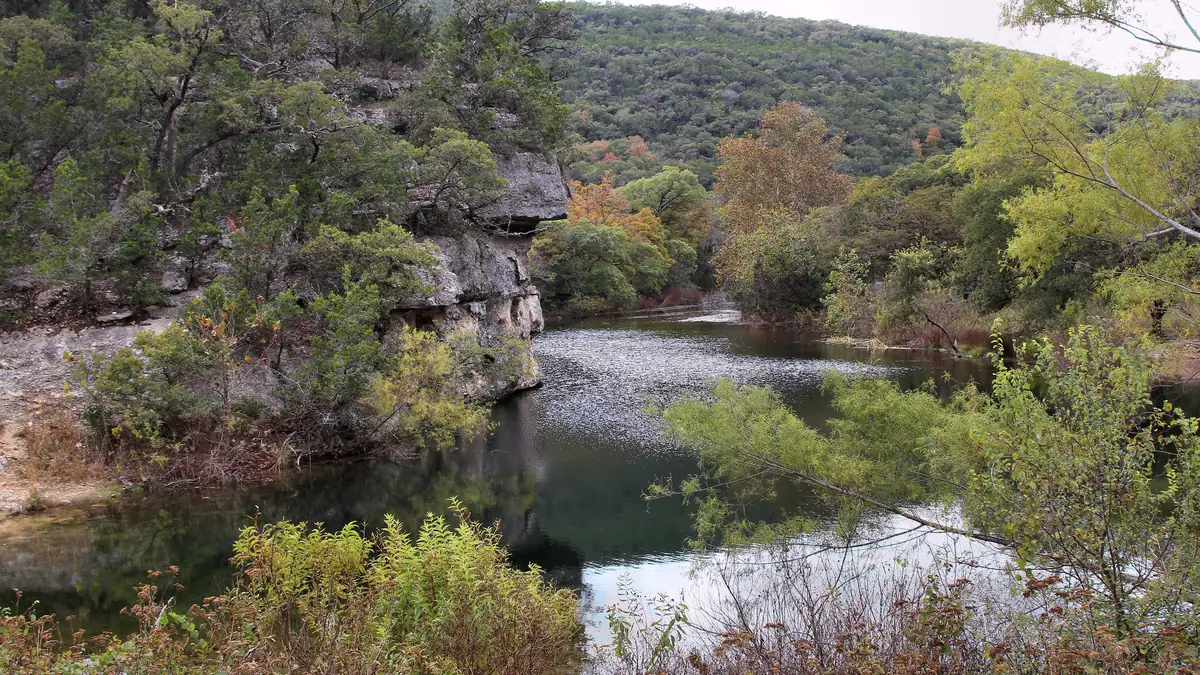
Fall color
Starts late October; peaks in November · Lost Maples, East Texas, Hill Country rivers
Texas has one of the latest peaks in the country, and the Texas A&M Forest Service is blunt that trees are “entirely weather dependent.” Lost Maples State Natural Area starts its weekly foliage report in mid-October and fills to capacity daily in October and November, so reserve a pass before you go, and keep off the maples’ shallow roots. In the Piney Woods, sweetgum, red oak, sassafras, sumac and bigtooth maple color against the pines; along the Guadalupe and Comal, bald cypress turns rust. The Field almanac reads satellite tree timing for your pin.
-
Pecans and acorns
October into December · Bottomlands, yards, parks
Most Texas pecan varieties are harvested in October. Live oak acorns ripen brown and drop from October into December, and they feed squirrels, jays, deer and raccoons, whose diet is more than half acorns and fruit. Count the acorns under one tree and write it down; mast years are worth knowing.
-
Pollen and mushrooms
Ragweed now; cedar not until December · Statewide; woods after rain
Ragweed is the fall allergen, peaking around the turn of September into October. Cedar fever is not an October problem: Ashe juniper sheds pollen from mid-December to early March. After October rains, chanterelles, chicken of the woods, ringless honey mushrooms, oysters and puffballs appear in Central Texas woods, with a toxic jack-o’-lantern look-alike among them. Photograph, do not eat, unless an expert has confirmed the identification.
What are the mammals, reptiles and bugs doing?
-
Bats leaving Austin
October, in waves · Congress Avenue Bridge and the Hill Country caves
The Mexican free-tailed females that raised pups under the Congress Avenue Bridge depart in October, often in partial migrations after fronts; a smaller number stay all winter. Bracken Cave’s public flights ended in September. If you find a bat on the ground, do not touch it; call animal control.
-
Deer: the rut approaches
Peaks Sept 30 – Oct 31 on the Gulf Prairies; November and December elsewhere · Statewide
TPWD’s breeding study of 2,436 does puts October at the very start of the season for most of the state: breeding ranges open in October in the Post Oak Savannah, Edwards Plateau, Cross Timbers and Rolling Plains but peak in November (Post Oak Savannah Nov 10–11, Cross Timbers Nov 15–17, Piney Woods Nov 12–22, Edwards Plateau Nov 7 to Dec 5 from east to west), and in December in the Trans-Pecos (Dec 8) and South Texas (Dec 16–24). The one region whose peak falls in October is the Gulf Prairies and Marshes, Sept 30 in the north and Oct 31 in the south. Look for rubs on saplings and scrapes on the ground this month; the dusk-and-dawn watch page in the journal is for this.
-
Snakes and alligators
Snakes active on warm days; alligators slow from mid-October · Statewide; coast
Temperatures of 80 to 90 °F are, in TPWD’s words, “probably the best and most comfortable” for snakes, and October has plenty of those days; rattlesnakes are mostly nocturnal. Watch where you put hands and feet. Alligators are mostly inactive from mid-October to early March but have not gone anywhere.
-
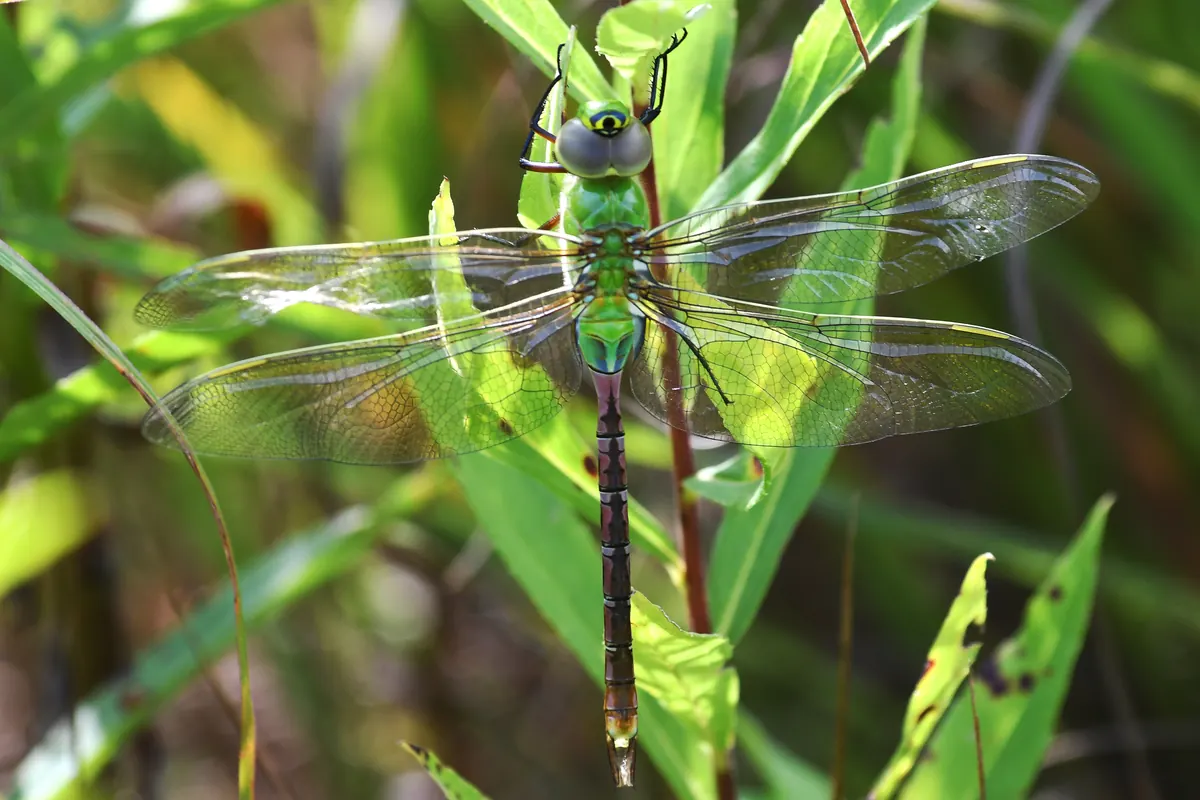
Green darners and snout butterflies
Darners through early November; snouts after rain · Statewide; South and Central Texas
Common green darner dragonflies migrate south from late August into early November, peaking in September; hawk-watch counters at Bentsen–Rio Grande Valley State Park see them almost every day. American snout butterflies erupt in some years after late-summer and fall rains, drifting north in clouds; Texas A&M AgriLife says “we see this every year, but some years it is more noticeable than others.”
-
Orb-weavers and walkingsticks
Most visible now; orb-weavers to the first hard frost · Gardens, fence lines, porch lights
The garden spiders have been here since spring, but October is when their webs are big enough to notice. They are not aggressive, and a bite is no worse than a bee sting for a healthy adult; most die with the first hard frost, leaving egg sacs behind. Two-striped walkingsticks are most abundant in late summer and fall as females lay eggs, often with a smaller male riding along; they can spray a defensive acid a foot away that stings the eyes, so look without handling.
-
Fire ants, and what is not happening
Mounds pop up after rain · Lawns, fields, trails
New fire-ant mounds appear after October rains, and late August to mid-October is the recommended window for broadcast bait. The tarantula “migration” people ask about is a May-to-August event, and the crane flies of spring are months away.
What can families do outside in Texas this month?
- Join the Texas Pollinator BioBlitz, October 16 to November 1. Photograph anything on a flower, add it to the iNaturalist project, tag it #TXPollinators. Monarchs, queens, snouts and bees all count.
- Report a monarch roost to Journey North the evening you find one, and tag with Monarch Watch if you have a kit. A tag recovered in Mexico earns the finder a small reward and earns science a data point.
- Keep a hummingbird last-sighting log. Note the date you last see one at the feeder, then leave the feeder up two more weeks.
- Watch a front come through. Read the pressure trend on the Weather now page, then go outside when the wind swings north: temperature, sky, the first geese. Write down the before and after.
- Book a star party or set the alarm for the Orionids on the morning of October 21 or 22, and sign up for Project FeederWatch, which begins November 1.
The Texas Master Naturalist annual meeting is October 22–25 in Waco; the local chapters are the best route into guided walks and citizen science near you.
Safety notes for October in Texas
- Heat is not over in early October; carry water.
- Hurricane season runs to November 30; October landfalls are rare, not impossible.
- Fire ants are active and mounds appear after rain; snakes are active on warm days; never handle a grounded bat; alligators slow down but stay put.
- Snow-on-the-prairie sap and walkingstick spray both irritate eyes.
- Hunting seasons: archery-only deer October 3 to November 6, youth-only October 30 to November 1, and the general deer season opens November 7; dove runs through October 25 in the Central and South zones and November 8 in the North; squirrel opens October 1 in East Texas; sandhill crane Zone A opens October 31. On public hunting lands, everyone, hikers included, must wear 400 square inches of hunter orange with orange headgear during daylight hours when hunting with firearms is permitted.
Sources
- Texas Parks and Wildlife: Texas Monarch Watch, fall flyways
- Monarch Watch: peak migration dates by latitude
- Monarch Watch: tagging program
- Journey North: monarch sightings and roost reports
- TPWD: Texas Pollinator BioBlitz 2026
- Houston Audubon: hummingbirds on the upper coast
- TPWD: hummingbird feeder questions
- HawkWatch International: Corpus Christi HawkWatch
- U.S. Fish and Wildlife Service: Aransas National Wildlife Refuge birding
- U.S. Fish and Wildlife Service: Muleshoe National Wildlife Refuge
- Texas Parks and Wildlife magazine: sandhill cranes
- Texas Breeding Bird Atlas: ruby-crowned kinglet
- Houston Audubon: yellow-rumped warbler; fall coastal landbird migration
- TPWD: Migration and the Migratory Birds of Texas (PDF)
- TPWD: 2026 teal season and blue-winged teal migration
- NOAA NCEI: 1991–2020 first-freeze probability normals (data API)
- NOAA NCEI: 1991–2020 monthly precipitation normals (data API)
- NWS Amarillo: the first freeze
- NWS Austin/San Antonio: Austin climate summary (PDF)
- Handbook of Texas: blue norther
- National Hurricane Center: climatology
- NWS/WPC, David Roth: Texas Hurricane History (PDF)
- NWS Fort Worth: tornadoes by month, 1950–2025
- Climate Prediction Center: ENSO diagnostic discussion, September 10, 2026
- NOAA Climate.gov: United States El Niño impacts
- U.S. Naval Observatory: moon phases 2026 and sunrise/sunset (data API)
- EarthSky: meteor shower guide; Saturn at opposition; visible planets
- American Meteor Society: 2026 meteor shower calendar
- International Occultation Timing Association: lunar occultation of Jupiter, October 6, 2026
- Fred Espenak: full moons at perigee, 2001–2100
- NIST: daylight saving time
- Lady Bird Johnson Wildflower Center: native plant database (bloom times)
- TPWD: Lost Maples State Natural Area
- Texas A&M Forest Service: fall foliage explained
- Texas A&M AgriLife: 2022 pecan harvest
- Texas A&M Forest Service: cedar fever season
- Central Texas Mycological Society: October forage forecast
- Austin Bat Refuge: Congress Avenue Bridge
- TPWD: bat-watching sites
- TPWD: white-tailed deer breeding chronology (the rut)
- TPWD: Snakes alive
- TPWD: American alligator
- Xerces Society: green darner migration counts
- Texas A&M AgriLife: snout butterflies
- Texas Master Gardeners (Henderson County): orb-weaver spiders
- Texas Master Gardeners (Galveston County): two-striped walkingstick (PDF)
- Texas A&M: fire ant Two-Step method
- Texas A&M: tarantulas on the move
- Project FeederWatch: how to participate
- Texas Master Naturalist: 2026 annual meeting
- TPWD: Enchanted Rock star party, October 3
- TPWD: Copper Breaks StarWalk, October 10
- National Park Service: stargazing in Big Bend
- TPWD: 2026–27 hunting season dates
- TPWD: hunter orange requirements
- Photos: U.S. Fish and Wildlife Service (public domain) via Wikimedia Commons; Lost Maples by Larry D. Moore (CC BY 4.0)
.jpg)