What to look for in nature in Texas this January
January is the cold heart of the Texas winter, and also the month when the year turns. Biologists fly the coast to count whooping cranes, most of the continent’s redheads dive for seagrass roots in the Laguna Madre, eaglets hatch in East Texas pines and great horned owls sit tight on eggs. Chorus frogs call from flooded ditches on mild rainy nights, and on the coast the first purple martins can appear before the month is out. This guide follows January across the state, from the Panhandle to the Rio Grande.
Other months in Texas: October, November, December, February.
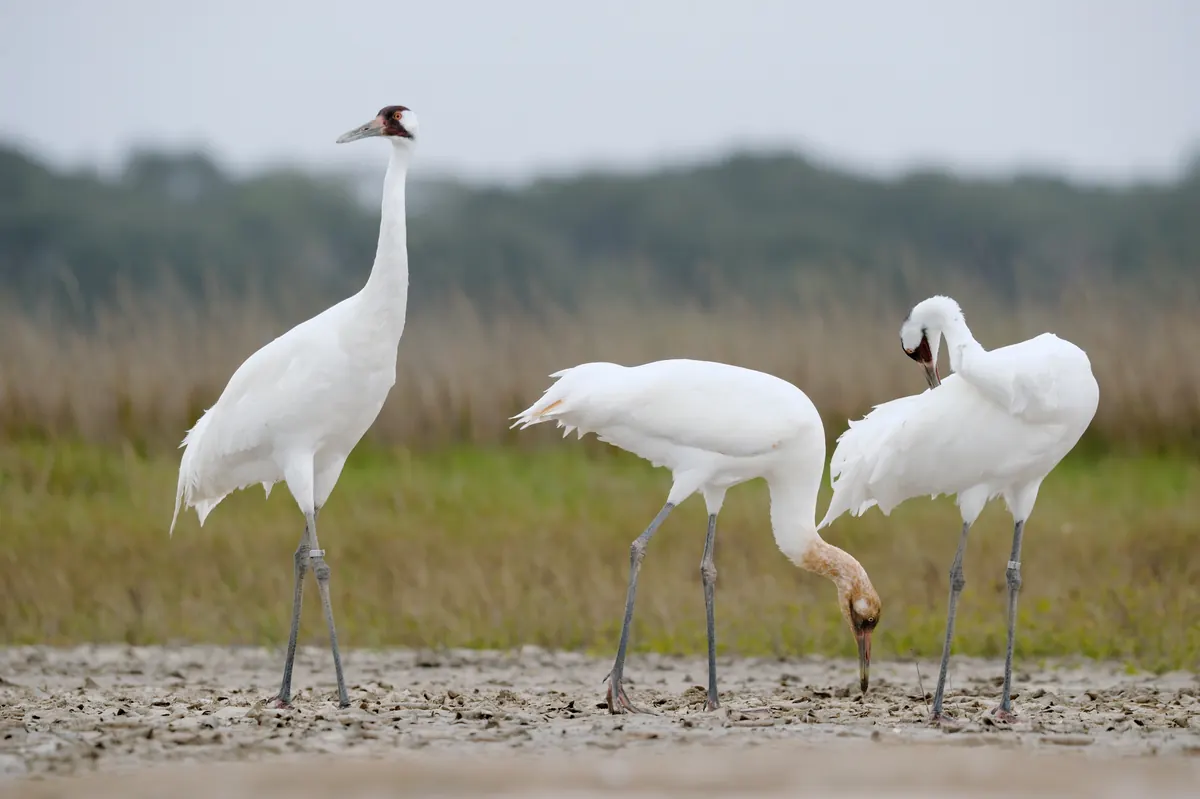
Start here

- Hike on New Year’s Day. Pick a First Day Hike at a state park on Friday, January 1. Galveston Island starts with a ranger-led sunrise beach walk at 7 a.m.; Caprock Canyons offers a hiking bingo activity. Write down the first bird you see in 2027.
- Visit the redheads. Drive to the lower Laguna Madre or Laguna Atascosa National Wildlife Refuge on a calm morning and scan the water for rafts of diving ducks. Most of North America’s redheads are spending the winter right there.
- Watch the Wolf Moon rise. On Thursday evening, January 21, look east around sunset for the closest and largest-looking full moon of 2027. Two nights later it sits close to Jupiter.
In the Naturalist’s Field Journal, enter a whooping crane, a raft of redheads or the year’s first purple martin on “birds I have seen,” with the date. A great horned owl on an old stick nest fits “nest observed,” and a rainy night of chorus frogs belongs on “a map of sounds.” Use “the same place twice” for a bluebonnet patch: sketch the winter rosettes now and return in spring when they bloom.
Regions used below: Panhandle and North Texas; Central Texas and the Hill Country; East Texas and the Piney Woods; Gulf Coast; South Texas and the Rio Grande Valley; Trans-Pecos and Big Bend.
How many whooping cranes winter in Texas, and how are they counted?
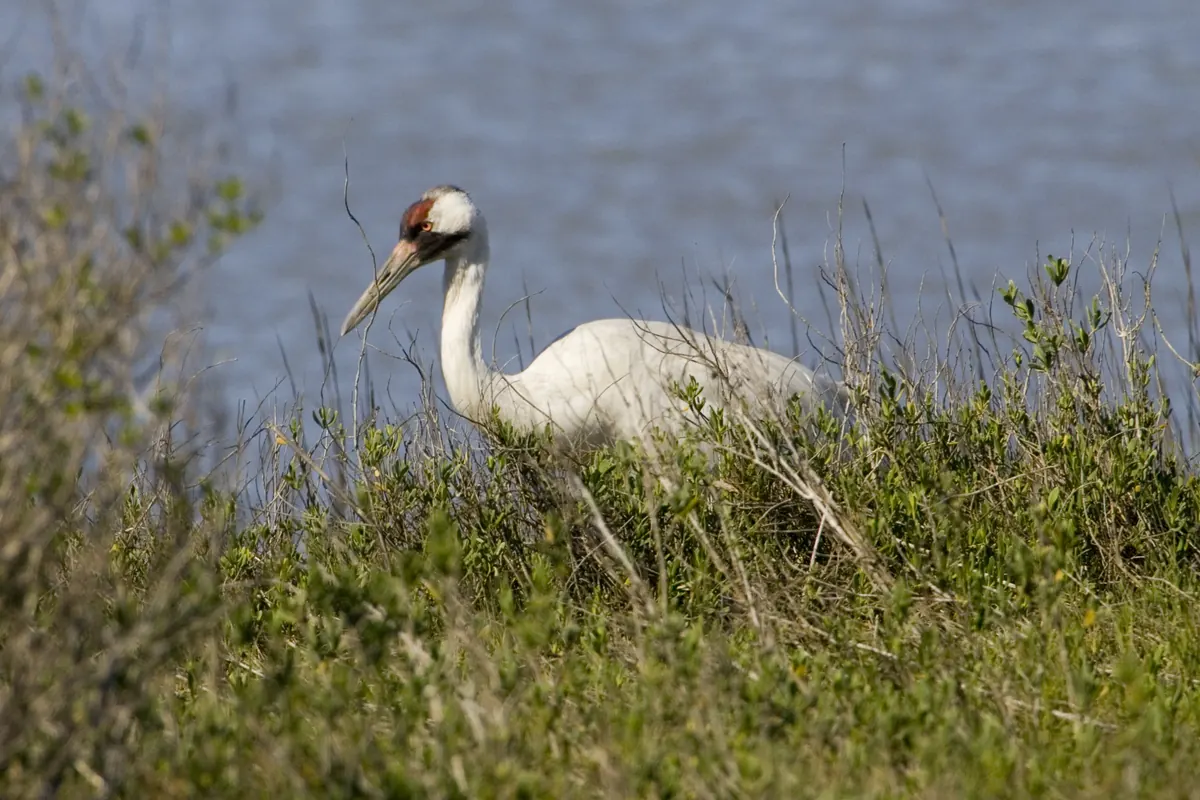
December found the white cranes settled into their marsh territories. January is when the U.S. Fish and Wildlife Service counts them. In the winter of 2025–26 a survey crew in a small Quest Kodiak plane flew the main wintering marshes around Aransas National Wildlife Refuge five times between January 21 and 29, and flew a ring of outlying areas once, on the 29th. Rather than trying to tally every bird, biologists use a statistical method called hierarchical distance sampling, which corrects for cranes the observers miss and gives an estimate with a margin of error.
That January 2026 count, released in June and described on our Texas November page, put the flock at about 540, with 143 adult pairs. Year to year the estimates wobble within their error bars, and the Service describes the population as stable. Breeding success shows up in the same flights: Canadian biologists counted at least 66 chicks fledging at Wood Buffalo National Park in summer 2025, and the survey found at least 57 rusty-headed juveniles in the primary area that winter. Over the full record, from the winter of 1938–39 on, the flock has grown by an average of about 4.2 percent a year.
-
Cranes beyond the refuge
During and after the survey window · Wharton and Colorado counties, Matagorda Bay, the Port Aransas area
A growing share of the population no longer winters inside the traditional survey area. During the 2026 count week the Service tallied 52 birds outside it, including 24 in the rice country of Wharton and Colorado counties, family groups at Mad Island, Powderhorn Lake and north Matagorda Island, and a pair near the Leonabelle Turnbull Birding Center in Nueces County. Those numbers came partly from ordinary people: the survey report credits sightings logged on eBird, iNaturalist and Texas Whooper Watch, the state’s reporting project. If you see a very tall white bird with black wingtips in a field or marsh anywhere in South or Coastal Texas this month, photograph it from a distance and report it.
-
Where to look yourself
Daylight, all month · Aransas National Wildlife Refuge auto tour and observation tower
The refuge’s paved tour road and its observation tower over the marsh remain the land-based way to look. January mornings after a norther are clear and calm, and the low sun lights the white plumage against brown cordgrass. Do not leave the road or approach a family on foot; a bird that flies off burns energy it needs in the coldest weeks.
| Winter | Survey month | Estimate | 95% range |
|---|---|---|---|
| 2015–16 | March | 463 | 392–549 |
| 2016–17 | March | 489 | 428–555 |
| 2017–18 | February | 505 | 439–576 |
| 2018–19 | February | 504 | 412–660 |
| 2019–20 | January | 506 | 342–678 |
| 2021–22 | January | 543 | 426–781 |
| 2022–23 | January | 536 | 443–644 |
| 2024–25 | January | 557 | 478–645 |
| 2025–26 | January | 540 | 482–608 |
The next count should again fall in January, with results months later. Whatever the number, every bird in this flock traces back to the handful that survived on this coast in the early 1940s.
Where do redhead ducks spend the winter?
Mostly in one long, shallow, salty lagoon. The U.S. Fish and Wildlife Service estimates that about 80 percent of all the redheads in North America winter on and around the Laguna Madre, the hypersaline bay that runs behind Padre Island from Corpus Christi to the Mexican border and continues as the Laguna Madre de Tamaulipas in Mexico. Laguna Atascosa National Wildlife Refuge, near Rio Hondo, was set up in 1946 largely for them.
-
Rafts of redheads on the lagoon
Through January into February · Lower Laguna Madre; Laguna Atascosa National Wildlife Refuge; the bay shore at Port Isabel and South Padre Island
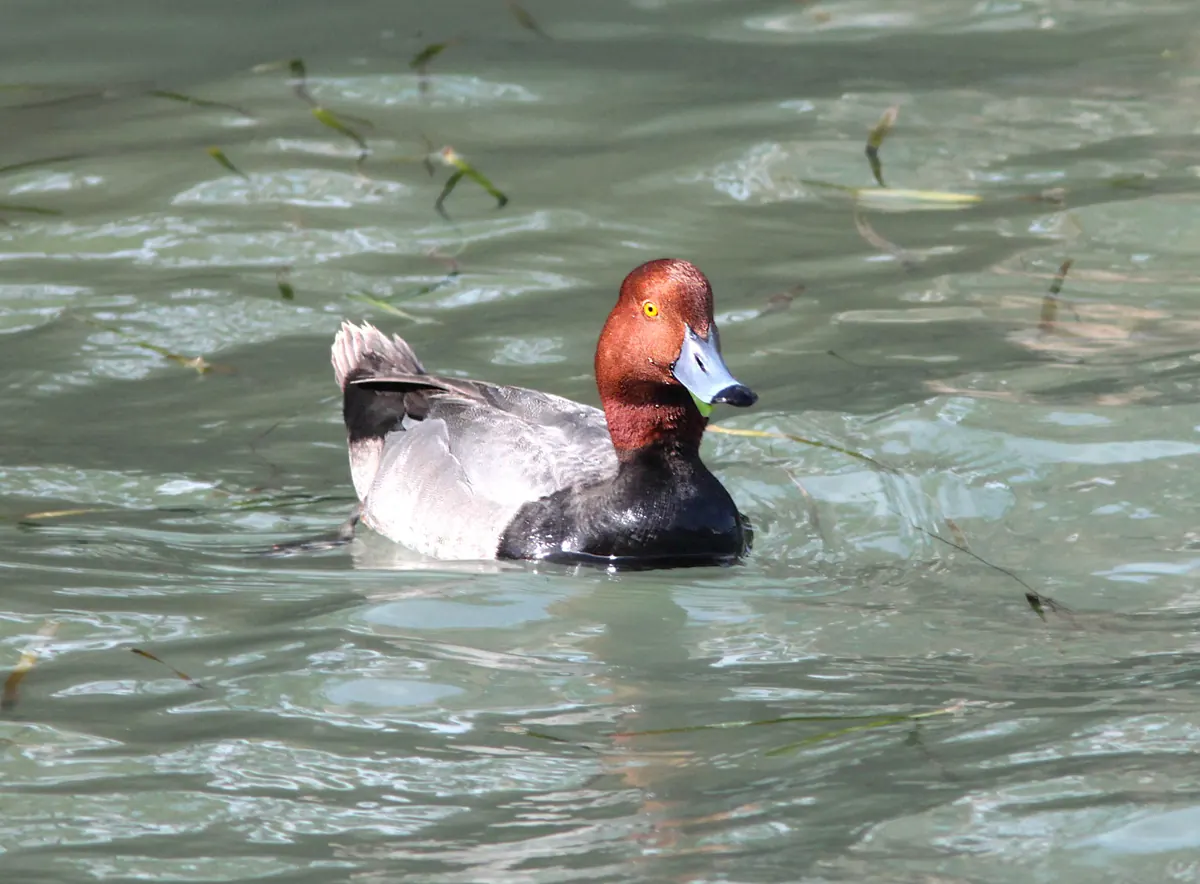
Redheads are diving ducks: the male has a rounded rust-red head, a black chest and a pale gray back; the female is plain brown with a pale ring near the bill tip. In the Laguna Madre they feed almost entirely on the buried roots of a single seagrass, shoalgrass, and U.S. Geological Survey researchers found that the ducks ate about three quarters of the shoalgrass root mass at their study sites each winter. Between feeding bouts many gather on the fresh and brackish ponds just inland of the lagoon, where USGS observers found them mostly asleep or preening, and those ponds can give much closer views. Look for big dark rafts far out on the water and scan with a scope.
-
A refuge with a record list
Dawn to dusk, every day · Laguna Atascosa National Wildlife Refuge
The refuge says 417 bird species have been recorded there, more than at any other national wildlife refuge. Its trails are open from dawn to dusk year-round, entry is $3 per vehicle through Recreation.gov, and the visitor center keeps 8 a.m. to 3 p.m. hours Tuesday through Friday. Staff suggest arriving before 9:30 a.m. or after 4:30 p.m., when animals move most. In the grasslands, watch for the aplomado falcon, a slim gray-and-cinnamon hawk-like falcon that had vanished from the United States and is being restored here. The refuge also shelters one of the last two breeding groups of ocelots in the country, though a sighting is very unlikely.
-
Counting the ducks
Early January · Statewide, from the air
Each January, wildlife agencies across the country fly the Midwinter Waterfowl Survey to track where ducks and geese spend the winter. In the Central Flyway’s 2024 report, most of the counting was done between January 2 and 8. The flights cover the coast, the rice prairies west of Houston and the playa lakes of the High Plains, which together make Texas one of the most important duck wintering states.
Watch the shorelines too. After a strong front blows water out of the shallow bays, the exposed flats fill with feeding shorebirds, herons and roseate spoonbills.
Where can I see bald eagles in Texas in January?
Texas has two kinds of bald eagles this month, and they are doing very different things.
-
Eaglets hatching
Mostly in January · East Texas, the Post Oak region and the coastal counties from Rockport to Houston
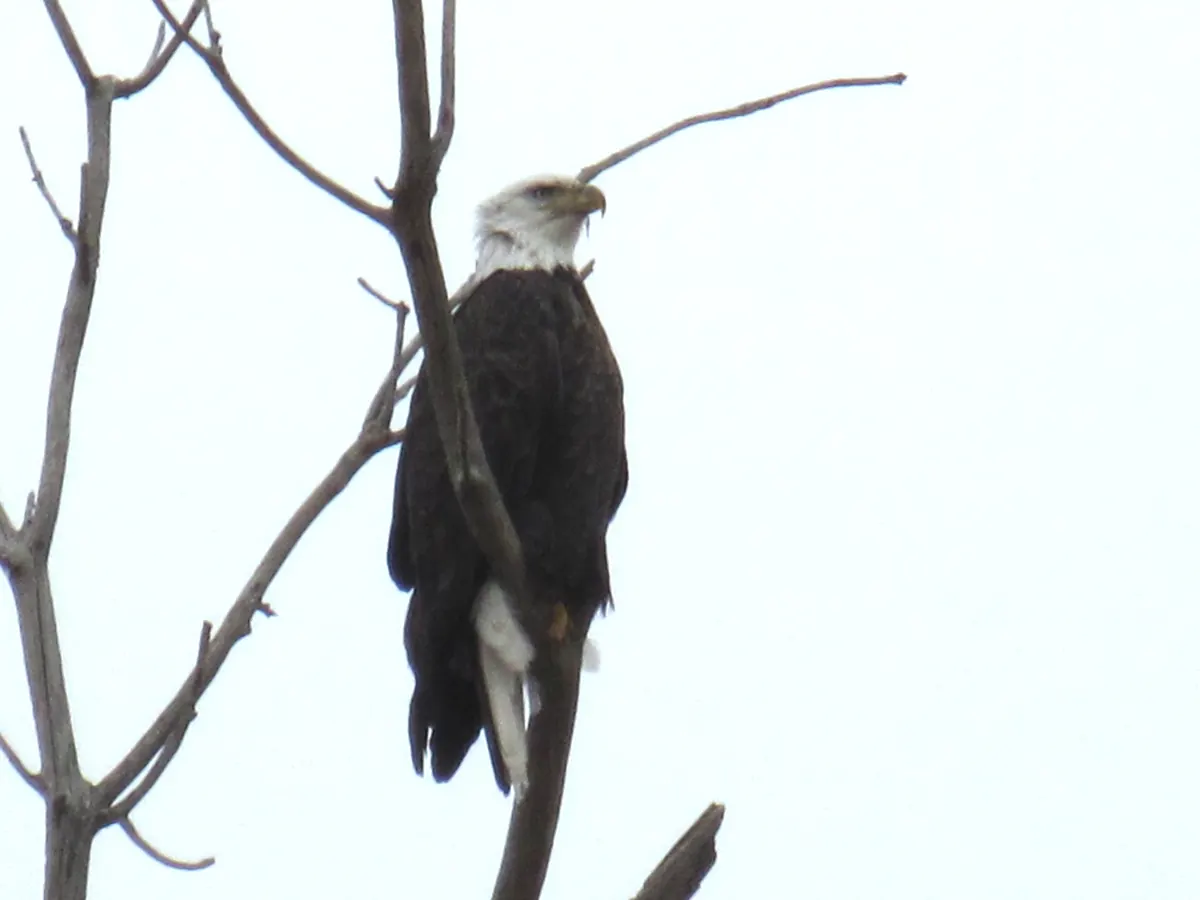
Texas Parks and Wildlife says nesting pairs lay mostly in December, so hatching comes chiefly in January. The chicks are gray balls of down at first, and the adults take turns brooding them and tearing fish into small pieces. The young leave the nest at roughly 11 to 12 weeks, which puts first flights in spring. Nests sit in the tallest trees near water: mostly loblolly pines in East Texas, and elsewhere bald cypress, live oak, cottonwood, sycamore or pecan. Watch any active nest from far away and do not linger; chilled chicks die quickly.
-
Northern eagles on the big reservoirs
December through March, best in midwinter · Lakes in the Panhandle, North, Central and East Texas
Most of the bald eagles Texans see in winter are visitors that breed in the northern states and spend December through March here. A TPWD fact sheet names the reservoirs where they usually gather, among them Lake Meredith and Buffalo Lake in the Panhandle, Lake Texoma, Lake Fork, Lake Tawakoni, Wright Patman Lake, Lake O’ the Pines, Toledo Bend, Sam Rayburn, Lake Livingston, Lake Whitney and Lake Buchanan. They hunt fish and coots on open water and sleep in big old roost trees, often the same ones every winter. The agency has noted that mild winters bring fewer northern eagles south, so a warm January may mean fewer birds. Scan dead snags along the shore early in the morning, and look for the dark immatures as well as the white-headed adults.
Two long-running Texas traditions build trips around these birds: eagle-watching boat cruises on Lake Buchanan, which operate in winter, and the Rains County Eagle Fest in Emory, between Lake Fork and Lake Tawakoni, which has historically been held on a January weekend. Neither had posted 2027 dates when we checked, so contact the operators directly before you plan around them.
Which Texas animals are already nesting or calling in January?
Spring starts early in the southern half of the state, and for a few animals it starts in the coldest month.
-
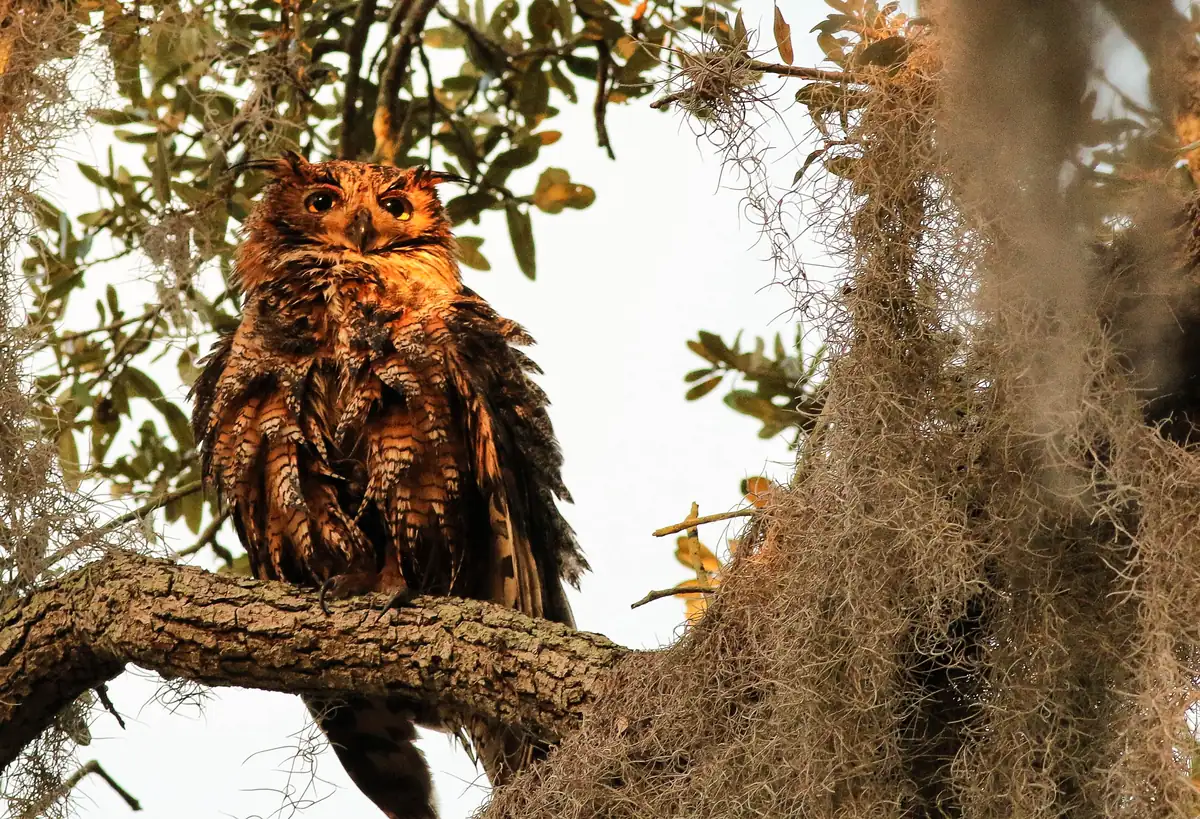
Great horned owls on eggs
Eggs from late December; young in nests from the end of January · Statewide, from city parks to canyon ledges
Great horned owls do not build nests. They take over an old red-tailed hawk or heron nest, a tree hollow or a cliff ledge, and in Texas the breeding season runs from December into summer. The Texas Breeding Bird Atlas has historical egg records from as early as late December and found young in nests from January 31 on. Travis Audubon describes the Austin pattern as pairs forming in November, duetting through December and incubating in January and early February. If you have been hearing a pair hoot at dusk, look for a large bird sitting very still in an old stick nest, with only its ear tufts showing over the rim.
-
Strecker’s chorus frogs
Rainy nights, November to March; often loudest in midwinter · Most of the eastern half of the state, in flooded ditches, pools and creek edges
Stand by a rain-filled ditch on a mild January night and you may hear a fast series of clear, ringing notes, a sound one description compares to sleigh bells. That is the Strecker’s chorus frog, a chunky little frog that spends most of the year buried several inches underground and comes up to breed in winter, digging with its front feet rather than its hind feet. According to the University of Michigan’s Animal Diversity Web, it breeds from November to March, lays its eggs in temporary pools and small creeks, and usually stops calling when the air drops below about 40 °F. Rain after a warm spell is the trigger. TPWD’s Texas Amphibian Watch has a recording of the call to learn before you go.
-
The first purple martins
Sometimes by January on the coast; later inland · Martin houses along the Gulf Coast first, then northward
Purple martins winter in South America, mostly in Brazil, and nest in North America almost entirely in houses and hanging gourds that people put up. The first birds back at a colony each year are called scouts. The Purple Martin Conservation Association explains that they are the oldest martins in the population, either male or female, returning to the site where they nested before, and not advance guards leading a flock. Coastal Texas Master Naturalists say early scouts sometimes reach the Gulf Coast as early as January and advise getting housing up that month. If one turns up at your house, enter the date in the association’s Scout-Arrival Study.
What is happening with Texas plants in the middle of winter?
Most trees are bare or dormant, but two plant stories reach a high point in January: one makes people sneeze and one makes them wait for spring.
-
Cedar pollen at its height
Peak about mid-January; fading toward early March · Hill Country and Edwards Plateau, west of I-35; drifts far downwind
The Texas A&M Forest Service puts the peak of Ashe juniper pollen production in mid-January. Each dry, gusty day behind a front opens the pollen cones on male trees all at once, and the drifting yellow dust can carry for miles, reaching people who live far from any juniper. Local pollen counts are the best guide: on high days, keep the windows shut and save long walks for still, damp days. It is also the easiest week of the year to sort male junipers from female ones, as the males look rusty while the females carry blue berry-like cones.
-
Bluebonnet rosettes
All winter · Roadsides, pastures and gardens across Central and South Texas
According to the Wildflower Center in Austin, Texas bluebonnets pass the winter as low rosettes, flat circles of gray-green leaves, each one split like the fingers of a hand, that hug the ground until they bolt and bloom in March, April and May. A January walk along a roadside that turned blue last spring will often show where this year’s flowers are coming. Photograph the same patch now and again in spring; it makes a good pair of journal entries.
For birds, this is the hungry stretch of winter. Female juniper cones, yaupon fruit softened by freezes and the red berries on bare possumhaw twigs feed flocks of fruit-eating songbirds, and one well-stocked shrub in a yard can keep a crowd busy for days.
How cold is January in Texas, and what could El Niño change?
By the numbers, January is the coldest month: at most major Texas stations its normal lows sit a degree or two below December’s. NOAA’s 1991–2020 normals give Amarillo a typical January high of 52.2 °F, a low of 24.9 °F and about 4 inches of snow. Lubbock averages 1.6 inches and El Paso 0.8 inch. Down the line, Dallas–Fort Worth averages 56.5 °F for a high and 36.1 °F for a low, Austin’s Camp Mabry 62.5 °F and 41.8 °F, Houston Intercontinental 63.8 °F and 43.7 °F, and Brownsville a mild 72.6 °F and 53.1 °F. Averages hide the swings: a January day can open in the 70s and end below freezing once a blue norther comes through.
Gardeners planning spring beds can look up the typical last freeze for the nearest station on our Texas frost-date tables.
This winter starts with the Pacific running hot. In its September 10, 2026, discussion, NOAA’s Climate Prediction Center gave this El Niño better than nine-in-ten odds of turning very strong before winter was out. For Texas that has usually tilted the season toward clouds and rain. A March 2026 drought.gov article from NOAA’s National Integrated Drought Information System sums up the pattern as El Niño usually, but not always, bringing cooler, wetter conditions to the southern United States, and lists past strong events, among them 2015–16, 1997–98 and 1982–83, that eased drought on the Southern Plains, while some others failed to. A 1997 review by the National Weather Service office in Houston looked at four El Niño winters, including the strong one of 1982–83, found rainfall above normal at the city in every one, and summed up the usual result as wet yet relatively mild. None of that rules out an ice storm. Official NOAA seasonal outlooks for this winter start coming out on October 15, with an update each month; find them on NOAA’s 90-day outlook maps, and the current conditions page is the place to watch a front arrive.
How much daylight do Texas cities gain in January?
January is the month the light starts coming back in a way you can notice. Across the eight cities in the table, the day lengthens by 26 to 38 minutes between New Year’s Day and January 31, and the farther north you live, the faster it grows: Amarillo picks up about 1.3 minutes a day on average, Brownsville about 0.9. Nearly all of that early gain lands in the evening. Sunrise keeps creeping later into the first part of January, so school-run mornings stay dark for weeks while the afternoons stretch. In Houston the sun never sets before 5 p.m. at any time of year; on January 1 it goes down at 5:33 p.m.
| City | Jan 1 | Jan 31 | Gained | Per day |
|---|---|---|---|---|
| Amarillo | 9 h 50 m | 10 h 28 m | 38 min | 1.3 min |
| Lubbock | 9 h 58 m | 10 h 34 m | 36 min | 1.2 min |
| Dallas | 10 h 02 m | 10 h 36 m | 34 min | 1.1 min |
| El Paso | 10 h 07 m | 10 h 39 m | 32 min | 1.1 min |
| Austin | 10 h 15 m | 10 h 45 m | 30 min | 1.0 min |
| Houston | 10 h 16 m | 10 h 46 m | 30 min | 1.0 min |
| Corpus Christi | 10 h 25 m | 10 h 52 m | 27 min | 0.9 min |
| Brownsville | 10 h 33 m | 10 h 59 m | 26 min | 0.9 min |
For any spot in the state, the sunrise and sunset calculator gives the times day by day, along with twilight.
What is in the Texas night sky in January 2027?
Times below are Central Standard Time. El Paso and Hudspeth counties keep Mountain time, so subtract one hour there.
-
The Quadrantid meteor shower
Sunday night, January 3, into the morning of Monday, January 4 · Anywhere dark; meteors appear all over the sky
The year opens with a brief, intense shower: the Quadrantids run at full strength for roughly six hours. Two predictions are in circulation. The American Meteor Society puts maximum near 9:30 p.m. Sunday, while EarthSky’s figure is 11:47 p.m.; Texas is in darkness for both. Their radiant, in the faint stars between Boötes and Draco, starts the evening close to the northern horizon and climbs all night, which is why the predawn hours of Monday tend to produce the best rates. Moonlight barely interferes, since only a slim waning crescent is up, and only in the last few hours before dawn. Under a dark West Texas or Hill Country sky, two or three dozen per hour would be a good night; city lights cut that sharply.
-
Closest to the sun
Saturday, January 2, 8:33 p.m. · Everywhere
At 8:33 that Saturday evening Earth makes its closest pass of the year around the sun, about 91.4 million miles out. Worth telling children who think winter means being far from the sun: Texas shivers in January at the very time the planet is nearest, because the season comes from the tilt of the axis and the shallow winter sun angle, not from distance.
-
Venus at its farthest from the sun
Sunday, January 3, and every clear morning · Southeast before sunrise
On Sunday, January 3, the morning planet reaches greatest western elongation, standing 47 degrees from the sun. Look for the dazzling light well up over the southeastern horizon before daybreak; it holds that spot all month. Through a modest telescope the disk appears about half illuminated.
-
The Wolf Moon, the biggest full moon of 2027
Full at 6:17 a.m. on Friday, January 22; watch Thursday evening, the 21st · Rising in the east-northeast near sunset
The moon swings through perigee on Thursday afternoon, about half a day before it turns full, which makes January’s the closest full moon of 2027, some 222,229 miles from Earth. Full phase arrives at 6:17 a.m. Friday, before the sun is up in Texas, so plan on Thursday night, January 21, when the moon rises in the east-northeast near sunset and is up until morning. On Friday evening it will still look perfectly round, and that is the night of the Government Canyon hike listed below.
-
The moon meets Jupiter
Saturday evening, January 23 · East after dark
On Saturday evening, the 23rd, the moon, just past full, rises beside Jupiter, which outshines every star in that part of the evening sky, with the star Regulus close by. Jupiter and Mars both gain brightness all month: Jupiter comes to opposition in the early evening of the 10th of next month, and Mars gets there nine days afterward. Saturn hangs in the southwestern sky after nightfall and sinks a little earlier each week. By the last days of January, Mercury begins to appear low in the west-southwest during evening twilight.
| Phase | Date | Time |
|---|---|---|
| New moon | Thursday, Jan 7 | 2:24 p.m. (1:24 p.m. MST) |
| First quarter | Friday, Jan 15 | 2:34 p.m. (1:34 p.m. MST) |
| Full moon, the Wolf Moon | Friday, Jan 22 | 6:17 a.m. (5:17 a.m. MST) |
| Last quarter | Friday, Jan 29 | 4:55 a.m. (3:55 a.m. MST) |
Moonless evenings run from about the 3rd to the 12th, the best stretch of the month for Big Bend and Hill Country stargazing. No eclipse touches January. Our moon calendar gives rise and set times for your town; before a long drive to dark skies, see whether the cloud cover forecast looks clear.
What can Texas families do outdoors in January 2027?
- Start 2027 on a trail. Friday, January 1, is First Day Hikes day in parks nationwide, and Texas parks take part. Listed on the TPWD calendar so far: a sunrise beach walk with a ranger at Galveston Island State Park (7 to 8 a.m.) followed by a ranger-led bird walk (9 to 10 a.m.); a self-guided hike with a hiking bingo activity at Caprock Canyons, checking in at the self-pay station at the visitor center between 9 and 11 a.m.; and self-guided hikes at Ray Roberts Lake (Johnson Branch), Guadalupe River and Lake Brownwood state parks. Expect more listings to appear as New Year’s Day nears.
- Join a late Christmas Bird Count. The 2026–27 count window ends Tuesday, January 5, and some Texas circles schedule their count after New Year’s Day. Check Audubon’s map of circles for one that has not yet happened.
- Go birding with a ranger. Government Canyon State Natural Area near San Antonio runs a Winter Bird Walk on Saturday, January 9, from 8 to 10:30 a.m., two to three miles along Lytle’s Loop looking for vesper sparrows, loggerhead shrikes and spotted towhees, with loaner binoculars. Galveston Island State Park has beginner-friendly Winter Birding walks on Saturdays, January 9 and 23, from 9 to 10 a.m. On January 30, Government Canyon’s Name That Tune (10 to 11:30 a.m.) teaches birding by ear.
- Walk under the Wolf Moon. Government Canyon’s Full Moon Hike, Friday, January 22, 6:30 to 8:30 p.m., is about a mile over fairly level ground, with binoculars provided for looking at the moon.
- Look at the stars on a dark night. South Llano River State Park lists Astronomy with Buddy on Thursday, January 7, at 6:30 p.m., the evening of the new moon.
- See rock art in the Chihuahuan Desert. Hueco Tanks State Park and Historic Site, east of El Paso, offers guided pictograph tours Wednesday through Sunday by reservation; call the park at (915) 857-1135.
- Report a whooping crane. Texas Whooper Watch on iNaturalist takes photos and sightings from anyone, and those reports now feed into the federal crane survey.
- Listen for frogs. On a rainy, mild night, take children to a flooded ditch or pond edge and count chorus frogs calling. TPWD’s Texas Amphibian Watch has call recordings and a simple protocol for regular listening.
- Keep a feeder tally. Project FeederWatch keeps going until the end of April. After that comes the four-day Great Backyard Bird Count, which Audubon schedules for February 12–15, 2027.
We took every program above from TPWD’s online events calendar in early October 2026. Parks do change or cancel programs, so look at the listing again a few days ahead. Kids 12 and younger pay no state park entry fee. The Naturalist’s Field Journal has room for a year’s worth of lists like these, and the nature guide for every month carries on into February. December’s cranes, cedar and cold-stunned turtles are on the Texas December page.
Safety notes for January in Texas
- Hunting seasons open in January (TPWD, 2026–27). The general white-tailed deer season closes January 3 in the North Zone and January 17 in the South Zone. Late seasons follow: a special late season runs January 4–17 in the north and January 18–31 in the south, and the youth-only late season and the muzzleloader-only season (in 90 counties) both run January 4–17; check your county’s rules for what may be taken. Ducks stay open through January 31 in the North, South and High Plains zones, and dark geese through January 31 in the East Zone and February 7 in the West. Light geese run to February 7 (West) and February 19 (East). Sandhill crane seasons end January 31 in Zones A and B and January 17 in Zone C. Woodcock is open to January 31, snipe to February 21, and quail, chachalaca and javelina in the north to February 28. Pheasant and North Zone fall turkey end January 3; South Zone fall turkey runs to January 17, with youth-only fall turkey seasons of January 4–17 (North) and January 18–31 (South). Winter dove segments close January 7 (North), January 14 (Central) and January 21 (South).
- Hunter orange. TPWD’s rule covers state-owned hunting land plus the national forests and grasslands: while firearm hunting is allowed there, anyone present during daylight must have on an orange hat and 400 or more square inches of orange in all, 144 of them visible from the front and 144 from behind. Turkey and migratory bird hunters are exempt. If you hike a wildlife management area or the Sam Houston, Davy Crockett, Angelina or Sabine national forests this month, wear orange anyway.
- Blue northers. A strong front can turn a warm afternoon into a freezing evening within hours, and the gusty north wind behind it makes the cold bite harder. Carry a warm layer even on a mild morning, and keep an eye on the forecast before a long hike.
- Ice on the roads. Freezing rain and sleet are the real winter danger in most of Texas. When they are forecast, stay home if you can; bridges and overpasses glaze first.
- Cold water. January lake and bay temperatures can be dangerous for anyone who falls in. Put on a life jacket in any kayak, canoe or fishing boat; cold water drains strength much faster than cold air.
- Stranded sea turtles. A turtle that looks lifeless on a beach or bay shore after a freeze may only be chilled. Keep it out of the water and phone the stranding line, 1-866-TURTLE5.
- Grass fires. Dry, frozen grass and strong winds behind fronts make winter wildfires common in West and Central Texas. Check county burn bans and never park a hot vehicle on tall grass.
- Short afternoons. Even on January 31, every city in our daylight table gets less than 11 hours of sun. Carry a light on any afternoon hike.
Sources
- U.S. Fish and Wildlife Service: Whooping Crane Survey Results, Winter 2025–2026 (PDF)
- U.S. Fish and Wildlife Service: Service estimates 540 whooping cranes wintered on Texas coast in 2025–2026
- U.S. Fish and Wildlife Service: 2025 wintering whooping crane count
- U.S. Fish and Wildlife Service: visiting Aransas National Wildlife Refuge
- iNaturalist: Texas Whooper Watch
- U.S. Fish and Wildlife Service: Laguna Atascosa National Wildlife Refuge, about
- U.S. Fish and Wildlife Service: Laguna Atascosa National Wildlife Refuge, species
- U.S. Fish and Wildlife Service: Laguna Atascosa National Wildlife Refuge, visit
- U.S. Geological Survey: Herbivory on shoalgrass by wintering redheads in Texas
- U.S. Geological Survey: Redhead duck behavior on lower Laguna Madre and adjacent ponds of southern Texas
- U.S. Fish and Wildlife Service: Central Flyway Midwinter Waterfowl Survey results, 2024 (PDF)
- U.S. Fish and Wildlife Service: Mid-winter Waterfowl Inventory
- TPWD: bald eagle species profile
- TPWD: bald eagle fact sheet (PDF)
- TPWD: The Bald Eagle, Eye on Nature brochure (PDF)
- Texas Breeding Bird Atlas (Texas A&M): great horned owl
- Travis Audubon: Bird of the Week, great horned owl
- Animal Diversity Web (University of Michigan): Strecker’s chorus frog
- TPWD Texas Nature Trackers: Texas Amphibian Watch frogs and toads, with calls
- Purple Martin Conservation Association: Scout-Arrival Study
- Purple Martin Conservation Association: purple martin timeline
- Texas Master Naturalist, Coastal Chapter: purple martins
- Texas A&M Forest Service: cedar fever season begins in Texas
- Texas A&M Forest Service: cedar fever
- Lady Bird Johnson Wildflower Center: Texas bluebonnet (Lupinus texensis)
- Lady Bird Johnson Wildflower Center: possumhaw (Ilex decidua)
- Lady Bird Johnson Wildflower Center: Ashe juniper (Juniperus ashei)
- Lady Bird Johnson Wildflower Center: yaupon (Ilex vomitoria)
- NOAA NCEI: 1991–2020 monthly climate normals (data API)
- Climate Prediction Center: ENSO diagnostic discussion, September 10, 2026
- Climate Prediction Center: official 90-day outlooks
- Drought.gov (NOAA NIDIS): El Niño on the horizon for the Southern Plains, March 2026
- National Weather Service Houston/Galveston: How will El Niño affect winter in Southeast Texas? (Storm Signals)
- NOAA Global Monitoring Laboratory: solar calculator (the equations behind the daylight table)
- U.S. Naval Observatory: moon phases (data API)
- U.S. Naval Observatory: Earth’s seasons and apsides, 2027
- Fred Espenak: Sky Event Almanac 2027
- American Meteor Society: meteor shower calendar
- EarthSky: Quadrantid meteor shower
- EarthSky: what is a supermoon?
- NASA: eclipses of 2021–2030
- TPWD calendar: First Day Hikes
- TPWD calendar: First Day Hike Sunrise Beach Walk, Galveston Island State Park
- TPWD calendar: First Day Hike Bird Walk, Galveston Island State Park
- TPWD calendar: First Day Hikes, Caprock Canyons State Park
- TPWD calendar: Winter Bird Walk, Government Canyon State Natural Area, January 9
- TPWD calendar: Winter Birding, Galveston Island State Park, January 9
- TPWD calendar: Winter Birding, Galveston Island State Park, January 23
- TPWD calendar: Name That Tune, Government Canyon State Natural Area, January 30
- TPWD calendar: Full Moon Hike, Government Canyon State Natural Area, January 22
- TPWD calendar: stargazing events (Astronomy with Buddy, South Llano River State Park)
- TPWD calendar: Hueco Tanks pictograph tours
- KETR: Eagle Fest this weekend in Emory (2017)
- Vanishing Texas River Cruise, Lake Buchanan
- National Audubon Society: Christmas Bird Count
- Project FeederWatch: how to participate
- National Audubon Society: Great Backyard Bird Count (February 12–15, 2027)
- TPWD: 2026–27 hunting season dates
- TPWD: hunter orange requirements
- National Park Service, Padre Island National Seashore: cold-stunned sea turtles
- Photos via Wikimedia Commons; licenses and photographers are credited under each picture
