What to look for in nature in Texas this December
Meteorological winter begins on December 1, and in Texas it arrives unevenly: a snowy week on the Llano Estacado can coincide with shorts weather in Brownsville. The cranes have settled, the Hill Country junipers get ready to smoke with pollen, bald eagles sit on eggs, and birders fan out across more than a hundred count circles for the Christmas Bird Count. Here is what December holds, region by region.
Other months in Texas: October, November.
Start here
- Sign up for a Christmas Bird Count. Texas circles pick their own single day somewhere in the window from December 14 through January 5. Audubon counted 123 Texas circles in the 2024–25 season, from Amarillo to Brownsville, and every one takes beginners. Find yours on Audubon’s circle map and write to the compiler now, before the dates fill.
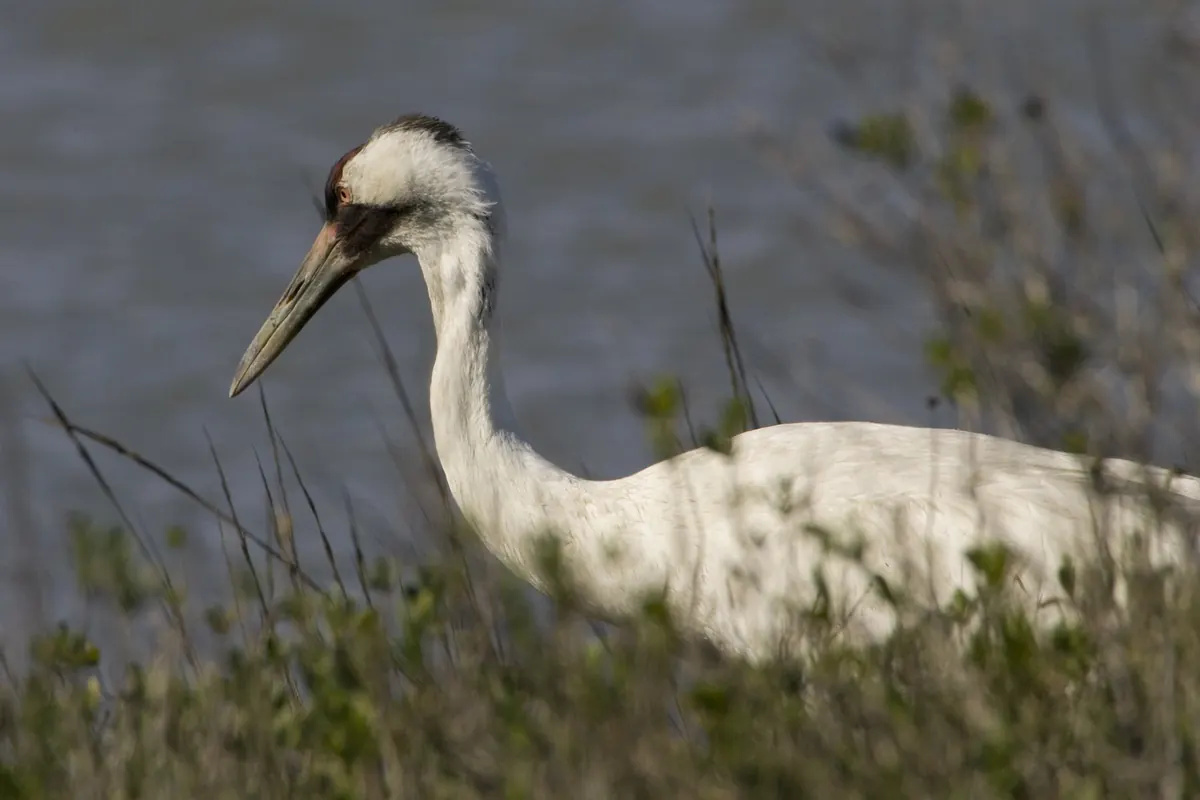
- Look for the white cranes at home. By December the whooping cranes have quit traveling and spread out as pairs and families over the salt marshes around Aransas National Wildlife Refuge. The observation tower on the refuge’s auto tour is the free, land-based place to scan for them.
- Geminids, then the Cold Moon. Look for the Geminids after the crescent moon sets, around 9 or 10 p.m. on Sunday, December 13, and keep watching into Monday’s small hours. Ten days on, the Cold Moon, 2026’s nearest full moon, lifts over the eastern horizon at dusk on the 23rd, a Wednesday.
In the Naturalist’s Field Journal, your Christmas Bird Count tally belongs on “birds I have seen,” with the circle’s name and the weather that morning. Sketch a male Ashe juniper’s rusty pollen cones on seeds, pods and cones, put raccoon or armadillo prints from a muddy creek bank on tracks to know, and keep the short days honest with dusk and dawn watch, writing down when the sun sets in the week of the solstice.
Regions used below: Panhandle and North Texas; Central Texas and the Hill Country; East Texas and the Piney Woods; Gulf Coast; South Texas and the Rio Grande Valley; Trans-Pecos and Big Bend.
When is the Christmas Bird Count in Texas, and how do I join?
The National Audubon Society’s Christmas Bird Count runs from December 14 to January 5. Every count area is a 15-mile-wide circle, and each one picks a single day inside that window; volunteers split the circle into sectors and tally every bird they find from dawn to dusk. It costs nothing, Audubon says, novices are welcome, and you can also count from home if your house sits inside a circle and you watch your feeder that day. Use the Circle Finder to find the compiler for your area, then write ahead: compilers usually hand out territories ahead of time and team newcomers with experienced counters.
Texas runs more counts than almost anywhere. Audubon’s summary of the 125th count (winter 2024–25) lists 123 Texas circles, and the compiler list for that season includes counts in Amarillo, Abilene, El Paso, the Davis and Guadalupe mountains, Austin, Dallas County, Fort Worth, Houston, Galveston, Corpus Christi, Harlingen and Brownsville, plus refuges and state parks such as Aransas, Hagerman, Buffalo Lake, Brazos Bend and Big Bend Ranch. The coast is where the species totals soar:
| Count circle | Species found | National rank |
|---|---|---|
| Matagorda County–Mad Island Marsh | 232 | 1st |
| Guadalupe River Delta–McFaddin Family Ranches | 223 | 3rd |
| Freeport | 197 | Tied 5th |
| Corpus Christi | 189 | Tied 8th |
Rarities turn up too. In that same season, Audubon reports, the Bolivar Peninsula count found a Siberian stonechat, a bird never before recorded on any Christmas count anywhere, and the Galveston count added a yellow-headed caracara, a first for U.S. counts. The real value, though, is in the ordinary tallies of cardinals, kinglets and killdeer, counted in the same circles year after year. If no circle is near you, Project FeederWatch keeps counting all winter, and an eBird checklist from any walk adds to the same picture.
Where can I see whooping cranes and sandhill cranes in Texas in December?
In November the cranes were arriving. In December they have stopped moving and fallen into a winter routine, which makes them easier to find.
-
Whooping cranes on their territories
All month; they stay until about mid-April · Aransas National Wildlife Refuge, the Blackjack Peninsula and nearby bays
On the wintering grounds, the U.S. Fish and Wildlife Service explains, a pair holds a territory of salt marsh that the male mostly defends, and a family with this year’s rusty-headed chick feeds together within it. The main winter foods are blue crabs and clams dug from the marsh, and in fall the red berries of Carolina wolfberry. Every whooping crane alive today descends from the flock that had fallen to just 15 birds wintering at Aransas in 1941. The refuge’s 16-mile paved auto tour runs from sunrise to sunset and leads to an observation tower over the marsh; the entrance fee is $3 for one adult or $5 for a carload, and children under 18 get in free. The visitor center keeps 9 a.m. to 4 p.m. hours Tuesday through Saturday. Bring a spotting scope, and scan the far edges of the marsh for a white shape that keeps its head down.
-
Sandhill cranes at their peak
Peak December to February · Muleshoe National Wildlife Refuge; wet fields around Houston, Brazos Bend State Park, Anahuac National Wildlife Refuge
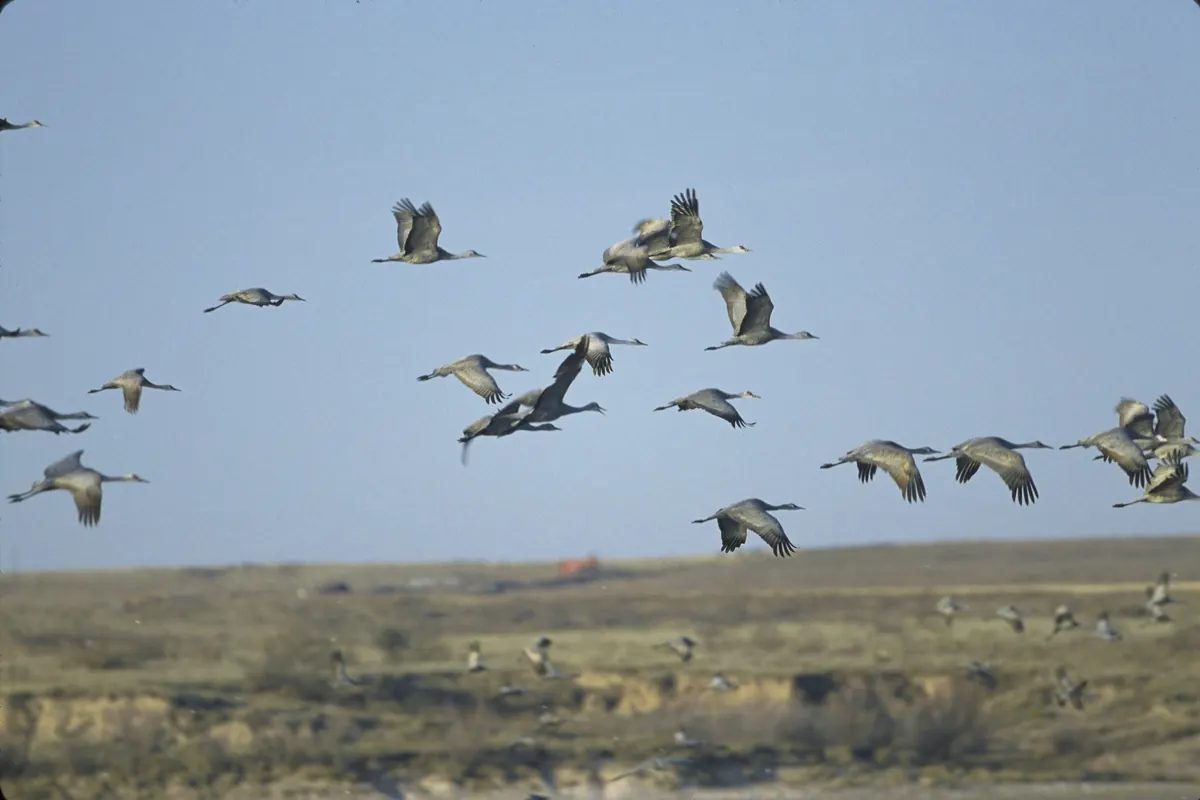
Muleshoe’s three salt lakes, Goose, White and Paul’s, hold about 600 acres of shallow water when full, and the refuge gives December through February as its peak crane season. Cranes roost standing in the shallows and fly out to feed on waste grain at sunrise, so the first half hour of daylight is the show. Texas Parks and Wildlife magazine adds the coastal side: the gray birds also winter in the wet fields around Houston, at Brazos Bend State Park and at Anahuac, eating roots, grain and insects. You will usually hear the rolling, trumpeting call before you spot the flock, a sound made by a windpipe that coils into the breastbone. While you are at Muleshoe, look up for golden eagles hunting over the grassland.
Watch from the car or a marked overlook. If cranes lift their heads and start walking off, back away: a flushed flock wastes energy it needs on cold nights.
What is a cold-stunned sea turtle, and what should I do if I find one?
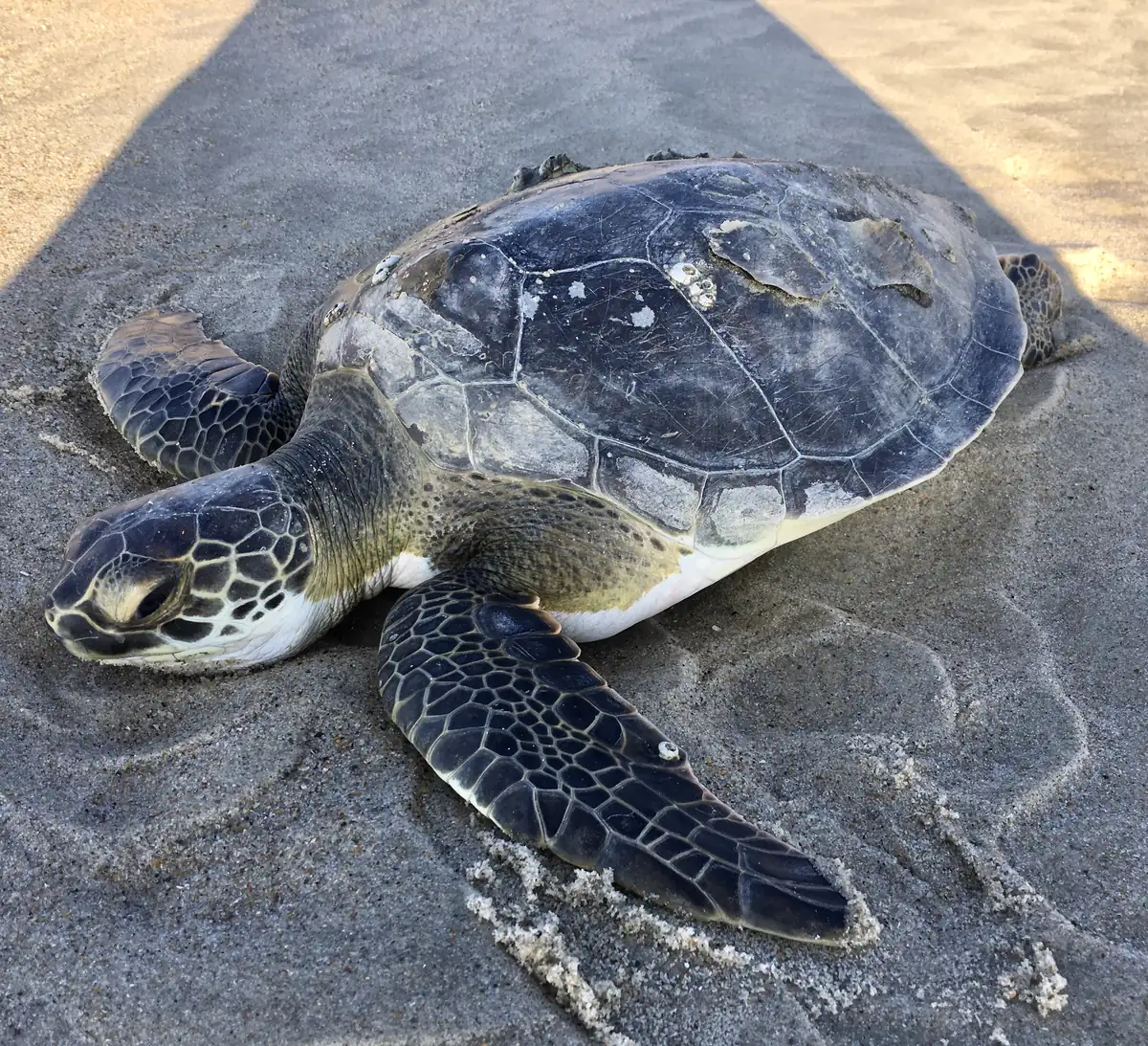
This is the strangest winter story on the Texas coast. When a hard norther drops the water temperature in the shallow bays below about 50 °F, Padre Island National Seashore explains, sea turtles turn lethargic and can no longer swim: they float helplessly or wash up on shore, alive but hypothermic. Most of them are juvenile green sea turtles that feed on seagrass in the Laguna Madre. In a mild winter there may be almost none; in severe winters with several fronts in a row, the park says, hundreds or even thousands can strand.
-
Report it, do not release it
After any sharp cold front, December to February · Laguna Madre, Padre and Mustang islands, bay shorelines from Galveston to South Padre
A cold-stunned turtle can look dead and still be alive. Do not put it back in cold water. Call 1-866-TURTLE5 (1-866-887-8535), the number the National Park Service gives for stranded sea turtles anywhere in Texas, and say where the turtle is, how big it is, how close to the surf, and whether it is moving. If it is alive, mark the spot and wait for a responder if you can. During a big event, park staff and volunteers patrol the shores and the Laguna Madre by boat, and the rescued turtles are warmed up at rehabilitation centers and released once the water is safe again.
-
Seeing a release
Only after a cold-stun event, and not every year · Padre Island National Seashore
Public releases of rehabilitated cold-stunned turtles are uncommon and may not happen in a given winter. To learn whether one is planned, the park asks people to call its Hatchling Hotline at (361) 949-7163.
When does cedar fever start in Texas?
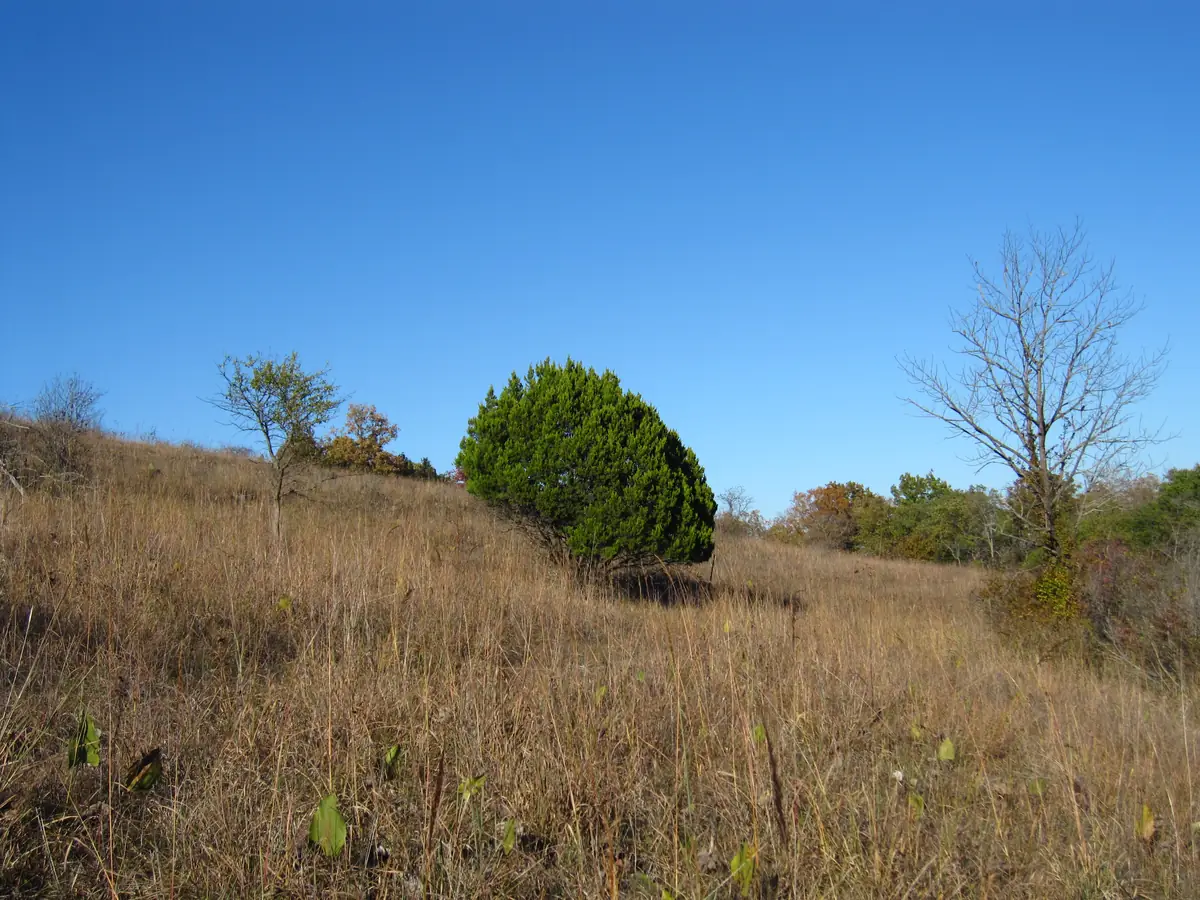
Usually in mid-December. Ashe juniper, the tree everyone in the Hill Country calls cedar, is unusual: it pollinates in the middle of winter. The Texas A&M Forest Service says pollen release typically begins in mid-December, often set off by the first sharp cold front, peaks in mid-January and tapers off toward the beginning of March. The dry, windy air behind a front makes the pollen cones open together, so a whole hillside can release at once and the yellow-orange haze can blow for miles. Allergy sufferers know the result as cedar fever, which is not a fever at all but an allergic reaction. It is worst west of Interstate 35, where juniper dominates the woods with a scattering of oaks; in the eastern part of the state, eastern redcedar pollinates in the same season.
-
Telling male trees from female trees
Mid-December onward · Edwards Plateau, Hill Country, Cross Timbers
Only the male trees make pollen. In December their branch tips turn rusty brown with thousands of small pollen cones, and a tap on a branch releases a puff of dust. Female trees carry the blue, berry-like cones instead, and the Wildflower Center in Austin says birds and small mammals find them very palatable. On a cold, clear morning after a norther, stand where you can see a juniper-covered slope in sunlight and watch for drifting plumes: it looks like smoke.
-
A tree with a rare bird attached
Bark matters in spring · Central Texas juniper-oak woodlands
The same unloved tree supports the golden-cheeked warbler, which nests only in Texas and, according to the Wildflower Center, builds its nest almost entirely from strips of mature Ashe juniper bark. The warblers are in Central America now, but the old shaggy-barked trees they need are easy to pick out on a winter walk.
If the pollen gets you, the Forest Service suggests keeping doors and windows shut on high-count days and changing the air filters at home and in the car. Clear mucus points to allergy; colored mucus points to a cold or the flu.
Which Texas trees stay green in winter, and which berries feed the birds?
Once the cypress and the maples drop their leaves, the Texas winter landscape belongs to the evergreens and to the shrubs that hold their fruit. A December walk is a good time to learn them, because nothing else is competing for your attention.
-
Yaupon holly
Berries hold all winter · East Texas, the coast and west into Central Texas
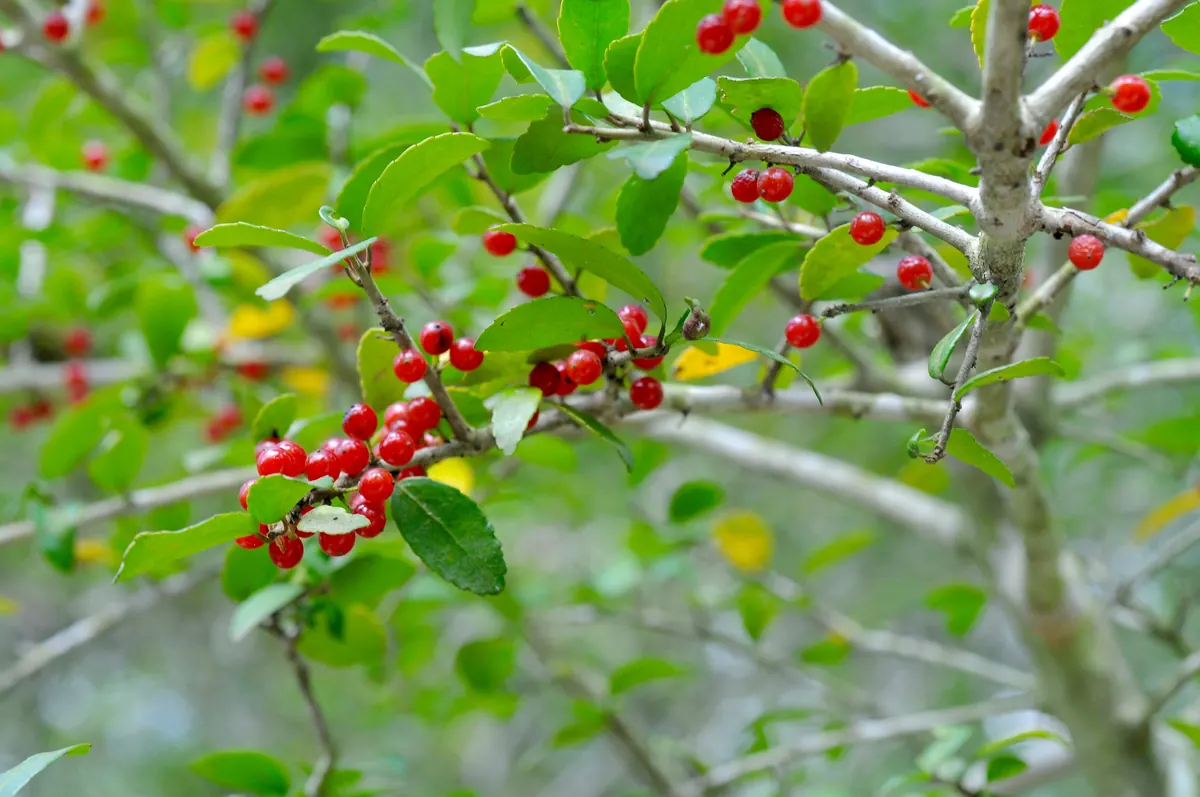
A shrub or small tree with small, dark, glossy evergreen leaves, and on female plants, bright red berries packed along the twigs. The Wildflower Center notes that many birds eat the fruit, but mostly in late winter, after several freezes and thaws have softened it, so the berries you see in December are a pantry for February. The leaves and twigs contain caffeine and were brewed into tea by Native peoples. Only female plants fruit, and they need a male nearby.
-
Live oaks and the Big Tree
Any day · Goose Island State Park, near Rockport
Texas live oaks keep their leaves through winter and replace them in a rush in spring. The most famous of all stands at Goose Island State Park: the Big Tree, a coastal live oak that has stood on the shore for centuries and was named the state champion in 1969. It sits a short drive from the whooping crane marshes across St. Charles Bay, which makes a good pairing for a December day.
What are Texas animals doing in early winter?
-
Bald eagles on eggs
Egg-laying peaks in December; chicks hatch mostly in January · East Texas and the coastal counties from Rockport to Houston
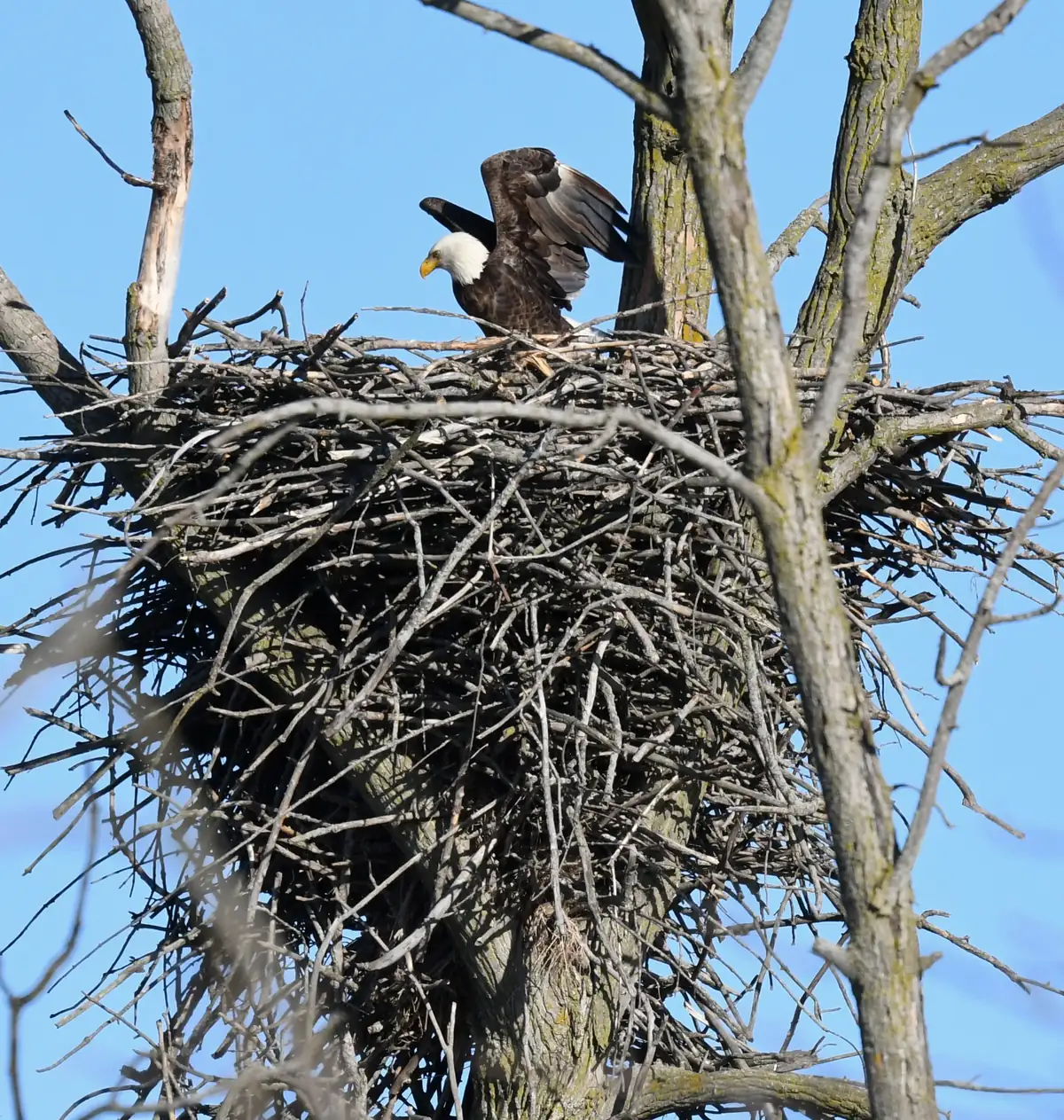
Texas Parks and Wildlife puts the peak of bald eagle egg-laying in December. A female usually lays two eggs, and incubation begins with the first egg and lasts 34 to 36 days, so a pair that looked busy all November now sits low and quiet, the adults trading places on the nest. Nests are huge, commonly six feet across and weighing hundreds of pounds, and are reused and built up every year. Watch from far away with binoculars or a scope; a disturbed adult that leaves the nest exposes the eggs to cold. Wintering eagles from the north also spread over the Panhandle, Central and East Texas lakes this month.
-
Great horned owls calling in pairs
Evenings, December onward · Statewide, from city parks to ranchland
Few Texas birds begin a family sooner than the great horned owl, which courts in the dark of winter. Audubon describes paired owls calling to each other through the night once December arrives. Owlets need many months of parental care before their first winter, which is why the adults begin so early. Listen at dusk on a still evening, and note the date in the journal.
-
The South Texas rut
Peak about December 16 to 24 in South Texas; Trans-Pecos around December 8 · South Texas Plains and the Trans-Pecos
While the rest of the state’s deer have mostly finished breeding, TPWD’s breeding-chronology study puts the South Texas Plains peak in the week before Christmas, and the Trans-Pecos peak a little earlier. Fresh scrapes and rubs and bucks crossing roads in daylight are the signs. The full table by ecoregion is on the Texas November page.
-
Tracks in the mud
The morning after a rain · Creek banks, stock tanks, muddy trail edges
Snow is rare across most of Texas, but a soft creek bank works just as well for tracks. Raccoons leave prints like small human hands, armadillos a line of pointed, bird-like marks beside a dragging tail, white-tailed deer split hearts, and coyotes oval paw prints with the claws showing. In the Valley and the brush country, javelina tracks look like a small deer’s but rounder. Photograph a print next to a coin for scale.
-
Alligators and snakes laying low
Mid-October to early March · Coast and East Texas; statewide for snakes
Alligators are mostly inactive through the cool months, though a warm, sunny afternoon can still bring one out to bask on a bank. Snakes shelter in burrows and rock crevices and may come out to warm up on mild days, so the advice to watch where you put your hands applies even in December.
How cold and snowy is December in Texas, and what will El Niño bring?
Weather scientists count winter from December 1: December, January and February together are, on average, the coldest three months, so meteorological winter starts here. In Texas the spread is enormous. The NOAA climate normals for 1991 to 2020 give Amarillo an average December low in the mid-20s and almost four inches of snow, while Brownsville’s average December afternoon reaches 74 °F and snow there essentially never falls. Most of the state’s December snow lands in the Panhandle, the South Plains and the far west.
| Station | Average high | Average low | Snowfall | Precipitation |
|---|---|---|---|---|
| Amarillo | 51.9 °F | 25.7 °F | 3.8 in | 0.71 in |
| Lubbock | 55.1 °F | 28.3 °F | 2.4 in | 0.75 in |
| El Paso | 57.8 °F | 34.4 °F | 1.3 in | 0.63 in |
| Midland | 59.2 °F | 33.6 °F | 1.4 in | 0.59 in |
| Dallas–Fort Worth | 57.9 °F | 38.3 °F | 0.2 in | 2.84 in |
| Austin (Camp Mabry) | 63.9 °F | 43.4 °F | 0.0 in | 2.72 in |
| San Antonio | 64.7 °F | 42.4 °F | 0.1 in | 2.00 in |
| Houston (IAH) | 65.3 °F | 45.6 °F | 0.1 in | 4.03 in |
| Brownsville | 74.2 °F | 54.7 °F | 0.0 in | 1.21 in |
For gardeners in the southern half of the state, December is also freeze month. The middle-of-the-road first freeze arrives around December 1 in San Antonio, December 6 at Austin’s Camp Mabry and December 8 at Houston’s Intercontinental Airport, while Corpus Christi usually waits until about December 19 and Brownsville until about December 30. The Texas first and last frost dates page has the station nearest you. On the first freezing morning, check a frostweed patch for curls of ice on the stems.
The Pacific is loading the dice this year. A September 10 update from NOAA’s seasonal forecasters judged that a warm event of the very strongest class had better than a 90 percent chance of holding through Texas’s cool season. Two published studies show what such winters have tended to bring. NOAA’s Climate.gov finds wetter-than-average October-to-March weather along the Gulf Coast, Texas included, in over four out of five El Niño episodes during the last hundred years. And the National Weather Service in Amarillo, studying 17 El Niño winters, found that every one brought at least eight days of measurable snow to the city, with an average near 15, and that a strong El Niño winter has had about three times as many snowy days there as a strong La Niña. Tendencies only. The official NOAA winter outlook was not out when we wrote this; it is scheduled for October 15, and the maps will appear among the CPC’s three-month outlooks. When a front is on its way, our weather now page shows the falling pressure and the wind shift that come first.
When is the earliest sunset in Texas?
Not on the shortest day. December 21, the solstice, is the shortest day, from 9 h 47 m in Amarillo to 10 h 31 m in Brownsville, but the evenings bottom out about two to three weeks earlier. Brownsville’s earliest sunset is 5:38 p.m. on November 30, Houston’s is 5:22 p.m. on December 2, Dallas reaches 5:21 p.m. on December 4, and Amarillo 5:35 p.m. on December 5. El Paso, which keeps Mountain time, sees the sun set first by the clock: 5:02 p.m. on December 3. The mornings run the other way: in Houston the latest sunrise, about 7:18 a.m., does not come until around January 10. The reason is that the earth’s orbit is an ellipse and its axis is tilted, so solar noon drifts later on the clock through December while the days are still shrinking. By December 31 every city has already won back two or three minutes since the solstice, almost all of it at the evening end.
| City | Dec 1 | Dec 21 | Dec 31 | Earliest sunset |
|---|---|---|---|---|
| Amarillo | 9 h 57 m | 9 h 47 m | 9 h 49 m | 5:35 p.m., Dec 5 |
| Lubbock | 10 h 05 m | 9 h 55 m | 9 h 58 m | 5:39 p.m., Dec 4 |
| Dallas | 10 h 09 m | 9 h 59 m | 10 h 02 m | 5:21 p.m., Dec 4 |
| El Paso | 10 h 14 m | 10 h 04 m | 10 h 07 m | 5:02 p.m., Dec 3 |
| Austin | 10 h 20 m | 10 h 12 m | 10 h 14 m | 5:30 p.m., Dec 2 |
| Houston | 10 h 23 m | 10 h 14 m | 10 h 16 m | 5:22 p.m., Dec 2 |
| Corpus Christi | 10 h 31 m | 10 h 23 m | 10 h 25 m | 5:34 p.m., Dec 1 |
| Brownsville | 10 h 38 m | 10 h 31 m | 10 h 33 m | 5:38 p.m., Nov 30 |
Look up any address on the daylight calculator for daily sunrise, sunset and twilight. In the first week of December, every city in the table sees the sun go down before about 5:40 p.m.
What can you see in the Texas night sky in December 2026?
Long nights and frequent clear, dry air behind the fronts make December one of the best stargazing months in Texas. Times are Central Standard Time; for El Paso and the Mountain-time corner of West Texas, take off an hour.
-
The Geminids
Night of Sunday, December 13, into Monday morning · Anywhere dark; the radiant near Castor and Pollux is high overhead after midnight
The best shower of the year, and this year the moon cooperates: the International Meteor Organization calls it a moon-free maximum, since the slim waxing moon drops out of the west by roughly 9 or 10 p.m. Under a truly dark rural sky the shower can approach 150 meteors an hour at its best; from a town, expect a fraction of that, still dozens. The count improves as Gemini climbs, peaking near 2 a.m. Bundle up for a night that can reach freezing, and lie back in a reclining chair with the bright lights off.
-
The Cold Moon, the biggest full moon of 2026
Evening of Wednesday, December 23 · Rising in the east-northeast around sunset
The moon turns full at 7:28 p.m. on the 23rd, roughly seven hours ahead of lunar perigee, which makes it the closest full moon, and the largest in appearance, of all 2026. Christmas Eve’s moon will look nearly as round. Enchanted Rock has a ranger-led night hike under it (details in the families section).
-
The winter solstice
Monday, December 21, 2:50 p.m. CST · Everywhere
Winter begins by the astronomers’ calendar at 2:50 in the afternoon (1:50 in El Paso). Mark where a fence post’s midday shadow ends on the 21st, then mark it again next June.
-
Venus at dawn, Saturn at dusk
All month · East before sunrise; south and southwest after dark
Before sunrise, dazzling Venus hangs in the east-southeast, climbing higher through the month until it stands farthest from the sun in early January (the 3rd). A crescent moon sits near it and the star Spica on the mornings of December 4 and 5. Jupiter and Mars are also in the morning sky, Jupiter rising by mid-evening by the end of the month and Mars slowly brightening. After dark, look for Saturn in the southwestern half of the sky; it sets a little earlier every evening.
-
Looking ahead: the Quadrantids and Comet Encke
Night of January 3 to 4; Encke in late January and February · North-northeast before dawn; western twilight
The Quadrantid shower peaks at about 9:25 that Sunday evening, January 3 (Central time), and the moon will be a thin waning crescent, so the hours before dawn on the 4th should be good. Comet Encke, the parent of November’s Taurid fireballs, begins brightening in December but is expected to need binoculars in the evening twilight of late January and February. No eclipses are visible from Texas this month.
| Phase | Date | Time |
|---|---|---|
| Last quarter | Tuesday, Dec 1 | 12:08 a.m. (11:08 p.m. Nov 30 in El Paso) |
| New moon | Tuesday, Dec 8 | 6:52 p.m. |
| First quarter | Wednesday, Dec 16 | 11:42 p.m. |
| Full moon, the Cold Moon | Wednesday, Dec 23 | 7:28 p.m. |
| Last quarter | Wednesday, Dec 30 | 12:59 p.m. |
See the moon phases and moonrise page for the times where you live, and check the cloud forecast before a long drive to a dark site.
What can Texas families do outside in December 2026?
- Count birds for science. Find a Christmas Bird Count circle near you (December 14 to January 5) and ask the compiler for a spot. A child with a tally sheet is welcome on most teams, and feeder counts from home count too.
- Go to a winter star party. Davis Mountains State Park holds Miles of Stars at the CCC Rock Lookout on Thursday, December 3, at 7 p.m. Enchanted Rock’s free-with-entry Christmas Starfest, with ranger telescopes, a star tour and holiday activities for children, runs Saturday, December 12, from 6 to 8:30 p.m. in Lot 1 (optional registration). Out west, Big Bend Ranch State Park has two more Star Party in the Borderlands nights, December 4 and December 30, both by reservation; ask the park for the start time.
- Walk under the Cold Moon. Enchanted Rock’s Super Full Cold Moon Night Hike climbs the 0.8-mile Summit Trail with a ranger on Wednesday, December 23, 5:30 to 7:30 p.m.; it is limited to 25 people, so email the park to reserve.
- Make treats for the birds. Guadalupe River State Park’s Christmas for the Birds (Saturday, December 19, 10 to 11 a.m., at the amphitheater behind the Discovery Center) teaches children about birds’ winter habits and has them make holiday snacks for them. On Saturday, December 26, Government Canyon State Natural Area runs Nest Quest, a ranger bird walk aimed at ages 6 to 10, from 10 a.m. to noon.
- Bird the holidays. Enchanted Rock offers an hour-long Christmas Morning Bird Walk at 9 a.m. on December 25 from the gazebo at the Summit Trailhead, no registration needed. Galveston Island State Park’s Winter Birding walk leaves the observation tower lot at 9 a.m. on Saturday, December 26 ($5 for adults, free for children 12 and under). Brazos Bend’s regular birding hike meets at 40 Acre Lake at 8 a.m. on Friday, December 4.
- Mark the solstice. Ray Roberts Lake State Park’s Johnson Branch Unit leads a 2.5-mile Winter SOLE-stice Hike on the Cross Timbers Trail on Sunday, December 20, 10 a.m. to noon, on paved trail suitable for wheelchairs.
- See a park in lights. Goose Island State Park’s Christmas in the Park, Saturday, December 12, 5:30 to 8:30 p.m., waives entrance fees and lets campers stay free if they decorate their sites; pair it with a morning at the Big Tree or the crane marshes.
- Start 2027 on a trail. Texas state parks take part in the national First Day Hikes on New Year’s Day, Friday, January 1. Galveston Island State Park, for one, has a one-mile ranger bird walk at 9 a.m.; the TPWD calendar lists the rest as parks post them.
Every event above is from the Texas Parks and Wildlife calendar as of early October; programs can change or be canceled for weather, so check the event page the week before. More than twenty parks hold light trails and craft days in mid-December. Children 12 and under enter Texas state parks free. For a pocket-sized place to keep the year’s first Christmas count list, there is the Naturalist’s Field Journal, and the month-by-month nature guides continue into the new year.
Safety notes for December in Texas
- Hunting seasons that run through December (TPWD, 2026–27). White-tailed deer general season continues statewide, ending on January 3 (North Zone) or January 17 (South Zone). For mule deer, the Panhandle season ends December 6 and the Trans-Pecos season December 13. Ducks: the North Zone reopens December 5 and the South Zone December 12, both through January 31; the High Plains Mallard Management Unit runs straight through to January 31. Geese stay open all month in every zone. Sandhill cranes: Zones A and B continue, and Zone C opens December 12. Pheasant opens December 5, quail and fall turkey continue, and the winter dove segments open December 11 in the Central Zone and December 18 in the North and South zones.
- Hunter orange. On public hunting lands (state lands, national forests and national grasslands), anyone there in daylight while a firearm season is open is required to have on 400 or more square inches of orange, a hat or cap among it, with at least 144 square inches showing on both chest and back. Hikers on wildlife management areas and in the East Texas national forests should wear orange by choice too.
- Northers and ice. A strong front can turn a mild afternoon into a freezing night. Dress in layers, keep a coat in the car, and if freezing rain is forecast, stay off the roads; bridges and overpasses ice before the pavement around them.
- Cold-stunned turtles. After a hard freeze on the coast, a sea turtle on the beach may be alive. Call 1-866-TURTLE5 and leave it out of the water.
- Cedar fever. If you are allergic, plan Hill Country hikes for the still, humid days between fronts, not the bright windy days just after one.
- Short days. In early December, sunset comes by roughly 5:40 p.m. across the cities in our daylight table, and close to 5:00 in El Paso. Start afternoon walks early, carry a headlamp, and drive slowly at dusk, when deer cross.
- Fire weather. Freeze-cured grass and gusty, dry post-frontal winds make winter grass fires a real risk in West and Central Texas; check for county burn bans before lighting anything.
Sources
- National Audubon Society: Christmas Bird Count
- National Audubon Society: join or start a Christmas Bird Count (Circle Finder)
- National Audubon Society: 125th Christmas Bird Count summary
- National Audubon Society: 125th Christmas Bird Count compiler list (PDF)
- Project FeederWatch: how to participate
- eBird
- U.S. Fish and Wildlife Service: birding at Aransas National Wildlife Refuge
- U.S. Fish and Wildlife Service: visiting Aransas National Wildlife Refuge (hours, fees, auto tour)
- U.S. Fish and Wildlife Service: whooping crane species profile
- U.S. Fish and Wildlife Service: Muleshoe National Wildlife Refuge, species
- Texas Parks and Wildlife magazine: sandhill cranes
- National Park Service, Padre Island National Seashore: cold-stunned sea turtles
- National Park Service, Padre Island National Seashore: reporting stranded sea turtles
- National Park Service, Padre Island National Seashore: sea turtle science and recovery
- Texas A&M Forest Service: cedar fever season begins in Texas
- Texas A&M Forest Service: cedar fever explained
- Lady Bird Johnson Wildflower Center: Ashe juniper (Juniperus ashei)
- Lady Bird Johnson Wildflower Center: yaupon (Ilex vomitoria)
- TPWD: Goose Island State Park and the Big Tree
- TPWD: bald eagle
- National Audubon Society: why great horned owls start nesting in winter
- TPWD: white-tailed deer breeding chronology (the rut)
- TPWD: American alligator
- NOAA NCEI: 1991–2020 monthly climate normals (data API)
- NOAA NCEI: 1991–2020 first-freeze probability normals (data API)
- Climate Prediction Center: ENSO diagnostic discussion, September 10, 2026
- Climate Prediction Center: official 90-day outlooks
- NOAA Climate.gov: United States El Niño impacts
- NWS Amarillo: El Niño, La Niña and the Panhandle
- NOAA Global Monitoring Laboratory: solar calculator (the equations behind the daylight table)
- U.S. Naval Observatory: moon phases (data API)
- U.S. Naval Observatory: equinoxes and solstices, 2026
- International Meteor Organization: 2026 meteor shower calendar (PDF)
- International Meteor Organization: 2027 meteor shower calendar (PDF)
- EarthSky: what is a supermoon?
- EarthSky: Venus at greatest western elongation
- Star Walk: Comet Encke
- NASA: eclipses of 2026
- TPWD calendar: Miles of Stars, Davis Mountains State Park, December 3
- TPWD calendar: Christmas Starfest at Enchanted Rock, December 12
- TPWD calendar: stargazing events, including Star Party in the Borderlands
- TPWD calendar: Super Full Cold Moon Night Hike, Enchanted Rock, December 23
- TPWD calendar: Christmas for the Birds, Guadalupe River State Park, December 19
- TPWD calendar: Nest Quest, Government Canyon State Natural Area, December 26
- TPWD calendar: Christmas Morning Bird Walk, Enchanted Rock, December 25
- TPWD calendar: Winter Birding, Galveston Island State Park, December 26
- TPWD calendar: birding hike, Brazos Bend State Park, December 4
- TPWD calendar: Winter SOLE-stice Hike, Ray Roberts Lake State Park, December 20
- TPWD calendar: Christmas in the Park, Goose Island State Park, December 12
- TPWD calendar: holiday events in state parks
- TPWD calendar: First Day Hikes
- TPWD calendar: First Day Hike bird walk, Galveston Island State Park, January 1, 2027
- TPWD: 2026–27 hunting season dates
- TPWD: hunter orange requirements
- Texas A&M Forest Service: dry conditions and wildfire risk (dormant season)
- Photos via Wikimedia Commons; licenses and photographers are credited under each picture
