What to look for in nature in Texas this November
November is when the winter birds of Texas actually land. Whooping cranes drop onto the Aransas marshes, sandhills fill the Panhandle playas at dusk, and white blankets of snow geese settle on rice stubble west of Houston. The Hill Country maples peak, the bucks go looking for does, and the freeze line slides south from the Panhandle toward Dallas. Here is what to watch, and when.
Other months in Texas: October, December.
Start here

- Sunday, November 1: a free park day. The clocks fall back at 2:00 a.m., and the same Sunday is the fourth annual Texas State Parks Day, with free entry to the state parks. Reserve a free “Save the Day” pass ahead for the popular ones. Project FeederWatch also opens its season that morning, so count your feeder birds when you get home.
- Watch the sky for white cranes. Whooping cranes cross the state in November on their way to the coast, often over Dallas–Fort Worth, Waco and Austin, and seldom stop more than a day. All white with black wingtips and a slow wingbeat: if you see one, report it to Texas Whooper Watch.
- Leonids, then the Beaver supermoon. For the Leonid meteors, go out after the half-lit moon sets, between about 12:30 and 1 a.m. (12:46 a.m. in Austin), on the morning of Wednesday, November 18, and watch until dawn. Six days later comes the Beaver Moon, whose exact full phase falls at 8:53 that Tuesday morning (Central time), the 24th, so the round moonrise to catch is at dusk either Monday or Tuesday evening.
In the Naturalist’s Field Journal, the first whooping crane or the first skein of snow geese belongs on “birds I have seen,” noted with the day and which way the wind blew. Press a bigtooth maple leaf on the colours of the day plate, put a buck rub or a scrape on reading the signs, and use dusk and dawn watch for cranes flying out to feed. A tree through the seasons page suits a cypress on your river, sketched now in rust and again bare in January.
Regions used below: Panhandle and North Texas; Central Texas and the Hill Country; East Texas and the Piney Woods; Gulf Coast; South Texas and the Rio Grande Valley; Trans-Pecos and Big Bend.
When do whooping cranes and sandhill cranes get to Texas?
Two crane stories run at once in November, one at each end of the state.
-
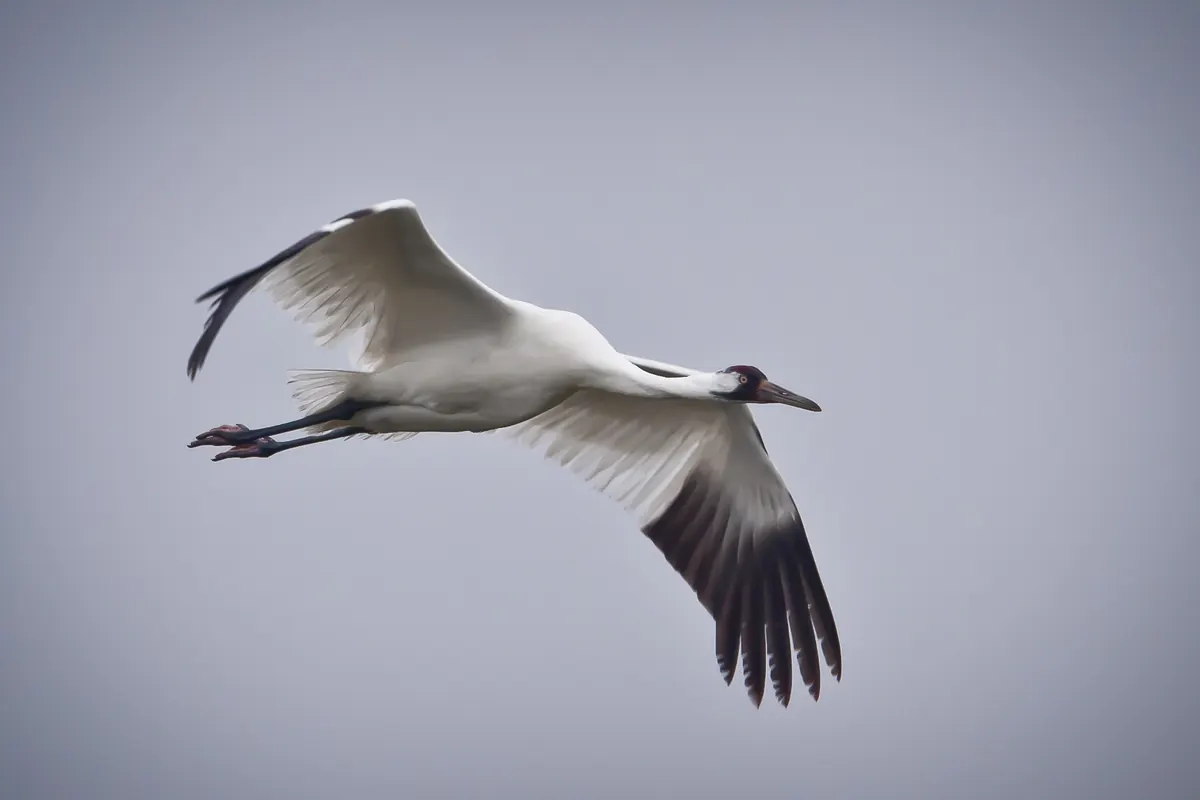
Whooping cranes, in transit
Through November; most on the coast by December · North and Central Texas skies, then Aransas
The only wild migratory flock of whooping cranes spends the summer in and around Wood Buffalo National Park in northern Canada and flies roughly 2,500 miles to the Texas coast, a trip that can take up to 50 days. In a Texas Parks and Wildlife release, the federal whooping crane coordinator called November the big month for migration sightings in Texas and said the whole flock is usually not on the coast until December. The route often passes Dallas–Fort Worth, Waco and Austin. The birds rarely stay put for more than a day, resting on wetlands and farm fields. The first arrivals at Aransas National Wildlife Refuge typically show up in late October, and the refuge expects them to leave by mid-April.
-
How many there are
Latest count: winter 2025–26 · Aransas National Wildlife Refuge and the bays around it
The U.S. Fish and Wildlife Service’s aerial survey last January estimated about 540 whooping cranes in the primary survey area, including at least 57 young of the year, essentially unchanged from the 557 of the winter before. Another 52 turned up outside the survey zone, eight of them spending the whole winter at Salt Plains refuge in Oklahoma, a first. The flock has now stayed above 500 for more than nine years running; at listing in 1967 it was about 50 birds.
-
Telling them apart
Whenever big white birds fly over · Statewide
Whooping cranes are pure white with black wingtips and fly with slow, deep beats, legs trailing. Sandhill cranes are gray. Snow geese also have black wingtips but are much smaller, fly in noisy crowds and flap faster. American white pelicans have black in the wings too, but a huge orange bill gives them away. Photograph what you can and add it to the Texas Whooper Watch project on iNaturalist; those reports feed the federal survey.
-
Sandhill cranes on the High Plains
Building through November; peak December to February · Muleshoe National Wildlife Refuge, Panhandle playas, Trans-Pecos salt lakes
Sandhills begin reaching Muleshoe in September, and the federal refuge puts its peak between December and February, when the salt lakes serve as night roosts. Marfa Public Radio’s Nature Notes says tens of thousands winter on the Llano Estacado and in parts of the Trans-Pecos, with thousands sometimes on a single playa or on the salt lakes west of the Guadalupe Mountains. November is the build-up: fewer birds than January, but the sound of a flock lifting off a roost at first light is the same. Stay on public roads and do not walk toward roosting birds.
Where can you see snow geese in Texas this month?
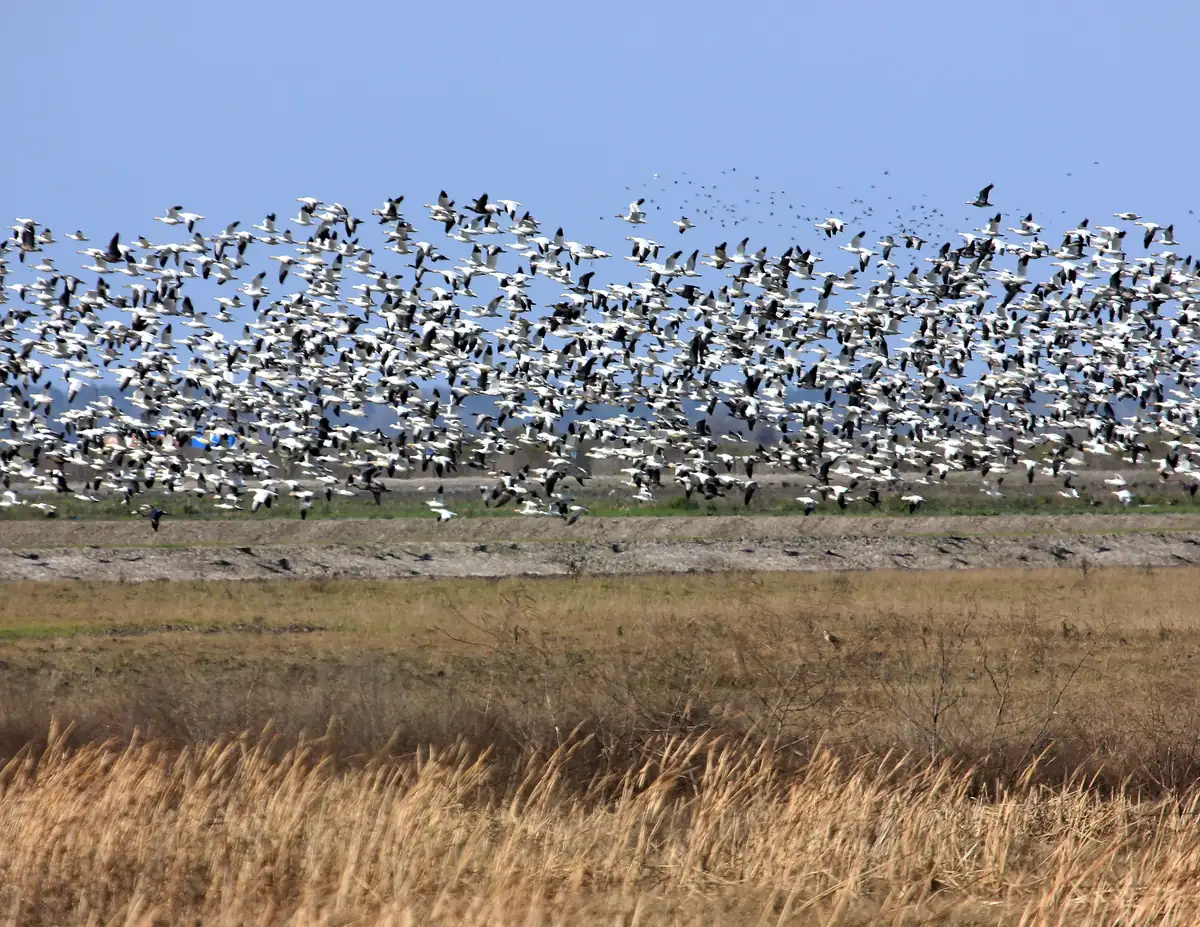
Snow geese are the most numerous winter goose on the upper coast. Houston Audubon says a few early birds show up around mid-October, many more arrive toward the middle of November, and they stay until about the end of February. Flocks of thousands are possible. Its recommended spot is Anahuac National Wildlife Refuge, where hundreds to thousands use the fields and marsh around Shoveler Pond along with ducks of many kinds.
-
Upper coast prairies and refuges
Mid-November onward · Anahuac National Wildlife Refuge and the coastal prairie west of Houston
Anahuac is the sure bet, but flocks also work the harvested rice fields of the coastal prairie west of Houston. Look for a white smear on the stubble that turns out to be birds, then wait for something to flush them. A flock rising all at once sounds like surf. Mixed in you may find the blue morph, dark-bodied with a white head, and the smaller Ross’s goose with a stubby bill. Drive slowly on farm roads, pull fully off the pavement, and never cross a fence.
-
Ducks behind each front
All month · Coastal marshes, Panhandle playas, reservoirs
Pintails, gadwall, green-winged teal, shovelers and wigeon keep arriving on north winds. Muleshoe names pintail, green-winged teal and ruddy ducks among the birds that depend on its saline lakes. A spotting scope earns its weight here, since the ducks mostly sit far out on open water.
Waterfowl hunting is open across much of the state in November (dates in the safety notes below), so on refuges, check which units are open to hunting that day, and on private land, view from the road.
Which other winter birds show up in Texas in November?
-
Bald eagles, nesting already
Nesting October to July; eggs peak in December · East Texas and the coastal counties from Rockport to Houston; winter visitors in the Panhandle and Central Texas
Texas eagles run on a different calendar from northern ones. TPWD says they nest from October to July, with egg-laying peaking in December and most chicks hatching in January, so November is when pairs are carrying sticks and refurbishing old nests in the eastern half of the state. Wintering eagles from farther north also spread across the Panhandle and Central Texas. On Lake Buchanan, eagle-viewing cruises run in winter, though a 2019 Texas Observer report found only a handful of birds a winter there in the late 2010s. Keep well back from any nest; a flushed eagle leaves its eggs exposed.
-
Winter hummingbirds
November to March · Mostly the coast and South Texas; some inland
The ruby-throats are nearly gone, and any hummingbird at a feeder now deserves a second look. Houston Audubon lists rufous hummingbirds on the upper coast from October to March in small numbers, and black-chinned hummingbirds winter there too. If you put out sugar water this month, keep it fresh through the winter.
-
The finch forecast says: not much
Winter 2026–27 · Statewide feeders
Writing on September 27, the Finch Research Network forecast that northern finches would mostly remain in Canada and the Northeast this winter, where cone and seed crops are good. Its authors see no large southern invasion; a purple finch flight, if one happens, should be small and late, and red-breasted nuthatches are not expected to repeat last winter’s push south. Pine siskins might trickle south. So a purple finch or a siskin at a Texas feeder this year would be a good record; American goldfinches, which winter here every year, are the dependable yellow-green visitors.
-
Project FeederWatch
November 1 to April 30 · Your yard
Cornell Lab’s winter feeder count opens its season on November 1. Pick a patch to watch, count on two consecutive days up to once a week, and for each species write down the most individuals in view together. Joining costs a small fee. Ordinary birds in small numbers are the useful part of the data.
Why go birding in the Rio Grande Valley in November?
The Lower Rio Grande Valley is where birds that barely reach the United States meet the wintering crowds from the north, and the cooler weather makes November a comfortable month to go.
-
Rio Grande Valley Birding Festival
November 11 to 15, 2026 · Harlingen Convention Center, with field trips across the Valley
Five days of guided field trips, workshops and talks, with habitats from thornscrub and river woodland to mudflats and open water. The festival’s own agenda confirms the 2026 dates, November 11 to 15, for its 33rd year; check field-trip availability on the festival’s website before you book.
-
Santa Ana National Wildlife Refuge
Winter schedule from November · South of Alamo, on the Rio Grande
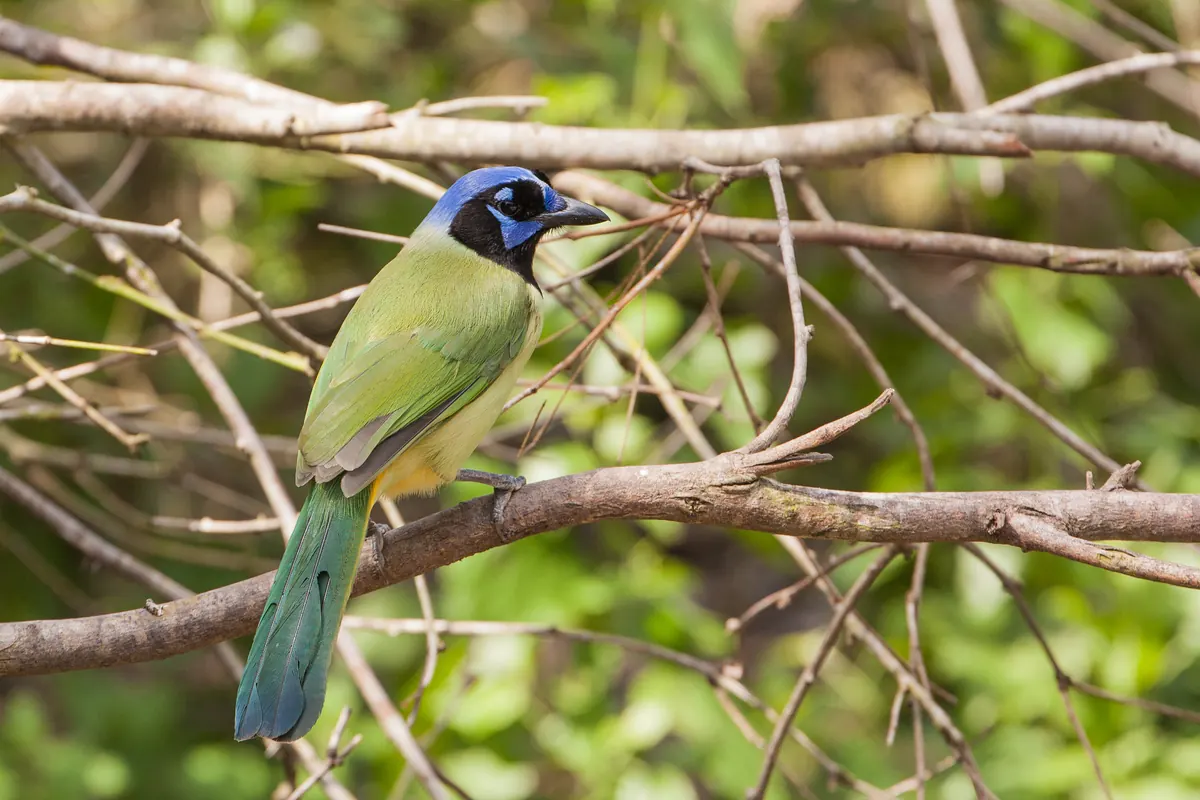
In the November to April season the visitor center keeps 9-to-4 hours Tuesday to Saturday, the interpretive tram leaves at 11 a.m. and 2 p.m. Wednesday to Saturday, and the trails stay open every day from first light to dusk. A guided walk leaves at 8 a.m. on the first Saturday of each month, and parking is free on the first Sunday. Green jays and plain chachalacas, birds found in this country only in South Texas, are the refuge’s calling cards; the first hours after dawn are best.
-
Butterflies in the late warmth
Warm November days · Valley gardens and refuges
Santa Ana lists the malachite, a big green-and-black tropical butterfly, among the things a visitor may meet under its Spanish moss and ebony trees. On a warm afternoon, check any flowering shrub along the trails.
Where is the best fall color in Texas in November?
-
Lost Maples State Natural Area
Usually the first two weeks of November · Sabinal River canyon, near Vanderpool
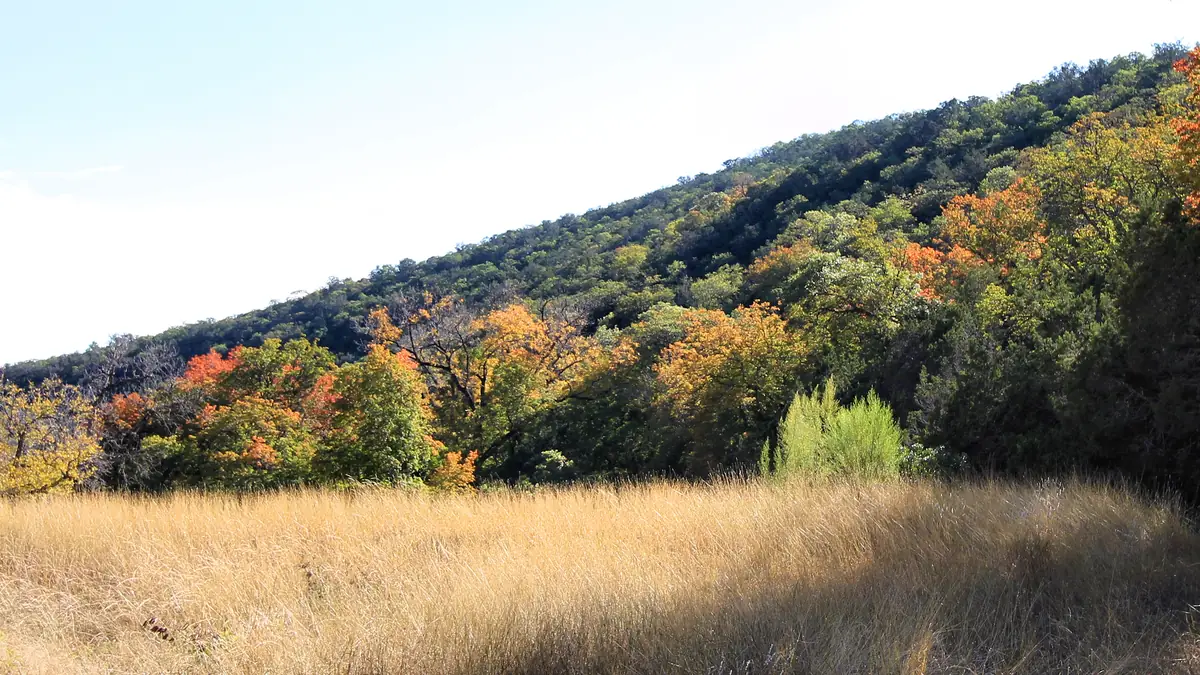
The park’s foliage reports say the trees start lighting up as October ends and usually peak in the first two weeks of November, though weather moves that around every year. Cool nights and sunny days hold the color; a dry, hot fall dulls it. The canyon’s Uvalde bigtooth maples share the show with Texas red oak, walnut and sycamore. October and November are the park’s busiest months and it fills every day, so buy a day pass in advance, and call (830) 966-3413, option 3, for the recorded foliage report.
-
Bald cypress turning rust
Late in the season · Guadalupe and Comal rivers; East Texas swamps and lakes
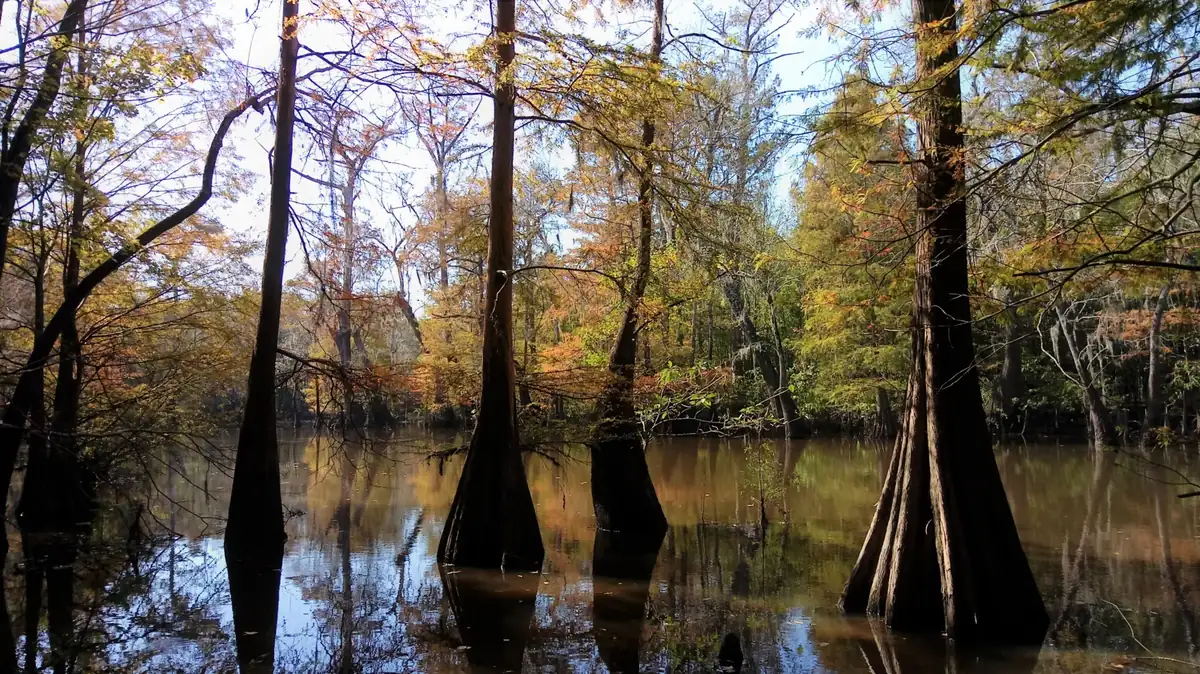
The Texas A&M Forest Service singles out the cypresses on the Guadalupe and Comal for their rust color. Bald cypress is a needle tree that goes bare in winter, and a line of copper trees above a green river is among the year’s final color displays.
-
Piney Woods hardwoods
Through November in a good year · National forests and state parks of East Texas
Among the pines, Shumard oak, red maple and sweetgum turn yellow, orange and red. The Forest Service notes that healthy leaves color best: a wet spring and a mild summer help, while drought, heat waves and an early freeze all take the edge off.
-
Possumhaw berries
Showing as the leaves fall; persist into winter · Creek bottoms and woodland edges, Central and East Texas
Possumhaw is a deciduous holly. Once its leaves drop, female trees stand out with small red berries along bare gray twigs. Songbirds, quail and turkeys, opossums and raccoons all feed on the fruit, the Wildflower Center in Austin says. Find one now and you have a winter landmark.
-
Frostweed’s ice ribbons
The first freezing morning · Shady creek banks and woodland edges, eastern half of the state
Frostweed fed monarchs and bees all fall. On the year’s first frost, its stems split and the sap freezes into thin curled sheets of ice, which the Native Plant Society of Texas calls ribbon-like sculpture. They melt once the sun reaches them, so look early and bring a camera. In much of North Texas that morning comes in November; in the Hill Country it is often December.
When is the white-tailed deer rut in Texas?
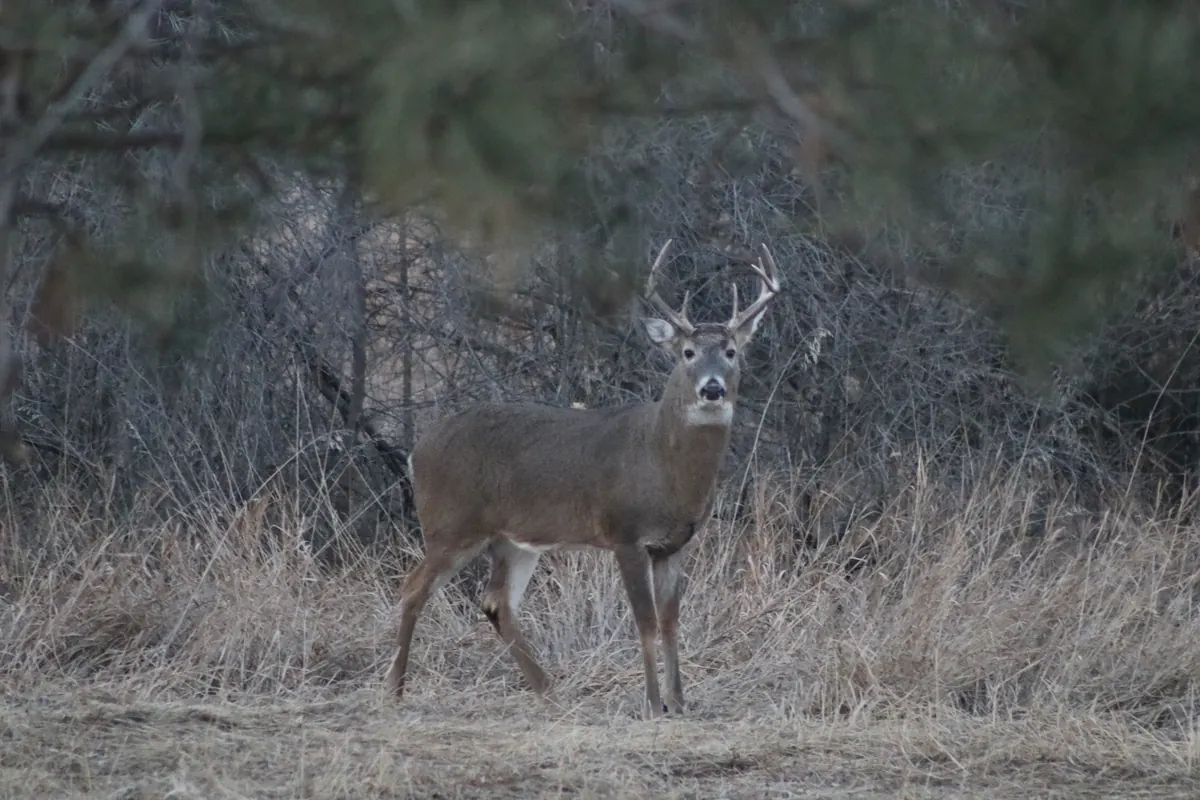
It depends on where you are, by as much as two and a half months. Texas Parks and Wildlife measured breeding dates in 2,436 does on 16 study areas over three years, and for most of the state the peak lands in November:
| Ecoregion | Peak breeding | Full range |
|---|---|---|
| Gulf Prairies and Marshes | Sept 30 to Oct 31 | Aug 24 to Nov 25 |
| Edwards Plateau | Nov 7 to Dec 5 | Oct 9 to Jan 30 |
| Post Oak Savannah | Nov 10 to 11 | Sept 30 to Jan 16 |
| Pineywoods | Nov 12 to 22 | Oct 21 to Jan 5 |
| Cross Timbers | Nov 15 to 17 | Oct 13 to Dec 17 |
| Rolling Plains | Nov 20 to Dec 3 | Oct 8 to Dec 30 |
| Trans-Pecos | Dec 8 | Nov 4 to Jan 4 |
| South Texas Plains | Dec 16 to 24 | Nov 9 to Feb 1 |
Signs to find: rubs, saplings shredded by antlers from about knee height up to the waist, and bare pawed patches of ground under an overhanging branch (scrapes), often with a broken twig above. TPWD notes that bucks with hardened antlers cover more ground when the weather cools, looking for does. On the Edwards Plateau the peak runs later from east to west. In South Texas the season is still ahead, so November there is the time to find the rubs before the chasing starts.
When does the first freeze usually come in Texas?
November is the month the freeze line marches across the state. By its first days the Panhandle has usually frozen already (Amarillo’s median first 32 °F night is October 24) and Lubbock’s median arrives November 2. Midland and Wichita Falls follow around November 10, El Paso around November 14, Waco around November 21 and Dallas–Fort Worth around November 25. San Antonio, Austin and Houston usually wait into early December, while Corpus Christi’s median is December 19 and Brownsville’s December 30. In one year out of ten, Brownsville is still waiting in early February.
| Station | One year in ten | Median | Nine years in ten |
|---|---|---|---|
| Amarillo | Oct 8 | Oct 24 | Nov 5 |
| Lubbock | Oct 18 | Nov 2 | Nov 14 |
| Wichita Falls | Oct 26 | Nov 10 | Nov 26 |
| El Paso | Oct 31 | Nov 14 | Nov 28 |
| Midland | Oct 28 | Nov 10 | Nov 24 |
| Dallas–Fort Worth | Nov 7 | Nov 25 | Dec 11 |
| Waco | Nov 2 | Nov 21 | Dec 8 |
| Austin (Camp Mabry) | Nov 19 | Dec 6 | Dec 30 |
| San Antonio | Nov 11 | Dec 1 | Dec 20 |
| Houston (IAH) | Nov 19 | Dec 8 | Jan 5 |
| Corpus Christi | Nov 30 | Dec 19 | Jan 19 |
| Brownsville | Dec 7 | Dec 30 | Feb 3 |
Read the middle column as a coin flip: in half of years the first freeze comes before that date. Low spots, river bottoms and rural fields freeze earlier than the airport, and downtowns later. Look up the stations nearest you on our frost dates for Texas page, and when a freeze is forecast, cover tender plants in the evening and uncover them the next morning. If you missed the October story of the first fronts, it is on the Texas October page.
How much daylight does Texas lose in November?
Less than in October, and less again the farther south you go: over the month Amarillo gives up 45 minutes of daylight and Brownsville only 30. The change people notice is the clock. In Dallas the sun sets at 6:37 p.m. on Saturday, October 31, and at 5:36 p.m. on Sunday, November 1, then creeps on to 5:21 p.m. by the 30th, while sunrise slides from 6:45 to 7:11 a.m. By month’s end every city in the table has its sunset before 5:40 p.m. (El Paso, on Mountain time, a little after 5:00).
| City | Nov 1 | Nov 30 | Lost | Per day |
|---|---|---|---|---|
| Amarillo | 10 h 43 m | 9 h 58 m | 45 min | 1.6 min |
| Lubbock | 10 h 49 m | 10 h 06 m | 43 min | 1.5 min |
| Dallas | 10 h 51 m | 10 h 10 m | 41 min | 1.4 min |
| El Paso | 10 h 54 m | 10 h 15 m | 39 min | 1.3 min |
| Austin | 10 h 58 m | 10 h 21 m | 37 min | 1.3 min |
| Houston | 11 h 00 m | 10 h 24 m | 36 min | 1.2 min |
| Corpus Christi | 11 h 04 m | 10 h 31 m | 33 min | 1.1 min |
| Brownsville | 11 h 09 m | 10 h 39 m | 30 min | 1.0 min |
For your own coordinates, the daylight and sunset tool lists sunrise, sunset and the twilight times, plus the minutes lost this week.
What will a very strong El Niño mean for Texas this winter?
The tropical Pacific is running hot. When the Climate Prediction Center updated its El Niño discussion on September 10, the odds that this El Niño reaches very strong status during the cool season topped 90 percent. A strong El Niño pushes the Pacific jet stream south and east across the southern states, and the storm track comes with it.
What that has usually meant here, according to the National Weather Service: in Amarillo, wetter and snowier winters with cooler afternoon highs, and the warmer the tropical Pacific, the stronger the effect. NOAA’s Climate.gov impact maps show the same tilt across the Gulf Coast states: wetter than usual in El Niño winters, and often cooler under the extra cloud. In its September 15 extended-range discussion, the Fort Worth office expected the late fall and winter of 2026–27 to bring above-normal precipitation and near to slightly below normal temperatures to North and Central Texas, and said this event is strong enough that the usual El Niño pattern should dominate. Wetter does not mean snowier south of the Panhandle, though: snow in Austin or San Antonio still needs a deep enough push of arctic air.
NOAA’s official December-to-February outlook is due October 15, later than this page went up; the maps will be posted at the CPC 90-day outlook page. For the coming week instead of the coming season, our local weather page shows the pressure trend that announces a norther.
What can you see in the Texas night sky in November 2026?
Daylight saving time ends at 2:00 a.m. on Sunday, November 1, when the clocks go back to 1:00, and from that evening the stars come out an hour earlier by the clock. That is good news for stargazers with an early bedtime. Times below are Central Standard Time; in El Paso and the far west corner on Mountain time, subtract an hour.
-
The Leonids
Pre-dawn hours of Wednesday, November 18 · Anywhere dark; the radiant is in Leo, high in the southeast before dawn
Fifteen an hour is about the ceiling under a truly dark sky, says the International Meteor Organization, which predicts nothing special this year. The half moon drops below the horizon between about 12:30 and 1 a.m. (12:46 a.m. in Austin) while Leo keeps rising, so watch from moonset until the sky brightens. A morning either side, the 17th or the 19th, can be nearly as good.
-
Taurid fireballs and the dark new moon
Early to mid-November; new moon November 9 · High in the east and south by late evening
The two Taurid streams peak around November 5 and 12. Only five to ten Taurids an hour show up, yet this shower is famous for slow, brilliant fireballs, and they come from the debris of Comet Encke. New moon on the 9th makes the surrounding week the darkest of the month. That is also when the Palo Pinto Mountains star party falls (November 7).
-
The Beaver Moon, a modest supermoon
Evenings of November 23 and 24 · Low in the east at sunset
Full at 8:53 a.m. on the 24th, roughly 30 hours ahead of perigee, so EarthSky counts it among the year’s supermoons. Overnight from Monday the 23rd into Tuesday morning, the bright moon drifts across the Seven Sisters star cluster, which mostly vanishes in its glow. The bigger one comes next month: December’s Cold Moon is the nearest full moon of 2026.
-
A morning planet parade
Mid to late November, before dawn · East and south before sunrise
The dazzling point in the east before sunrise is Venus, which switched to the morning sky in late October and is at peak brightness around Thanksgiving week. On the 9th Venus and Spica sit a little more than one degree apart. In Leo, Mars passes Jupiter at a separation of about 1.2 degrees, nearest each other before sunrise on the 15th and 16th. Little Mercury also shows, hugging the east-southeast horizon, from about the 18th to the 25th. Saturn holds the evening alone, shining without a twinkle in the southern sky after dark.
-
No eclipse this month
Not until 2027 · Not visible from the United States
There are no eclipses visible from the United States in November or December.
| Phase | Date | Time |
|---|---|---|
| Last quarter | Sunday, Nov 1 | 2:28 p.m. |
| New moon | Monday, Nov 9 | 1:02 a.m. |
| First quarter | Tuesday, Nov 17 | 5:48 a.m. |
| Full moon, the Beaver Moon | Tuesday, Nov 24 | 8:53 a.m. (looks full the evenings of Nov 23 and 24) |
| Last quarter | Tuesday, Dec 1 | 12:08 a.m. (11:08 p.m. Nov 30 in El Paso) |
Before you drive out to a dark spot, check tonight’s cloud cover on the clouds page; the moon phase calendar gives the moonrise for your town.
What can Texas families do outside in November 2026?
- Use the free day. Every Texas state park is free on Sunday, November 1, for Texas State Parks Day. Reserve a free “Save the Day” pass online or at (512) 389-8900 if you have a busy park in mind. Brazos Bend State Park leads a two-hour birding hike that morning at 8:00, meeting at 40 Acre Lake, on a flat, graveled 1.2-mile loop.
- Go to a star party. Palo Pinto Mountains State Park hosts the Fort Worth Astronomical Society on Saturday, November 7, 6:30 to 8:00 p.m. Enchanted Rock has the Austin Astronomical Society on Saturday, November 21, 6:00 to 8:00 p.m. (park in Lot 2 and walk over the low-water crossing to Lot 1). Big Bend Ranch State Park lists its reservations-only Star Party in the Borderlands on November 7 and again on November 27; ask the park for the start time. The first two cost nothing beyond park entry.
- Spend Black Friday outside, November 27. Lost Maples has a two-mile ranger-led Turkey Walk from 10 a.m. to noon (register in advance and hold a day pass). Bastrop State Park runs “Gobble Till You Wobble,” a 3.5-mile ranger-led backcountry hike for adults 17 and older, 10 a.m. to 2 p.m., with registration required. Galveston Island State Park offers an Opt Outside kayak tour over the bay’s seagrass beds, noon to 2:30 p.m., for ages 13 and up, with online registration opening seven days ahead at 9 a.m. Guadalupe River State Park makes the whole day an Opt Outside day with a nature scavenger hunt.
- Look for a whooping crane. Teach the field marks (all white, black wingtips, slow wingbeats) and report any sighting to Texas Whooper Watch on iNaturalist.
- Count feeder birds for Project FeederWatch from November 1, or start a simple list of the first date each winter bird appears in the yard.
- Find a frostweed patch before the first freeze, and on that cold morning go back early to look for the ice.
Children 12 and under get into Texas state parks free all year. The nature guides for every state and month carry on through the winter, and a field journal gives a child somewhere to sketch the first goose flock and date it.
Safety notes for November in Texas
- Hunting seasons, 2026–27 (TPWD). White-tailed deer: archery ends November 6, and the general season runs November 7 to January 3 in the North Zone and to January 17 in the South Zone. Mule deer general season: Panhandle November 21 to December 6, Trans-Pecos November 27 to December 13. Fall turkey opens November 7. Quail opens November 1 statewide, and chachalaca in four Valley counties the same day. Ducks: South Zone November 7 to 29, North Zone November 14 to 29, then both reopen in December; the High Plains Mallard Management Unit has been open since October 30. Geese open November 7 in both zones. Sandhill cranes: Zone A since October 31, Zone B from November 27. Dove season closes November 8 in the North Zone.
- Hunter orange. Under TPWD rules, anyone on public hunting land (state lands, national forests and grasslands) during daylight hours when firearm hunting is allowed has to have on a minimum of 400 square inches of hunter orange, orange headgear among it, with 144 square inches or more visible on the chest and on the back. The rule does not cover private land, but hikers in the national forests of East Texas and on wildlife management areas this month should dress in orange anyway.
- Deer on the roads. Bucks in the rut move more and watch less, and the clock change puts the evening commute in the dark. Slow down at dusk, and where you see one deer, expect another.
- Northers. A strong front can drop a mild afternoon into a raw, windy evening within a few hours. Carry a jacket even on warm days, and on the coast watch for rough water and sudden wind shifts when paddling.
- Grass fires. Once a freeze cures the grass, dry, windy days behind cold fronts bring the dormant-season fire risk the Texas A&M Forest Service warns about. Check for burn bans before any campfire.
- Short days. By late November the sun is down before 5:40 p.m. even in Brownsville. Start afternoon hikes by 2:00, and pack a headlamp.
Sources
- Texas Parks and Wildlife: Texas State Parks Day, November 1, 2026
- TPWD news release: migrating whooping cranes arrive on the Texas coast (Texas Whooper Watch)
- iNaturalist: Texas Whooper Watch project
- U.S. Fish and Wildlife Service: 540 whooping cranes wintered on the Texas coast in 2025–26
- U.S. Fish and Wildlife Service: Whooping Crane Survey Results, Winter 2025–2026 (PDF)
- U.S. Fish and Wildlife Service: birding at Aransas National Wildlife Refuge
- U.S. Fish and Wildlife Service: Muleshoe National Wildlife Refuge, species
- Marfa Public Radio, Nature Notes: sandhill cranes
- Houston Audubon: snow goose
- Houston Audubon: hummingbirds of the upper Texas coast
- Texas Parks and Wildlife: bald eagle
- Texas Observer: bald eagle numbers at Lake Buchanan (2019)
- Vanishing Texas River Cruise: Lake Buchanan cruises
- Finch Research Network: Winter Finch Forecast 2026–2027
- Project FeederWatch: how to participate
- Coastal Bend Audubon Society: Rio Grande Valley Birding Festival, November 11–15, 2026
- Rio Grande Valley Birding Festival (33rd annual, November 11–15, 2026; agenda)
- U.S. Fish and Wildlife Service: visiting Santa Ana National Wildlife Refuge
- TPWD: Lost Maples State Natural Area
- TPWD: Lost Maples fall foliage report
- Texas A&M Forest Service: fall foliage explained
- Lady Bird Johnson Wildflower Center: possumhaw (Ilex decidua)
- Native Plant Society of Texas: frostweed, a late-season refuge for pollinators
- TPWD: Texas Monarch Watch, fall flyways
- TPWD: white-tailed deer breeding chronology (the rut)
- NOAA NCEI: 1991–2020 first-freeze probability normals (data API)
- NOAA Global Monitoring Laboratory: solar calculator (the equations behind the daylight table)
- Climate Prediction Center: ENSO diagnostic discussion, September 10, 2026
- Climate Prediction Center: official 90-day outlooks
- NWS Amarillo: El Niño and La Niña and the Panhandle
- NWS Fort Worth: extended range weather pattern discussion, September 15, 2026
- NOAA Climate.gov: United States El Niño impacts
- U.S. Naval Observatory: moon phases (data API)
- U.S. Naval Observatory: moonrise and moonset, Austin, November 18, 2026
- International Meteor Organization: 2026 meteor shower calendar (PDF)
- EarthSky: what is a supermoon?
- NASA: eclipses of 2026
- NIST: daylight saving time
- TPWD: birding hike at Brazos Bend State Park, November 1
- TPWD: star party at Palo Pinto Mountains State Park, November 7
- TPWD: November star party at Enchanted Rock, November 21
- TPWD: Big Bend Ranch State Park events
- TPWD: Turkey Walk at Lost Maples, November 27
- TPWD: Gobble Till You Wobble at Bastrop State Park, November 27
- TPWD: Opt Outside kayak tour at Galveston Island State Park, November 27
- TPWD: Opt Outside Day at Guadalupe River State Park, November 27
- TPWD: 2026–27 hunting season dates
- TPWD: hunter orange requirements
- Texas A&M Forest Service: dry conditions and wildfire risk (dormant season)
- Photos via Wikimedia Commons; licenses and photographers are credited under each picture
