What to look for in nature in West Virginia this May
May is when West Virginia turns green from the river valleys to the ridgetops, a few weeks apart. The Wildflower Pilgrimage fills Blackwater Falls on the first full weekend, rhododendron and laurel start to open on the Allegheny plateau, warblers and thrushes stream through the woods, and the eaglets at Shepherdstown are becoming eagles. It is also the nursery month, with fawns, cubs and box turtles all in motion. The sky offers a meteor shower with no moonlight on the 6th and a Flower Moon on the 20th that also qualifies for the seasonal Blue Moon label. The stories follow in order, each marked as fixed or as something to confirm.
Other months in West Virginia: October, November, December, January, February, March, April.

Start here

- Take a ridge walk at dawn. Pick a wooded trail, arrive at first light and listen. In May the song of a thrush or warbler comes from every layer of the forest. Note the first song you cannot name.
- Go out for the Flower Moon on May 19. The full moon rises in the east around 8 p.m. on the evening before it is full. Watch it clear the ridge, and remember the Blue Moon label is only about the calendar.
- Leave baby animals alone. If you find a fawn, a fledgling or a turtle, give it room. Most are not orphaned. Note the place and time in your journal instead.
Keep May in the Naturalist's Field Journal: the warblers and thrushes you hear, listed on birds I have seen, with their songs on a map of sounds; laurel and rhododendron buds opening, followed on the same place twice and a tree through the seasons; eaglet milestones under nest observed; fireflies and bats on dusk and dawn watch; and the day's weather on the daily field log.
Regions used below: Potomac Highlands and the Allegheny Mountains; Eastern Panhandle; Northern Panhandle and Morgantown; Mid-Ohio Valley; Kanawha Valley and Charleston; Huntington and the Metro Valley; New River Gorge and the southern coalfields.
What is the Wildflower Pilgrimage, and which flowers are still out in May?
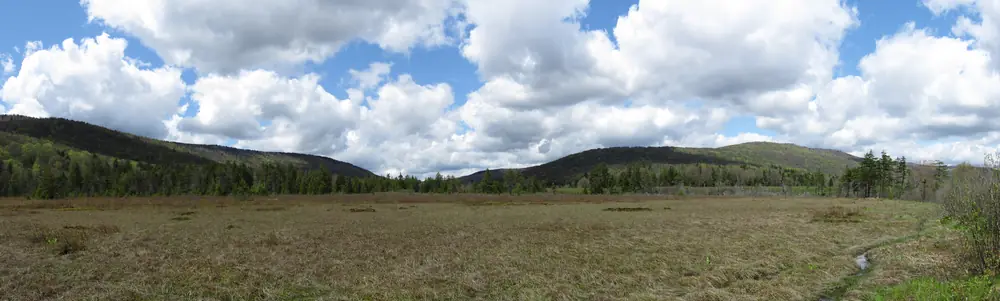
By May the first spring ephemerals of the lowlands have set seed and the story moves uphill and into the shade of closing leaves. The month's best-known gathering is the West Virginia Wildflower Pilgrimage, and the flowers that carry it are the late bloomers of the high country.
-
The 65th Wildflower Pilgrimage
Thursday through Sunday, May 6 to 9, 2027 (the date is posted by the state) · Blackwater Falls State Park, Tucker County
The Division of Natural Resources lists this year's pilgrimage as the 65th annual, a special project of the West Virginia Garden Club co-sponsored by the agency, with help from West Virginia University, the Brooks Bird Club and colleges in four states. Thursday is set aside for beginners, with workshops on wildflower identification, nature photography, ferns and birding, plus evening talks. On Friday and Saturday one guided tour a day leaves from the park lodge with experts who name plants, birds and other features along the way. Families are welcome, though the agency notes some tours suit adults better. Registration is required, and the park's lodge rooms, cabins and campsites are booked by calling 304-558-2754. The agency's page does not list a fee or name particular flowers, so ask when you register what the leaders expect to find.
-
Canada mayflower, one of the last ephemerals
Early to mid-May on the Mylius Trail, per the Forest Service · Mylius Trail (No. 128), Cheat-Potomac Ranger District, Monongahela National Forest
The Forest Service's bloom calendar for this trail ends with Canada mayflower, which it calls one of the latest-blooming of the spring ephemerals, opening in early to mid-May. It is a low, glossy plant with heart-shaped leaves and a short spike of tiny white flowers, easy to walk past. Its timing is a reminder that on an Allegheny slope the season runs weeks behind the river valleys, so a hike on the same trail three weekends running shows three different forests.
-
Rhododendron, azaleas and mountain laurel
Bloom runs May through June at Dolly Sods, per the Forest Service · Dolly Sods Wilderness (Grant, Randolph and Tucker counties) and other Allegheny trails
The Forest Service says flowering laurel, rhododendron and azaleas bloom in the wilderness from May through June. The wilderness covers 17,371 acres between roughly 2,500 and 4,700 feet, and the agency describes bog and heath communities there that resemble those of southern Canada. The rhododendron is also the state flower, so a thicket in bloom is something of a local emblem. Because bloom starts lower and later higher, a patch near a river may be finished while one on the plateau is only budding. Bring a map, a waterproof layer and a way to treat water, and read the wilderness rules before you go (see the safety notes).
-
The bogs at Cranberry Glades
Spring through summer; guided tours run through the summer · Cranberry Glades Botanical Area, Pocahontas County, Monongahela National Forest
The Forest Service describes a half-mile, wheelchair-accessible boardwalk through two of the area's four bogs. It says unusual bog plants grow here, among them carnivorous ones, and that some of the plants and animals are at the southern limit of their range in North America, left behind as the glaciers retreated. Visitors are asked to stay on the boardwalk to protect the fragile ground. The agency does not name bloom months for the glades, so ask the Cranberry Mountain Nature Center, which also handles guided tours and, on the page we read, is closed Tuesdays and Wednesdays, what is out that week.
Is May the best month for warblers in West Virginia, and what is World Migratory Bird Day?
April brings the first travelers, and May brings the crowd. Warblers, thrushes, vireos and flycatchers pour north overnight and drop into woods at dawn, while the first fledglings of year-round birds are already begging for food. The month is a good one to learn songs by ear.
-
Watching the night flights
BirdCast's migration tools run March 1 to June 15 · Any window or yard; the live maps cover the whole country
Cornell Lab's BirdCast posts forecast maps of how many birds are expected to fly on coming nights and live maps of what radar is picking up now. A strong forecast night after a warm southerly wind often means a morning of new birds in a woodlot, so the maps help you choose which dawn to be outdoors. The site also stresses the combined hazard of lights and glass, so turn off unneeded outdoor lights on heavy migration nights and make large windows visible with decals or screens.
-
World Migratory Bird Day
Second Saturday of May in the United States by the organizers’ rule; no 2027 date posted yet · Anywhere birds are, including state parks and refuges
In Canada and the United States the organizers place the day on the second Saturday of May, while Mexico, Central and South America and the Caribbean mark it on the second Saturday of October. The 2026 theme highlighted community science. No 2027 date or theme appeared on the site at our last visit, so confirm the day with the organizers closer to the time. West Virginia events, if any, are set by local groups, so ask your nearest park, refuge or bird club.
-
A river-valley bird club's May count
The Spring Migration Count is annual; the club does not post its date on its home page · Wood County, around Parkersburg and Marietta
The Mountwood Bird Club, an affiliate of the Brooks Bird Club, sponsors a Spring Migration Count and keeps an early and late date checklist for Wood County, and it schedules outings most Thursdays. Its home page lists no 2027 count date, so contact the club. Even if you do not join, a county checklist of first and last dates is a handy way to see how migration moves through a river valley.
-
The festival that ends May 1
April 26 to May 1, 2027, per the organizer's site, which calls it the 25th year · Fayette County and New River Gorge National Park and Preserve
The New River Birding and Nature Festival has run since 2002, with guided trips and a registration system tied to partner lodging, and its proceeds support the Fayette County Education Fund. In 2027 its last day is the first of the month, so a May weekend visit falls just after it. Guides who work the festival often stay around to lead other trips, though the organizer does not say so, so ask.
-
Hummingbird feeders
The Division of Natural Resources says the earliest ruby-throats arrive as soon as April 1 · Feeders and red tubular flowers statewide
The agency's spring guidance, as reported in April 2026, was a sugar-water mix of 1 to 3 or 1 to 4, no red dye and a cleaning every three to five days, with red tubular flowers such as columbine and trumpet vine as natural magnets. Journey North welcomes sightings from anyone, and its migration maps track the northward front.
-
Birds of the spruce
Late spring and summer · Red spruce forest at the highest elevations of the Alleghenies
The Division of Natural Resources names red crossbill, pine siskin, Swainson's thrush and olive-sided flycatcher among the birds tied to the state's red spruce forests, along with the northern goshawk. These are birds of cool, high places, so May is a good month to take a ridge walk with a recording app and listen for the flutelike song of the thrush.
How fast do the Shepherdstown eaglets grow in May, and when do they fly?
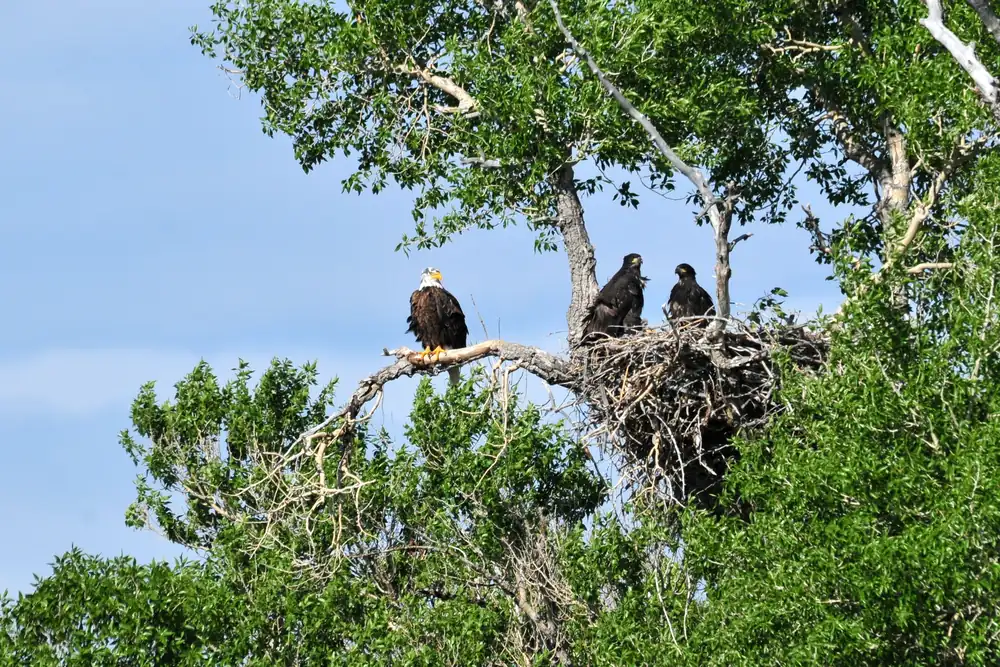
In April the chicks at the National Conservation Training Center were fuzzy and fragile. In May, if the nest is active, they become eagle-shaped. The Fish and Wildlife Service has kept season-by-season notes on its camera feed, and the pattern across the years it posted is steady.
-
Weeks five to ten, by the calendar
Early May through early June in a normal season · National Conservation Training Center, Shepherdstown, Jefferson County; live camera on the Service's site
In the 2021 notes, six-week-old eaglets on May 5 were nearly covered in feathers, and by May 18, at eight weeks, they were nearly full grown, feeding themselves and still at least two weeks from flight. In 2020 the Service reported a first try at self-feeding at 39 days, on May 4, and branching, a first hop to a perch beside the nest, expected around two months. In 2019 flight feathers were lengthening at nearly nine weeks. By the second week of June the young are flapping hard and using higher perches.
-
First flights
Mid-June in the years the Service posted: June 5 and 8 in 2021, June 13 in 2020 and June 15 in 2023 · Over the Potomac River near the nest
Fledging in those seasons came at about 11 weeks, and the notes describe young birds returning to the nest for days afterward. That is a June story, but May is when the muscles are built, so a camera visit now shows the training. In 2019 a fledgling fell while reaching for a favorite perch and was back to practice takeoffs the next day.
-
Not every year is the same
Hatching comes in late March or April; the nest has had losses · The same camera
The Service's notes say a windstorm brought the nest down on April 19, 2025, and no eaglets were raised in 2022. Nature does not keep a promise, so watch the camera and the notes page rather than a date. If a camera shows an empty nest, nothing is wrong with your connection.
What should you do if you find a fawn, a baby bird or a turtle in the road?
Spring is the nursery season, and it is when people meet young wildlife most often. The Division of Natural Resources has a short set of rules for these encounters, and the best of them is to do very little.
-
Fawns
Spring, when fawns are usually born · Yards, fields and field edges
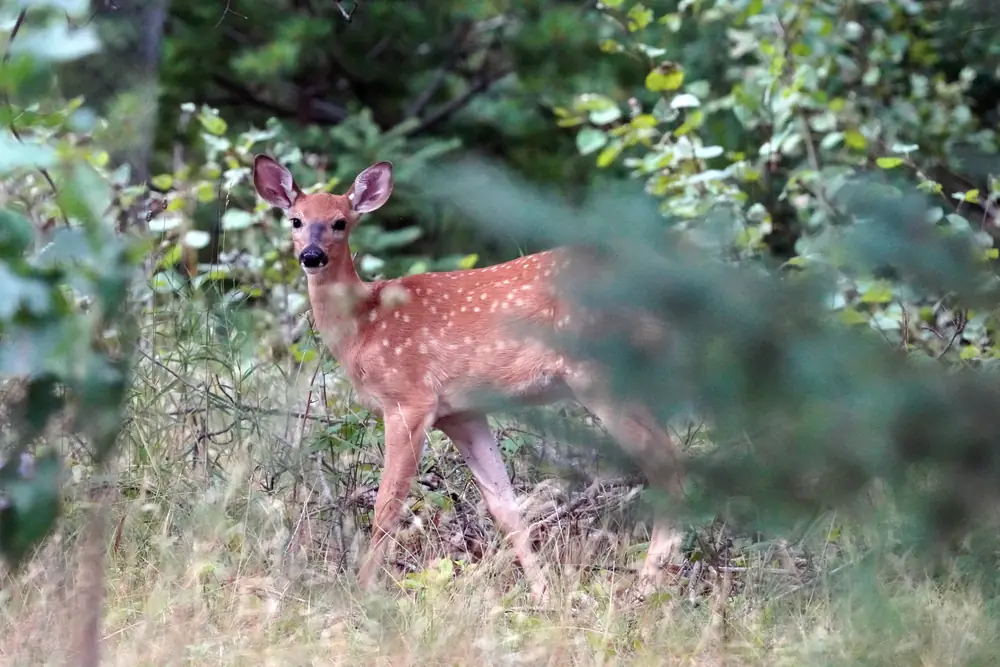
The agency says a mother deer often leaves her young for hours while she forages, and that a bedded fawn with no adult in sight is not abandoned. It adds that a young animal is generally in no danger until someone picks it up, and that removing it almost surely leads to its death. Leave it, keep pets away, and go home.
-
Eastern box turtles
Active in spring, when traffic is a major danger · Roads, trails and yards statewide
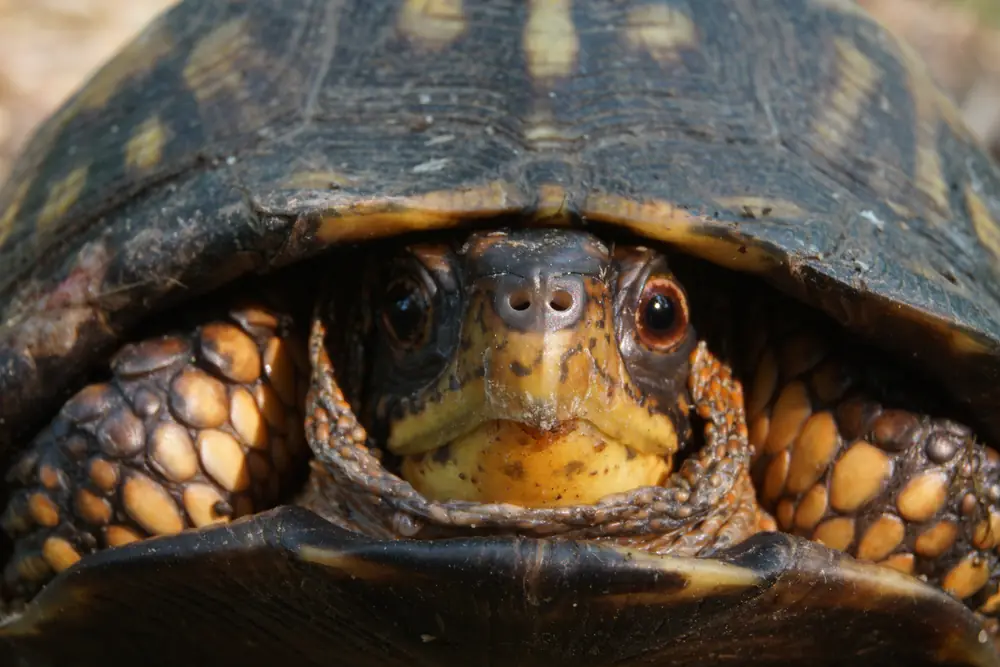
The agency says box turtles can live for more than a century, though most do not survive past 30 to 40 years, and the shell can close fully when threatened. If it is safe to stop, note which way a turtle is heading and move it off the road in that same direction, never somewhere else you think is better. Taking turtles from the wild is against state rules, and mowing with the blade at least eight inches off the ground protects those hiding in long grass. Brush piles, fruiting shrubs and fewer insecticides make a yard friendlier to them.
-
Black bears and their cubs
Bear activity peaks in May and June, per the Division of Natural Resources · Parks, neighborhoods, campsites and roadsides
Bears are hungry after winter, and human food is easy and rich. The agency says to keep trash secured until pickup morning, clean grills after each use, remove pet food after feeding and, at a campsite, hang food and scented items about 10 feet off the ground. If you meet a bear, never approach it; back away slowly while making yourself known, and use bear spray if it keeps coming. Never feed a bear, and give any cub plenty of room, since its mother is rarely far.
What lives in West Virginia's red spruce forests and in Canaan Valley?
The Allegheny crest holds the state's most northern nature. May is a good time to visit, with the leaves still small and the birds loud, as long as you pack for cold.
-
The red spruce forest
Year-round; May is the start of the visiting season · High elevations of the Allegheny Mountains
The Division of Natural Resources estimates about 178,000 acres of upland red spruce forest and woodland, roughly 1.16 percent of the state, with about 86 percent on public land. It says the spruce may once have covered up to a million acres before logging and fire. Animals that need it include the West Virginia northern flying squirrel, snowshoe hare and northern goshawk, and restoration work, led by the Central Appalachian Spruce Restoration Initiative, is bringing the forest back slowly.
-
The Cheat Mountain salamander
Salamander Saturday, which the agency describes as the first Saturday in May; confirm any events · On and around Cheat Mountain in the eastern highlands
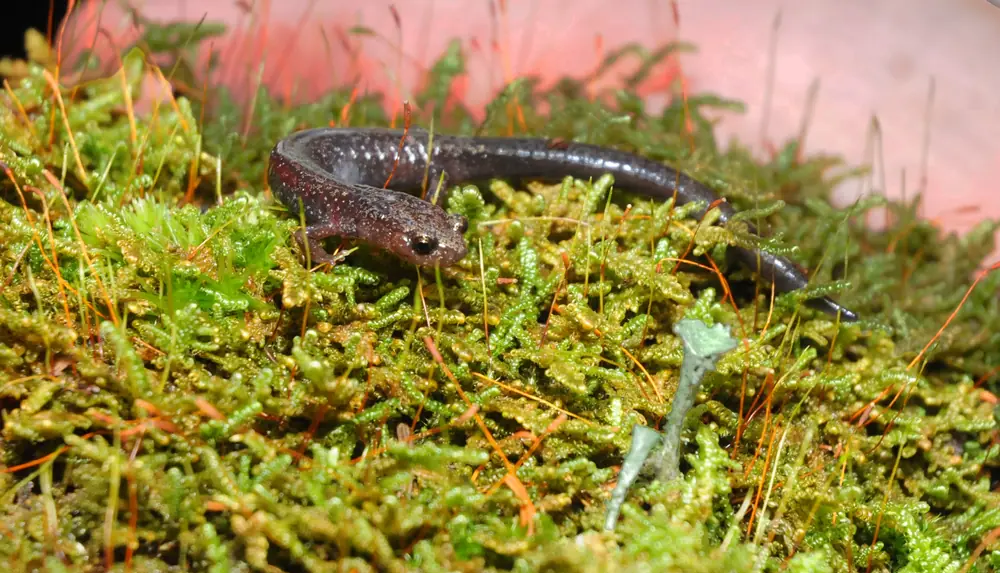
This small woodland salamander is found only on and around Cheat Mountain and carries threatened status under the federal Endangered Species Act. The state agency says two salamander species occur nowhere else than West Virginia's mountains. Finding one is a matter of luck, and disturbing the forest floor harms the cool, damp homes it needs, so enjoy the woods from the trail. A 2021 state rule prohibits taking or possessing most native reptiles and amphibians, including 26 kinds of salamander.
-
Canaan Valley National Wildlife Refuge
Visitor center open Wednesday through Saturday, 10 a.m. to 4 p.m., as posted; confirm before a trip · Eastern Tucker County, about 3,200 feet
Established in 1994, the refuge is, in the Fish and Wildlife Service's words, West Virginia's largest unbroken high-elevation wetland complex: 5,225 acres of the valley's roughly 8,400 acres of wetlands, including the headwaters of the Little Blackwater River and 13 miles of the Blackwater. The agency says it hosts migratory birds, threatened and endangered species and rare plants and animals more typical of the north. The Freeland Boardwalk Trail is a good place to listen at dawn. The refuge's page does not list May species, so ask the visitor center what has arrived.
When do fireflies and bats come back, and how can you help count them?
May evenings are warming, and the first creatures of the night shift are out. Two of them have projects that welcome volunteers.
-
Fireflies
Synchronous fireflies emerge from early June through July, lower elevations first; other kinds can come earlier · Dark, humid, forested places, often near water; Watoga State Park is the best-known viewing spot
News coverage of a Division of Natural Resources project says West Virginia has as many as 40 firefly species, each with its own flash pattern. The citizen science project asks the public to report sightings at wvdnr.gov/fireflies or through the Survey123 app, with photos tagged #LightUpWV. The synchronous species, which flashes in unison, is a June event: adults live only about two weeks, and the larvae spend two years in the soil. Researchers at West Virginia University ask visitors to use red light, stay quiet and stay on the path. May is the time to plan, and to dim your own yard lights.
-
Bats over the river
Evenings as insects hatch · Over water and forest edges; New River Gorge National Park and Preserve has ten bat species
The Park Service says all ten of the gorge's bat species eat insects and that seven of them use abandoned mine portals for winter hibernation. White-nose syndrome, a fungal disease, is especially dangerous to bats that winter in those portals because it drains the fat they need to survive. The park's Grandview Bat Condo is a bat house designed for up to 10,000 bats. At dusk, stand near water and watch for flickering shapes against the last light.
-
Monarchs and other travelers
Spring sightings are collected by Journey North · Gardens and meadows
Each spring Journey North gathers volunteers' first sightings of monarch adults, eggs and caterpillars. It posts no dates for this region, which makes your own report the valuable part. Leave some lawn unmowed and plant native flowers, which the state's firefly biologist also recommends.
How warm, wet and stormy is May in West Virginia?
May is the month the mountains turn warm, but not everywhere at once. In NOAA's 1991 to 2020 normals, afternoon highs range from 76 °F at Charleston and Huntington to just under 60 °F at Snowshoe, and the average low at Snowshoe is 43 °F. Rain averages between 4.5 and 5.8 inches, and the Canaan Valley station still counts a half inch of snow on average. Records show how far one May can stray. At Charleston, with records from 1885, May 2018 was the warmest on record at an average of 72.0 °F against a normal of 64.7 °F, while May 1967 was the coldest at 58.3 °F. The wettest May there was 2020 at 8.93 inches, and the driest was 1939 at 0.61 inch. At Elkins, with records from 1899, the warmest May was 2018 (67.1 °F) and the coldest 1997 (52.4 °F); the wettest was 1996 at 15.76 inches, and the driest 1939 at 1.16 inches. Snow in May is rare: the most recorded at Charleston is 0.6 inch, in 1989, and at Elkins 1.5 inches, in 2020.
| Station | Average high | Average low | Precipitation | Snowfall |
|---|---|---|---|---|
| Snowshoe (Pocahontas County) | 59.7 | 43.2 | 5.84 | 0.8 |
| Davis 3 SE (Canaan Valley, Tucker County) | 64.4 | 44.9 | 5.70 | 0.5 |
| Bluefield Mercer County Airport | 69.7 | 50.9 | 4.61 | 0.0 |
| Beckley Raleigh County Airport | 71.5 | 51.1 | 4.68 | 0.0 |
| Elkins Randolph County Airport | 73.4 | 47.0 | 5.14 | 0.0 |
| Charleston Yeager Airport | 76.2 | 53.2 | 4.93 | 0.0 |
| Huntington Tri-State Airport | 76.2 | 54.2 | 4.51 | 0.0 |
What to watch. Thunderstorms are common in May, and steep hollows turn flash floods into a danger within minutes, so check the radar before a hike and move off ridges when thunder is near. The forecast office in South Charleston posts river forecasts, rainfall gauges, local storm reports and SKYWARN spotter details on its website. Spring fire season lasts through May 31 as well; see the safety notes. The Climate Prediction Center publishes its newest seasonal map on the 90-day outlook page, updated monthly; read it there. Afternoon cloud towers are worth a look on our cloud guide, and the weather page has more.
When is the last spring freeze in West Virginia?
For many valleys it is already behind you by Mother's Day, and for the plateau it is not. The middle year at Elkins has its last 32 °F night on May 5, and Canaan Valley's middle year waits until May 15, with nine springs in ten not finished until June 1. Charleston and Huntington reach their median in mid-April and are done in nine springs out of ten by May 5 and May 3. A frost that late can still nip tomato plants and tender fruit blossoms, so garden by the station closest to you. For other towns, look at frost dates for West Virginia.
| Station | One year in ten | Median | Nine years in ten |
|---|---|---|---|
| Canaan Valley (Tucker County, about 3,250 ft) | Apr 26 | May 15 | Jun 1 |
| Elkins | Apr 20 | May 5 | May 21 |
| Beckley | Apr 8 | Apr 22 | May 13 |
| Martinsburg (Eastern Panhandle) | Apr 3 | Apr 20 | May 12 |
| Morgantown | Apr 7 | Apr 23 | May 14 |
| Wheeling (Northern Panhandle) | Apr 5 | Apr 20 | May 6 |
| Parkersburg (Mid-Ohio Valley) | Mar 31 | Apr 14 | May 2 |
| Charleston | Apr 1 | Apr 16 | May 5 |
| Huntington | Mar 28 | Apr 14 | May 3 |
How much daylight does West Virginia gain in May?
The eight cities below add between 48 minutes (Bluefield) and 54 minutes (Wheeling) of daylight across May, about 1.6 to 1.8 minutes a day. That is a slowing pace, because the gains fall toward zero at the June solstice, on Monday, June 21, at 10:11 a.m. EDT. Wheeling's day grows from 13 h 55 m to 14 h 49 m, and Charleston's from 13 h 48 m to 14 h 39 m. Bluefield, farthest south, starts the month with the shortest day of the eight and ends it with the shortest, 13 h 44 m to 14 h 32 m. Clocks have run an hour ahead since March 14, so the sunrise and sunset times you see on a watch are the daylight-time ones.
| City | May 1 | May 31 | Gained | Per day |
|---|---|---|---|---|
| Wheeling | 13 h 55 m | 14 h 49 m | 54 min | 1.8 min |
| Morgantown | 13 h 53 m | 14 h 46 m | 53 min | 1.8 min |
| Martinsburg | 13 h 52 m | 14 h 45 m | 53 min | 1.8 min |
| Parkersburg | 13 h 51 m | 14 h 44 m | 53 min | 1.8 min |
| Elkins | 13 h 50 m | 14 h 42 m | 52 min | 1.7 min |
| Charleston | 13 h 48 m | 14 h 39 m | 51 min | 1.7 min |
| Huntington | 13 h 48 m | 14 h 39 m | 51 min | 1.7 min |
| Bluefield | 13 h 44 m | 14 h 32 m | 48 min | 1.6 min |
Our daylight calculator gives numbers for your own town.
What can you see in West Virginia's night sky in May 2027?
May's headline is a meteor shower that peaks with no moonlight to spoil it, then a full moon with a rare label, then a good evening for Mercury. All times below are Eastern daylight time. To see faint objects, pick the dark nights near the new moon on Thursday, May 6. Planet times are computed for one spot in the central United States, so ridges and hollows can move them by up to thirty minutes.
-
Eta Aquariid meteors at new moon
Best mornings May 5, 6 and 7, before dawn; new moon May 6 at 6:58 a.m. EDT · Any dark site with a clear eastern sky
In 2027 the shower peaks at new moon, with only a 1 to 2 percent crescent in the sky, which Sea and Sky calls an excellent year. The American Meteor Society's ten to thirty an hour describes the last dark stretch before sunrise across the southern two-thirds of the country. The meteors fan out from Aquarius, which rises late and sits low, so numbers shrink with latitude and a West Virginia observer should plan on fewer than that. Dress warmly, lie back, and give your eyes 20 minutes.
-
Venus and Saturn, close but low
Mornings of May 6 to 8; closest on May 7 · Low in the east before sunrise
On the mornings around May 7 Venus and Saturn are about one degree apart, and their closest approach, 0.6 degree, happens, by our calculations, at about 2:44 in the afternoon (EDT) on the 7th, while the sun is up here. Venus is the brilliant one at magnitude -3.9, with Saturn at +0.7. Both are only about 3 to 6 degrees high half an hour before sunrise, so they need a flat horizon and binoculars, and many West Virginia hollows will hide them. Treat it as a bonus if you are up for the meteors.
-
The Flower Moon, a seasonal Blue Moon
Full on Thursday, May 20, at 6:59 a.m. EDT; the best evening to watch it rise is Wednesday, May 19 · Rising in the east around 8 p.m. on the 19th
The May full moon is traditionally the Flower Moon. This year it also earns the older, seasonal Blue Moon title: spring in the astronomer's sense, equinox to solstice, holds four full moons by our count, and the Flower Moon is third, the one that wears the old blue label. Sea and Sky's calendar gives it that label. Today's popular rule, a second full moon inside one calendar month, yields nothing this year, so no one should expect a tint; the Moon will keep its usual cream and silver. Moonrise on the evening of the 19th falls between about 7:50 p.m. in New York and 8:15 p.m. in Atlanta, so a West Virginia ridge sees it around 8 p.m.
-
Mercury at its best evening
Greatest eastern elongation on May 28 at 9:14 a.m. EDT, so the evenings of May 27 and 28 are best; look from about May 12 to June 5 · Low in the west-northwest, 45 to 90 minutes after sunset
At greatest elongation Mercury lies 22.8 degrees to the sun's east, and it shines near magnitude -0.6 in mid-May, fading to +0.9 by June 1. By our calculations it lingers some 97 minutes after sunset in mid-May at 40 degrees north (the time shifts a little with latitude), so find a clear western horizon (a river valley facing west is ideal) and use binoculars to pick it out in the twilight.
-
Jupiter and the Moon
Wednesday, May 12, evening; the Moon is near first quarter · High in the south and southwest after dark
Jupiter still owns the evening sky. On May 1 Jupiter stays out well into the night by our calculations, and it sets a little earlier every week as the Sun closes in. On the evening of May 12 the nearly half-lit moon passes about 1.2 degrees from it, an easy sight without a telescope. Mars, much fainter now, lies in Leo as well.
-
The Milky Way returns
May 1 to 14 and May 25 to 31, computed for 40 N latitude, with up to about 3.8 hours of dark core · Dark skies away from town lights with a clear south-southeastern horizon
The brightest stretch of our galaxy, toward Sagittarius, hangs low over the southern horizon, and its season gets going this month. The computed windows require the core to stand at least 10 degrees high, the sky to be fully dark and the Moon to be gone. Dark spots such as the high country near Canaan Valley suit it. The sunspot cycle is past its peak but the sun is still active; check NOAA's Space Weather Prediction Center for an aurora alert on clear nights.
| Phase | Date | Time |
|---|---|---|
| Last quarter | Wednesday, Apr 28 | 4:18 p.m. EDT |
| New moon | Thursday, May 6 | 6:58 a.m. EDT |
| First quarter | Thursday, May 13 | 12:44 a.m. EDT |
| Full moon, the Flower Moon | Thursday, May 20 | 6:59 a.m. EDT |
| Last quarter | Friday, May 28 | 9:58 a.m. EDT |
| New moon | Friday, Jun 4 | 3:40 p.m. EDT |
Our moon phase guide shows the phases for other dates, and the cloud guide can tell you which evenings are likely to stay clear.
What can West Virginia families do outdoors in May?
- Late April into May: the City Nature Challenge, which observes on April 30 to May 3. This four-day worldwide bioblitz has people snap pictures or record sounds of wild creatures and plants, and the following two weeks (through May 16) are for uploading and naming them, with the tally released on May 20. Ask the organizers whether a West Virginia area has joined; finds can also go straight onto iNaturalist.
- Thursday through Sunday, May 6 to 9: Wildflower Pilgrimage. Registration is required at Blackwater Falls; Thursday suits beginners.
- Date to confirm: World Migratory Bird Day. Spend an hour with binoculars and tally each species you hear.
- Usually the first Saturday in May: Salamander Saturday. The Division of Natural Resources uses it to celebrate the state's salamanders; look for its posts rather than flipping logs.
- Thursday, May 20: the Flower Moon. Go out on the evening of the 19th for the moonrise.
- On warm evenings: a firefly watch. Report what you see at wvdnr.gov/fireflies and tag photos #LightUpWV.
- Daily: the eagle camera. Count how many times the parents bring fish, and watch the young stretch their wings.
- The state wildlife center at French Creek, Upshur County. The agency's spring hours were 9 a.m. to 5 p.m. daily, with exit gates closing at 6 p.m. from April through October, and it posts admission of $4 for adults, $2 for ages 6 to 15 and free for younger children; confirm 2027 hours and prices, which can change with the weather.
- Canaan Valley refuge and Cranberry Mountain Nature Center. Check opening days before driving a long way on mountain roads.
- Join a project. NestWatch is free and open to anyone who wants to log a nest, and Journey North collects hummingbird and monarch reports.
Write your finds in the Naturalist's Field Journal, and browse our nature pages for other states and months.
Safety notes for May in West Virginia
- Turkey hunters in the woods. The Division of Natural Resources' seasons page lists the 2027 youth season April 17 to 18 and the regular season for bearded turkeys April 19 through May 23, with a daily limit of one and a season limit of two. Hunters are afield at dawn, so wear bright colors, stay on trails, and avoid imitating turkey calls. The seasons page does not state a hunter-orange rule for spring turkey, and the regulations summary is the place to confirm hours and clothing rules.
- Fire law through May 31. The state says outdoor burning is prohibited from 7 a.m. to 5 p.m. The rules for an evening fire: someone stays with it, a 10-foot strip is cleared around it, and it is dead out by morning. Penalties reach $1,000, and a fire that escapes also makes its owner liable for the cost of putting it out.
- Ticks. The state health department calls Lyme disease the most common tickborne illness in West Virginia and says most infections occur from late spring through early fall. It advises repellent in wooded and brushy places, a check of clothing, gear and pets when you come indoors, a prompt shower, and saving a tick for identification if you are bitten.
- Bears. Bear sightings in towns and campsites climb in late spring; the wildlife agency names May and June as the busiest stretch. Lock up garbage, wash the grill, and bring pet bowls in.
- Fawns, fledglings and turtles. Leave young animals where you find them. Help a box turtle across a road only if it is safe, and only in the direction it was heading.
- Storms and high water. Get off ridges when thunder is near and never drive into flooded road. On Dolly Sods trails the Forest Service cautions that some fords and small creeks become hard to cross in high water.
- Unexploded shells on the Sods. Army training began there in 1943, and shells may remain. Should you spot a suspicious metal object, leave it untouched and undisturbed, retrace your steps and phone the Forest Service. Camps must be at least 200 feet from roads, streams and trails, groups are limited to 10 and there is no drinking water.
- Late freezes at elevation. Nights near 32 °F remain possible in the highlands into June, so carry an extra layer.
- Memorial Day weekend. Monday, May 31, 2027, brings crowds to parks and rivers; reserve early and watch the weather.
Sources (42)
- West Virginia DNR: West Virginia Wildflower Pilgrimage (65th annual, May 6 to 9, 2027)
- USDA Forest Service: Mylius Trail wildflowers, Monongahela National Forest
- USDA Forest Service: Dolly Sods Wilderness
- USDA Forest Service: Cranberry Glades Botanical Area
- BirdCast (Cornell Lab of Ornithology): migration forecasts and live maps
- World Migratory Bird Day: official site
- Brooks Bird Club: Mountwood Bird Club
- Brooks Bird Club: home page
- New River Birding and Nature Festival: official site
- West Virginia Public Broadcasting: hummingbirds sighted in W.Va. (April 20, 2026)
- Journey North: hummingbird migration
- Journey North: monarch butterfly migration
- WVDNR: upland red spruce forests and woodlands
- U.S. Fish and Wildlife Service: NCTC eagle nest updates
- WVDNR: you might be staying inside, but West Virginia wildlife is coming out to play
- WVDNR: watch out for eastern box turtles (March 27, 2020 release)
- WVDNR: five ways you can help protect wild woodland box turtles
- WVDNR: new law prohibiting possession of most native reptiles and amphibians
- WVDNR: Salamander Saturday, learn more about these gems of West Virginia
- U.S. Fish and Wildlife Service: Cheat Mountain salamander species page
- WVDNR: basics for avoiding human-bear conflicts this spring
- U.S. Fish and Wildlife Service: Canaan Valley National Wildlife Refuge
- West Virginia Explorer: West Virginia launches project to monitor lightning bugs (May 6, 2020)
- West Virginia Explorer: W.Va. biologists urge citizen participation in firefly project (July 18, 2020)
- West Virginia Explorer: West Virginia University insect tracker says light pollution threatens rare fireflies
- National Park Service: bats at New River Gorge National Park and Preserve
- NOAA NCEI: 1991-2020 monthly normals for seven West Virginia stations (May values)
- National Weather Service Charleston, WV: climate top ten for May at Charleston
- National Weather Service Charleston, WV: climate top ten for May at Elkins
- National Weather Service Charleston, WV: forecast office home page
- Climate Prediction Center: seasonal (90-day) outlooks
- West Virginia Emergency Management: spring fire season runs March through May
- West Virginia Department of Health: preventing tickborne diseases
- WVDNR: hunting seasons (spring 2027 turkey)
- WVDNR: hunting regulations page
- WVDNR: fish stocking (how stockings are posted)
- WVDNR: West Virginia Wildlife Center spring hours
- City Nature Challenge: 2027 dates and how it works
- West Virginia Native Plant Society
- U.S. Naval Observatory: moon phases for 2027
- Sea and Sky: astronomy calendar 2027
- Photos via Wikimedia Commons; licenses and photographers are credited on each file page