What to look for in nature in West Virginia this October
West Virginia’s October is a story told in feet of elevation. Frost and red maples come to Canaan Valley and the Dolly Sods plateau while the Kanawha and Ohio valleys are still green, and the color then walks downhill for a month. Elk bugle in the old strip-mine meadows of Logan County, the last warblers and sharp-shinned hawks ride the ridges south, the Gauley roars for two more weekends, and the woods this year hold a few more white-oak acorns than last fall but far fewer red-oak ones. Here is what to look for, place by place, with dates.
Start here

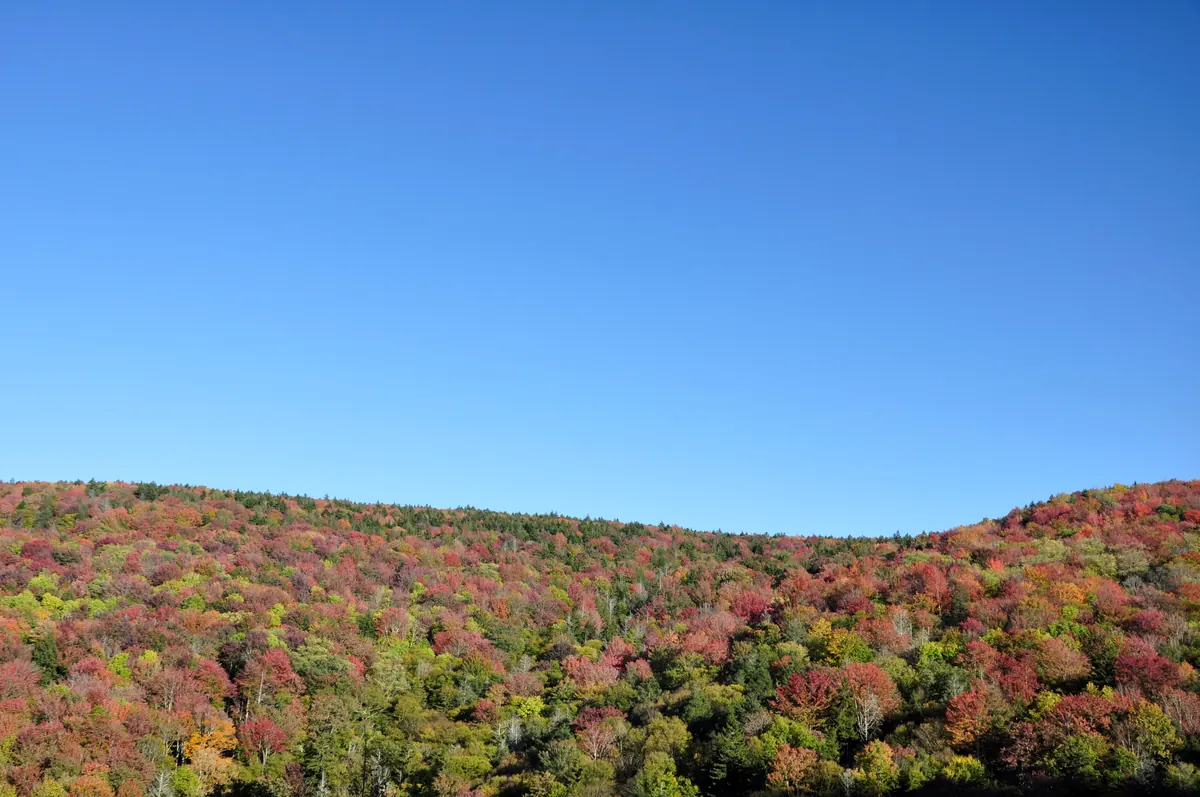
- Color, from the top down. The state’s own projection has central West Virginia peaking from late September into mid-October and the southwest and both panhandles in late October into early November. On the high plateaus (Dolly Sods, Spruce Knob, Canaan Valley) the best of it is now through about the first week of October; the New River Gorge usually peaks in the middle of the month, Charleston and Harpers Ferry near the end.
- Bugling elk and a thin red-oak year. Guided elk tours leave Chief Logan State Park on weekends through October 24, at 5:30 a.m. and 4:30 p.m. Across the state, the WVDNR’s 55th mast survey found red and black oak acorns scarce this fall, while white oaks bore better than last year, so bears, deer and turkeys will travel more than usual to eat.
- The moon covers Jupiter on October 6. A sliver of moon passes over Jupiter in the dark before Tuesday’s dawn, October 6. From Elkins, the planet vanishes at about 4:20 a.m. and comes back at about 5:22, well before first light. The Hunter’s Moon rises around sunset on October 25 and 26, and Bridge Day fills the New River Gorge Bridge with walkers on Saturday, October 17.
Keep a record: a tree-through-the-seasons page in the Naturalist’s Field Journal can follow one sugar maple from first blush to bare twigs; the seeds, pods and cones plate holds acorns, hickory husks and a persimmon; the juncos and white-throated sparrows go on your birds-I-have-seen list as they arrive; and the tracks to know page is ready for the first muddy deer trail by the creek. Write the date on every entry.
Regions used below: Potomac Highlands and the Allegheny Mountains; Eastern Panhandle; Northern Panhandle and Morgantown; Mid-Ohio Valley; Kanawha Valley and Charleston; Huntington and the Metro Valley; New River Gorge and the southern coalfields.
When do the leaves peak in West Virginia?
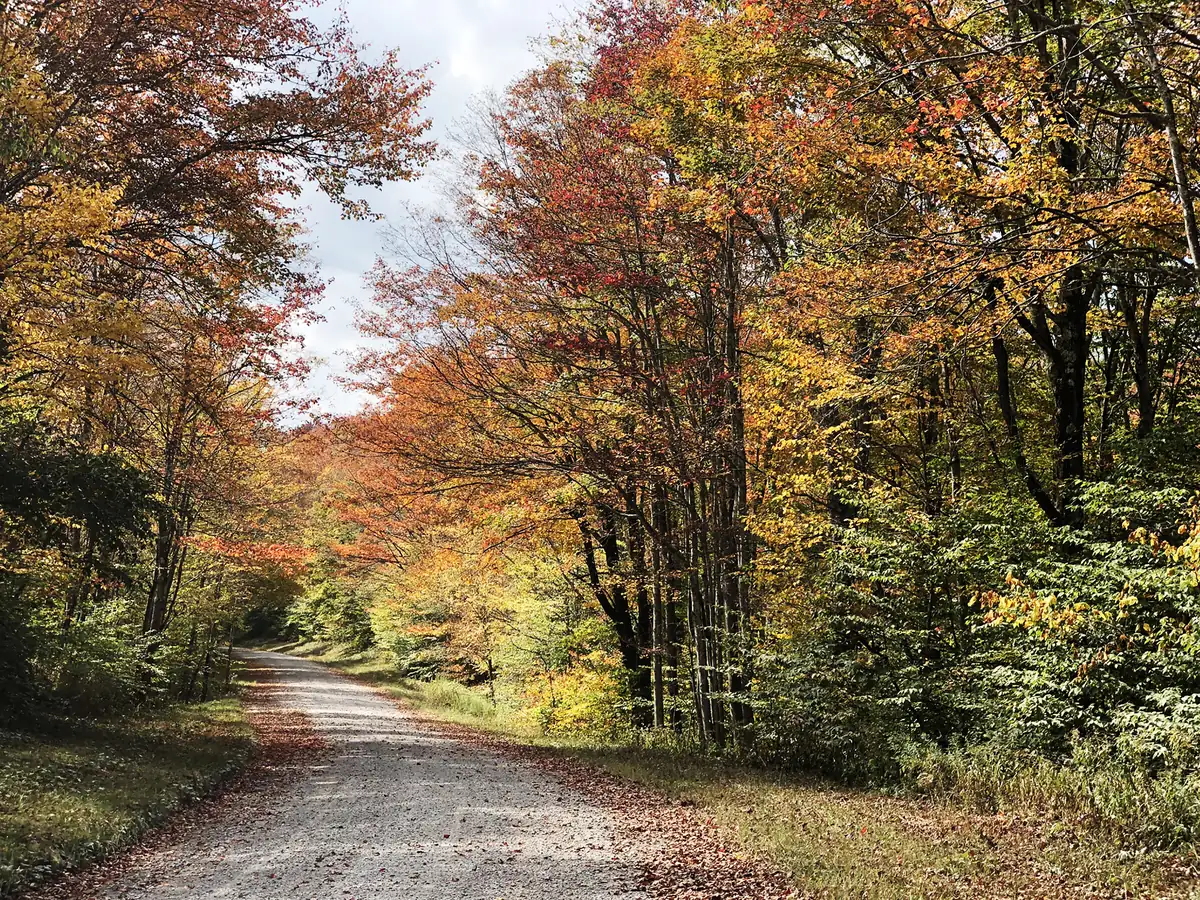
In a state that climbs from the Potomac at Harpers Ferry, its lowest ground, to the top of Spruce Knob, its highest, “peak” is not a date but a slope. The West Virginia Department of Tourism’s 2026 projection, released in August, puts central West Virginia’s best color from the end of September into mid-October and the southwest and both panhandles in late October into early November; its Live Leaf Map is updated weekly through the fall. The weather has cooperated: in the Drought Monitor’s September 22 analysis, about 97 percent of the state showed no dryness at all, and trees that go into autumn with water in the soil tend to hold their leaves and turn cleanly instead of browning early.
| Area | Reference places | Typical peak |
|---|---|---|
| Highest plateaus | Dolly Sods, Spruce Knob, Canaan Valley | Late September to early October |
| High mountain towns | Blackwater Falls, Davis, Snowshoe | Early to mid-October |
| Central mountains | Greenbrier Valley, Pocahontas County | Mid-October |
| The gorges | New River Gorge, Babcock, Fayetteville | Mid to late October |
| Kanawha Valley | Charleston, lower Kanawha | Late October |
| Eastern Panhandle | Harpers Ferry, Berkeley Springs | Late October |
| Lowest river valleys | Ohio River towns, Huntington, Parkersburg | Late October to early November |
Red maples and the low blueberry thickets set the Dolly Sods heath alight early, often before the hardwoods below have started, and Virginia creeper, which the Lady Bird Johnson Wildflower Center calls one of the first vines to color, runs scarlet up fence posts all over the state by the first week. A sunny, dry stretch with cool nights brings out the reds; a cold front with rain and wind can strip a ridge overnight, so if the map says “near peak” for somewhere within driving distance, go that weekend.
Where can you watch hawks and migrating songbirds in West Virginia in October?
West Virginia’s long northeast–southwest ridges work like guide rails for migrants. By October the broad-winged hawk flood of mid-September is over and the warbler flight is thinning, but the month brings its own crowd: sharp-shinned hawks, kinglets, sparrows, the first juncos and, late in the month, red-tailed hawks and golden eagles.
-
Banding on the Allegheny Front
Late August to early October; the last days are in the first week of the month · Allegheny Front Migration Observatory, Dolly Sods, Grant County
The Brooks Bird Club has run a banding station on the crest of the Allegheny Front, at about 4,000 feet near Dolly Sods, every fall since 1958, which makes it the longest continuously operating banding station in the country. Volunteers have banded close to half a million birds there, and the black-throated blue warbler is the species they handle most. Visitors are welcome and free: you can watch birds come out of the nets, be weighed and measured, and sometimes release one yourself. This year the station also started morning counts of birds flying over, posted on Trektellen. The season winds down in early October, so check with the club before you drive up.
-
Hawks along Peters Mountain
Sharp-shinned hawks peak in early October; red-tails and golden eagles in mid-November · Hanging Rock Raptor Observatory, Monroe County, on the Virginia line
Hawk watchers have tallied migrating raptors on this 3,800-foot ridge since 1952, and the count season on HawkCount runs from mid-August to mid-November. The e-WV encyclopedia gives the pattern: broad-wings peak around September 16–21, sharp-shins in early October, golden eagles and red-tails in mid-November. The old fire tower itself has been closed since a Forest Service inspection in November 2024 found its framing unsafe, and a group is raising money to rebuild it; the counters now sit on the rocks beside it. October days with a northwest wind after a cold front are the ones to pick. Bring water and layers, because the top of Peters Mountain can feel like a different season.
-
Sparrows, juncos and the Canaan Valley wetlands
Through October and into November · Canaan Valley National Wildlife Refuge, Tucker County; brushy edges statewide
Canaan Valley sits at 3,200 feet and holds the largest wetland complex in the state, about 8,400 acres of it, including the refuge that became the nation’s 500th in 1994. Its bogs, shrub swamps and old fields are full of sparrows in October, and American woodcock pass through on their way south. The visitor center is open Wednesday through Saturday, 10 a.m. to 4 p.m. Elsewhere, white-throated sparrows and dark-eyed juncos arrive in lowland yards during the month; note the first date each one scratches under your feeder.
-
Monarchs: the tail end
Stragglers into mid-October on warm days · Aster and goldenrod patches, ridge tops, Ohio River bottoms
Monarch Watch’s peak-migration table sets the 39th parallel, near Parkersburg and Morgantown, at September 14–26, and the 37th, just below Bluefield, at September 19 to October 1, so most of West Virginia’s migrants have already gone through. A warm afternoon with a south wind can still bring a few to asters on a sunny slope. Log your last one with Journey North, which uses such sightings to map how late the flight runs.
Where can you see and hear elk in West Virginia?
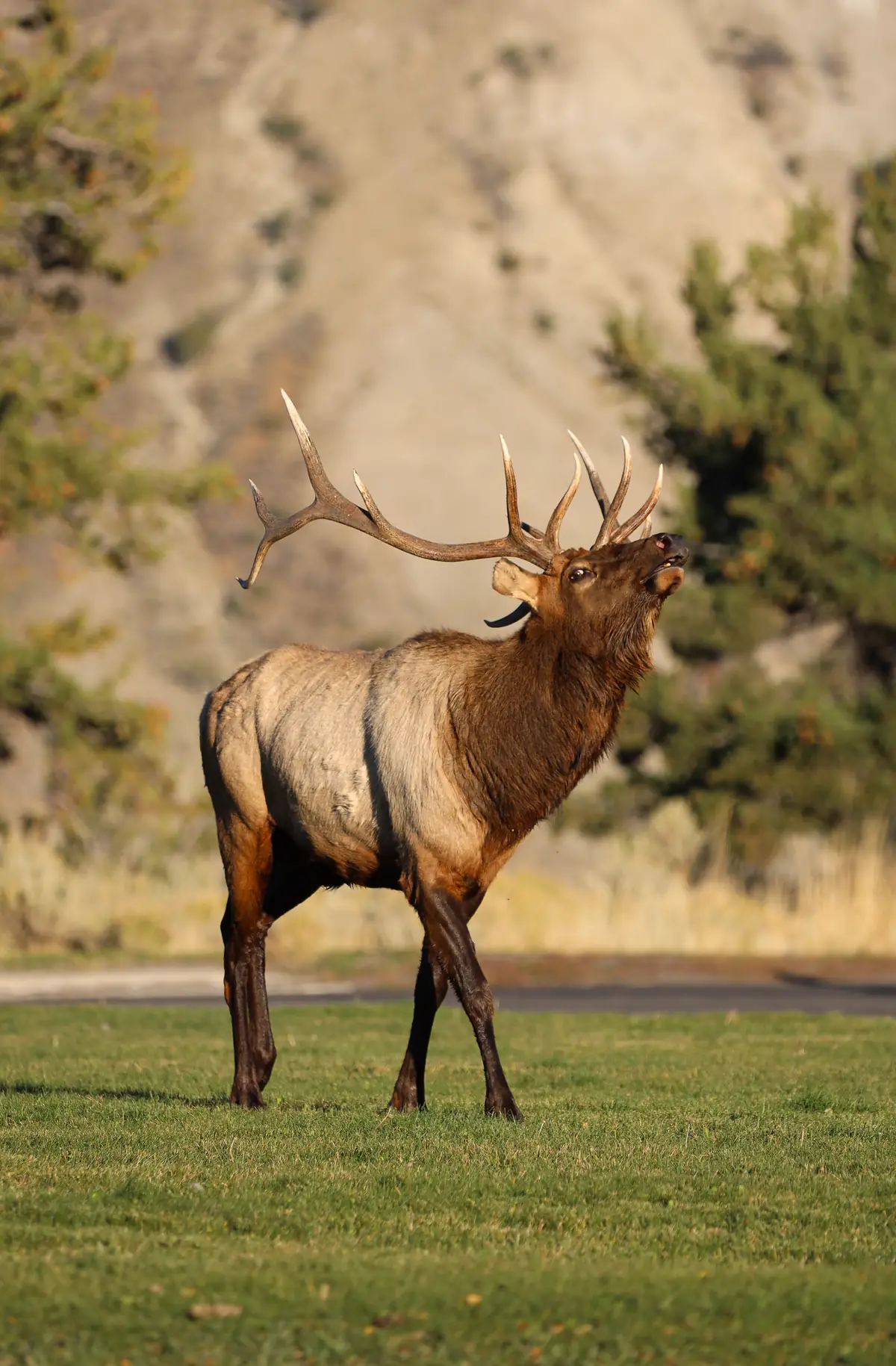
Elk vanished from West Virginia more than a century ago. Starting in 2016 the WVDNR brought animals in from Land Between the Lakes in Kentucky, and later more from Kentucky and from Arizona, to the Tomblin Wildlife Management Area in Logan and Mingo counties. The agency counted about 130 elk in 2024, with about 60 calves born in the state since the first releases. September and October are the rut, when bulls bugle across the reclaimed mine benches and gather cows.
-
Guided elk tours from Chief Logan
Weekends through Saturday, October 24; departures at 5:30 a.m. and 4:30 p.m. · Chief Logan Lodge, Chief Logan State Park, Logan County
The tours run about four hours, start and finish at the lodge, and include up to two or three miles on foot. Sightings are not guaranteed, but the rut is the best time to try. Seats are limited and have sold out every year, so book through West Virginia State Parks; the lodge offers a tour-night room rate.
-
On your own at the viewing platform
Any day, best near dawn and dusk · Elk Education Center, 333 Doyle Drive, Holden
The DNR has built an elevated platform with a wide view over the management area, plus a level viewing spot for people who cannot climb. Bring binoculars and give the animals plenty of room; a bull in the rut is huge and has a short temper. Listen for the bugle, a rising whistle that ends in grunts, carried a long way on a still October evening. If you hear one, put it on the map of sounds page.
What is happening on West Virginia’s rivers and trout streams in October?
October is the last loud month on the whitewater rivers and the quiet start of the trout year in the mountain creeks.
-
The last weekends of Gauley season
Released weekends through October 17–18 · Gauley River below Summersville Dam, Nicholas and Fayette counties
Each fall the Army Corps of Engineers draws down Summersville Lake in scheduled releases of about 2,800 cubic feet per second, and the Gauley becomes one of the most famous whitewater runs in the world. The 2026 season began September 11 and has 22 release days spread across six weekends, ending on October 17–18. Water this cold is serious: the rivers are for guided trips and experienced paddlers only.
-
Bridge Day
Saturday, October 17, 9 a.m. to 3 p.m. · New River Gorge Bridge, Fayetteville
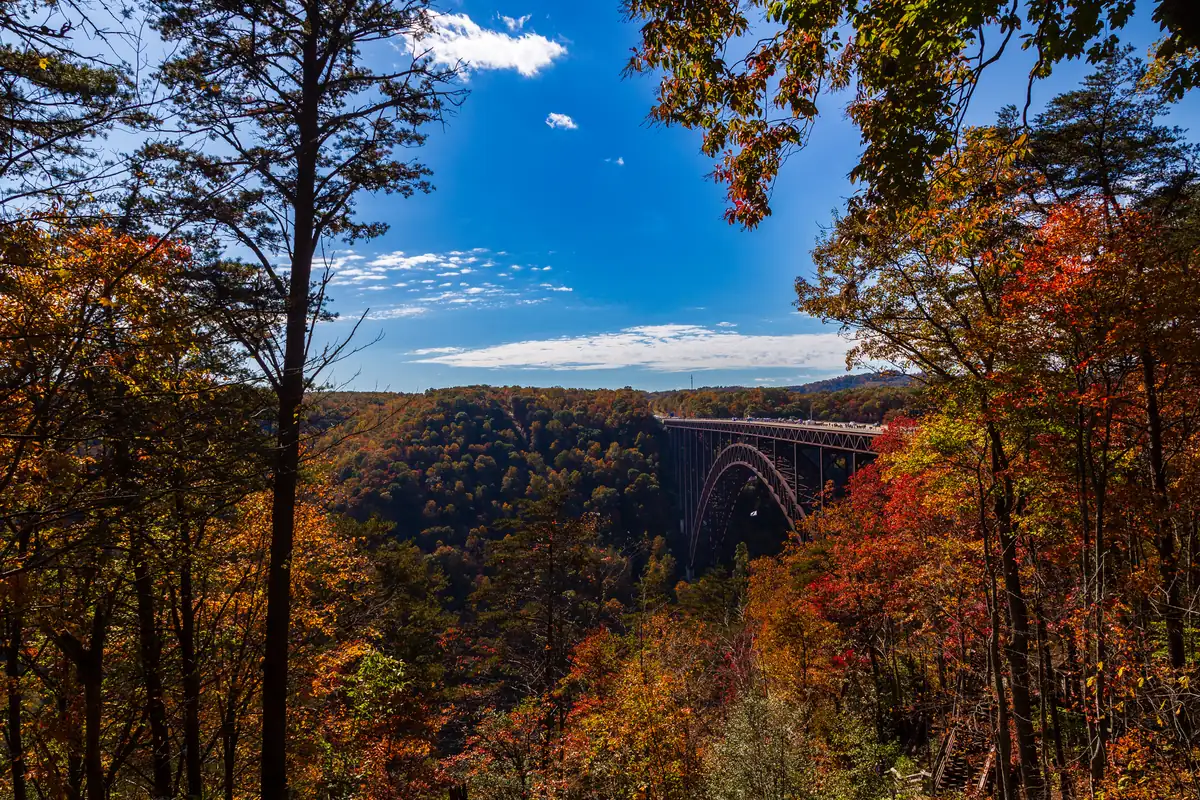
During West Virginia’s biggest one-day festival, all four lanes of the New River Gorge Bridge close to cars and open to people on foot, 876 feet above the river, while BASE jumpers leap into the gorge and rappellers drop from the deck. U.S. 19 closes to traffic from 7 a.m. to 5 p.m., and shuttle buses leave from lots in Fayetteville and Oak Hill starting at 8:30 a.m. for $5 cash. It usually lands close to peak color in the gorge; look down at the forest as well as at the parachutes.
-
Brook trout in their spawning colors
September and October · Small, cold headwater streams, mostly in the mountains
The brook trout is the state fish and the only trout native here. The U.S. Fish and Wildlife Service puts its spawning in September and October: the female fans a nest, called a redd, in clean gravel where groundwater seeps up, and the male’s belly and flanks turn orange-red, edged in black and white. Stay out of clean gravel riffles in small creeks this fall; the eggs lie in the stones all winter.
-
Fall trout stocking
Usually the last two weeks of October; 2026 list not yet posted · About 40 lakes and streams statewide
In recent years the WVDNR has stocked trout, including three- to six-pound “monster” trout, at roughly forty waters over the last two weeks of October, with tagged fish for a prize drawing. As of September 30, the 2026 schedule has not been announced, so watch the DNR’s fall stocking page for dates and waters.
When is the first frost and freeze in West Virginia?
Elevation spreads the first freeze of fall across more than a month here. In NOAA’s 1991–2020 records, the Canaan Valley station has frozen by September 18 in one year out of ten, and half of all years by October 2, and Snowshoe’s median is October 7. Meanwhile London Locks on the Kanawha holds out to a median of November 4. Most towns in the lowlands and valleys freeze in the last ten days of October. Cold air drains into hollows at night, so a valley-floor farm often freezes days before the hillside above it, and the NWS office in Charleston notes that a big river can hold off frost along its banks in the fall.
| Station | One year in ten | Median | Nine years in ten |
|---|---|---|---|
| Canaan Valley #2 (Tucker County, about 3,250 ft) | Sep 18 | Oct 2 | Oct 16 |
| Elkins Randolph County Airport | Oct 1 | Oct 12 | Oct 25 |
| Beckley Raleigh County Airport | Oct 8 | Oct 21 | Nov 2 |
| Martinsburg E Wv Regional Airport (Eastern Panhandle) | Oct 7 | Oct 22 | Nov 4 |
| Morgantown Hart Field | Oct 11 | Oct 24 | Nov 5 |
| Wheeling (Northern Panhandle) | Oct 15 | Oct 29 | Nov 10 |
| Parkersburg (Mid-Ohio Valley) | Oct 16 | Oct 30 | Nov 12 |
| Charleston Yeager Airport | Oct 13 | Oct 26 | Nov 6 |
| Huntington Tri State Airport | Oct 13 | Oct 26 | Nov 7 |
Every other station in the state, from Bayard and Glady to Williamson, is listed on the West Virginia frost dates page. The Charleston forecast office issues a frost advisory when it expects lows of 33 to 36 °F under clear, calm skies, and a freeze warning at 29 to 32 °F; once a killing freeze has hit a county, those alerts stop for the year. That is the night to bring in the geraniums, pick the green tomatoes and write the date in your journal.
How much daylight does West Virginia lose in October?
Between 69 and 76 minutes, and the north loses more than the south: Wheeling gives up 76 minutes over the month, Charleston 71, Bluefield 69. Charleston’s sunrise slides from 7:22 a.m. on October 1 to 7:52 on the 31st, and its sunset from 7:09 p.m. to 6:28 p.m. Mountain valleys lose more still, because ridges hide the sun for the first and last part of the day. The clocks drop back an hour in the small hours after Halloween night, at 2 a.m. on Sunday the 1st, and from then on the commute home slips into dusk.
| City | Oct 1 | Oct 31 | Lost | Per day |
|---|---|---|---|---|
| Wheeling | 11 h 46 m | 10 h 30 m | 76 min | 2.5 min |
| Morgantown | 11 h 46 m | 10 h 32 m | 74 min | 2.5 min |
| Martinsburg | 11 h 46 m | 10 h 32 m | 74 min | 2.5 min |
| Parkersburg | 11 h 47 m | 10 h 33 m | 74 min | 2.5 min |
| Elkins | 11 h 47 m | 10 h 34 m | 73 min | 2.4 min |
| Charleston | 11 h 47 m | 10 h 36 m | 71 min | 2.4 min |
| Huntington | 11 h 46 m | 10 h 36 m | 70 min | 2.3 min |
| Bluefield | 11 h 48 m | 10 h 39 m | 69 min | 2.3 min |
Type in the address of your own hollow or hilltop on the Field almanac to see its sun times, twilight and this week’s loss.
What is October weather like in West Virginia, and what could El Niño mean this winter?
October is usually one of the calmer months of the year. NOAA’s 1991–2020 normals give Charleston an average high of 68.7 °F and a low of 45.3 °F, Huntington nearly the same, and Elkins, at almost 2,000 feet, a high of 66.3 °F with nights near 39 °F. Bluefield is the coolest of the airport stations by day, at 62.8 °F. Rain is modest: between about 2.7 inches at Beckley and 3.1 inches at Elkins and Morgantown. Snow is possible in the mountains, where Elkins averages nearly an inch in October and about 4 inches in November; Canaan Valley and Snowshoe often see flakes first.
The winter ahead is where the Pacific comes in. On September 10 the Climate Prediction Center’s monthly discussion said El Niño was building and gave better than nine chances in ten that it becomes a very strong event by late fall and winter, plus a three-in-four chance that the October–December average tops 2.5 °C above normal, which the center called historic. West Virginia sits between two storm tracks in such winters, so the signal here is mixed. A study by the Cleveland forecast office of 17 Ohio Valley and lower Great Lakes stations, Charleston among them, found El Niño winters in the region warmer and drier than average as a group, yet found no link between El Niño years and low snowfall at Charleston itself. The Northeast Regional Climate Center, looking at the record 2015–16 event, found the whole region warm that winter, but West Virginia and the Mid-Atlantic had more snow than normal, helped by the January 2016 blizzard; strong El Niños tend to send more storms up the East Coast. In short, the western lowlands lean toward a mild, dry Ohio Valley winter, while the mountains and Eastern Panhandle keep a fair shot at one big coastal snowstorm. NOAA’s winter outlook comes out in mid-October. October’s own weather owes little to El Niño either way.
Before a hike to a high overlook, check the Weather now page; if the day turns gray, the cloud guide will help you name what is rolling over the ridge.
What can you see in West Virginia’s night sky in October?
West Virginia has some of the darkest sky east of the Mississippi. Watoga State Park, Calvin Price State Forest and Droop Mountain Battlefield State Park in Pocahontas County became the state’s first International Dark Sky Parks in 2021, and the new moon on October 10 makes the weekend of the 9th through 11th the darkest of the month.
-
Jupiter disappears behind the moon
Tuesday, October 6, about 4:20 to 5:22 a.m. EDT · The east, 15 to 27 degrees up; a clear eastern horizon helps
An 18-percent-lit crescent comes up near 3 a.m. (2:51 at Elkins, 3:00 at Charleston) with Jupiter just beside it. The International Occultation Timing Association lists one West Virginia site, Elkins: Jupiter goes behind the bright limb at 4:19:40 a.m. at a moon altitude of 15 degrees, then pops back out at the unlit edge at 5:22 a.m., by which time the moon is 27 degrees high. Nearby listed cities bracket the rest of the state within a minute or two: Pittsburgh 4:21 and 5:22, Columbus 4:20 and 5:20, Louisville 4:18 and 5:18, Washington 4:21 and 5:24. Civil twilight does not begin in Charleston until 7:01, so both events happen in a fully dark sky. Binoculars show the planet’s disk being swallowed over about a minute; watch for Jupiter’s moons blinking out one by one on either side.
-
Saturn at its best
Opposition October 4; the moon passes nearby October 23–24 · Rising in the east at dusk, high in the south around midnight
Saturn reaches opposition, the point straight across the sky from the sun, on October 4, so it climbs out of the east at dusk, sets at dawn, and outshines itself for the year, a steady pale-gold point with rings that any small telescope will show. A fat waxing moon parks near it for two nights, the 23rd and 24th.
-
Venus leaves, Mars meets the Beehive
Venus only in the first days of October; Mars at the Beehive the morning of October 11 · Venus very low in the west after sunset; Mars in the east before dawn
For only a handful of evenings at the start of October, Venus lies close to the western skyline in the glow after Charleston’s 7:09 p.m. sunset; from most valleys, the ridges will hide it. On October 23 it slips between us and the sun, to reappear before sunrise in November. Jupiter owns the eastern predawn sky all month. Early on October 11, Mars crosses the Beehive, a star cluster in Cancer: in binoculars, a ruddy spark in a swarm of faint stars.
-
Two meteor showers
Draconids the evening of October 8; Orionids best before dawn on October 21 and 22 · Dark sites; Pocahontas County’s dark sky parks are ideal
The Draconids are a brief and usually gentle shower that favors the hours right after dark, and this year there is no moonlight in those hours: in Charleston the thin crescent sets at 5:52 p.m. on the 8th, before the sun does, and the next moonrise is the following morning. Orionid meteors fly between October 2 and November 7, most of them around October 21–22. The waxing moon sets at 2:43 a.m. (October 21) and 3:46 a.m. (October 22) in Charleston, which leaves roughly two and a half to three and a half hours of dark sky before morning twilight.
-
The Hunter’s Moon
Evenings of Sunday, October 25 and Monday, October 26 · The eastern horizon at sunset
Because the instant of full falls just after midnight (12:12 a.m. EDT, Monday the 26th), it looks round on both of those evenings. Charleston sees it rise at 6:02 p.m. on the 25th, roughly thirty minutes ahead of the 6:35 sunset, and on the 26th at 6:36 p.m., two minutes after the sun sets. It is not a supermoon. The moon phase calendar shows each night’s shape if you want to sketch the moon through the month.
| Phase | Date | Time |
|---|---|---|
| Last quarter | Saturday, Oct 3 | 9:25 a.m. EDT |
| New moon | Saturday, Oct 10 | 11:50 a.m. EDT |
| First quarter | Sunday, Oct 18 | 12:12 p.m. EDT |
| Full moon, the Hunter’s Moon | Monday, Oct 26 | 12:12 a.m. EDT (looks full the evenings of Oct 25 and 26) |
| Last quarter | Sunday, Nov 1 | 3:28 p.m. EST |
What is blooming, ripening and dropping in West Virginia in October?
-
Acorns, but mostly white ones
September through November · Oak forests statewide
The WVDNR’s 55th annual mast survey, released at the end of September, found hard mast overall down 16 percent from 2025 and 14 percent below the long-term average. Red and black oak acorns fell sharply, by 58 percent; chestnut oak was about average; white oak was up 8 percent. Soft mast was better than last year by a quarter, still a little under average, and wild black cherry had its best crop in years, especially in the high country. Apples and crabapples were down. Count the acorns under one oak near your house each week; the seeds, pods and cones page is made for that.
-
American ginseng: berries, and the digging season
Digging season September 1 to November 30 · Rich, shady north- and east-facing coves
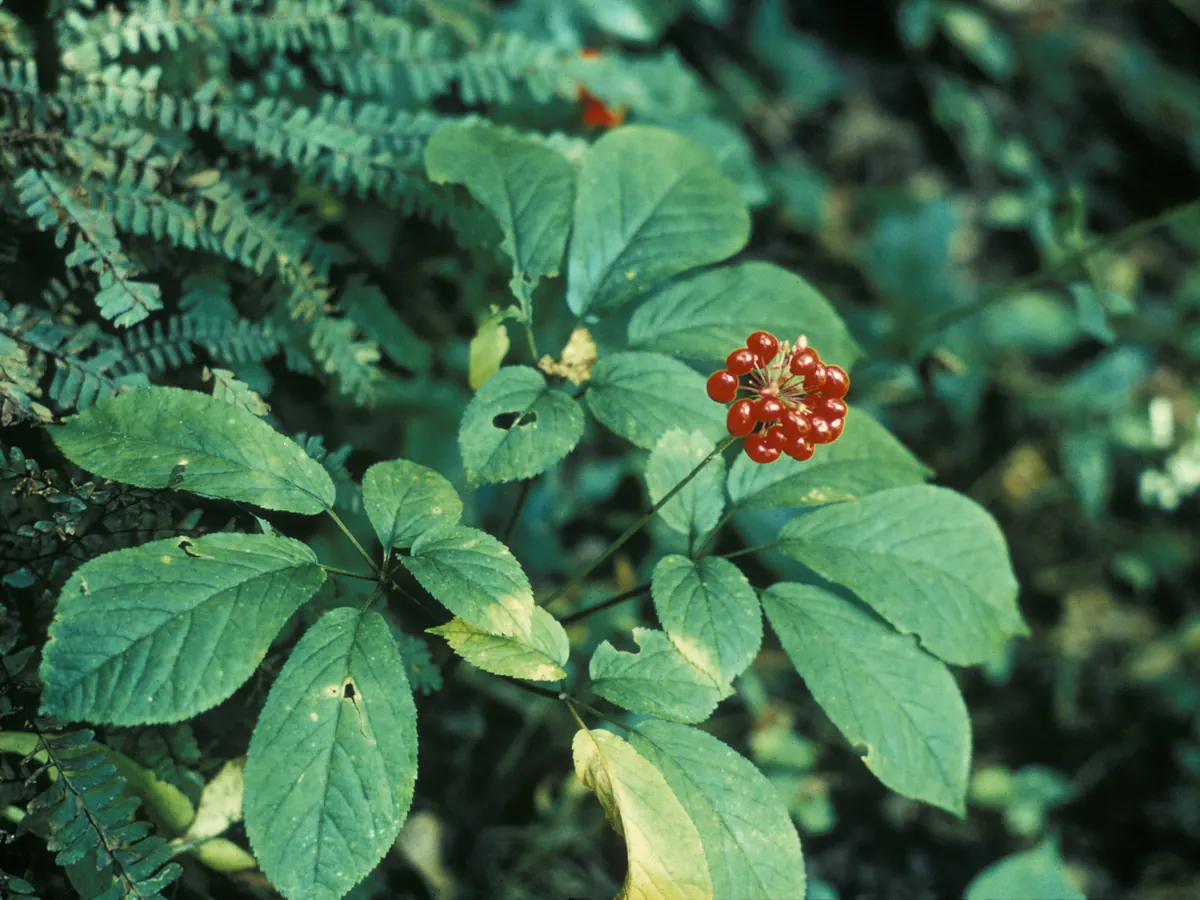
West Virginia has one of the longest ginseng traditions in the country, and the Division of Forestry sets strict rules. A plant may be dug only if it is at least five years old with at least three prongs, and its red berries must be planted where it grew. Roots have to be weighed and certified by the Division of Forestry before they are sold, and diggers have until March 31 to sell them to a registered dealer or get a weight receipt.
-
Witch hazel
Flowers from September into December; seed pods fire in the fall · Moist woods, stream banks and ravines
The last wildflower of the year opens on a small tree: spidery yellow blossoms with four narrow, crinkled petals, often as the leaves are falling. The Wildflower Center notes that the woody capsule from the previous year contracts as it dries and can throw its seed up to 30 feet.
-
Persimmons and pawpaws
Persimmons late September to November; pawpaws mostly finished by early October · Old fields, fencerows, river bottoms (persimmon); moist floodplains (pawpaw)
Persimmons turn orange on the tree from late September, but the Wildflower Center warns that unripe fruit is powerfully astringent and is not good to eat until it has been through frost or a long cold spell. Foxes, raccoons, opossums, deer and many birds eat them as they soften. A few late pawpaws may still hang in the Ohio and Kanawha bottoms in early October; look for their big leaves turning a clear yellow.
-
The last asters and the bogs
Asters and goldenrods until the hard freeze · Roadsides and meadows; Cranberry Glades near Richwood
Heart-leaved, white wood and New England asters and the goldenrods keep feeding bumblebee queens and late butterflies until the first hard freeze; the pollinator watch page will show you which ones they choose. Cranberry Glades, a 750-acre botanical area in the Monongahela National Forest, holds four bogs; a half-mile boardwalk crosses two of them, where carnivorous plants grow in the acid peat and several northern species reach the southern edge of their range. Check the Cranberry Mountain Nature Center’s days before you go; it is closed on Tuesdays and Wednesdays.
What are bears, deer, snakes and insects doing in West Virginia in October?
-
Black bears on the move
All month, until they den · Mountain counties and, more and more, the western hills
Bears spend the fall eating as much as they can before winter. In a year with few red-oak acorns they travel farther to find food, which is why the DNR expects its archery bear harvest to rise and its firearms harvest to dip. For homeowners, it means bears in orchards, cornfields and trash cans. Keep garbage inside until pickup morning, and take bird feeders down if a bear comes by.
-
Deer: rubs, scrapes and the roads
Rubs and scrapes through October; collisions peak in November · Statewide, especially at dusk
Bucks shed their velvet weeks ago, and October is when you find the evidence of the coming rut: saplings rubbed raw at knee height, and pawed-out scrapes under low branches along field edges. That restlessness is why State Farm’s insurance data have ranked West Virginia first in the nation for animal collisions, about 1 in 46 drivers in its state table, with November and then October the worst months. Deer spotted at dusk or dawn belong in the dusk and dawn watch pages.
-
Snakes heading to their dens
Warm October afternoons · Rocky, south-facing slopes and ledges
Copperheads and timber rattlesnakes, the state’s two venomous snakes, move back toward their winter dens in the fall and bask on sunny rocks on warm afternoons. The National Park Service at New River Gorge says hikers meet them now and then, and that neither is normally aggressive if left room to get away.
-
Spotted lanternflies and stink bugs
Adult lanternflies until the hard freeze; stink bugs on warm walls in October · Lanternflies mostly in the Eastern Panhandle and spreading; stink bugs statewide
The spotted lanternfly was first found in West Virginia in 2019, near Bunker Hill in Berkeley County, and has since turned up in more counties. Adults feed and lay eggs in fall, mainly on tree-of-heaven, and the egg masses overwinter on trunks, stone and vehicles. The Department of Agriculture asks you to report sightings, with a photo and location, to bugbusters@wvda.us. Brown marmorated stink bugs and Asian lady beetles gather on sunny walls on warm afternoons after the first cold nights, looking for gaps to spend the winter in; seal them before they get in.
What are the best outdoor outings for West Virginia families in October?
- October 2–4: the last weekend of the Mountain State Forest Festival in Elkins. The 88th festival runs through October 4, with parades at 7:30 p.m. Friday the 2nd and 1 p.m. Saturday the 3rd, plus lumberjack events.
- Early October: see a warbler in the hand. The Allegheny Front banding station near Dolly Sods is free and open to visitors until it closes for the season in early October; call ahead.
- Thursday, October 8, and the new-moon weekend. Watch the Draconids in the early evening, then take a camp chair to a dark sky park in Pocahontas County on the 9th or 10th.
- October 10–11: count birds. eBird’s October Big Day is Saturday the 10th, and the Big Sit runs through the 11th: see how many species you can find from a 17-foot circle in your yard.
- Weekends through October 24: elk tours from Chief Logan State Park. Early-morning and evening trips; book ahead.
- Saturday, October 17: Bridge Day. Walk the New River Gorge Bridge from 9 a.m. to 3 p.m. and take the shuttle; the same weekend is the last of Gauley season.
- October 21–22 and 25–26: the Orionids and the Hunter’s Moon. Set an alarm for 4 a.m. on the 21st or 22nd, and watch the full moon rise near sunset on the 25th or 26th.
- Citizen science. Send your latest monarch to Journey North, and join Project FeederWatch before its November 1 start. If you live in the chronic wasting disease containment area, the DNR rules allow bird feeding only if it doesn’t draw in deer, so keep feeders high and tidy.
Room for every one of these, from the first junco to the Hunter’s Moon, is in the Naturalist’s Field Journal, and October pages for other states are gathered on the nature this month index.
Safety notes for October in West Virginia
- Hunting seasons and blaze orange. Deer and bear archery and crossbow seasons opened September 26 and run through December 31. In October, the WVDNR’s 2026–27 summary also has fall wild turkey from October 10 in the open counties (with later segments in some), ruffed grouse and raccoon hunting from October 17, the youth, Class Q and Class XS deer and bear days on October 17–18, an antlerless deer firearms season on October 22–25 in selected counties (bear firearms runs alongside it in some), bear with dogs in Boone, Fayette, Kanawha and Raleigh on October 3–9, wild boar firearms on October 24–31 in Boone, Logan, Raleigh and Wyoming counties, and a youth waterfowl day on October 31; duck and goose dates are in the separate migratory bird summary. Looking ahead, the buck firearms season runs November 23 to December 6 statewide, the busiest orange-clothing weeks of the year. Anyone hunting where a deer firearms or muzzleloader season is open, including the October 17–18 youth days and the October 22–25 antlerless season, needs an outer layer carrying no less than 400 square inches of blaze orange (duck and goose hunters excepted). Sunday hunting is legal on public hunting land and on private land with written permission. Hikers on national forest and WMA land are wise to add orange as well, dog included.
- Dolly Sods and the high country. The 17,371-acre Dolly Sods Wilderness rises from 2,500 to more than 4,700 feet, and old military ordnance still turns up there; the Forest Service says not to touch, move or dig near anything suspicious, and to call them right away. Groups larger than ten are not allowed in the wilderness. Weather on the plateau can go from sunny to sleet in an hour, so carry a warm layer, a map and a light.
- Crowds and cold water. On Bridge Day, U.S. 19 is closed from 7 a.m. to 5 p.m. and roads around Fayetteville are jammed; use the shuttles. Rivers in October are cold enough to disable a swimmer quickly, and the Gauley releases are for guided trips and experts.
- Deer on the roads. West Virginia leads the nation in animal collisions. Slow down at dusk and dawn, watch for a second deer after the first, and brake rather than swerve.
- Ticks, mushrooms and darkness. Ticks stay active in October, so check after every hike. Leave wild mushrooms unpicked for the table unless someone expert has named them. Sunset comes before 6:30 p.m. by the end of the month, so start long hikes early.
Sources
- West Virginia Department of Tourism: fall in West Virginia and the Live Leaf Map
- WCHS: West Virginia Tourism releases 2026 fall foliage projection map (August 19, 2026)
- West Virginia Explorer: West Virginia fall foliage 2026, when and where colors will peak
- West Virginia Explorer: 2026 fall foliage map released
- U.S. Drought Monitor: West Virginia (map valid September 22, 2026)
- Lady Bird Johnson Wildflower Center: Virginia creeper (Parthenocissus quinquefolia)
- Brooks Bird Club: Allegheny Front Migration Observatory bird banding
- The Real WV: bird banding at Dolly Sods offers a window into fall migration (September 18, 2026)
- e-WV, the West Virginia Encyclopedia: Hanging Rock Observatory
- HawkCount: Hanging Rock Tower site profile (count season and history)
- Hanging Rock Tower: tower closure and rebuilding
- Charleston Gazette-Mail: annual Monroe County raptor count continues without its tower
- U.S. Fish and Wildlife Service: Canaan Valley National Wildlife Refuge
- Monarch Watch: peak migration dates by latitude
- Journey North: monarch sightings and roosts
- WVDNR: elk in West Virginia (herd, Elk Education Center and viewing platform)
- My Buckhannon: tickets on sale for WVDNR’s 2026 elk management tours
- WV MetroNews: Chief Logan elk tours (September 19, 2026)
- West Virginia Explorer: Gauley season 2026
- Visit Fayetteville WV: Bridge Day 2026, everything you need to know
- Wikipedia: Bridge Day (bridge closed to cars and opened to pedestrians)
- U.S. Fish and Wildlife Service: brook trout
- WVDNR: fall trout stockings
- National Park Service: fish of New River Gorge
- NOAA NCEI: U.S. climate normals, 1991–2020 (first-freeze dates for West Virginia stations)
- National Weather Service Charleston, WV: frost and freeze information
- U.S. Naval Observatory: sun and moon rise and set data (Charleston, October 2026)
- U.S. Naval Observatory: moon phases, 2026
- NOAA NCEI: 1991–2020 monthly normals for West Virginia airport stations
- Climate Prediction Center: ENSO diagnostic discussion, September 10, 2026
- NWS Cleveland: El Niño and the lower Great Lakes and Ohio Valley (17-station study including Charleston, WV)
- Northeast Regional Climate Center: El Niño impacts, Northeast region (2015–16 winter review)
- International Occultation Timing Association: lunar occultation of Jupiter, October 6, 2026
- Watoga Foundation: Watoga dark sky parks
- WV MetroNews: mast in West Virginia drops for 2026, but not drastically (September 30, 2026)
- West Virginia Division of Forestry: ginseng
- Lady Bird Johnson Wildflower Center: American witch hazel (Hamamelis virginiana)
- Lady Bird Johnson Wildflower Center: common persimmon (Diospyros virginiana)
- U.S. Forest Service: Cranberry Glades Botanical Area
- State Farm: how likely are you to have an animal collision?
- National Park Service: reptiles of New River Gorge
- West Virginia Department of Agriculture: spotted lanternfly
- Mountain State Forest Festival, September 26–October 4, 2026
- WDTV: Elkins prepares for the 2026 Forest Festival (parade times)
- BirdsCaribbean: October Big Day 2026 (Saturday, October 10)
- The Big Sit! 2026 (October 10–11)
- Project FeederWatch (season begins November 1)
- WVDNR: 2026–27 Hunting and Trapping Regulations Summary (season dates, blaze orange, Sunday hunting, CWD rules)
- U.S. Forest Service: Dolly Sods Wilderness
- Photos via Wikimedia Commons; licenses and photographers are credited under each picture
