What to look for in nature in West Virginia this January
Midwinter in West Virginia brings the coldest, snowiest weeks of the year. The plateaus around Canaan Valley and Terra Alta pile up more than three feet of snow in an average January while Huntington sees about half a foot. It is also, quietly, the start of a new breeding year. Bald eagles are refurbishing their stick nests along the rivers, black bear cubs weighing less than a pound are being born in dens under rock ledges and fallen trees, and red foxes leave paired trails across fresh snow as they court. Volunteers count eagles around Hinton, the DNR starts its year of trout stocking, and the brightest full moon of 2027 lights up the snow on the night of the 21st. The sections below take it one story at a time.
Other months in West Virginia: October, November, December, February.
Start here

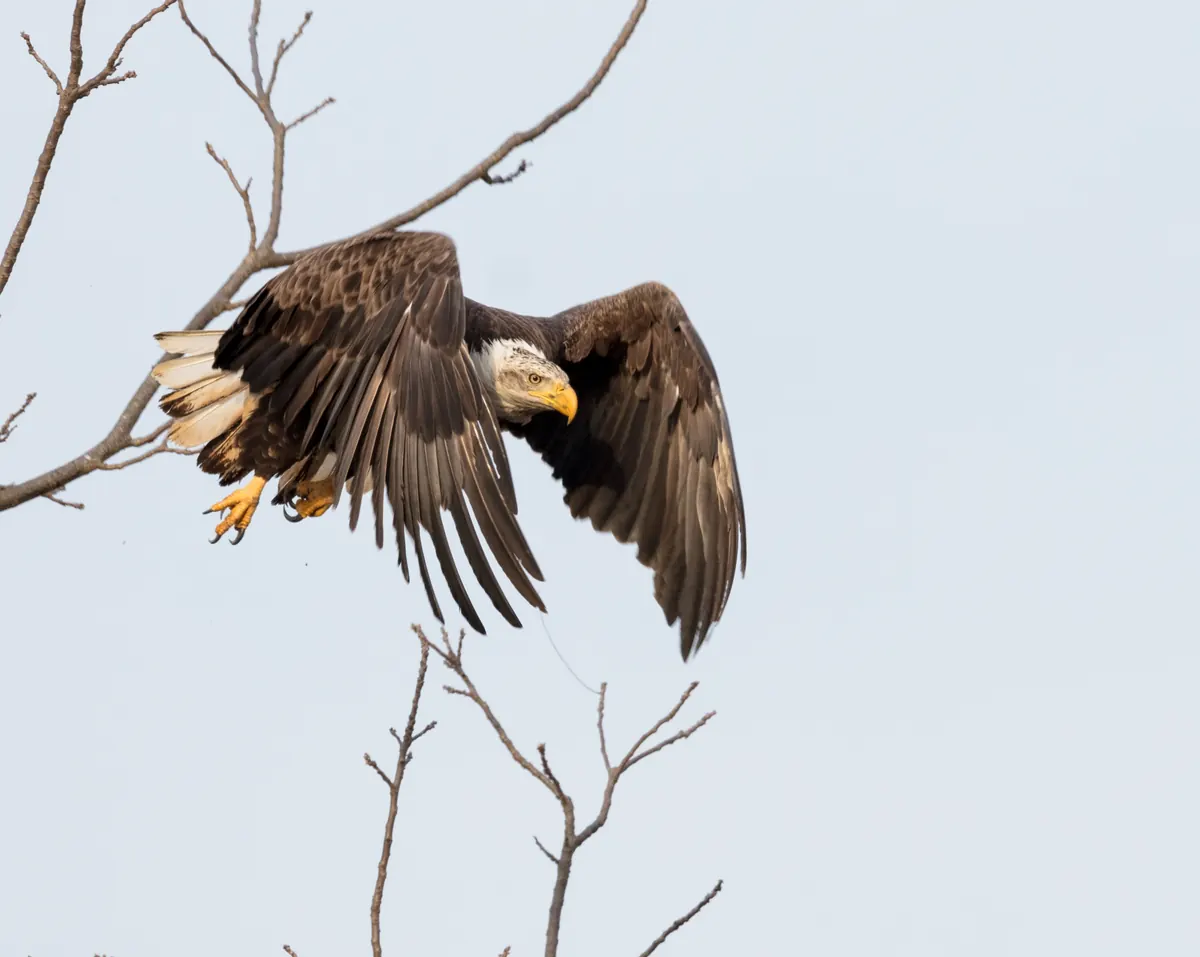
- Scan the rivers for eagles. Pick a calm, cold morning and glass the big sycamores along the New, Greenbrier, Ohio or South Branch. Adult bald eagles are easy at a distance; brown young ones take a second look. Pairs are already carrying sticks, and some will sit on eggs before February is out.
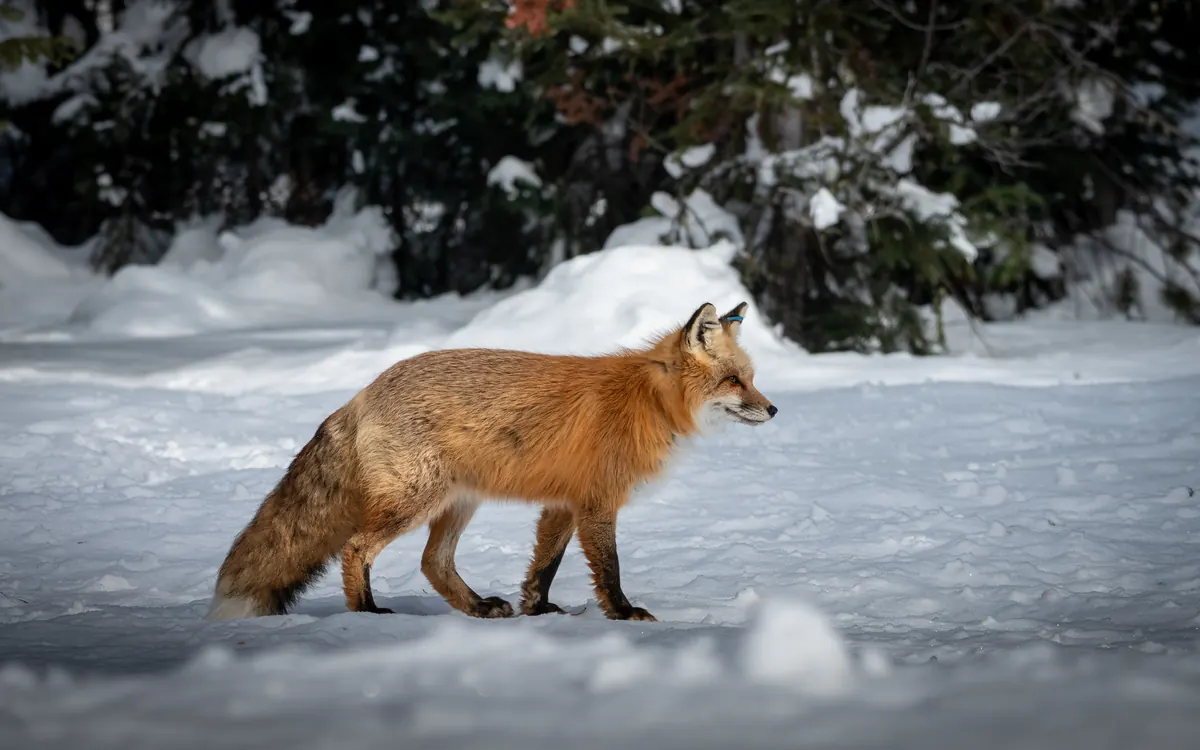
- Follow a fox line. After a fresh snow, look for a single-file string of small round prints crossing a field edge. A red fox walks almost in a straight line, putting each hind foot into the front print. In January a second trail often runs beside the first: the courting season has begun.
- Watch the Wolf supermoon rise. The year's closest and brightest full moon becomes full at 7:17 a.m. EST on Friday, January 22. Go out the evening before: it clears the eastern ridges near sunset and lights the snow until dawn.
Keep this month in the Naturalist's Field Journal: every eagle you see, with the river and whether it was an adult, under birds I have seen; fox, deer and mouse trails in the snow on tracks to know; the bark of one sycamore or beech, sketched close up, on a tree through the seasons; a stick nest, its tree and its height on nest observed; and the January sunsets on dusk and dawn watch, so you can count the minutes coming back.
Regions used below: Potomac Highlands and the Allegheny Mountains; Eastern Panhandle; Northern Panhandle and Morgantown; Mid-Ohio Valley; Kanawha Valley and Charleston; Huntington and the Metro Valley; New River Gorge and the southern coalfields.
Where can you see bald eagles in West Virginia in January?
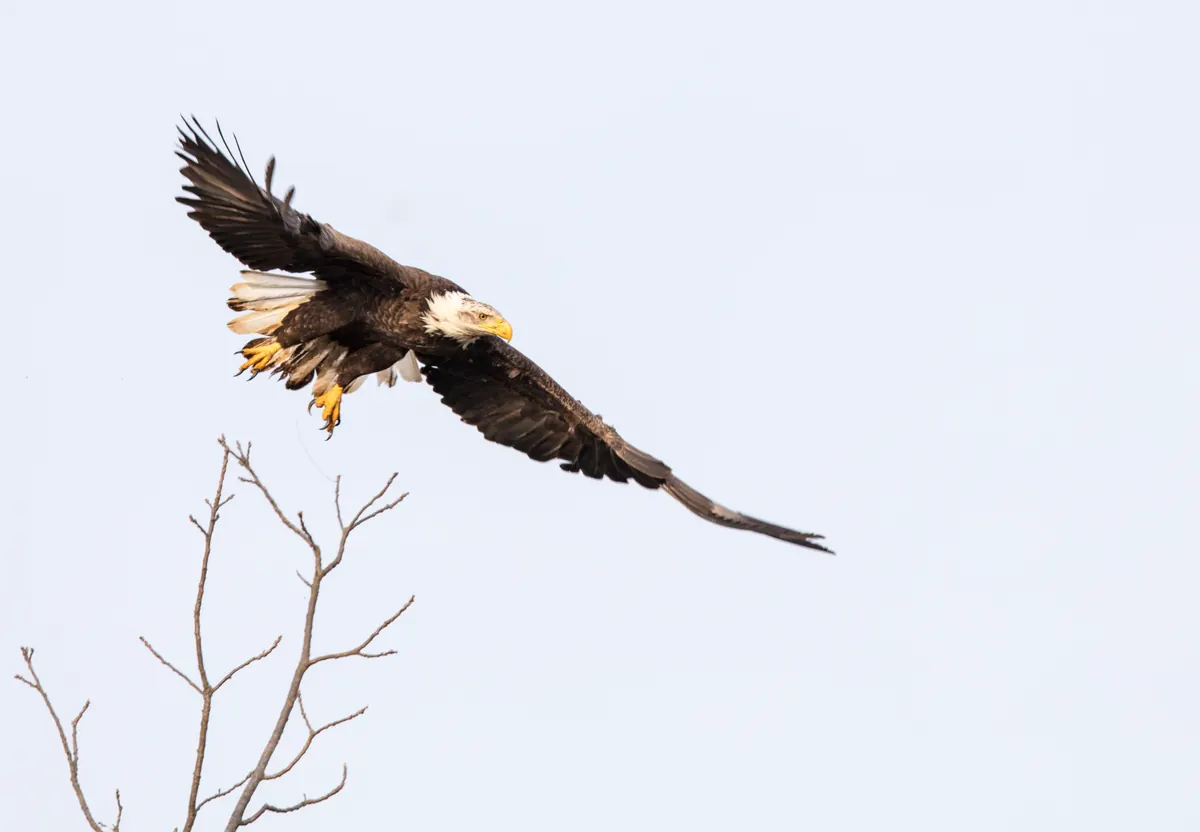
Bald eagles were once scarce in every season here. According to the WVDNR's eagle brochure, just 19 pairs attempted to nest here in 2005; the 2022 tally passed 130 known nests. Nonbreeding birds now turn up in most parts of the state, and in winter the easiest place to find any eagle is along open, unfrozen water where fish are within reach.
-
The winter eagle survey around Bluestone Lake
Annual, usually on a Saturday in the second week of January, roughly 10 a.m. to 2 p.m.; the 2027 date has not been announced · Bluestone Lake and the New and Greenbrier rivers around Hinton in Summers County, with spotters in Monroe, Raleigh, Mercer and Greenbrier counties
For more than twenty years, the Eagle Brigade of Southern West Virginia (the Three Rivers Avian Center, the Bibbee Nature Club and the Hanging Rock observatory crew) has spread volunteers along the rivers and lake shores near Hinton for a few hours of counting. When the survey started, its organizer says, spotters felt lucky to find a single eagle. The 2024 count found 42 bald eagles and one golden; on January 10, 2026, the 21st survey's 37 volunteers tallied 30 bald eagles, 20 of them adults. The group also runs an early spring count; in 2025 it fell on March 1. Newcomers are welcome and are paired with experienced counters: bring binoculars, a folding chair, lunch and far more layers than you think you need. Contact the Three Rivers Avian Center for the 2027 date.
-
Eagles on the Ohio River islands
December through February · Ohio River Islands National Wildlife Refuge, from the Northern Panhandle down to the Mid-Ohio Valley; Middle Island at St. Marys is open to visitors
The refuge protects 24 islands and four mainland tracts scattered along 362 miles of the upper Ohio, and most of its land is in West Virginia. Its wildlife-watching page says winter eagles are most often seen around Broadback, Neal and Grandview islands, and ducks gather on the river and its backwaters whenever smaller waters freeze. Middle Island, joined to St. Marys by a bridge, has more than 3.5 miles of hiking trails and a wildlife observation blind, and with the leaves gone you can see clear across the back channel. The refuge visitor center near Williamstown has two short trails, about 1.2 and 0.7 miles.
-
Pairs back at the nest
Nesting usually starts in January or February; eggs hatch after about 35 days · Big trees beside rivers and lakes, especially along the South Branch of the Potomac, the Ohio, Kanawha and Greenbrier
The DNR notes that bald eagles in West Virginia usually begin nesting in January or February, often reusing a nest that grows a little every year. The state's first known nest, found along the South Branch in 1981, had reached 5.25 feet across and 2.75 feet deep by 1984. Both adults take turns warming the eggs, usually two of them. Should you come across a nest, keep well back and use a scope: human presence near an occupied nest counts as harassment under state law, and the DNR asks that new nests be reported to its wildlife office.
-
Ducks on the open water
Through the cold snaps, when small ponds lock up and birds crowd onto rivers and big lakes · The Ohio and Kanawha rivers, Bluestone, Summersville, Stonewall Jackson and Burnsville lakes, and the Potomac in the Eastern Panhandle
When ice closes the ponds, waterfowl crowd onto whatever water stays open, which is also where the eagles hunt. The DNR's 2026–27 duck rules hint at the variety, setting limits for mergansers, scaup, canvasbacks, redheads, pintails and sea ducks. Look for the white sides of common mergansers in the riffles, rafts of diving ducks far out on the reservoirs, and little black-and-white buffleheads that dive and surface somewhere else.
When are black bear cubs born in West Virginia?
Right now. The state's bears have been underground since late fall, and January is when the pregnant females give birth, in a den they will not leave until spring. West Virginia now has a lot of bears: the West Virginia Encyclopedia puts the population at 12,000 to 14,000, up more than half this century, with the most in a crescent of counties from Tucker through Greenbrier and Monroe and west across Kanawha and Boone.
-
Birth in the den
Cubs born in January or February; they leave the den in April or May · Rock crevices, hollow trees, brush piles and dug-out hollows, mostly in the mountain counties
Black bears have a two-step pregnancy. Mating happens in early summer, yet the embryo stays unattached until fall and implants only if the female has stored enough fat. BearWise, the outreach program run by the state wildlife agencies, says cubs arrive in January or February weighing under a pound, less than a hundred-and-fiftieth of their mother's weight. Two or three is usual, though a litter can be anywhere from one to six. They are nearly naked and blind, and they purr and hum as they nurse on milk rich in fat. Over roughly thirteen weeks in the den, each one gains four to eight pounds while the mother eats nothing at all. Each spring, WVDNR biologists visit some of these dens to weigh and measure the cubs and check that the population is staying healthy.
What animal tracks can you find in the snow in West Virginia in January?
A fresh inch of snow on a quiet morning is the best field guide the state has. The WVDNR's winter wildlife checklist includes red and gray foxes, coyotes, bobcats, mink, otters, beavers, raccoons, skunks and deer, and most of them write their names across the snow even when you never see the animal.
-
Red foxes in courtship
Mating calls and paired trails build through January and February · Farm fields, pasture edges, golf courses and suburban backyards statewide
Red foxes prefer open country, fields, brushy edges and farmland, the DNR's magazine notes, while gray foxes stay in the woods and are the only American members of the dog family that can climb trees. Late winter is their courting season; by February, a Nature Conservancy writer notes, red foxes are either mating or about to start. The same writer describes the vixen's call as a hoarse, piercing scream that can frighten a listener who does not know what it is; you will hear it most on cold, still nights. Fox prints are small and neat, about the size of a cat's but with claw marks, set almost in a single line, and a pair traveling together leaves two trails that wander side by side. Where the line stops at a small crater, a fox has pounced on a mouse it heard moving under the snow.
-
Bobcats and coyotes
All winter · Woods, rocky slopes and reclaimed mine land statewide; coyotes everywhere from farmland to town edges
A bobcat's print is round, with no claw marks, because the claws are pulled in like a house cat's. Coyote prints are larger and more oval than a fox's, with the two middle toes pushed forward. Coyotes are newcomers: WVU Extension says the first one recorded in West Virginia turned up in the 1970s.
-
Mice and the world under the snow
Whenever snow lies for more than a day · Field edges, meadows and woodland floors; the Canaan Valley refuge is a good place to look
The tiniest trails belong to deer mice and voles: paired dots with a thin line where the tail drags, running from one grass stem to the next and then vanishing down a hole. Beneath the snow, in the narrow gap between the snowpack and the ground, the air holds near freezing even when the surface is far colder, and small mammals spend the winter there, feeding and moving out of sight of the owls. Refuge staff in Canaan Valley have photographed deer mouse trails in fresh powder that look like a line of stitching across the snow.
Where can you ski or snowshoe through wildlife country in West Virginia in January?
Canaan Valley in Tucker County sits high in the Alleghenies, and the Fish and Wildlife Service says its elevation gives it a cool, moist climate more like Maine or Canada than the Mid-Atlantic. In NOAA's 1991–2020 normals the cooperative station near Davis averages 45 inches of snow in January, more than any other station listed below. Much of the valley floor, nearly 19,000 acres, is the Canaan Valley National Wildlife Refuge, home to the largest wetland complex in the central and southern Appalachians, and in winter its trails become ski and snowshoe routes.
-
Ski and snowshoe the refuge trails
Whenever the snow allows, usually from late December into March · Canaan Valley National Wildlife Refuge, between Davis and Canaan Valley Resort
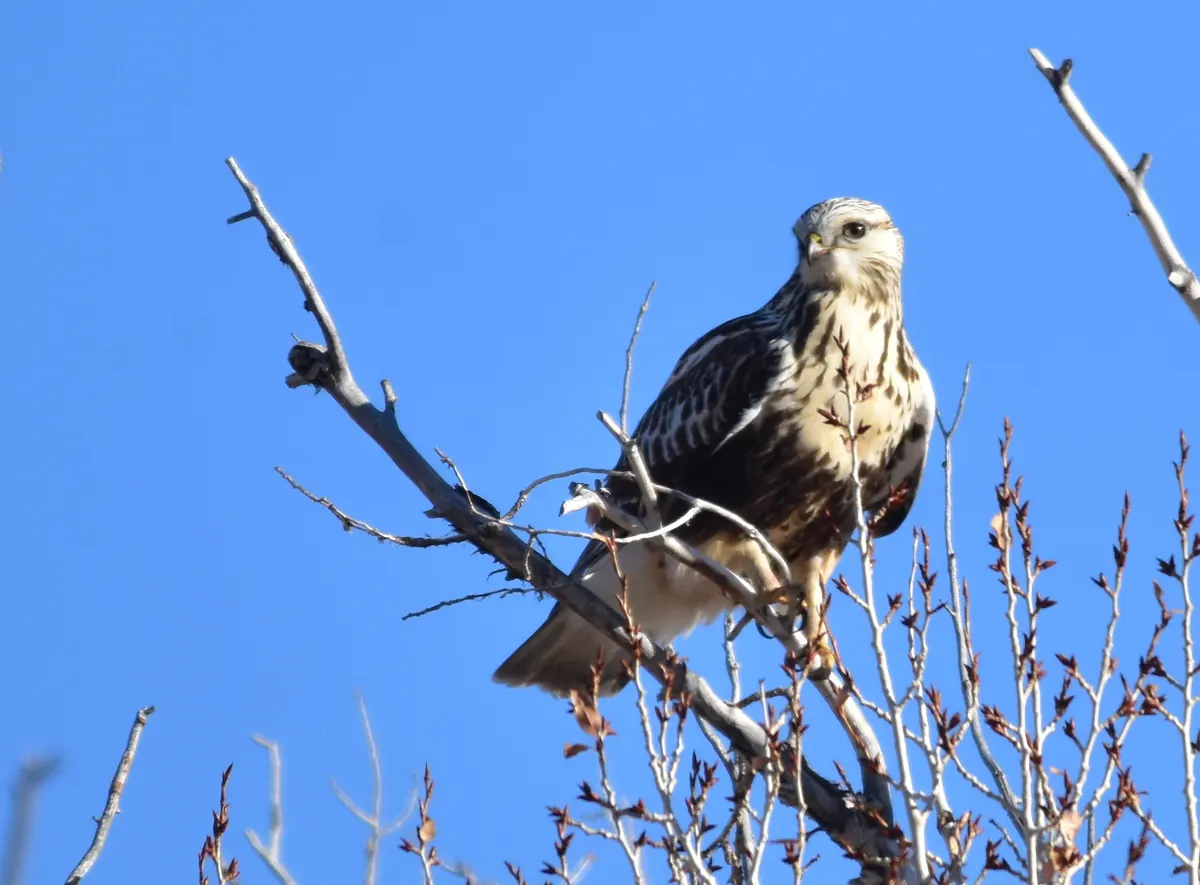
The U.S. Fish and Wildlife Service opens every refuge trail to cross-country skiing except the Freeland Boardwalk, and grooms some of the Beall trails in good snow years; the refuge's Facebook page posts grooming updates. The refuge's trail map runs from the short, flat Freeland Boardwalk and the Beall loops through old fields to steeper routes that climb through the woods. Watch for white-tailed deer, cottontails, snowshoe hares, wild turkeys, songbirds and, over the open wetlands, rough-legged hawks down from the Arctic tundra, which hover on beating wings over one spot like a big kestrel. Report any you find to eBird.
How can you identify West Virginia trees in winter?
With the leaves gone, bark does the talking. The West Virginia Division of Forestry's tree identification guide, written for high-school forestry teams, describes the bark of every common tree, and a few are easy to learn on one January walk.
-
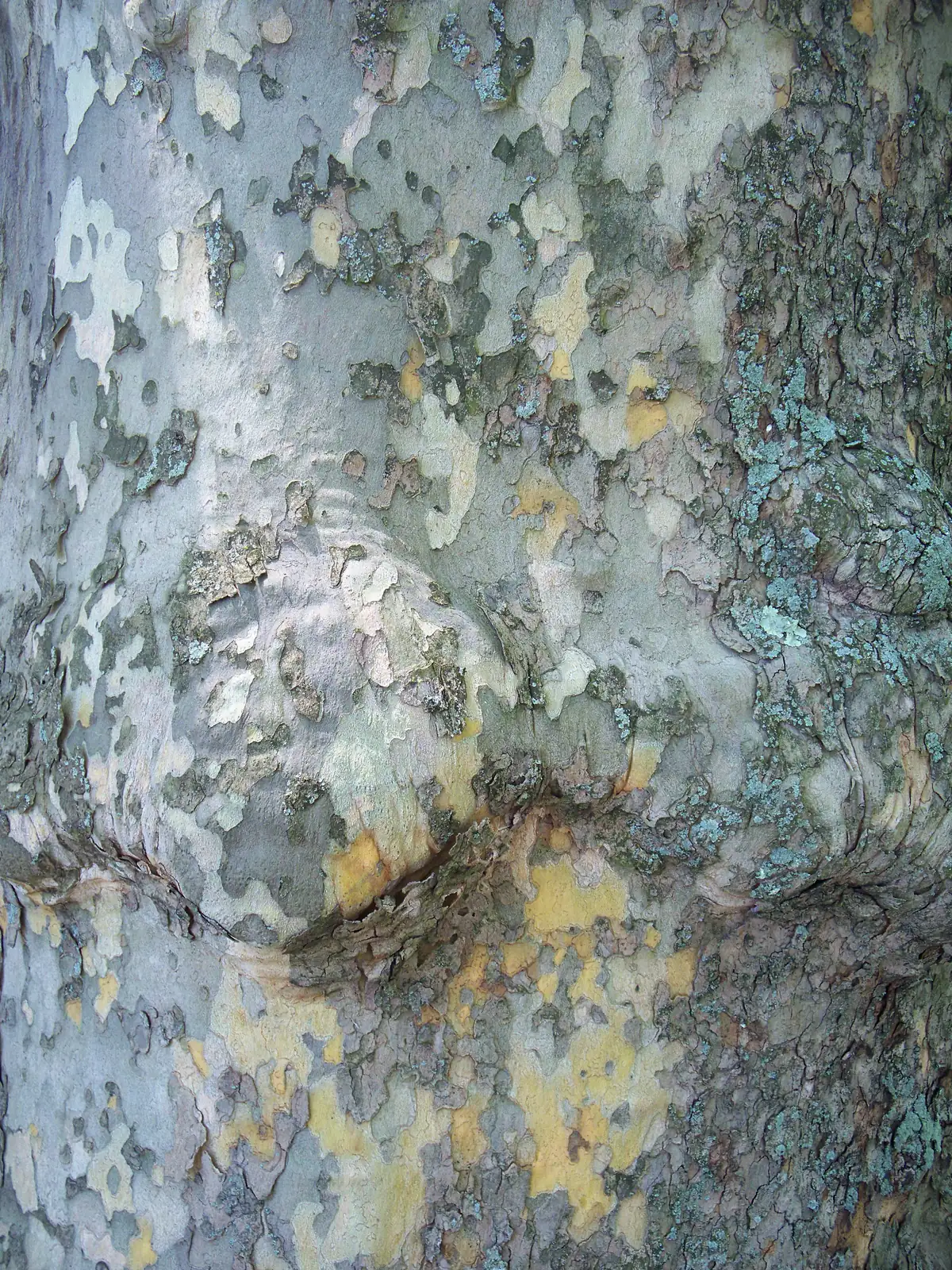
Sycamore, the ghost of the river bottoms
Bright all winter, most striking against a gray sky · Stream banks and floodplains statewide, the bigger the river the bigger the trees
The forestry guide describes sycamore bark as brown at first but soon mottled, flaking off in patches to expose cream and white underneath. On a winter day the upper limbs look almost white, so you can follow the course of a creek across a valley just by the line of pale treetops.
-
Beech, smooth and gray
All year; pale leaves often hang on young trees all winter · Moist slopes and coves throughout the state
Beech bark is thin, smooth and light blue-gray, and according to the forestry guide it does not change as the tree ages, so an old trunk looks much like a young one. Look also for the long, sharply pointed, cigar-shaped buds at the twig tips, among the easiest buds in the woods to name.
-
Shagbark hickory and black cherry
All year · Upland oak-hickory woods (shagbark); old fields and mixed hardwoods (black cherry)
Shagbark's gray bark breaks into long, thin plates that curve away from the trunk at both ends, which gives the shaggy look in the name. Black cherry, a prized timber tree in West Virginia, starts out with smooth, reddish-brown bark marked by short horizontal lines and later turns into small, black, flaky plates with turned-up edges.
-
Yellow-poplar and sugar maple
All year · Coves and lower slopes (yellow-poplar); rich, moist uplands (sugar maple, the state tree)
Young yellow-poplar bark is smooth and greenish with small white spots, and with age it breaks into long, rounded ridges separated by ashy-gray furrows, on tall, unusually straight trunks. Sugar maple bark is gray and on old trees deeply furrowed into long, thick, irregular plates.
What is happening in West Virginia's trout streams in January?
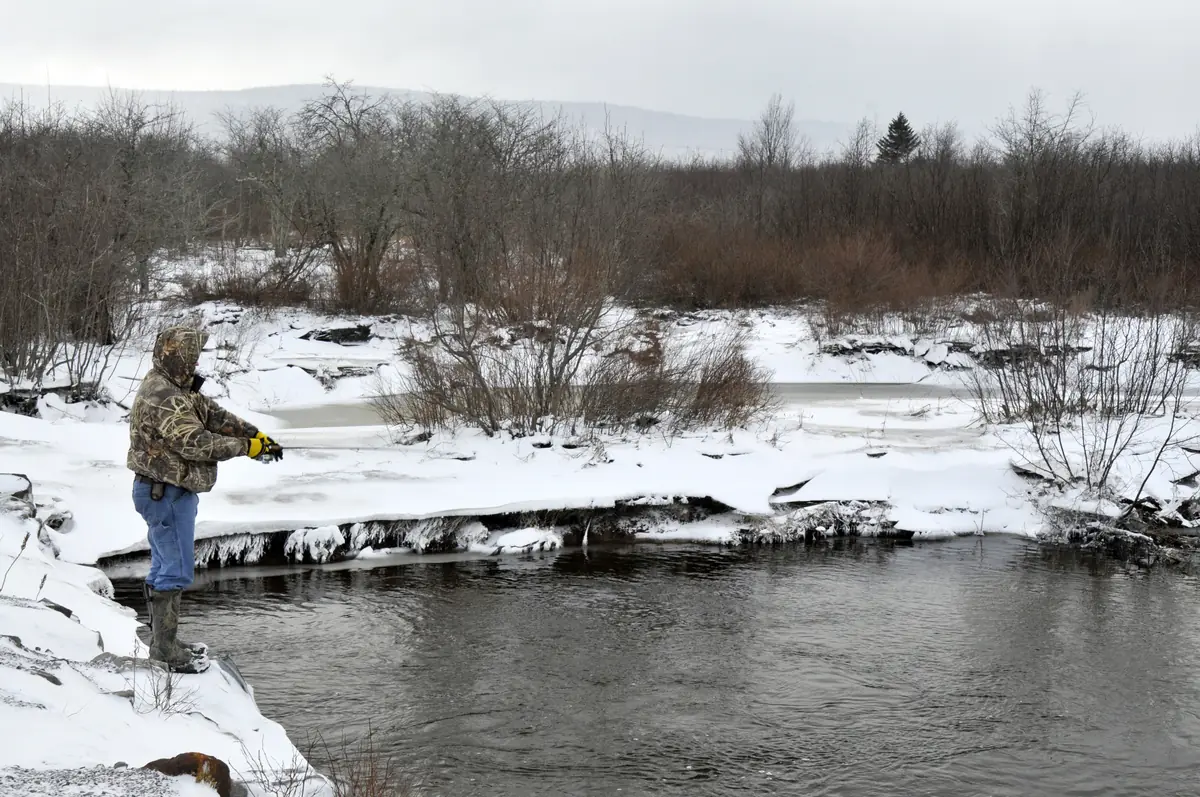
Winter streams look empty, but the DNR's hatchery trucks are on the road, and the water itself is hatching insects that fly over the snow.
-
The first trout stockings of the year
Select waters from early January, more each week in February and March · Stocked streams and lakes statewide; in January 2026 the list included Spruce Knob Lake, Shavers Fork, the South Branch, Cranberry River, Greenbrier River and Hurricane Reservoir
The DNR's hatchery program manager has explained that stocking starts in January on select waters and then speeds up through February and March. In the first full week of January 2026, the agency stocked 46 lakes and streams. The state raises all four of its stocked trout, rainbow, golden, brook and brown, and the golden rainbow is a West Virginia original: the DNR traces it to a single yellow-mottled fish a biologist spotted among the rainbows at the Petersburg hatchery in 1955. Anglers 15 and older need a 2027 fishing license and a trout stamp, and the DNR posts daily stocking reports on its website and on its fishing hotline.
-
Winter stoneflies on the snow
Mild winter afternoons, when snow lies along the stream · Riffles and the snow along clean, fast streams
On a sunny winter afternoon, look along a snowy stream bank for small, dark, slender insects walking on the snow with their wings folded flat. These are winter stoneflies, often called snowflies. The Forest Preserve District of Will County, in Illinois, explains that their young live in the streambed, sometimes for as long as three years, before the adults come out in the cold months to mate; a male drums his abdomen on a perch or the ground to call a female. Because the nymphs need clean, well-oxygenated water, finding them is a good sign for the stream.
How cold and snowy is January in West Virginia, and what could El Niño bring?
January is the heart of the cold season here, and the snow map follows the mountains. In NOAA's 1991–2020 normals, the cooperative stations at Davis in Canaan Valley and Terra Alta in Preston County each average more than 44 inches of snow in January, and Davis keeps an inch or more of snow cover for about 24 days of an average January. In the Ohio Valley, Huntington averages 6 inches and Charleston about 10. Nights at or below zero come about five times in an average January at Snowshoe, Davis and Glady, and about once every other year at Charleston and Huntington.
Single Januaries can be far more extreme. The National Weather Service office in Charleston lists January 1977 as the coldest January on record at both Charleston (an average of 18.5 °F) and Elkins (15.0 °F), and January 1985 as the snowiest at Elkins, with 54.1 inches. At Charleston, the snowiest was January 1978, with 39.5 inches.
| Station | Average high | Average low | Snowfall | Days with 1 in or more of snow on the ground | Nights at or below 0 °F |
|---|---|---|---|---|---|
| Davis 3 SE (Canaan Valley, Tucker County) | 31.9 | 15.9 | 45.0 | 24.2 | 4.8 |
| Terra Alta #1 (Preston County) | 34.0 | 17.7 | 44.1 | 22.1 | 2.5 |
| Snowshoe (Pocahontas County) | 29.8 | 14.3 | 35.5 | 22.3 | 5.0 |
| Bayard (Grant County) | 35.0 | 16.1 | 31.9 | 22.2 | 3.2 |
| Glady 1 N (Randolph County) | 35.1 | 15.7 | 27.3 | 21.4 | 5.2 |
| Elkins Randolph County Airport | 41.5 | 20.0 | 20.3 | 15.2 | 3.0 |
| Beckley Raleigh County Airport | 40.5 | 24.0 | 15.5 | 10.8 | 1.0 |
| Charleston Yeager Airport | 43.9 | 26.1 | 10.3 | 7.0 | 0.5 |
| Bluefield Mercer County Airport | 39.9 | 23.8 | 9.9 | 9.5 | 0.6 |
| Romney 1 SW (Eastern Panhandle) | 40.2 | 20.8 | 7.0 | 10.2 | 1.2 |
| Huntington Tri-State Airport | 43.2 | 26.4 | 6.0 | 4.8 | 0.5 |
The Pacific may tilt the odds this winter. Out in the equatorial Pacific, sea temperatures are running far above normal. NOAA's ENSO forecasters, writing in early September, rated this event's odds of becoming very strong this winter at over nine chances in ten (their September 10 discussion). For West Virginia the record is mixed, and January is where it shows. During the record 2015–16 El Niño, the storm of January 22 to 24, 2016 buried the Mid-Atlantic; the Weather Service's own assessment says snow topped 2 feet in parts of West Virginia, and the Charleston office's records put January 2016 sixth on that city's list of snowiest Januaries, at 21.3 inches. The Northeast Regional Climate Center points out that several of the region's great nor'easters, that blizzard among them, came in El Niño winters, because a strong southern storm track can turn up the coast. Yet the Charleston office's own look at 16 El Niño winters found them only slightly snowier than normal on average, and slightly colder and drier, with wide swings from year to year. NOAA's official winter outlook was issued on October 15 and is refreshed every month; you will find each month's update among the CPC seasonal outlook maps. Before a mountain trip, look at the current weather, and learn to spot a thickening veil of altostratus, the classic storm-day sky, with our guide to clouds. Gardeners dreaming over seed catalogs can check when their town's last spring freeze usually comes in our frost date tables for West Virginia.
How much daylight does West Virginia gain in January?
The light is coming back, slowly at first. Every town in the table below gains between 40 and 45 minutes of daylight over the month, roughly 1.3 to 1.5 minutes daily, and the rate keeps climbing into February and March. Bluefield, the southernmost city here, starts January with the longest day, 9 hours 39 minutes, and ends it at 10 hours 19 minutes. Wheeling, the farthest north, starts with the least, 9 hours 23 minutes, but gains the most, 45 minutes, to reach 10 hours 8 minutes on January 31. Charleston and Huntington run neck and neck, from 9 hours 33 minutes to 10 hours 15 minutes. Most of the early-January gain lands in the evening, because sunrise is still drifting later in the first days of the year; late in the month, sunrise begins coming earlier as well.
| City | Jan 1 | Jan 31 | Gained | Per day |
|---|---|---|---|---|
| Wheeling | 9 h 23 m | 10 h 08 m | 45 min | 1.5 min |
| Morgantown | 9 h 25 m | 10 h 09 m | 44 min | 1.5 min |
| Martinsburg | 9 h 27 m | 10 h 11 m | 44 min | 1.5 min |
| Parkersburg | 9 h 28 m | 10 h 12 m | 44 min | 1.5 min |
| Elkins | 9 h 30 m | 10 h 12 m | 42 min | 1.4 min |
| Charleston | 9 h 33 m | 10 h 15 m | 42 min | 1.4 min |
| Huntington | 9 h 33 m | 10 h 15 m | 42 min | 1.4 min |
| Bluefield | 9 h 39 m | 10 h 19 m | 40 min | 1.3 min |
Our daylight calculator gives sun times and twilight for your own street.
What can you see in West Virginia's night sky in January 2027?
Long, frosty nights and a new moon on Thursday, January 7, make the first half of the month the darkest. Pocahontas County's dark sky parks at Watoga, Calvin Price State Forest and Droop Mountain are the places to go, if the roads are clear. All times below are Eastern Standard Time.
-
The Quadrantid meteor shower
Peak on the night of Sunday, January 3, into the dawn of Monday, January 4 · Northeastern sky; the radiant, between the Big Dipper's handle and Boötes, climbs higher after midnight
Quadrantid peaks are short, roughly six hours long, and 2027's falls during North American darkness. The American Meteor Society's prediction is about 10:30 p.m. on January 3, and EarthSky's is 12:47 a.m. on January 4. Because the radiant starts out near the northern horizon and rises toward morning, the strongest showing here should be in the last dark hours before Monday's sunrise. The waning crescent moon, only about a sixth lit, comes up late and does little harm. Under a truly dark sky, expect perhaps a few dozen meteors per hour near the peak, fewer elsewhere. Pack a thermos and a sleeping bag to sit in: it will be the frostiest hour.
-
Earth at perihelion
Saturday, January 2, at 9:33 p.m. · Everywhere
Earth is closest to the sun for the year, about 91.4 million miles away. It is cold anyway: the seasons come from the tilt of Earth's axis, not the distance, and in January the Northern Hemisphere is tipped away, so the sun stays low and the days stay short.
-
Venus at its highest in the morning
Greatest elongation on Sunday, January 3; bright all month · Southeast before dawn
Sunday the 3rd is the morning Venus pulls farthest from the glare, 47 degrees by the almanac's reckoning, and it blazes over the southeastern ridges before sunrise all month. In a small telescope it looks like a tiny half-moon. Ringed Saturn, meanwhile, slides toward the southwestern ridgelines a bit earlier each evening. Mercury joins the dusk sky as January closes, a small spark low in the west-southwest a half hour or more after the sun goes down; its best evening showing of the winter comes in early February.
-
The Wolf Moon, the closest full moon of 2027
Full on Friday, January 22, at 7:17 a.m.; best on the night of Thursday the 21st · Rising in the east-northeast near sunset on the 21st
The moon passes perigee, its nearest point, roughly 14.5 hours ahead of the full phase, which makes January's full moon the year's biggest supermoon, about 222,229 miles away. On the night of the 21st it climbs high across the south, because a winter full moon follows the path the sun takes in summer, and on fresh snow it gives enough light to walk a field without a flashlight. Jupiter, the brightest point of light in the east that weekend, sits just beside the moon when it comes up over the hills on the 23rd. Track every phase on our moon phase calendar.
| Phase | Date | Time |
|---|---|---|
| Last quarter | Wednesday, Dec 30, 2026 | 1:59 p.m. |
| New moon | Thursday, Jan 7 | 3:24 p.m. |
| First quarter | Friday, Jan 15 | 3:34 p.m. |
| Full moon, the Wolf Moon | Friday, Jan 22 | 7:17 a.m. |
| Last quarter | Friday, Jan 29 | 5:55 a.m. |
| New moon | Saturday, Feb 6 | 10:56 a.m. |
What can West Virginia families do outdoors in January?
- Friday, January 1: a First Day Hike. Twenty state parks and forests led free guided walks on New Year's Day 2026, most starting between 9 a.m. and 2 p.m., as part of America's State Parks' national program. Look for the 2027 schedule on the state parks website, which usually fills it in during December.
- January 1 to 5: the last Christmas Bird Counts. Audubon's 127th count season ends on January 5, 2027. Last season, Huntington and Lewisburg counted on January 3, Inwood on the 4th and Elkins on the 5th; the Brooks Bird Club lists this season's dates and compilers as they are set.
- Sunday night, January 3: the Quadrantids. Older kids can set an alarm for the hours before dawn on Monday; younger ones can look for an early meteor or two after dark.
- Early to mid-January: the winter eagle survey. The Eagle Brigade's count around Hinton and Bluestone Lake welcomes families who can sit still in the cold. The date is usually a Saturday in the second week of January; check with the Three Rivers Avian Center.
- After any snowfall: a track hunt. Take a ruler and a phone camera to a field edge and see how many different animals you can find before the snow melts.
- Any day through March 31: the West Virginia Wildlife Center. The DNR's wildlife center in Upshur County, near French Creek, keeps winter hours of 9 a.m. to 3 p.m. every day until March 31, with elk, bison, river otters and birds of prey along an easy trail, and the state's weather groundhog asleep until his big day in February.
- A snowy weekend: ski or snowshoe Canaan Valley. Start on the flat refuge trails and look for snowshoe hare prints, which are bigger than you expect.
Count days, tracks and moonrises each have a page in the Naturalist's Field Journal; for other states and months, browse the nature guides index. Missed the solstice stories? They are in the West Virginia December guide.
Safety notes for January in West Virginia
- Hunting in January, and orange. Most of the big deer seasons close by December 31 under the WVDNR's 2026–27 rules, but January is not quiet. The Mountaineer Heritage Season for deer, bear and turkey runs from Thursday, January 14 to Sunday, January 17, 2027, with only traditional weapons allowed: flintlock and percussion muzzleloaders, longbows and recurve bows. The DNR’s 2026–27 regulations summary says the blaze orange rule, an outer garment of at least 400 square inches, applies to the Heritage season in any county where deer may be hunted with a gun or muzzleloader that week; Logan, McDowell, Mingo and Wyoming counties have their own Heritage rules, so read the summary before you go. Small-game seasons stay open all month: squirrel, ruffed grouse, cottontail and snowshoe hare until February 28, and bobwhite quail to January 2. Red and gray foxes, bobcats and raccoons may be hunted or trapped through February 28 (fisher trapping closes January 31), with night hunting for foxes allowed from January 1; coyotes are open all year. The migratory bird rules keep ducks, mergansers and coots open from December 21 to January 31, Canada and snow geese from December 8 to January 31, and brant from January 2 to January 31, so expect shotgun fire around rivers and lakes at dawn. Hikers should wear orange on any public hunting land, Sundays included, and put an orange vest or collar on the dog. Sunday hunting is legal on public land and, with written permission, on private land.
- No ice is safe ice. The DNR's winter fishing guide warns that even after a long freeze, walking on the ice of West Virginia's lakes and ponds is never safe. Moving rivers and spillways are worse. Keep children and pets back from frozen edges, and never go out on the ice after a dog.
- Cold, wind and short days. On the high plateaus, January lows near 15 °F combine with strong northwest winds, and the wind chill can drop well below zero. Dress in layers, cover your face and fingers, and turn around early: the days are still short, and darkness comes fast in a hollow.
- Snow on the passes. Upslope snow on northwest winds can whiten U.S. 33, U.S. 219 and the roads into Canaan Valley and Snowshoe while the lowlands only see flurries.
Sources
- WVDNR: Eagles of West Virginia (brochure: nest counts, nesting season, South Branch nest history)
- West Virginia Press Association: winter eagle survey finds 30 bald eagles across southern West Virginia (January 2026)
- Yahoo News (Bluefield Daily Telegraph): annual eagle count coming this January and March (December 2024)
- Three Rivers Avian Center (Eagle Brigade member)
- U.S. Army Corps of Engineers: National Midwinter Bald Eagle Survey
- U.S. Fish and Wildlife Service: wildlife watching at Ohio River Islands National Wildlife Refuge
- U.S. Fish and Wildlife Service: Ohio River Islands National Wildlife Refuge, visit us
- U.S. Fish and Wildlife Service: Ohio River Islands National Wildlife Refuge species
- e-WV, the West Virginia Encyclopedia: Ohio River Islands National Wildlife Refuge
- WVDNR: 2026–27 Migratory Bird Hunting Regulations Summary (duck, goose and brant seasons)
- e-WV, the West Virginia Encyclopedia: black bear (population and range)
- BearWise: January and February is birthday time for bears
- WCHS: WV Wildlife, bear cubs study (WVDNR den checks, March 2017)
- WVU Extension: black bears
- WVDNR: West Virginia winter wildlife viewing checklist
- Wonderful West Virginia (WVDNR): a tail of two foxes (November 2024)
- The Nature Conservancy, Cool Green Science: how to see a red fox in winter
- WVU Extension: coyotes
- U.S. Fish and Wildlife Service: deer mouse tracks in snow, Canaan Valley National Wildlife Refuge (photo record)
- U.S. Fish and Wildlife Service: cross-country skiing at Canaan Valley National Wildlife Refuge
- U.S. Fish and Wildlife Service: Snow Wonder, winter at Canaan Valley refuge
- U.S. Fish and Wildlife Service: Canaan Valley National Wildlife Refuge trails
- eBird (Cornell Lab of Ornithology)
- West Virginia Division of Forestry: basic tree identification (bark and leaf descriptions)
- WVU Extension: 4-H tree identification project
- WVDNR: trout stockings provide opportunities for year-round fishing
- WVDNR: stocks 46 waters during week of January 5 (2026)
- WVDNR: stocks 16 waters during week of January 12 (2026)
- Forest Preserve District of Will County: winter stoneflies flourish in frigid winter weather (December 2024)
- NOAA NCEI: 1991–2020 monthly normals for West Virginia airport stations
- NOAA NCEI: 1991–2020 monthly normals for Snowshoe, Terra Alta, Davis, Bayard, Glady and Romney
- NOAA NCEI: U.S. climate normals, 1991–2020
- National Weather Service Charleston, WV: climate top ten for January at Elkins
- National Weather Service Charleston, WV: climate top ten for January at Charleston
- National Weather Service: service assessment, the historic nor'easter of January 2016
- National Weather Service Charleston, WV: El Niño winters at Charleston
- Northeast Regional Climate Center: El Niño impacts in the Northeast
- Climate Prediction Center: ENSO diagnostic discussion, September 10, 2026
- Climate Prediction Center: seasonal (90-day) outlooks
- U.S. Naval Observatory: moon phases from December 30, 2026
- U.S. Naval Observatory: Earth's seasons and perihelion, 2027
- American Meteor Society: meteor shower calendar (Quadrantids)
- EarthSky: Quadrantid meteor shower
- Fred Espenak, Sky Event Almanac 2027 (planets, perihelion, Moon and Jupiter)
- EarthSky: what is a supermoon? (2027 list)
- EarthSky: Venus at greatest western elongation
- NOAA Space Weather Prediction Center: aurora forecast
- Watoga Foundation: Watoga dark sky parks
- West Virginia State Parks: First Day Hikes
- National Audubon Society: join the Christmas Bird Count (127th count, December 14, 2026 to January 5, 2027)
- Brooks Bird Club: West Virginia Christmas Bird Counts (dates and compilers)
- WVDNR: West Virginia Wildlife Center
- WVDNR: hunting season dates, 2026–27 (Mountaineer Heritage Season, small game and furbearers)
- WVDNR: 2026–27 Hunting and Trapping Regulations Summary
- WVDNR: Mountaineer Heritage Season rules (weapons, blaze orange, bow-only counties)
- West Virginia Code §20-2-60: fluorescent orange for deer hunters
- West Virginia Code §20-2-5: Sunday hunting on private land with written consent and on public land
- WVDNR: rainbow vs. golden rainbow trout
- U.S. Fish and Wildlife Service: about Canaan Valley National Wildlife Refuge
- WVDNR: your guide to winter fishing in West Virginia (ice safety)
- Photos via Wikimedia Commons; licenses and photographers are credited under each picture
.jpg)