What to look for in nature in West Virginia this November
November strips West Virginia down to its bones. The ridgelines show through bare hardwoods, and the birds that use them change from songbirds to eagles: golden eagles come down the Alleghenies to spend the winter in the Monongahela high country, and the bald eagles on the big rivers start fixing their nests. Tiny saw-whet owls pass in the dark, bucks lose their caution in the middle of the month, and the Monday before Thanksgiving fills the woods with orange. Up in Preston County a bog full of tamaracks turns gold after almost everything else has gone brown. Below, region by region, is where and when to find it all.
Other months in West Virginia: October, December.
Start here

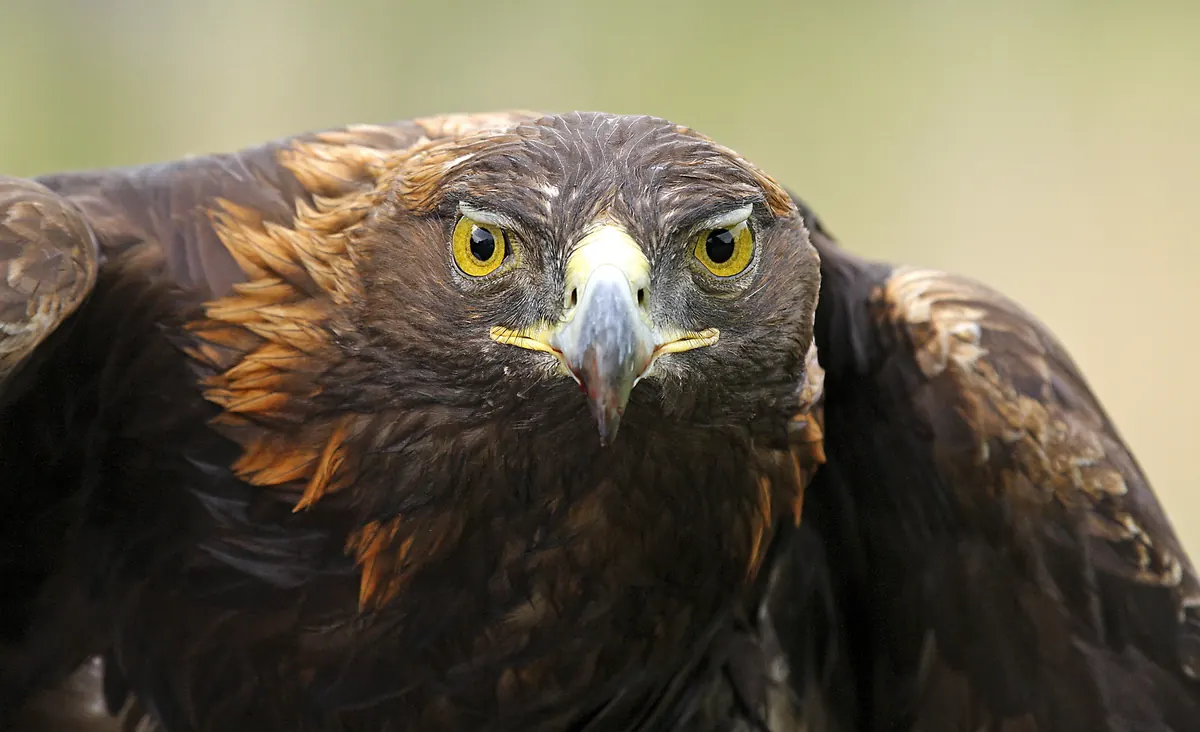
- Golden eagles on the ridges. Eastern golden eagles winter in the central Appalachians, and West Virginia’s share lives mostly in the mountains from Tucker County down to Monroe County. The Hanging Rock count on Peters Mountain runs until about November 11; its single best day for the species was 14 golden eagles on November 3, 2018.
- The rut, then the opener. In a 2013 interview, the DNR’s deer biologist placed peak breeding in West Virginia around November 14 to 17, worked out from the age of fetuses in road-killed does. The buck firearms season follows on Monday, November 23, and runs through December 6 in every county except Logan, McDowell, Mingo and Wyoming.
- Mars meets Jupiter, then a Beaver supermoon. Get up early on the 15th or 16th: the red planet and the giant one hang barely more than a degree apart high in the southeast, and Venus blazes below them. The Beaver Moon is full at 9:53 a.m. EST on Tuesday, November 24, which means the moon appears full both Monday and Tuesday evening; it also counts, just barely, as a supermoon.
For the Naturalist’s Field Journal this month: your first eagle or saw-whet owl of the season under birds I have seen; a scrape or a rubbed sapling on the reading the signs plate; a tamarack cone or a dry beech leaf for seeds, pods and cones; the oak in your yard on a tree through the seasons as it finally lets go; and the deer crossing the road at 5:15 p.m. on the dusk and dawn watch. Note the weather beside every entry.
Regions used below: Potomac Highlands and the Allegheny Mountains; Eastern Panhandle; Northern Panhandle and Morgantown; Mid-Ohio Valley; Kanawha Valley and Charleston; Huntington and the Metro Valley; New River Gorge and the southern coalfields.
Where can you see golden eagles and bald eagles in West Virginia in November?
Two eagles share the state in winter, and November is when both settle in. The WVDNR’s eagle brochure notes that eastern golden eagles are found in their greatest winter numbers in the central Appalachian mountains of Pennsylvania, Virginia and West Virginia, and that in West Virginia they turn up mainly in the high country between Tucker and Monroe counties. None are known to nest anywhere in the eastern United States; the birds you see breed far to the north in Canada and come south for the cold months. Bald eagles, which were once scarce here in every season, are now seen regularly along most of the big rivers.
-
Golden eagles over Peters Mountain
Late October into mid-November; the official count usually stops around November 11 · Hanging Rock Raptor Observatory, Monroe County, on the Virginia line
HawkCount’s profile of the Hanging Rock site gives an average of about 34 golden eagles per fall season, a high of 81 in 2015, and a best single day of 14 on November 3, 2018. The West Virginia Encyclopedia’s entry on the observatory puts golden eagles and red-tailed hawks at their best in mid-November. The wooden lookout itself is still closed while a group raises money to rebuild it, so the counters sit on the rocks next to it. The best days follow a cold front, with blue sky and a northwest breeze lifting off the mountain. Adults are chocolate-brown with a gold wash across the nape, legs feathered right down to the toes, and long wings held nearly flat; a young one shows white patches at the base of the flight feathers and a white tail ending in a dark band.
-
Winter goldens in the national forest
November through March · Monongahela National Forest and nearby open ridges and old mine land, Tucker County south to Monroe
Much of what is known about these birds came from West Virginia University. In the early 2010s, a WVU researcher and the Eastern Golden Eagle Working Group set more than 80 motion-triggered cameras in small, remote clearings from New York to North Carolina, baited them with road-killed deer, and collected thousands of eagle photographs, proof of how readily golden eagles eat carrion in winter. A golden eagle weighs 6 to 14 pounds and spans 6 to 7 feet or a little more, and it takes a wide range of live mammals and birds as well. You are most likely to see one soaring along a high ridge or flushing from a roadkill on a mountain road.
-
Bald eagles on the rivers and lakes
All month; pairs add sticks to their nests before laying in January or February · The South Branch of the Potomac, the Ohio, Kanawha and Greenbrier rivers, and large reservoirs
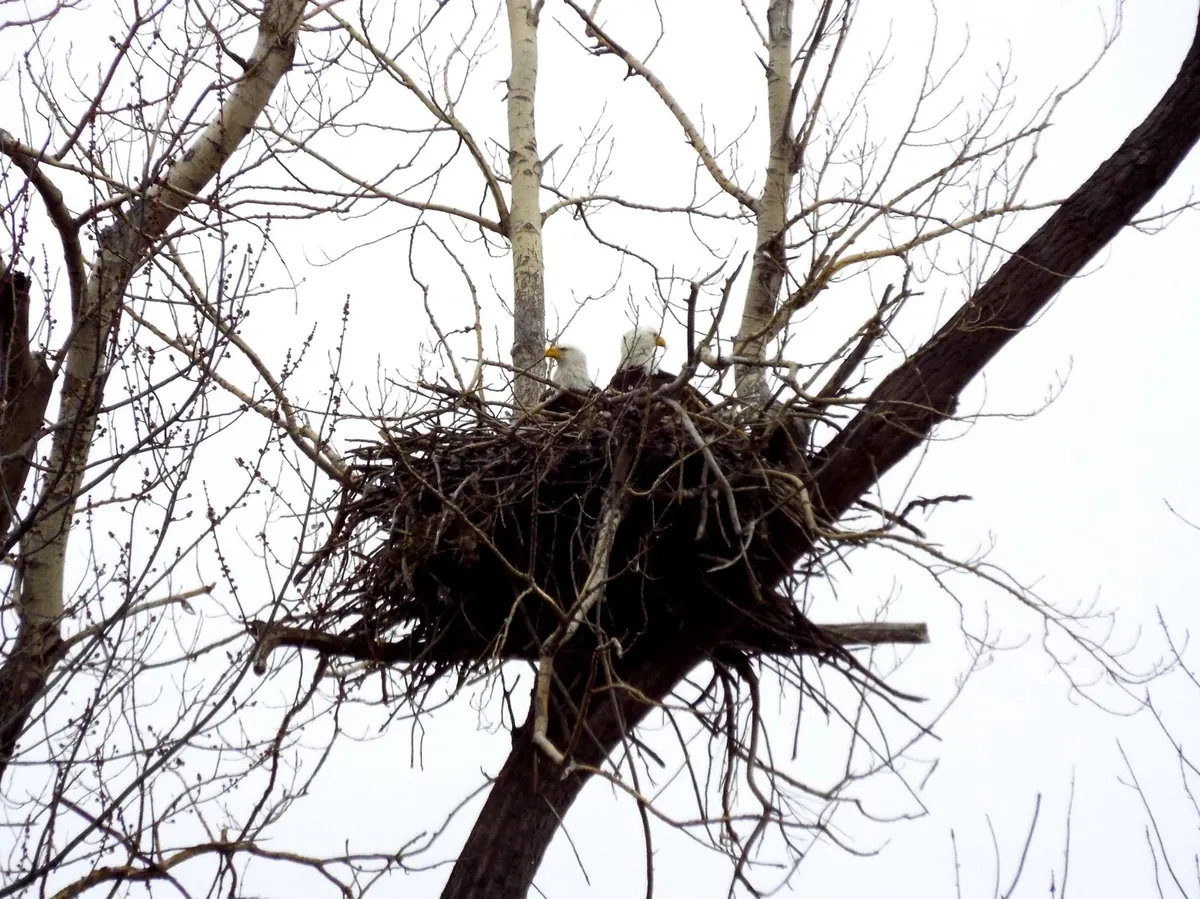
The state’s first recorded bald eagle nest was found in 1981 beside the South Branch of the Potomac, and the DNR says the same territory was still in use in 2022. In 2005, 19 pairs tried to nest; by 2022 biologists had documented more than 130 nests. During fall migration, the brochure adds, most eagles are seen in the mountains, where they follow the ridges south and gather at lakes. With the leaves down, November is a good time to spot the bulky stick nests and the pairs that use them. Watch from a distance and never approach an active nest; disturbing eagles breaks state and federal law. The DNR asks people to report new nests to dnr.wildlife@wv.gov.
Which birds arrive in West Virginia in November, and will winter finches come this year?
The warblers have gone, and the winter crowd moves in: juncos and white-throated sparrows in the brush, kinglets and creepers in the woods, and, unseen by most people, small owls moving south at night.
-
Northern saw-whet owls
October and November; heaviest in the first half of November · Valley Falls State Park, Marion County, and conifer or rhododendron thickets statewide
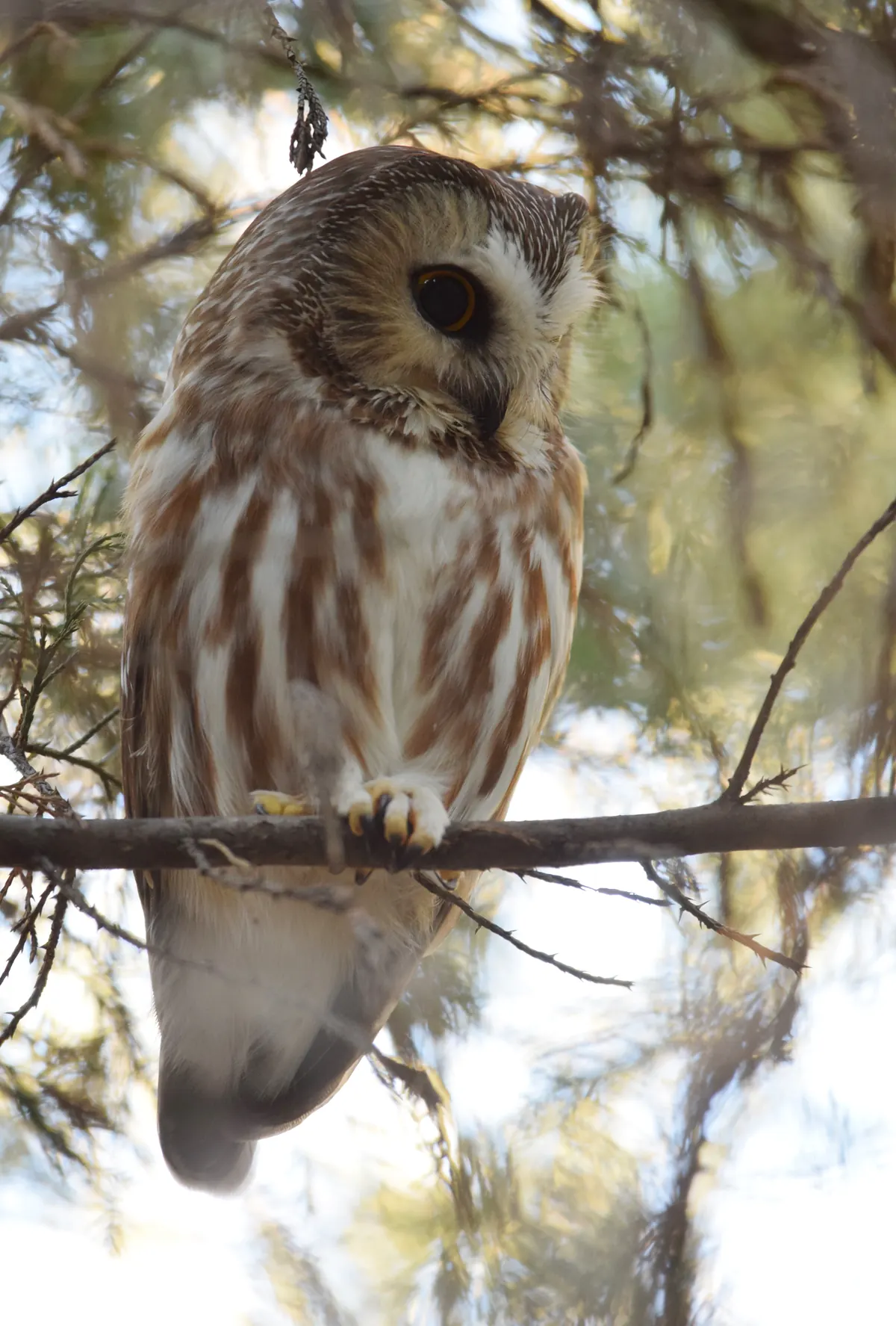
The northern saw-whet owl is the smallest owl in the eastern United States: 7 or 8 inches tall and 2 to 4 ounces, about the weight of a deck of cards. WVU Extension notes that the birds migrate through West Virginia with a peak in early to mid-November, and that some have nested in the state’s high-elevation forests. Since 2005, a Brooks Bird Club bander has run a fall owl station at Valley Falls State Park, opening fine mist nets after dark. His best night there brought 26 saw-whets on November 6, 2016, and in 2018 the station caught 27 owls and welcomed 75 visitors. Each owl gets a numbered leg band before it is released. The club has not posted a 2026 schedule, so contact it before you plan an evening; migrants move most on cold, clear nights.
-
Juncos, sparrows and the start of FeederWatch
Juncos arrive in the lowlands by early November; FeederWatch runs November 1 to April 30 · Yards, field edges and brushy fencerows
Dark-eyed juncos nest on West Virginia’s highest mountains in summer, and in November the northern birds join them in valleys and towns, flashing white outer tail feathers as they flush. White-throated sparrows whistle from the hedges, and Carolina wrens and titmice crowd the feeders. FeederWatch, the Cornell Lab and Birds Canada survey of backyard birds, starts its 2026–27 counting season on November 1 and runs until the end of April; participants watch on two back-to-back days and note, for every species, the highest number present together, then do it again whenever they like.
-
Winter finches: probably a quiet year
Through the winter; any flight would build late · Spruce and hemlock in the high country; sunflower feeders statewide
According to the Finch Research Network’s 2026–27 outlook, cone and seed crops are heavy this year in the Northeast and eastern Canada, so most northern finches can find food without coming this far south. It does not expect big irruptions into the southeastern states. Evening grosbeaks may make a small to moderate flight into southern New York and Pennsylvania, purple finches may trickle into the Mid-Atlantic late in the season, and the red-breasted nuthatch, which came south in numbers last winter, should mostly stay north. The forecast does expect a few Type 1 red crossbills to scatter as far south as the mountains of West Virginia, so listen for their hard calls in the red spruce of Canaan Valley, Spruce Knob and Cranberry Glades, where pine siskins can turn up too.
When is the deer rut in West Virginia, and when do bears go into their dens?
Whitetails and black bears spend November doing opposite things. Whitetail bucks are at their most reckless, while black bears are slowing down and choosing a place to sleep.
-
The peak of the rut
Chasing builds in early November; most does are bred around November 14 to 17 · Field edges, oak ridges and creek bottoms statewide
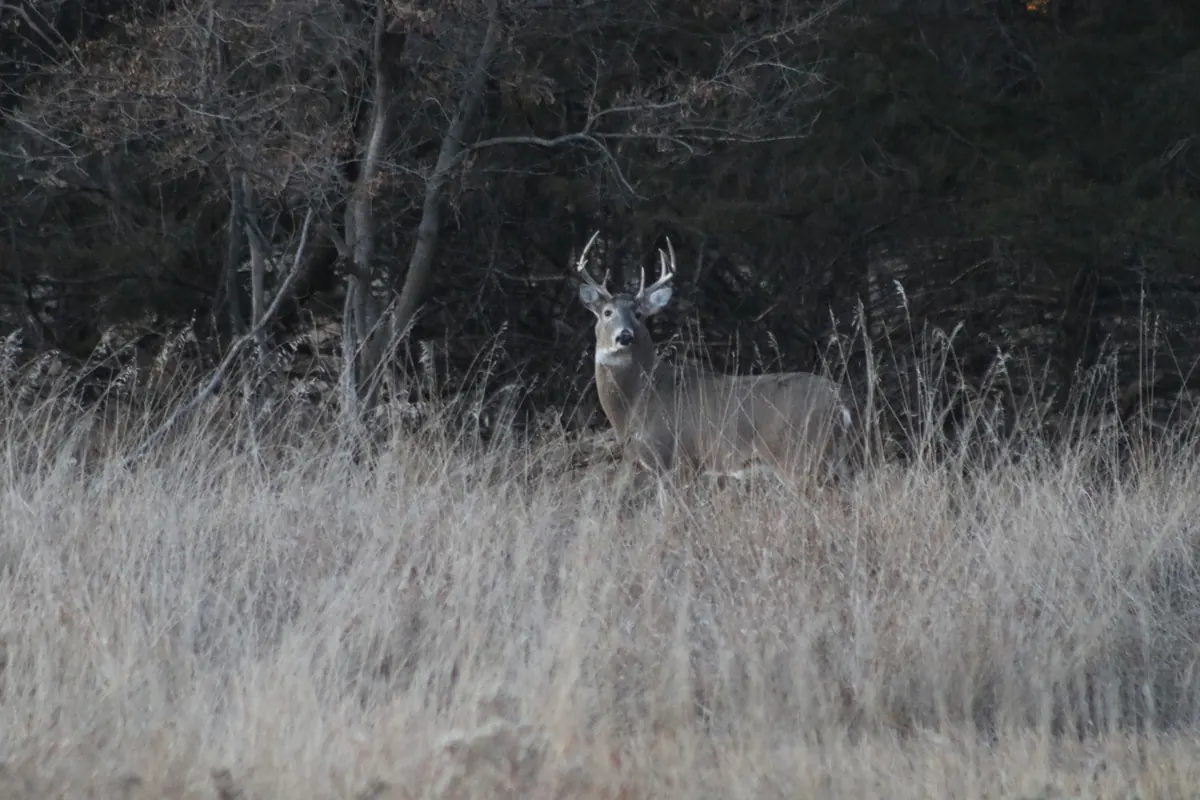
Jim Crum, then the DNR’s deer biologist, told WV MetroNews in 2013 that the window is tight: dating the fetuses carried by does killed on the roads in spring shows that the largest share are bred between November 14 and 17. In the days before, bucks travel far, often in daylight, nose down on a doe’s trail. Look for fresh scrapes, patches of bare earth pawed under an overhanging branch, and for rubs on saplings the thickness of your wrist. A buck seen crossing a field at noon in mid-November is not unusual at all.
-
Deer on the roads
All month, especially at dusk and dawn · Every county, especially two-lane roads through farmland and woods
When daylight saving time ends on November 1, the evening commute suddenly lands in the hour when deer are moving most. State Farm’s claims data have ranked West Virginia as the state where a driver is most likely to hit an animal, and November as the worst month nationally. Ease off near wooded bends at dusk, flick to high beams on empty roads, and assume one deer is followed by another.
-
Buck season week
Monday, November 23, through Sunday, December 6 · All counties except Logan, McDowell, Mingo and Wyoming, which are closed to firearms deer hunting
Opening day falls on the Monday of Thanksgiving week, and the 2026–27 regulations summary lets hunters take antlerless deer at the same time in 51 counties or parts of counties, and bans most small game hunting for the first three days, until November 26. For everyone else on public land, this is the busiest stretch of the year in the woods; see the safety section below.
-
Bears heading for the den
Beginning in mid-November · Rock crevices, hollow trees, brush piles and ground nests, mostly in the mountains but now statewide
WVU Extension says West Virginia’s bears usually go back into their dens beginning in mid-November and come out from mid-March. Acorns from the red-oak group are scarce this year, according to the DNR’s 2026 mast survey, though white oaks produced a bit more, so expect hungry bears to keep roaming until they settle in. Until a cold snap settles things, keep garbage locked up and bring bird feeders in at night, because a bear packing on fat for winter will happily empty one.
Which trees still have color or leaves in West Virginia in November?
By the first week of November most mountain ridges are bare and gray, and only the lowest river valleys keep some color. But a few trees run on their own calendar, and they are worth seeking out.
-
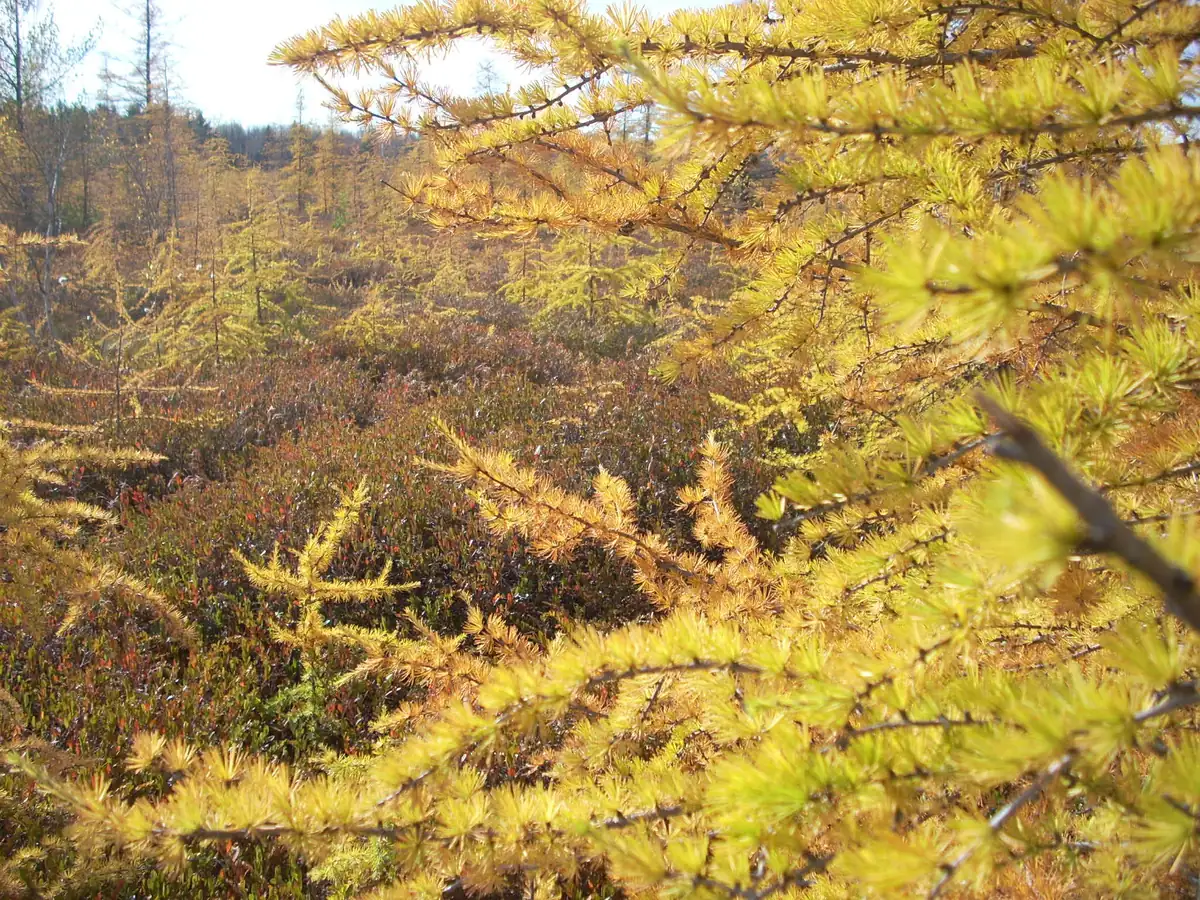
Gold tamaracks at Cranesville Swamp
Late October into early November; check before you go · Cranesville Swamp Preserve, Preston County, on the Maryland line
Tamarack (American larch) is the odd conifer out: its soft needles go butter-gold and fall each autumn. Its southernmost natural stands are in this 1,774-acre preserve owned by The Nature Conservancy, which sits in a frost pocket where the surrounding hills trap cold, wet air, so the bog feels more like Canada than Appalachia. A Maryland state forester once called the larches at Cranesville and nearby Finzel Swamp an unusual late-fall treat, because they glow after the oaks have gone brown. A 1,500-foot boardwalk crosses the wettest bog; the preserve is open from dawn to dusk year-round, dogs are not allowed, and rising water can flood the trails, so wear waterproof boots.
-
Oaks and beeches that will not let go
All winter, until new growth pushes the old leaves off in spring · Young American beech in the understory; young oaks along field edges
Clemson’s Home and Garden Information Center explains the habit, called marcescence: the band of cells that normally snaps each leaf off in autumn does not finish its work until spring. American beech is the classic example, and young oaks, hornbeam and hophornbeam do it too. One idea is that the papery leaves shield buds from browsing deer; another is that dropping them in spring gives the soil a fresh layer of mulch. Pale, rattling beech saplings light up gray November woods.
-
Witch hazel in flower
Blooms from late September into December · Stream banks, moist slopes and woodland edges
Look for small yellow ribbons along leafless twigs: each flower has four strap-shaped petals. The Lady Bird Johnson Wildflower Center notes that last year’s capsules split as they dry and can fling their black seeds up to 30 feet, so on a quiet day you may hear them snap.
-
The last days of ginseng season
Digging ends November 30 · Rich, shaded north-facing coves
The Division of Forestry’s rules allow digging only of plants at least five years old with three or more prongs, and the berries must go back in the ground where the plant grew. By late November the leaves have yellowed and dropped, which makes plants hard to find; after the season closes, roots must be weighed and certified, and the deadline for selling to a licensed dealer is March 31.
Has West Virginia had its first freeze yet?
For most of the state, yes. In NOAA’s 1991–2020 records every station in the table below has a median first freeze in October, from October 2 in Canaan Valley to October 30 at Parkersburg, which means that in an ordinary autumn every station has seen 32 °F before Halloween. The places still waiting in early November are the warmest river bottoms: Wheeling and Parkersburg freeze by November 10 to 12 in nine years out of ten, and London Locks, on the Kanawha upstream of Charleston, has a median of November 4. If your thermometer has not dipped to 32 °F yet, you are in one of those valleys, and your first freeze is probably days away.
| Station | One year in ten | Median | Nine years in ten |
|---|---|---|---|
| Canaan Valley #2 (Tucker County, about 3,250 ft) | Sep 18 | Oct 2 | Oct 16 |
| Elkins Randolph County Airport | Oct 1 | Oct 12 | Oct 25 |
| Beckley Raleigh County Airport | Oct 8 | Oct 21 | Nov 2 |
| Martinsburg E Wv Regional Airport (Eastern Panhandle) | Oct 7 | Oct 22 | Nov 4 |
| Morgantown Hart Field | Oct 11 | Oct 24 | Nov 5 |
| Wheeling (Northern Panhandle) | Oct 15 | Oct 29 | Nov 10 |
| Parkersburg (Mid-Ohio Valley) | Oct 16 | Oct 30 | Nov 12 |
| Charleston Yeager Airport | Oct 13 | Oct 26 | Nov 6 |
| Huntington Tri State Airport | Oct 13 | Oct 26 | Nov 7 |
The full station list, including Pickens, where the median is October 19, and Williamson, at November 2, is on the West Virginia frost page. Once your county has had a killing freeze, the Charleston weather office stops issuing frost advisories for the year.
How much daylight does West Virginia lose in November?
A little under an hour. Wheeling, farthest north in the table, goes from 10 h 28 m of sun on the 1st to 9 h 33 m on the 30th, a loss of 55 minutes; Bluefield, in the south, loses 49. The clocks make it feel worse: daylight saving ends early on Sunday the 1st, and sunset in Charleston jumps from 6:28 p.m. on Halloween to 5:27 p.m. on Sunday. On the 30th Charleston’s sunset is 5:07 p.m., and Martinsburg’s is 4:49.
| City | Nov 1 | Nov 30 | Lost | Per day |
|---|---|---|---|---|
| Wheeling | 10 h 28 m | 9 h 33 m | 55 min | 1.9 min |
| Morgantown | 10 h 30 m | 9 h 36 m | 54 min | 1.9 min |
| Martinsburg | 10 h 30 m | 9 h 37 m | 53 min | 1.8 min |
| Parkersburg | 10 h 31 m | 9 h 38 m | 53 min | 1.8 min |
| Elkins | 10 h 32 m | 9 h 40 m | 52 min | 1.8 min |
| Charleston | 10 h 34 m | 9 h 43 m | 51 min | 1.8 min |
| Huntington | 10 h 34 m | 9 h 43 m | 51 min | 1.8 min |
| Bluefield | 10 h 38 m | 9 h 49 m | 49 min | 1.7 min |
To see your own sunrise, sunset and twilight times, enter your town on the daylight calculator.
When does it start snowing in West Virginia, and what could a strong El Niño bring this winter?
Winter weather arrives this month, from the top of the state down. NOAA’s 1991–2020 normals give Elkins an average November high of 54.8 °F and low of 29.9 °F with 4.1 inches of snow, while Charleston averages 57.3 °F and 35.6 °F with 1.5 inches. Beckley averages 2.3 inches, Bluefield 1.4 and Huntington only half an inch. Precipitation is steady, from about 2.6 inches at Bluefield to 3.2 at Charleston, and most of it falls as rain below 2,000 feet. On the high plateaus around Canaan Valley and Snowshoe, snow showers on northwest winds behind each cold front start to whiten the ground.
Thanksgiving week can also deliver the worst. The Great Appalachian Storm of November 24 to 29, 1950 is, in the Charleston forecast office’s words, objectively the worst winter storm on record for the Ohio Valley. It left 25.7 inches at Charleston, 34.6 at Parkersburg and 20.9 at Huntington, and Coburn Creek reported 62 inches. Elkins finished that month with 37.6 inches, still its snowiest November; over its full record the station’s November average is about 5 inches.
The Pacific is the wild card for the coming winter. NOAA’s ENSO forecasters said on September 10 that the odds now exceed 90 percent that this fall and winter bring a very strong El Niño, with roughly three chances in four that it becomes the strongest on record since 1950 by late fall. What that means here is honestly unclear, because West Virginia sits between the warm, dry Ohio Valley pattern and the stormy East Coast pattern. An older analysis by the Charleston office found that the 16 El Niño winters since 1950 averaged a little colder than normal at Charleston (34.7 °F against 35.9 °F), slightly drier, and a little snowier (26.5 inches against 24.4) for December through February, with none landing on any of the station’s top-ten lists. The Cleveland office’s study of 17 Ohio Valley and Great Lakes stations found El Niño winters there warmer and drier on the whole, without a clear link to low snow at Charleston. And the Northeast Regional Climate Center’s look at the record 2015–16 event found a warm winter regionwide that still delivered above-normal snow in West Virginia, thanks largely to the January 2016 blizzard. The government’s own three-month outlook for the heart of winter arrives on October 15; when it does, you can read it among the CPC 90-day outlook maps.
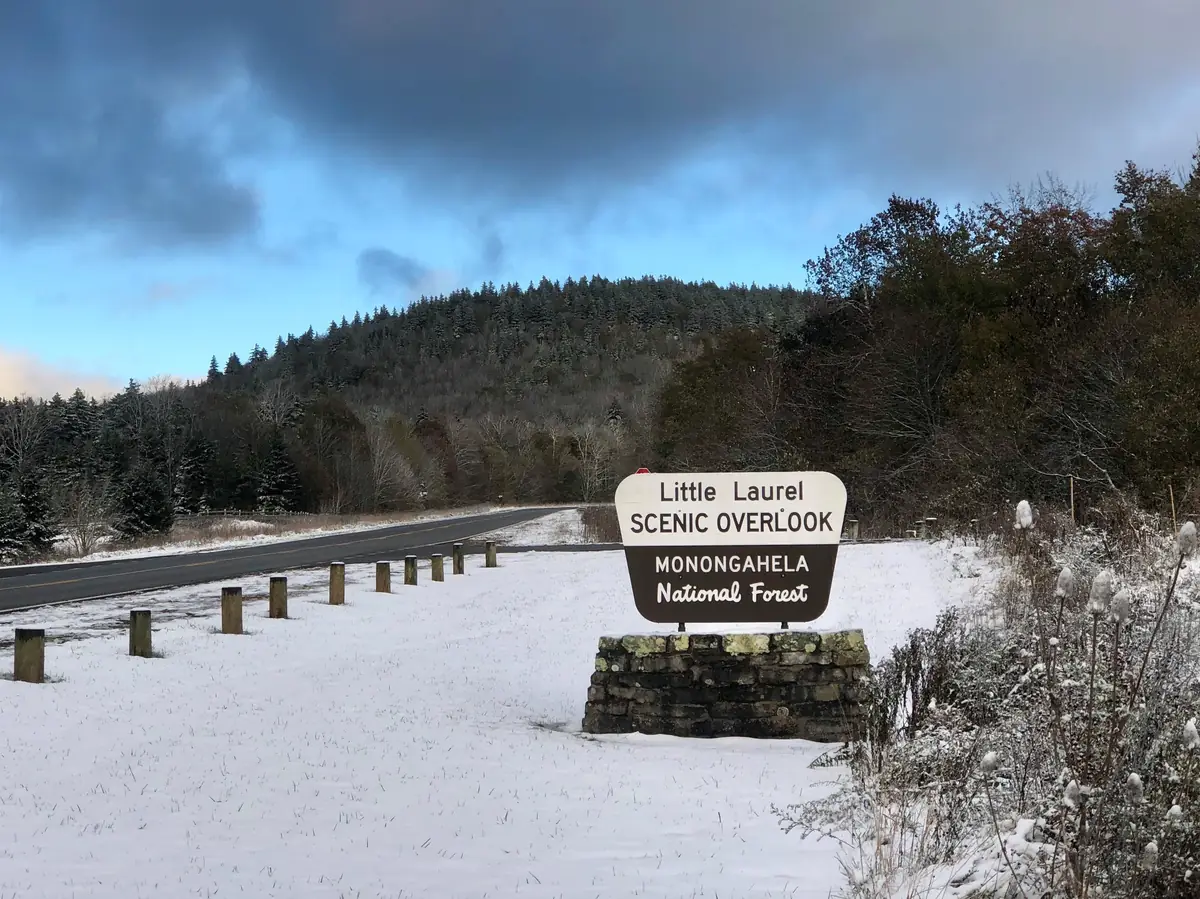
Planning a ridge walk this week? Look at today’s weather before a mountain hike, and use the cloud identification guide to name the gray stratocumulus deck that so often sits over the plateau in November.
What can you see in West Virginia’s night sky in November?
Long nights, an early dark and some of the best skies in the East make November a good stargazing month here, if the clouds cooperate. The new moon falls on Monday, November 9, so the weekend of the 7th and 8th is darkest; three Pocahontas County parks (Watoga, Calvin Price State Forest next door, and Droop Mountain Battlefield) hold International Dark Sky Park status.
-
A crowded morning sky
All month before dawn; Mars and Jupiter closest on the mornings of November 15 and 16 · East and southeast, an hour or so before sunrise
The evening sky has only Saturn, but the mornings are full. Venus, which swung past the sun’s near side in late October, climbs out of the east-southeast as a brilliant morning star and peaks in brilliance as Thanksgiving approaches. In Leo, Jupiter and Mars come up near midnight. Mars closes to about 1.2 degrees from Jupiter; the exact pairing happens on the evening of the 15th, while the two are under our horizon, so both the 15th and 16th give a fine predawn view. Little Mercury peeks up near the horizon in the east-southeast during roughly the third week, its best showing coming near the 20th. On November 9, Venus glides about one degree past Spica, Virgo’s lead star.
-
The Leonids
Best from moonset, a little after midnight, until dawn on November 18; also the 17th and 19th · Anywhere dark; the meteors come from Leo, high in the east before dawn
The International Meteor Organization expects about 15 meteors an hour at best from the Leonids this year, peaking late on November 17 by its model, with only weak debris trails and no outburst. The first-quarter moon sets somewhere around 12:30 to 1 a.m., leaving the darkest, best hours before morning twilight. Leonids are fast, and the brighter ones leave trails that glow for a second or two.
-
Taurid fireballs around the new moon
Southern Taurids peak November 5, Northern Taurids November 12 · Much of the night, from the direction of Taurus and the Pleiades
Neither Taurid branch produces more than five to ten meteors an hour, yet both are famous for the occasional slow, blazing fireball. They come from debris shed by Comet Encke, and the dark skies around the November 9 new moon give them a fair chance this year.
-
The Beaver Moon, a supermoon
Evenings of Monday, November 23, and Tuesday, November 24 · Rising in the east-northeast around sunset
EarthSky, using Fred Espenak’s tables, lists November’s full moon as a supermoon, about 360,770 km from Earth, though it is a modest one because the moon’s closest approach comes some 30 hours after full. Before dawn on the 24th it slides over or just past the Pleiades, whose faint stars will struggle in the glare. The next day, November 25, Uranus is at opposition in Taurus, a faint blue-green dot in binoculars from a dark site. Follow the moon night by night on the moon phase calendar.
| Phase | Date | Time |
|---|---|---|
| Last quarter | Sunday, Nov 1 | 3:28 p.m. |
| New moon | Monday, Nov 9 | 2:02 a.m. |
| First quarter | Tuesday, Nov 17 | 6:48 a.m. |
| Full moon, the Beaver Moon | Tuesday, Nov 24 | 9:53 a.m. (looks full the evenings of Nov 23 and 24) |
| Last quarter | Tuesday, Dec 1 | 1:08 a.m. |
What are good outdoor outings for West Virginia families in November?
- Sunday, November 1: clocks back, FeederWatch begins. Use the extra morning hour to set up a feeder you can see from the kitchen window, and sign up for Project FeederWatch.
- Early November: a ridge-top hawk watch. Pack a lunch for the rocks at Hanging Rock on Peters Mountain on a breezy day after a cold front, before the count ends around November 11.
- Early to mid-November: owls in the hand. Ask the Brooks Bird Club whether visitors are welcome on a saw-whet owl banding night at Valley Falls State Park this year; dress for cold and late hours.
- Saturday, November 7, and Sunday, November 8: the darkest weekend. With no moon, take a blanket to one of the Pocahontas County dark sky parks and look for Taurid fireballs.
- Saturday, November 14, 4 p.m.: live birds of prey. Three Rivers Avian Center brings its educational raptors to the North Bend State Park lodge for Wings of Wonder, a free hour-long program.
- Mornings of November 15 and 16, and November 18. Wake early to see Mars beside Jupiter, then try for Leonid meteors after midnight on the 17th.
- November 23 and 24, at dusk: a moonrise. The Beaver Moon clears the eastern hills around sunset; sketch it in a journal as it climbs.
- Friday, November 27: Lincoln’s Day. The day after Thanksgiving is a state holiday in West Virginia, and West Virginia State Parks has encouraged families to opt outside instead of shopping. Good choices include the Cranny Crow overlook at Lost River, Blackwater Falls and the Elk River Rail Trail. Wear orange; it is the middle of buck season.
- All month: a tamarack trip. Walk the boardwalk at Cranesville Swamp in early November while the larches are gold.
Log each outing in the Naturalist’s Field Journal; guides for other states sit on the monthly nature guides page. Last month’s West Virginia guide is at October in West Virginia.
Safety notes for November in West Virginia
- Hunting seasons and blaze orange. The WVDNR’s 2026–27 regulations summary sets the buck firearms season for November 23 through December 6 in every county except Logan, McDowell, Mingo and Wyoming, with antlerless deer legal at the same time in 51 counties or parts of counties, and bear firearms open alongside it in many counties. Deer and bear archery and crossbow seasons run all month, and the seasons for bobwhite quail, snowshoe hare and bobcat open on November 7. State park deer hunts are scheduled at Stonewall Resort (November 2–4, 9–11 and 16–18), Beech Fork (November 9–11 and 16–18), Pipestem (November 11–13 and 16–18) and Twin Falls (November 9–11); check with the park before hiking those days. The migratory bird summary has duck and goose hunting from November 7 to 15 and woodcock through November 21. While any deer gun or muzzleloader season is open in a county, every hunter there, bowhunters too, has to show at least 400 square inches of blaze orange over everything else; waterfowl hunters and farmers working their own land are exempt. Sunday hunting is legal on public hunting lands and on private land with the owner’s written permission. Hikers should wear orange as well, especially from November 23 on, and a bright vest helps a dog too.
- Short days in steep country. After November 1 the sun sets between about 4:50 and 5:30 p.m., depending on the town and the date, and earlier still behind a ridge. Set out by midmorning, pack a headlamp, and leave your plans with a friend; cell service is poor in many hollows and gorges.
- Cold, wet and windy on the high ground. Dolly Sods and Spruce Knob sit 3,000 to 4,000 feet above Charleston and are usually 10 to 15 degrees colder, with far more wind. Carry a warm hat, gloves and a waterproof layer. Mountain roads above 3,000 feet can ice over on November nights well before the valleys see snow.
- Cold water and slick rocks. Streams are cold enough by now to bring on hypothermia quickly. Wet leaves on rock steps and boardwalks, including the one at Cranesville, are slippery.
- Deer on the road. Expect the most deer movement at dusk, which now falls during the drive home. Brake firmly rather than swerving.
- Bears. Until bears den, take feeders in at night and keep trash secured.
Sources
- WVDNR: 2026–27 Hunting and Trapping Regulations Summary (season dates, buck firearms counties, blaze orange, Sunday hunting, state park deer hunts)
- WVDNR: 2026–27 Migratory Bird Hunting Regulations Summary (duck, goose and woodcock dates)
- WVDNR: new 2026–27 dates for dove, woodcock and rail seasons
- WVDNR: hunting regulations page
- WVDNR: Eagles of West Virginia (brochure)
- HawkCount: Hanging Rock Tower site profile (golden eagle averages and records)
- e-WV, the West Virginia Encyclopedia: Hanging Rock Observatory
- Hanging Rock Tower: closure and rebuilding
- Appalachian Voices: golden eagles winter in Appalachia (WVU camera-trap research)
- Brooks Bird Club: northern saw-whet owl banding at Valley Falls State Park
- WVU Extension: wildlife spotlight, northern saw-whet owl
- Project FeederWatch (Cornell Lab of Ornithology and Birds Canada)
- Finch Research Network: Winter Finch Forecast 2026–2027 (September 25, 2026)
- WV MetroNews: the science behind the rut (WVDNR deer biologist on peak breeding dates)
- State Farm: how likely are you to have an animal collision?
- WVU Extension: black bears
- WVDNR: Hunting Outlook and Mast Survey
- WV MetroNews: mast in West Virginia drops for 2026 (September 30, 2026)
- The Nature Conservancy: Cranesville Swamp Preserve
- West Virginia Explorer: southern extent of tamarack at Cranesville Swamp
- Maryland DNR: fall foliage report for November 3–4, 2018 (tamaracks at Cranesville and Finzel swamps)
- Clemson Home and Garden Information Center: when leaves don’t let go, marcescence
- Lady Bird Johnson Wildflower Center: American witch hazel (Hamamelis virginiana)
- Lady Bird Johnson Wildflower Center: common persimmon (Diospyros virginiana)
- West Virginia Division of Forestry: ginseng
- NOAA NCEI: U.S. climate normals, 1991–2020 (first-freeze dates)
- NOAA NCEI: 1991–2020 monthly normals for West Virginia airport stations (November temperature, precipitation and snowfall)
- National Weather Service Charleston, WV: frost and freeze information
- National Weather Service Charleston, WV: top snowstorms (November 1950)
- National Weather Service Charleston, WV: climate top ten for November at Elkins
- National Weather Service Charleston, WV: El Niño winters at Charleston
- NWS Cleveland: El Niño and the lower Great Lakes and Ohio Valley
- Northeast Regional Climate Center: El Niño impacts in the Northeast (2015–16 review)
- Climate Prediction Center: ENSO diagnostic discussion, September 10, 2026
- Climate Prediction Center: seasonal (90-day) outlooks
- U.S. Naval Observatory: moon phases from November 1, 2026
- International Meteor Organization: 2026 meteor shower calendar
- EarthSky: what is a supermoon? (2026 full supermoons)
- EarthSky: best stargazing of 2026 (Mars and Jupiter, November 16)
- EarthSky: Uranus at opposition
- Farmers’ Almanac: the November full Beaver Moon
- Watoga Foundation: Watoga dark sky parks
- West Virginia State Parks: Wings of Wonder, live birds of prey at North Bend State Park (November 14, 2026)
- West Virginia State Parks: opt outside at state parks and forests this Black Friday
- West Virginia Code §2-2-1: legal holidays (Lincoln’s Day)
- Photos via Wikimedia Commons; licenses and photographers are credited under each picture
