What to look for in nature in Pennsylvania this May
May is when Pennsylvania finishes turning green. Trees leaf out in the first half of the month, warblers pile into Presque Isle in its middle, and the spring hawk count at Hawk Mountain has closed on May 15 in recent years. Hummingbirds reach feeders near the first of the month, fawns and elk calves come by its end, and spring gobbler season fills all 31 days. Overhead, the Eta Aquariid meteors fall under a new moon on May 5 to 7, the Flower Moon rises full on May 20 as a seasonal Blue Moon, and Mercury has its best evening near May 28.
Other months in Pennsylvania: October, November, December, January, February, March, April.
Start here
- Go to the lake in mid-May. Walk Presque Isle's trails on a morning after a south wind and count warblers in the shrubs and treetops. Watch Gull Point from the platform rather than the beach.
- Listen for the dawn chorus. Step outside half an hour before sunrise with binoculars and a notebook, and list every song you can match to a bird, from tanagers to grouse.
- Look east before dawn on May 5 to 7. Find a dark yard, lie back and watch for Eta Aquariid meteors in the last two hours of the night. With only a sliver of Moon, the sky stays dark.
The Naturalist’s Field Journal can hold the first warbler, tanager and hummingbird on birds I have seen, let a tree through the seasons follow a leafing oak or maple, give an eagle nest a page of nest observed, and map dawn songs on a map of sounds. Dusk and dawn watch suits the meteors and the May 19 moonrise.
Regions used below: Northwest and Lake Erie; Allegheny National Forest and the Northern Tier; Laurel Highlands and Pittsburgh; Central Ridge and Valley and State College; Poconos and the Northeast; Susquehanna Valley and Harrisburg; Southeast and Philadelphia.
When is the warbler peak in Pennsylvania, and where do you see it?
Bird watchers get their best month in May. Most of the birds that wintered in the tropics are back by the thirty-first, and in the first half the leaves are still small enough to let you see them. The park the state itself points to is Presque Isle, the seven-mile sand peninsula that hooks into Lake Erie at Erie. Both the state parks agency (DCNR, the Department of Conservation and Natural Resources) and the Tom Ridge Environmental Center put warbler migration there in mid-May, and DCNR counts more than 339 bird species recorded on the peninsula.
-
Presque Isle in mid-May
Mid-May for warblers; April through May for early migrants · Presque Isle State Park, Erie; the Gull Point observation platform and the lagoon trails
An Audubon magazine guide explains the trap: birds that follow the shore run out of land at the peninsula's tip, where water nearly surrounds them, and the crowding can make for excellent days. Weather decides which days; a night of south wind brings new arrivals, while a cold north wind holds them back. Bring binoculars and a list. A checklist is sold at the center's nature shop.
-
Tanagers, grosbeaks, orioles and buntings
Through May, as the leaves open · Woodland edges, hedgerows and the tops of trees statewide
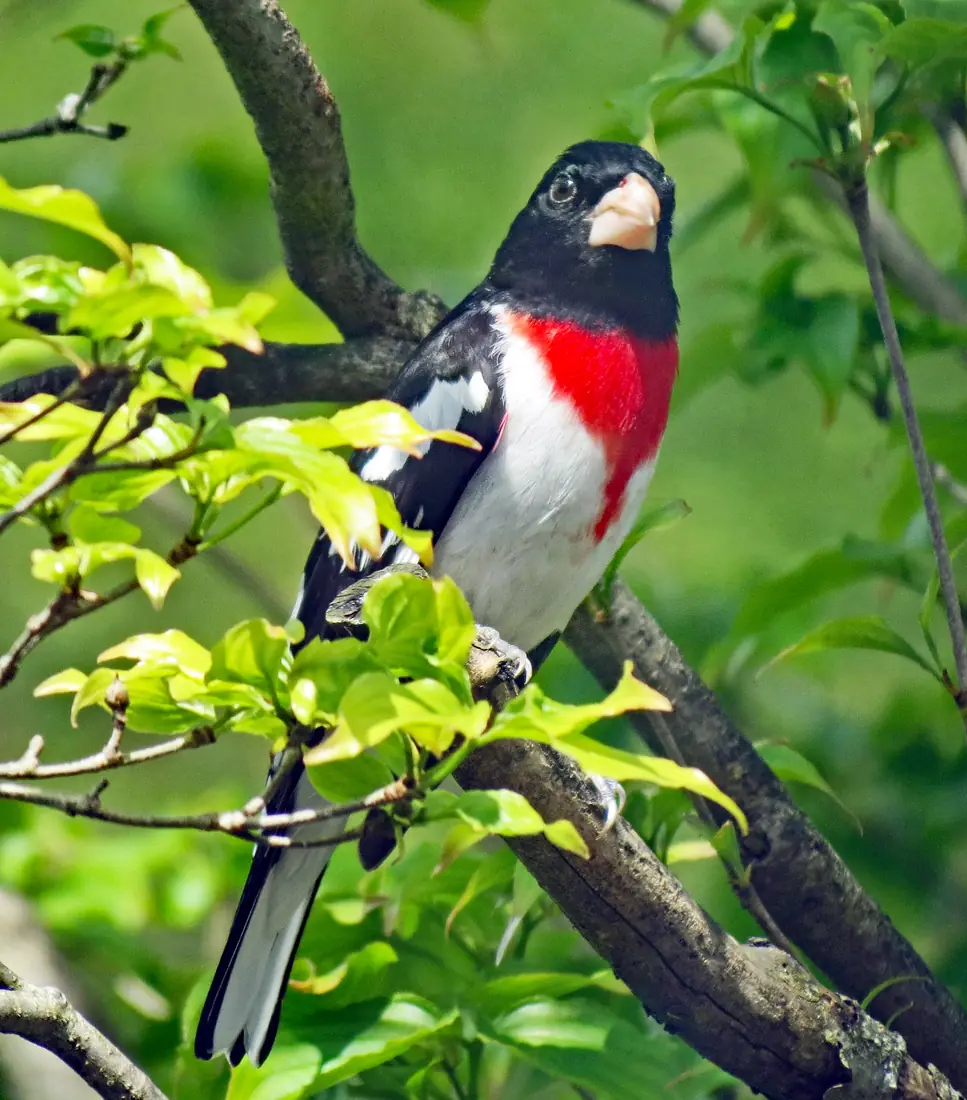
Penn State Extension's phenology notes describe the color arriving: scarlet tanagers, rose-breasted grosbeaks, Baltimore orioles and indigo buntings show up at woodland edges and in treetops in bright breeding plumage, while summer tanagers, blackpoll warblers and gray-cheeked thrushes reappear through the month. The notes give no exact days, so go out on several mornings.
-
A banding station in its 66th year
Spring migration season; check the schedule · Erie Bird Observatory, Presque Isle
The Erie Bird Observatory calls its Presque Isle landbird banding program its 66th year, and also lists spring and fall waterbird counts on Pennsylvania's Lake Erie shore. It sends visitors to its bird walk and event calendars, so check them for May walks.
-
The Festival of the Birds
Annual, in mid-May in 2026; check the 2027 dates · Presque Isle State Park, hosted by Presque Isle Audubon
Presque Isle Audubon held its 2026 festival on May 15, 16 and 17, with field trips, workshops, a trip to the banding station and hawk watch, optional kayaking in the lagoons and a Friday reception, capped at 150 people. Its page showed no 2027 dates when we looked, so treat it as an annual event and ask the organizer.
-
Kettle Creek's birding festival
Saturday, May 8, 2027, 10 a.m. to 2 p.m. · Kettle Creek State Park, western Clinton County
DCNR's calendar lists Kettle Creek's Annual Birding Festival for Saturday, May 8, 2027, from 10 a.m. to 2 p.m., free, tagged for birding, education and festivals. It gives no program, so call the park at 570-923-6004. The park covers 1,793 acres of mountain valley in the Pennsylvania Wilds.
-
Migration forecasts and lights out
Forecast tools run March 1 to June 15 · Your own county; turn off unneeded lights at night
BirdCast's forecast maps and county dashboard run from March 1 to June 15 in spring. It reports that over 80 percent of North American migratory species fly at night, and that lit windows and glass are dangerous along their routes. On big nights, switch off outdoor lights and close blinds.
Treat the dates as a typical pattern. A cold snap delays the peak by days, and a warm spell pulls it forward. The April page covers the first arrivals.
What is nesting on the Lake Erie shore in May, and why is Gull Point closed?
While warblers fill the trees, the sand at the east end of Presque Isle has a quieter job. DCNR calls Gull Point the park's most ecologically dynamic area, a resting and nesting stop for migrants. Its easternmost part is a State Park Natural Area, closed to the public from April 1 through November 30, and the closure matters most in May.
-
Gull Point's observation platform
April 1 through November 30 for the closure · Gull Point Hiking Trail, Presque Isle State Park
You can still look. DCNR and the Tom Ridge center send visitors along the Gull Point Hiking Trail to an observation platform and ask them to stay on the marked trail. Bring a spotting scope, because the birds on the sand sit far enough away to be left alone.
-
Piping plovers and common terns
Plovers arrive in April; chicks hatch from late May to early June in the species account · Presque Isle's beaches; viewed from the platform only
The Erie Bird Observatory lists monitoring of Pennsylvania's only nesting piping plovers, and of common terns, on Presque Isle. The Great Lakes piping plover carries a federal endangered listing dating to December 11, 1985. The federal species account puts courtship and nesting in mid-to-late April, hatching between late May and early June, and fledging 25 to 35 days after hatching. That account is not about Pennsylvania in particular, so read it as the general sequence. Stay off the closed beach.
-
Ospreys and eagles over the water
Sightings during May migration · Presque Isle and the Lake Erie shore
DCNR says ospreys and bald eagles are sighted at Presque Isle during May migration. Scan the lagoons and open lake for a bird hovering before a plunge.
-
Erie National Wildlife Refuge
Waterfowl peak earlier in spring; May is for songbirds and families · Crawford County, south of Erie
The refuge, in Crawford County, lists waterfowl migrations from March to early April, with Canada geese, wood ducks and mallards. An observation blind on Boland/Ritchie Road overlooks Reitz's Pond. Children can collect a free Let's Go Birding booklet at the office and earn a patch. No May programs were listed, so ask the staff.
The best help you can give shorebirds is to watch Gull Point from the platform with a scope.
Are hawks still migrating in May, and when do eaglets leave the nest?
Hawk migration thins out in May, but two stories continue: the closing days of the spring count at Hawk Mountain, and the eaglets growing up in nests that watchers followed from the egg.
-
The last days of the Hawk Mountain count
The count has run April 1 to May 15 in recent years; confirm 2027 · North Lookout, Hawk Mountain Sanctuary, Berks County
The sanctuary’s own pages describe an annual count on the North Lookout from April 1 through May 15, daily from 9 a.m. until 4 p.m., and its 2026 season recap closed the count on May 15. The flight typically peaks in mid to late April, so May is the tail end. The sanctuary had not posted 2027 hours that we could find, so confirm them before you drive.
-
Bald eaglets in the nest
Most eggs hatch in April; young leave the nest about 8 to 14 weeks later · Nests along rivers and lakes statewide
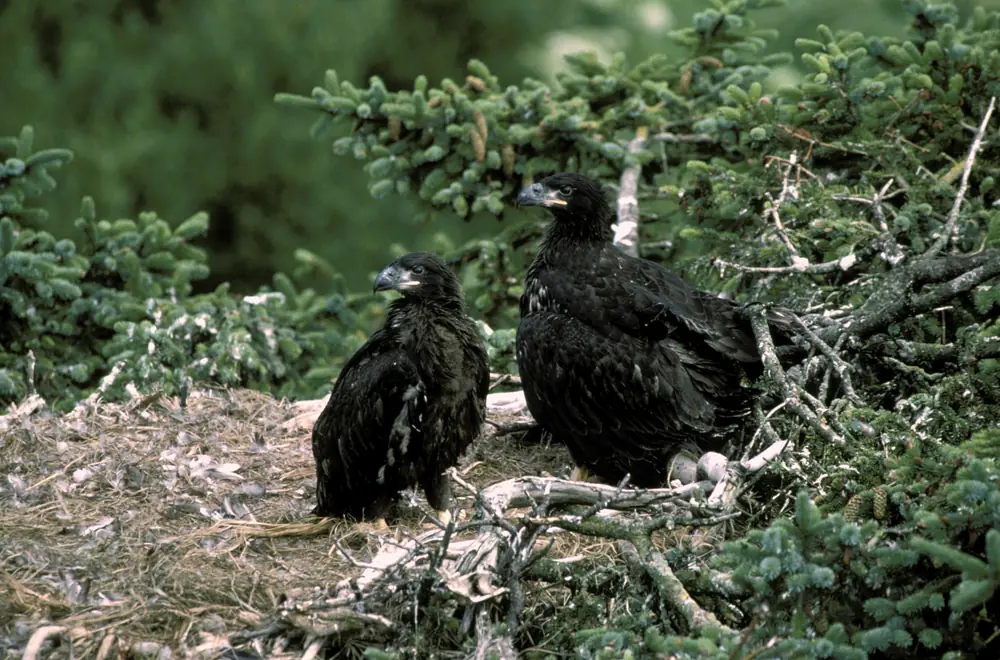
The Game Commission says most eggs are laid between mid-February and mid-March and take about 35 days to hatch, commonly in April. Young leave the nest 8 to 14 weeks after hatching, around 12 weeks on average, so in May the eaglets are big and brown but still at home, fledging by the end of June or in July. Stay at least 1,000 feet away from an active nest and never flush an eagle off it.
-
Eagle cams
Through the nesting season · Hanover, York County, and the farm country nest
The Game Commission lists the Hanover Bald Eagle Nest Cam, streamed since 2015, and a farm-country cam whose pair has reared three young in most years. It does not say what either shows in May, so check the live streams.
A nest followed for a month teaches more than a hundred quick sightings: note the date, the weather and how many young you see.
When do ruby-throated hummingbirds arrive, and when should you put out a feeder?
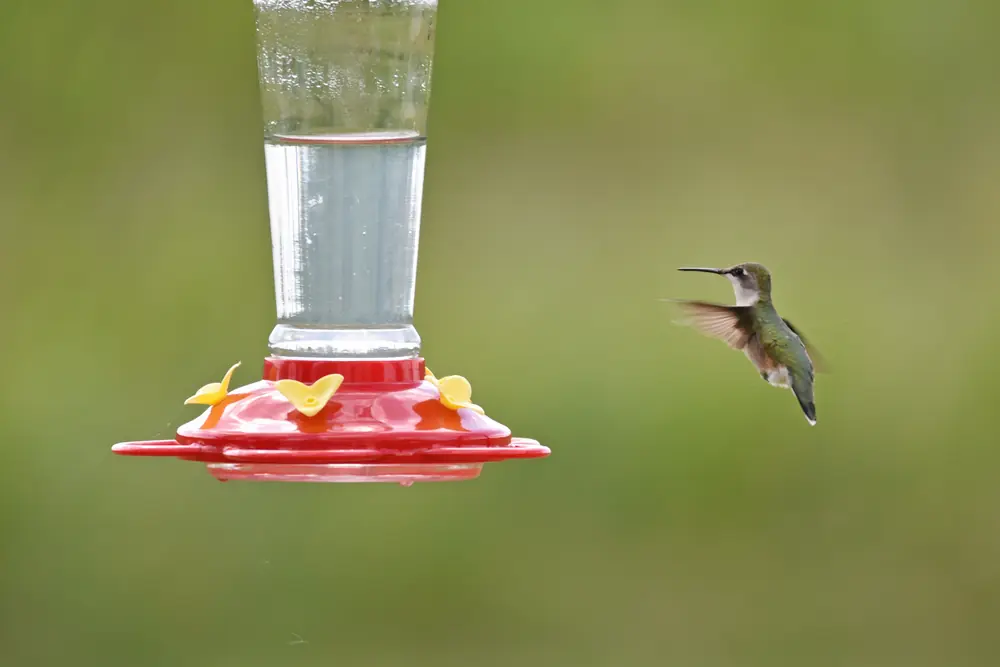
The ruby-throated hummingbird is the one most Pennsylvanians see, and May is when it comes back.
-
Arrival
Typically around May 1, with some early birds in warm springs · Feeders, gardens and woodland edges statewide
A Pennsylvania news report said ruby-throated hummingbirds typically arrive around May 1, with some early birds in warm springs. Males come first and often go straight to last year's feeder.
-
Feeders and flowers
Put the feeder out by late April · A yard with a few tubular flowers
The report advised hanging the feeder before the neighbors do and adding natural food: tubular flowers such as coralbells, salvia, trumpet vine and honeysuckle. It cautioned against relying on invasive mimosa.
-
Add your sighting
Spring migration, as the birds arrive · Journey North's hummingbird report page
Journey North takes hummingbird reports from Mexico to Canada, and its maps show the birds moving north in spring. Its page gives no Northeast dates, so your first bird adds to the record.
What should you do if you find a fawn, a grouse chick or a bear cub?
Penn State Extension says birthing season is under way from mid-April into May, so young animals appear before most people notice. The Game Commission's rule is short: do not disturb newborn wildlife. Parents often hide their young and return only to nurse, so an animal that looks abandoned usually is not.
-
White-tailed fawns
Late May into early June · Fields, hedgerows and the edges of yards
The Game Commission says fawning season approaches in late May, and Penn State Extension places doe births from late May into early June. Fawns have reddish-brown coats dappled with white that serve as camouflage, so one lying still in tall grass is doing its job. Leash dogs, check before you mow and walk away.
-
Elk calves
Late May or early June · Elk Country, Elk and Cameron Counties; the public viewing area near Benezette
A cow has one calf, about 30 pounds, able to stand at 20 minutes old. The Game Commission asks viewers to keep at least 100 yards away, never approach and never feed elk, and cows defend calves, so give mothers extra room. The Elk Country Visitor Center on Winslow Hill Road is a good stop, and a live elk cam runs at Benezette.
-
Ruffed grouse broods
Chicks leave the nest within a day of hatching · Young forest, brushy edges and old logging roads
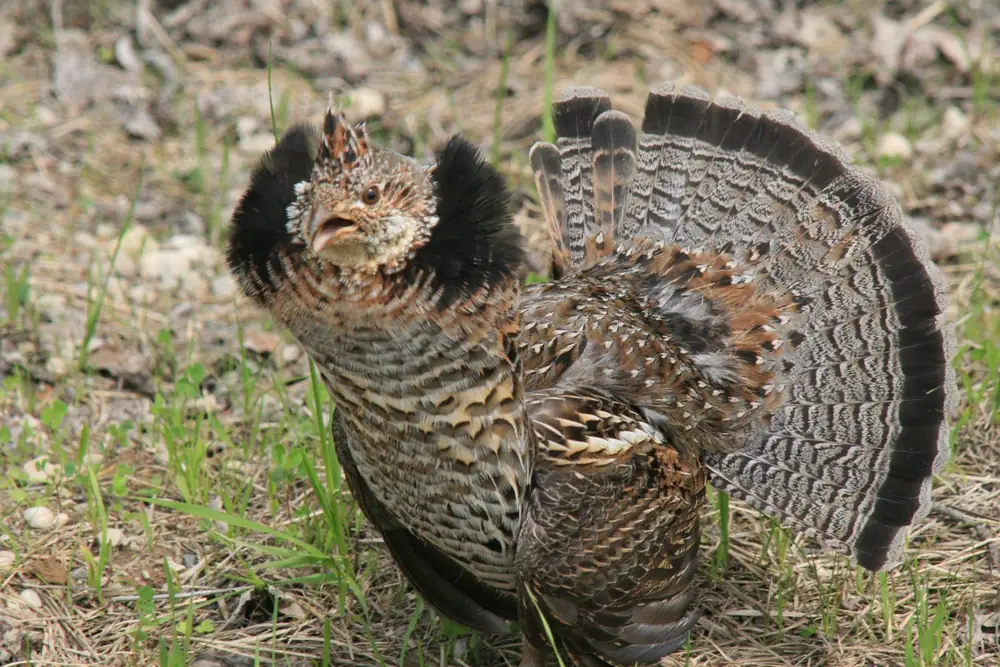
Clutches hold 6 to 16 eggs, laid in a leaf-lined scrape under a log or by a tree base, and the hen sits roughly 24 days. Chicks are precocial and she usually leads them off within a day. They flutter in their first week and fly well by three weeks. The Game Commission says over three-quarters die within 35 days, mostly from predators or exposure, and that cold, wet springs make it worse. If a hen flutters at your feet, back away.
-
Black bears and their yearlings
Spring, when family groups break up · Forests of the north and center; also edges of towns
Cubs are born in January and leave the den at about three months, the Game Commission says. In spring the family splits when the mother is ready to breed again: male yearlings, about 16 months old, disperse, and females settle nearby. A young bear passing through a yard in May is often one of these. Bears follow their noses, so BearWise advises locking up food, garbage and recycling, bringing in pet food and removing bird feeders when bears are active.
-
Bat pups
May and June · Barns, attics and tree hollows
The Game Commission's bat note lists when bats return, maternity colonies, when pups are born (May to June) and white-nose syndrome. If bats use your building, ask the commission before sealing it.
The Game Commission also asks people to wait until after nesting season to mow fallow fields and large yards.
What blooms and leafs out in Pennsylvania in May, and is the last frost over?
Penn State Extension says trees leaf out during the first half of May in most of Pennsylvania, often set off by a good rain after warm days. As the canopy closes, April's woodland ephemerals fade and a second cast of flowers takes over.
-
Mayapples, trillium and lady's slippers
Late spring, as the canopy closes · Rich woods, creek terraces and shaded slopes
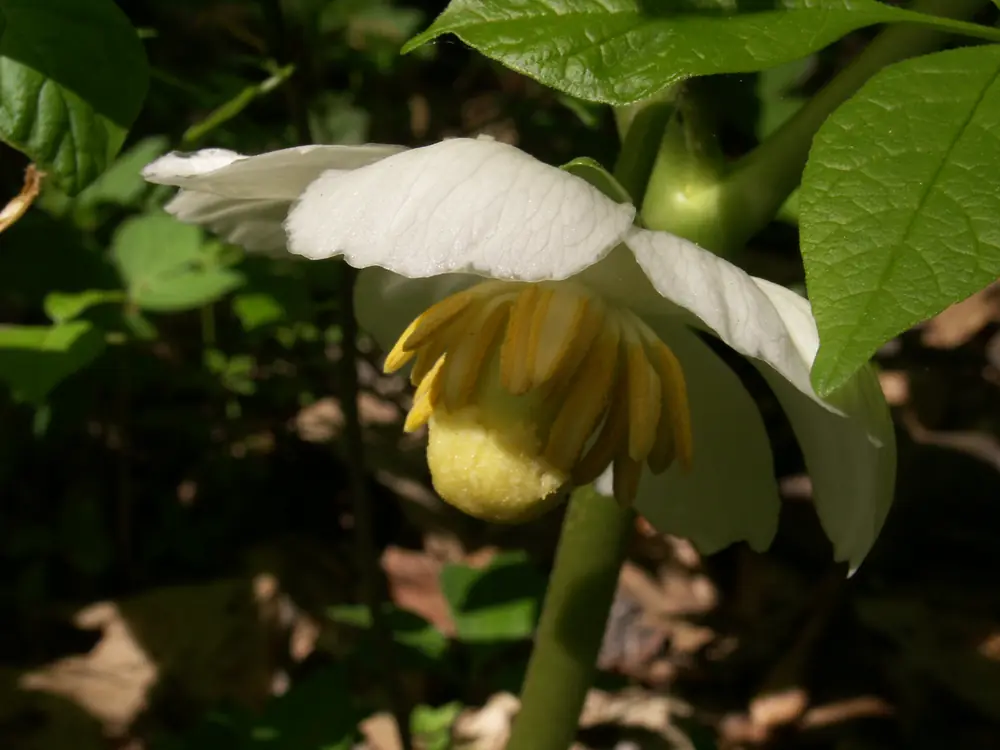
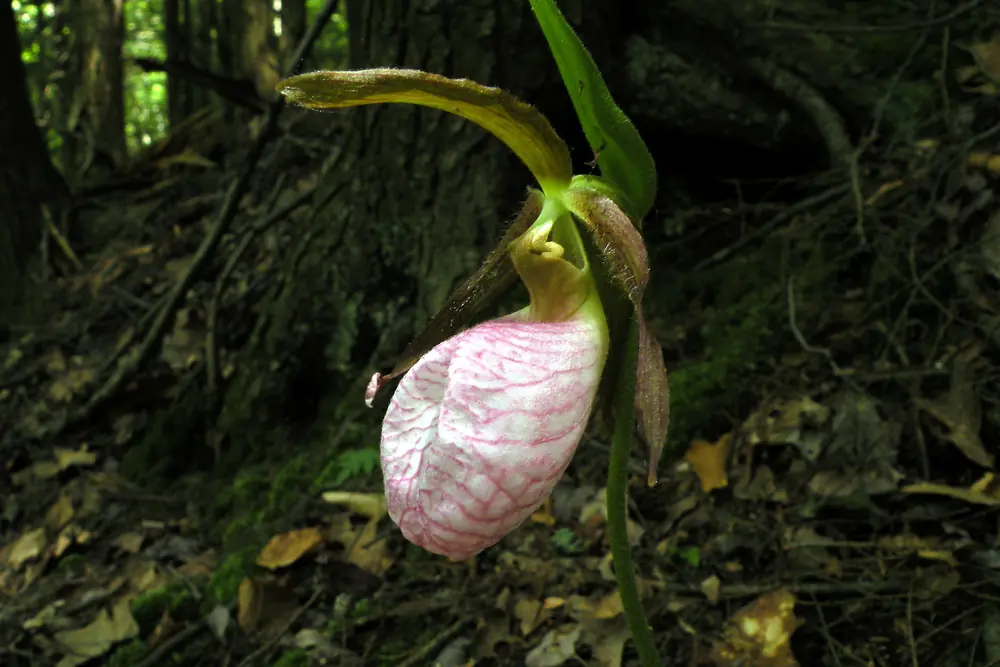
The extension's May notes list mayapples, trillium and yellow and pink lady's slippers among the late-spring flowers. Bowman's Hill Wildflower Preserve says its woodland trails are vivid with spring ephemerals from mid-April through May. Look and photograph, but leave plants in place; many take years to flower from seed.
-
Cherry, sassafras and oak flowers
May · Hillsides and woodland edges
Black cherry, sassafras, red oaks and blackhaw viburnum are flowering, the same notes say. Red oak catkins are easy to miss, but yellow dust on a parked car gives them away. More butterflies are active too: the spring azure lays eggs on dogwood, blueberry and viburnum buds, and the Eastern tiger swallowtail feeds on black cherry blooms.
-
Dryad's saddle
Overlaps with morel season · Base of dead or dying elm trees
Dryad's saddle (Polyporus squamosus), a bracket fungus, appears at the base of dead or dying elms, overlapping morel season. We give no morel dates because the sources we read give none; ask an extension office before eating any wild mushroom.
| Station | One year in ten | Median | Nine years in ten |
|---|---|---|---|
| Bradford | Apr 30 | May 18 | May 31 |
| Wilkes-Barre/Scranton | Apr 9 | Apr 23 | May 10 |
| Johnstown | Apr 14 | Apr 29 | May 17 |
| Williamsport | Apr 12 | Apr 24 | May 11 |
| Harrisburg | Apr 1 | Apr 15 | May 2 |
| Pittsburgh | Apr 9 | Apr 23 | May 12 |
| State College | Apr 7 | Apr 20 | May 6 |
| Erie | Apr 10 | Apr 26 | May 13 |
| Philadelphia | Mar 21 | Apr 4 | Apr 17 |
One main station stands for each town, so your own place may be days off. In the north the freeze lingers: the median last freeze at Bradford is May 18 and only one spring in ten sees a freeze after May 31, which is why many gardeners wait for Memorial Day to plant tender crops. More places are on our frost page.
What are spotted lanternfly nymphs and ticks doing in May?
Warm weather wakes two insects worth knowing by name.
-
Spotted lanternfly nymphs
Hatching from late April to June · Tree trunks, vines and tender new growth
Penn State Extension says spotted lanternfly eggs hatch from late April to June. Newborn nymphs are about an eighth of an inch and can pass for ticks or spiders. The first three stages are black with white spots, and the fourth is red with white dots and black stripes. They jump, move constantly and feed on tender new growth, and adults emerge in July. The guide advises early traps, regular scouting and reporting sightings outside the known range.
-
Blacklegged tick nymphs
May through July · Leaf litter, tall grass and trail edges
Blacklegged ticks are the main biters in Pennsylvania, and the extension names May through July as the time to be most careful. It says Pennsylvania ranks first in Lyme disease cases but gives no total. Walk down the center of the path, tuck trousers into socks and look yourself over afterward. The CDC adds that an attached tick should come off promptly and that a shower soon after coming indoors helps.
For the field journal, count the nymphs on one tree each week and note their color to record the molts.
How much daylight does Pennsylvania gain in May?
May adds between 54 minutes (Philadelphia and Harrisburg) and 59 minutes (Erie), roughly 1.8 to 2.0 minutes a day, a slower pace than April because the solstice is near. By May 31 the Sun is up 14 hours 48 minutes at Philadelphia and 15 hours 2 minutes at Erie, and June 21, the longest day, is three weeks off. With daylight time in force since March 14, clock times of sunrise and sunset run an hour later than standard time would give.
Try the daylight page for your own town. The table measures sunrise to sunset, which the clock change does not alter.
| City | May 1 | May 31 | Gained | Per day |
|---|---|---|---|---|
| Erie | 14 h 03 m | 15 h 02 m | 59 min | 2.0 min |
| Scranton | 14 h 00 m | 14 h 57 m | 57 min | 1.9 min |
| Williamsport | 13 h 59 m | 14 h 56 m | 57 min | 1.9 min |
| State College | 13 h 58 m | 14 h 53 m | 55 min | 1.8 min |
| Pittsburgh | 13 h 56 m | 14 h 51 m | 55 min | 1.8 min |
| Harrisburg | 13 h 56 m | 14 h 50 m | 54 min | 1.8 min |
| Philadelphia | 13 h 54 m | 14 h 48 m | 54 min | 1.8 min |
What is May weather like in Pennsylvania, and what hazards should you expect?
May is when the mountains and the coast finally warm up together. In the 1991 to 2020 record kept by NOAA, a May afternoon reaches about 74 °F at Philadelphia and about 68 °F at Bradford and Erie, and overnight lows range from 43 °F at Bradford to 54 °F at Philadelphia. Freezing nights are mostly over except in the cold north: Bradford still averages 5.1 nights of 32 °F or colder in May, while Philadelphia and Harrisburg average none. Rain averages between 3.26 inches at Wilkes-Barre and 4.21 inches at Bradford.
| Station | High | Low | Nights ≤ 32 °F | Precipitation |
|---|---|---|---|---|
| Erie | 68.3 | 49.3 | 0.4 | 3.50 |
| Bradford | 67.5 | 43.3 | 5.1 | 4.21 |
| Pittsburgh | 71.9 | 50.6 | 0.5 | 3.83 |
| State College | 69.4 | 50.3 | 0.3 | 3.64 |
| Williamsport | 72.4 | 49.1 | 0.6 | 3.86 |
| Wilkes-Barre | 72.2 | 49.6 | 0.6 | 3.26 |
| Harrisburg (Middletown) | 73.7 | 53.1 | 0.0 | 3.83 |
| Philadelphia | 74.4 | 54.2 | 0.0 | 3.34 |
What to watch. The National Weather Service calls a thunderstorm severe when it can produce hail of an inch or more or gusts above 58 mph, and says storms also bring tornadoes, lightning and flash floods. It reports about 25 million lightning strikes a year in the country, mostly in summer, and about 20 deaths; its advice is “Flash, Dash Inside.” Its Turn Around Don't Drown campaign says six inches of fast flood water can knock an adult down, twelve inches will lift most cars, and two feet can sweep away trucks. DCNR lists May among the months of greatest wildfire danger and says people cause 99 percent of the state's wildfires, so check for burn bans first. Look up the NOAA three-month outlook, which appears monthly near mid-month, while our weather page covers the coming days. Our clouds page shows what builds before a storm.
What can you see in the Pennsylvania night sky in May 2027?
All times are Eastern Daylight Time.
-
The Flower Moon and a seasonal Blue Moon
Full at 6:59 a.m. Thursday, May 20; best evening is Wednesday, May 19 · Rising in the east around dusk
Because the full instant comes in the morning, the evening of May 19 is when the Moon rises nearest to full. By our calculation moonrise that evening is about 8:05 p.m. at Harrisburg, 8:18 p.m. at Pittsburgh and 8:25 p.m. at Erie, shortly before sunset in each. The Moon also looks full on May 18 and 20. Old Farmer's Almanac calls it the Flower Moon. Four full moons fall in spring as astronomers count it (equinox to solstice): March 22, then April 20, this month's May 20 and June 19. Old almanac custom reserves “Blue” for the third in a set of four, so under that older rule this one qualifies. The newer test (two full moons in one calendar month) never comes up in 2027.
-
The Eta Aquariid meteors
Best mornings of May 5, 6 and 7, before dawn; peak night May 5 to 6 · Any dark yard with a clear view east
A new moon on May 6 leaves only a thin crescent, which makes the shower's peak night, May 5 to 6, a good one. The American Meteor Society cites somewhere around 10 to 30 an hour in the final stretch before daybreak across the southern states. This far north the constellation Aquarius climbs into view only shortly before dawn, so Pennsylvania should count fewer. Recline in the last two hours of darkness and face east.
-
Venus and Saturn close together
Friday, May 7, before sunrise (also the mornings of May 6 and 8) · Very low in the east, with binoculars and a flat horizon
On the 7th the two planets lie roughly 0.6 degrees apart (their closest moment comes after sunrise), and close to a degree apart on the mornings around it. In Pisces, they stand a mere 3 to 6 degrees up in the half hour before sunrise, at about 40 degrees north. Brilliant Venus (magnitude -3.9) is easy; Saturn (+0.7) is faint beside it. Choose a spot with an open view east and bring binoculars.
-
The Moon beside Jupiter
Wednesday evening, May 12 · High in the evening sky, after dark
The almost-first-quarter Moon passes about 1.2 degrees from Jupiter, closest at 5:52 p.m., before dark. After sunset they stay close and high, and no equipment is needed.
-
Mercury at its best evening of the year
Evenings of May 12 to June 5, with greatest elongation on May 27 and 28 · Low in the west-northwest, 45 to 90 minutes after sunset
Friday, May 28 at 9:14 a.m. is when Mercury stands widest from the Sun on its eastern side, at 22.8 degrees, so you can pick either evening, the 27th or the 28th. By May 15 it follows the Sun down by about an hour and a half (magnitude -0.6), and by June 1 by nearly two hours, though it dims fast through June. Northern observers get their best evening look at the planet all year. A hazy west-northwest sky calls for binoculars.
-
Milky Way, after midnight
May 1 to 14 and May 25 to 31, around the new moon of May 6 · Dark sites; low in the south and south-southeast late at night
Our figures for 40 degrees north, the latitude of Harrisburg, show up to roughly 3.8 hours when the galaxy's bright core stands over the horizon under dark, moonless skies, with less in the north where nights run short. Treat the hours as approximate.
| Phase | Date | Time |
|---|---|---|
| New moon | Thursday, May 6 | 6:58 a.m. EDT |
| First quarter | Thursday, May 13 | 12:44 a.m. EDT |
| Full moon, the Flower Moon | Thursday, May 20 | 6:59 a.m. EDT |
| Last quarter | Friday, May 28 | 9:58 a.m. EDT |
The planet and Milky Way hours are our own calculations. The moon page has phases for other months.
What are good May nature outings for families in Pennsylvania?
- Join the City Nature Challenge. Its organizers list observing from April 30 to May 3, 2027, uploading identifications through May 16 and announcing results May 20. Their page showed no participating cities, so look for one near you.
- Go to Kettle Creek's birding festival, listed by DCNR for Saturday, May 8, 10 a.m. to 2 p.m., free.
- Help the Pennsylvania Bird Atlas. The volunteer survey began in 2024 and uses eBird; any skill level is welcome.
- Spend a morning at Presque Isle. Check Presque Isle Audubon and the Erie Bird Observatory for 2027 walks and festival dates.
- Catch the hawk count's final days. Hawk Mountain's count has ended on May 15 in recent years; confirm with the sanctuary.
- Watch BirdCast and dim your lights on heavy migration nights.
- Report your first hummingbird to Journey North.
- Visit a nest cam. The Game Commission lists eagle cams at Hanover and in farm country, plus an elk cam.
- Mark World Migratory Bird Day. It is held in May and October; the 2026 observances fell on May 9 and October 10, and the 2027 days were not yet posted at our visit.
- Collect a Let's Go Birding booklet at Erie National Wildlife Refuge for a child.
Hosts change plans often, so check with each one before you set out.
Safety notes for May in Pennsylvania
- Spring gobbler season. The Game Commission's 2026-27 table gives the general season as May 1 to 31, 2027, bearded birds only, one a day and one a season, and says Sunday spring turkey hunting begins in 2027. Legal hours open 30 minutes before sunrise and close at noon early on, and from May 17 stretch to 30 minutes after sunset. The commission's final-seasons release puts the changeover on May 17, so hours are noon-close through May 16; check the current digest. A 2025 notice said no orange is required for spring turkey hunters, though it is recommended, and advised against wearing a turkey's colors (black, red, white, blue). The youth hunt, April 24 and 25, falls before this month.
- Fishing. We could not confirm May season dates from the Fish and Boat Commission, so read its current regulations.
- Elk and fawns. Stay 100 yards from elk, and leave fawns alone.
- Bears. Lock up food and garbage, and bring feeders in.
- Eagles. Keep 1,000 feet from an active nest.
- Gull Point. The natural area is closed through November 30; use the platform.
- Ticks. Check yourself and pets after each outing.
- Storms and floods. Go indoors when thunder sounds, and never walk or drive into flood water.
- Rivers. At the Upper Delaware the Park Service counts about two drownings a year and warns that the river is often deeper and faster than it appears, so wear a life jacket. Its river hotline (845-252-7100) runs April 1 through October 31. It also notes that bears, bobcats, bats and snakes live in the park, so keep your distance and leash pets.
- Wildfire. Follow burn bans and check local rules before any campfire.
Sources (50)
- Pennsylvania Game Commission: final 2026-27 hunting seasons approved (spring gobbler dates)
- Pennsylvania Game Commission: seasons and bag limits (spring gobbler, 2027)
- Pennsylvania Game Commission: spring gobbler season notice (2025, orange and safety advice)
- Pennsylvania Game Commission: white-tailed deer (fawning season)
- Pennsylvania Game Commission: six things you can do for wildlife (young wildlife, mowing)
- Pennsylvania Game Commission: black bear
- Pennsylvania Game Commission: elk (calving, cow behavior)
- Pennsylvania Game Commission: ruffed grouse (nesting and broods)
- Pennsylvania Game Commission: bald eagles (nesting timeline, 1,000-foot guideline, nest counts)
- Pennsylvania Game Commission: raptor migration viewing sites
- Pennsylvania Game Commission: wildlife cams
- Pennsylvania Game Commission: bats wildlife note (topics: return, maternity colonies, pups May to June)
- Pennsylvania Game Commission: Pennsylvania Bird Atlas
- Visit PA Go: elk viewing (distance, calves, rules)
- DCNR: Presque Isle State Park wildlife watching (warblers, Gull Point)
- DCNR: Presque Isle State Park
- DCNR: Kettle Creek State Park
- DCNR calendar of events: May 2027
- DCNR calendar of events: May 8, 2027 (Kettle Creek birding festival)
- DCNR: wildfire season and caution (99 percent human-caused)
- Tom Ridge Environmental Center: Presque Isle wildlife watching
- Presque Isle Audubon
- Presque Isle Audubon: Festival of the Birds (2026 dates and program)
- Erie Bird Observatory
- Audubon magazine: birding in Pennsylvania
- Penn State Extension: spring phenology notes (May)
- Penn State Extension: a sign of spring (young wildlife)
- Penn State Extension: ticks and tickborne disease
- Penn State Extension: spotted lanternfly management guide
- CDC: preventing Lyme disease and ticks
- Bowman's Hill Wildflower Preserve: what's in season
- Hawk Mountain Sanctuary: spring migration count and season recaps
- U.S. Fish and Wildlife Service: Erie National Wildlife Refuge activities
- U.S. Fish and Wildlife Service: piping plover
- Journey North: hummingbirds
- Local 21 News: hummingbirds set to arrive in Pennsylvania
- BirdCast (Cornell Lab of Ornithology): migration forecasts and Lights Out
- World Migratory Bird Day
- City Nature Challenge
- BearWise: living with bears
- National Park Service: Upper Delaware Scenic and Recreational River, plan your visit
- National Weather Service: severe thunderstorms
- National Weather Service: lightning
- National Weather Service: Turn Around Don't Drown
- NOAA NCEI: 1991–2020 monthly normals for Pennsylvania stations (data API, May)
- Climate Prediction Center: seasonal outlooks (issued monthly near mid-month)
- U.S. Naval Observatory: 2027 moon phases (data API)
- Sea and Sky: astronomy calendar of celestial events 2027
- American Meteor Society: 2027 meteor shower calendar (Eta Aquariids)
- Photos via Wikimedia Commons; licenses and photographers are credited under each picture
