What to look for in nature in Pennsylvania this January
January is the deep middle of Pennsylvania’s cold season, the stretch of meteorological winter when the East usually reaches its coldest days and Erie collects more snow than in any other month. It is also a month of quiet beginnings. Black bear cubs smaller than a squirrel are born in dens in the first weeks, bald eagle pairs start carrying sticks, foxes bark at night, and by late January a few great horned owls are incubating. Wintering eagles crowd the open water of the Upper Delaware, ice dunes build along the Presque Isle beaches, and on mild afternoons tiny stoneflies crawl out of trout streams onto the snow. After dark there are the Quadrantid meteors early in the month and, on January 22, the year’s closest full moon. What follows runs from the Erie shore to the Delaware.
Other months in Pennsylvania: October, November, December, February.
Start here
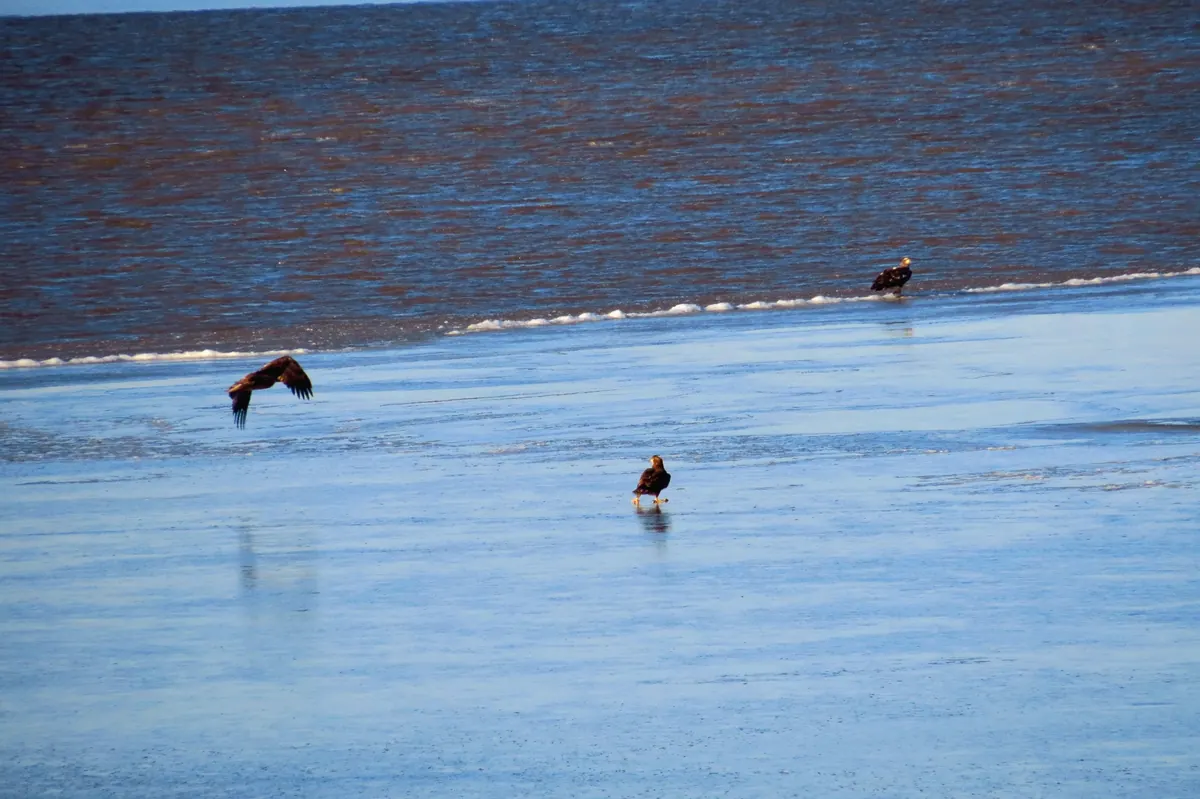
- Eagles at Lackawaxen. On winter weekends, volunteers with the Delaware Highlands Conservancy usually set up at the Lackawaxen River Access in Pike County, across the road from the Zane Grey Museum, to help visitors find the eagles fishing the Upper Delaware. Viewing there is free. Bring binoculars, stay by your car, and check the Conservancy’s calendar for the 2027 schedule.
- The Quadrantids, January 3 to 4. Sunday night, January 3, into Monday morning brings the first strong meteor shower of 2027, with hardly any moonlight to spoil it. Head out in the hours before dawn on Monday, when the radiant stands highest in the northeast.
- A winter tree walk. Pick five trees on your street or in a park and learn them by bark, buds and branching. Start with the easy ones: smooth gray beech, red-twigged red maple, black birch with its wintergreen smell, and the seed balls of sycamore.
Keep a record: note an eagle over the ice among the birds you have seen in the Naturalist’s Field Journal, a fox’s straight line of prints or a grouse’s snowbank burrow on the tracks-to-know plate, a beech twig with its long cigar-shaped bud in the seeds, pods and cones pages, and the fox barks and owl hoots of a January night on the map of sounds. A few lines on the coldest morning of the month is plenty.
Regions used below: Northwest and Lake Erie; Allegheny National Forest and the Northern Tier; Laurel Highlands and Pittsburgh; Central Ridge and Valley and State College; Poconos and the Northeast; Susquehanna Valley and Harrisburg; Southeast and Philadelphia.
Where can you watch bald eagles in Pennsylvania in January?
In January the state’s own nesting eagles are joined by birds pushed south by ice farther north, and both go where the water stays open. The Game Commission names two winter strongholds: the Upper Delaware River along the New York line, with National Park Service access points at Matamoras, Callicoon and Buckingham, and the lower Susquehanna River south of Harrisburg. Ice decides the rest. When ponds and smaller lakes lock up, eagles shift to river riffles, dam tailwaters and warm-water outflows, so a cold snap is often the best time to look.
-
The Upper Delaware
Peak numbers in January and February · The Delaware River in Pike and Wayne counties; the Lackawaxen River Access across from the Zane Grey Museum
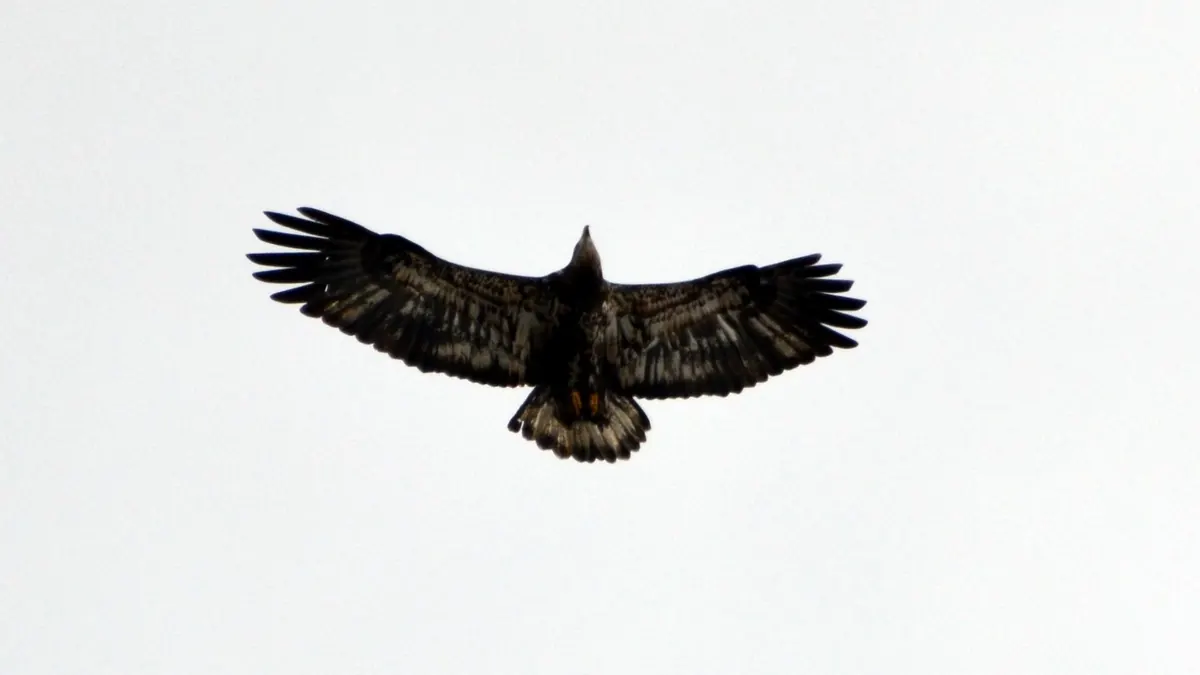
The Game Commission puts the winter population of the Upper Delaware region at 150 to 200 eagles. The count is highest in January and February, and by mid to late March the visitors have mostly flown back north to breed. The river’s rapids keep running when lakes in the region freeze, and that open water is what holds the birds. The Delaware Highlands Conservancy runs a winter field office in the Zane Grey Museum at Lackawaxen and, in recent years, has staffed the river access across the road on Saturdays and Sundays in January and February. Dates for 2027 were not posted in early October, so check the Conservancy’s events page before you go.
-
The lower Susquehanna
November to February · The river south of Harrisburg through Lancaster and York counties, down to Conowingo Dam just over the Maryland line
Below Harrisburg the Susquehanna runs through a chain of hydroelectric dams, and eagles gather along it all winter to fish and scavenge for shad, channel catfish and carp. The Game Commission notes that the biggest concentration is at the base of Conowingo Dam, just over the line in Maryland, where dozens can be counted from the viewing platforms between November and February. On the Pennsylvania side, scan the river from overlooks and river parks on a still, cold morning, when eagles perch on the islands and tree lines waiting for fish.
-
Courtship and nest repair
Sticks from mid-January; eggs from mid-February, most in early March · Rivers, lakes and reservoirs in most counties; the Game Commission’s eagle cams
By the agency’s count Pennsylvania now has more than 300 nests, up from three known pairs in 1980, and the eagle came off the state’s threatened list in January 2014. Resident pairs repair their nests from December through February, and stick-carrying in midwinter is part of courtship. Watch for pairs flying side by side, and now and then the cartwheel display, talons locked as they tumble. The Game Commission asks people to stay at least 1,000 feet from an active nest, roost or feeding area, and to report new nests through its online form.
What happens on Lake Erie and at Presque Isle in January?
Erie is Pennsylvania’s snow capital, and January is its snowiest month: the airport averages 31.8 inches, with nearly nine days bringing an inch or more. Lake-effect snow depends on open water, so the season’s bands are strongest while the lake is still ice-free and tend to fade once ice spreads. Because Erie is the shallowest of the Great Lakes, it freezes more completely than the others; NASA’s Earth Observatory notes that its yearly maximum ice cover regularly tops 80 percent, and it froze over entirely in 1978, 1979 and 1996.
-
Ice dunes on the beaches
January and February, in cold spells · The lake-side beaches of Presque Isle State Park
When the air is well below freezing and waves throw spray and slush onto the beach, the ice builds into ridges and mounds along the shore. The Tom Ridge Environmental Center lists ice dunes as the January and February sight at Presque Isle. They are beautiful but largely hollow, and park rangers have urged visitors to admire them from the beach rather than climb them, because a dune can give way under your feet.
-
Rafts of diving ducks, snow buntings and the odd snowy owl
Until the ice closes the water · Offshore from the Presque Isle beaches and the lake bluffs; the outer beaches and breakwaters
Presque Isle Audubon’s birding guide says large rafts of diving ducks sit offshore until ice closes over the lake. Scan the open water with a scope for scaup and other divers. On the beaches look for snow buntings and American pipits, and sometimes longspurs; in some winters snowy owls rest on the beaches, breakwaters and dunes.
-
Ice fishing, and steelhead in the creeks
Once the ice is thick enough; steelhead from late fall to early spring · Presque Isle Bay, Misery Bay and the Marina; Elk Creek and other Lake Erie tributaries
In a cold January, Presque Isle Bay fills with ice anglers, and Misery Bay draws skaters and iceboats. The park does not measure the ice; see the safety notes below. In the creeks the steelhead run goes on all winter: DCNR says these lake-run rainbow trout reach 30 inches or more in Elk Creek at Erie Bluffs State Park. Never walk on ice over moving water.
When are black bear cubs born in Pennsylvania, and why do foxes bark on January nights?
Midwinter looks like a dead season, but for several of the state’s mammals it is the start of the year’s family business. Bears give birth in the den, and the wild dogs, foxes and coyotes, are pairing up for a February mating season.
-
Bear cubs born in the den
Early January · Dens in forested country statewide
Pregnant females are the first bears to den, usually by mid to late November, and they give birth in early January without fully waking. The Game Commission describes newborn cubs as about 9 inches long and 8 to 10 ounces, with litters of one to five and three the most common in Pennsylvania. The cubs nurse in the den, open their eyes at about six weeks, and walk out with their mother at around three months. A den may be a rock cleft, a tipped-up root mass, a dug-out burrow or simply a bed of leaves on the open ground, and the agency’s biologists visit some of them in late winter to weigh and ear-tag the cubs. If your dog finds a bear in a brush pile, call the dog back and leave quietly.
-
Red foxes barking at night
Late winter; mating usually in February · Farm country, suburbs and woods edges statewide
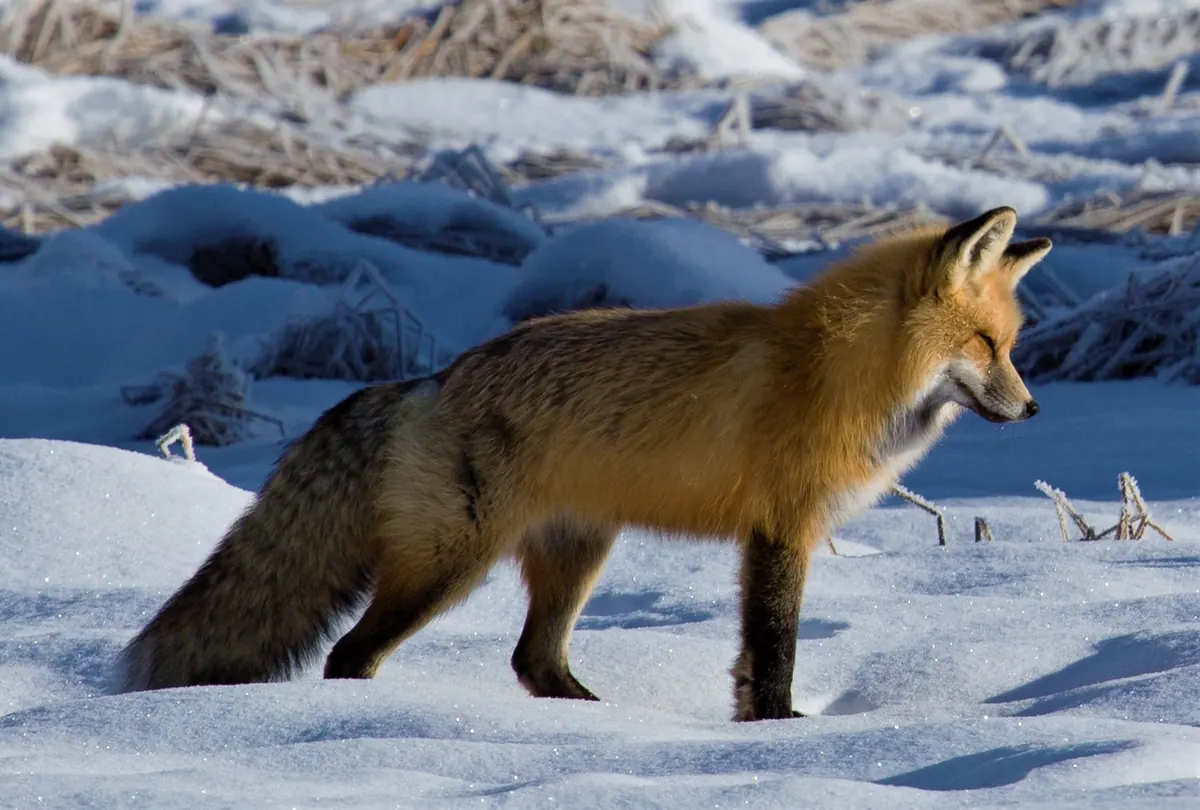
A sharp, hoarse bark or a scream in the dark on a January night is most often a red fox. The Game Commission explains that foxes call in late winter to announce themselves to possible mates, and that breeding usually takes place in February, with pups born in the den about 51 days later for red foxes and 63 for grays. Red foxes rarely use a den in winter itself; they sleep out in the open with the bushy tail wrapped over the nose.
-
Coyotes on the move
Pairing in winter; mating usually in February · Statewide, from big forest to the edges of the cities
The eastern coyote now lives in every part of the state. A female comes into heat only once a year, for four or five days, usually in February, so January is when pairs travel and mark territory together, and when you may find two sets of tracks side by side. Howls can come at any hour but are most frequent at night, and on a still, cold evening they carry a long way.
Fresh snow is the best way to read all of this. A red fox leaves a neat, single line of prints; a coyote’s line is similar but larger. What came before is on Pennsylvania in December.
Can you see elk in Pennsylvania in winter?
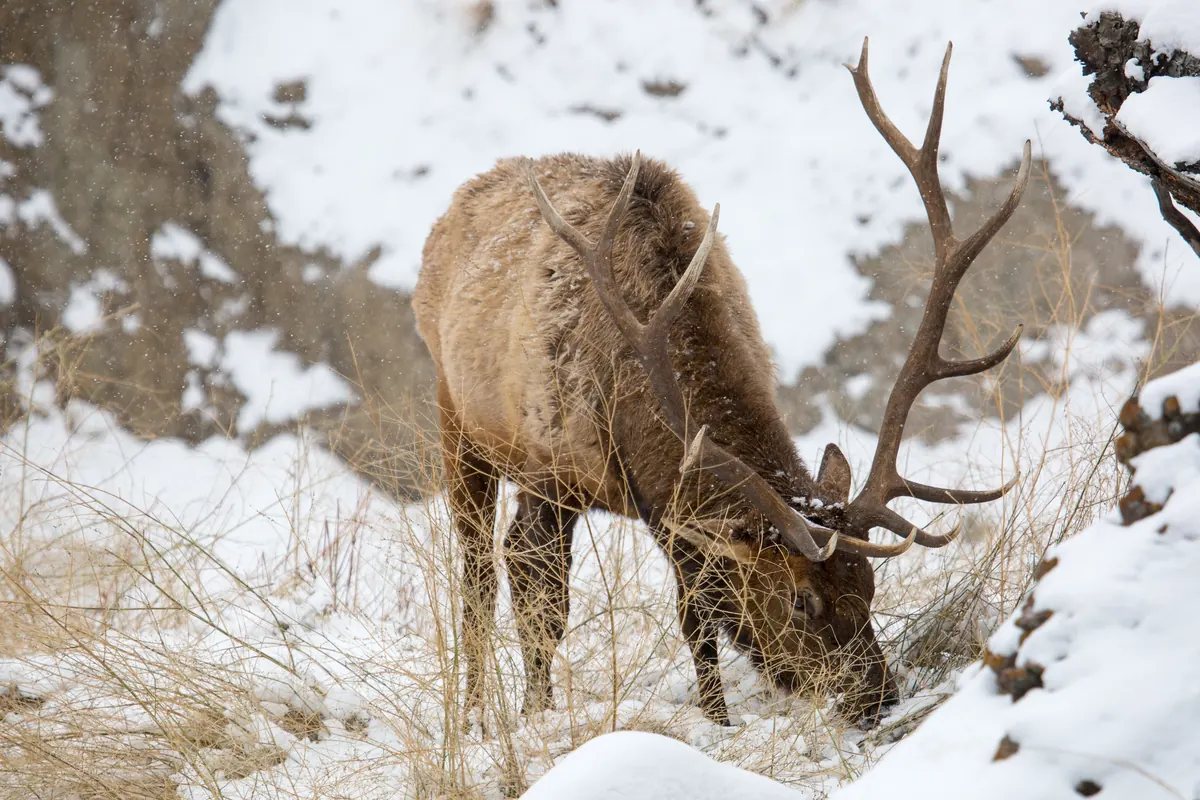
Pennsylvania’s elk are the descendants of animals the Game Commission released between 1913 and 1926, and the herd now ranges across north-central Pennsylvania, centered on Elk and Cameron counties. Most visitors come for the fall rut, but in winter the crowds are gone and the herds stand out against the snow.
-
Winter herds and bachelor groups
All month · Fields and food plots around Benezette and along Route 555 in Elk County
In winter, cows, calves and young bulls gather in large herds, and mature bulls often travel together in groups of their own. The Game Commission says elk paw through snow to reach grass in winter, or turn to twigs, buds and bark when the snow is deep. Bulls carry their antlers into late winter or early spring, so a January bull still wears the full rack it fought with in October. Watch from the road shoulder or the viewing areas, never walk out toward a herd, and do not feed elk.
-
The Elk Country Visitor Center
Winter weekend hours · Near Benezette, Elk County
The visitor center lists winter hours of 9 a.m. to 5 p.m. on Saturdays and Sundays, with its viewing fields and trails open beyond that. Winter weather can change those hours, so confirm them before a long drive into the mountains.
What lives on and under the snow in a Pennsylvania January?
A blanket of snow is good insulation, and some animals use it on purpose. Others are busiest when nearly everything else sleeps.
-
Ruffed grouse in snow roosts
Cold nights with soft, deep snow · Young forest and brushy woods, especially near conifers, statewide
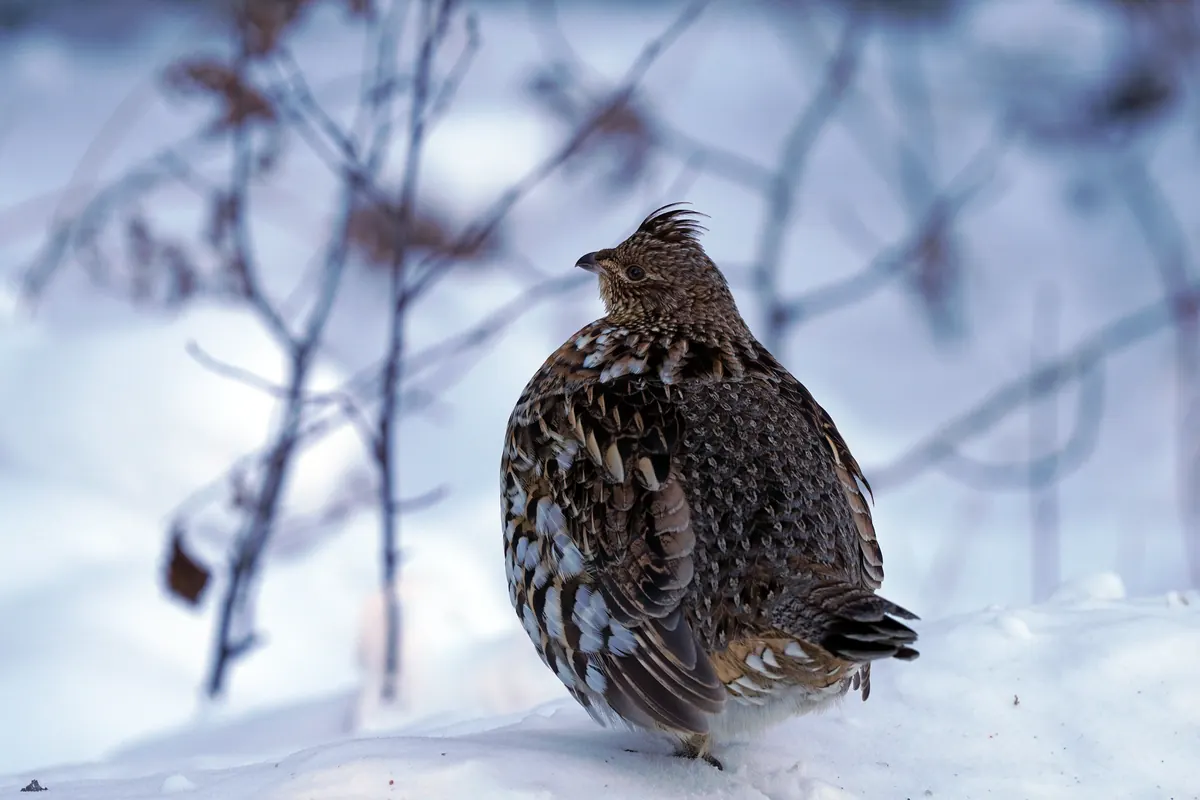
The ruffed grouse has been Pennsylvania’s state bird since 1931. The Game Commission’s grouse note describes how a grouse may spend a winter night in a snow roost hidden under the surface, sometimes flying straight into a soft bank at dusk so it leaves no trail. In winter the bird’s toes grow a comb-like fringe that works like a snowshoe, and it lives largely on buds of aspen, birch, beech, maple, cherry and apple.
-
Winter stoneflies crawling on snow
Mild days, January into March depending on the winter · Snowy banks and bridges along clean, rocky streams
Small dark insects walking over the snow beside a trout stream in January are probably winter stoneflies. The nymphs live under stones in the riffles, and the adults climb out through cracks in the ice and snow, then walk rather than fly as they search for a mate. University of Maryland entomologist Michael Raupp points out that stoneflies need clean, well-oxygenated water, so finding them is a sign of a healthy stream. Fly anglers know the smallest of them as little black stoneflies.
-
Snow fleas
Sunny days around or just above freezing · Snow around the bases of trees, in or near woods
If the snow near a tree looks sprinkled with pepper, and the pepper jumps, you have found snow fleas. Penn State Extension explains that these are springtails, not fleas, harmless decomposers that come up through the snow on warm winter days to feed. They spring several times their own length with a forked tail tucked under the body.
Which owls and winter birds can you find in Pennsylvania in January?
January birding in Pennsylvania means fewer species but more to notice: owls starting their nesting season in the dark, northern visitors at the feeders, and the last days of the holiday counts.
-
Great horned owls on the nest
Calling all winter; eggs usually in February, occasionally late January · Woodlots, farm country, river bottoms and city parks statewide
The great horned owl is the earliest nester among Pennsylvania’s owls. The Game Commission says females are on eggs in February and early March, and occasionally as early as late January. They take over an old hawk, crow, heron or squirrel nest, and the incubating female can end up dusted with snow. Listen at dusk for the pair’s deep, back-and-forth hooting, and in daylight scan old stick nests in leafless trees for a pair of feathered ‘horns’ showing over the edge. Keep your distance: nesting great horned owls defend their young fiercely.
-
Winter finches and other visitors from the north
All winter, varying from year to year · Feeders, conifer stands and weedy fields; the Northern Tier and the Poconos most often
The Finch Research Network’s forecast, written by Tyler Hoar in late September 2026, does not expect a big southward flight of most species this winter. It does say that northwestern Pennsylvania and southern New York have had at least small to moderate irruptions out of the boreal the last two winters, and that a small movement south into Pennsylvania is quite possible again. Keep sunflower and nyjer seed out and check every finch flock.
-
The last Christmas Bird Counts
Through January 5, 2027 · Count circles statewide
The Christmas Bird Count window closes on January 5, so a few circles in Pennsylvania still hold their count days in the first week of the year. Audubon’s Circle Finder shows which ones and who the compilers are. After that, Project FeederWatch keeps going through April; you count the birds at your own feeders on days you choose.
How can you tell Pennsylvania trees apart in winter?
Bare trees are easier to learn than most people think. A winter tree handout from Pittsburgh’s Venture Outdoors sorts them by four clues: how twigs and buds are arranged, bark, the buds themselves, and any dried fruit or leaves left hanging. The trees below grow across the state.
-
Opposite or alternate?
All winter · Any woods, street or park
Look first at whether buds and side twigs come off the branch in pairs or one at a time. Only a few common trees have opposite branching, and the memory aid is MADHorse: maples, ashes, dogwoods and horse chestnuts. Among the maples, red maple has red twigs and blunt red buds, while sugar maple has brown twigs and sharp, pointed buds. White ash has stout twigs with leaf scars shaped like a smile.
-
Beech: smooth bark and leaves that hang on
All winter · Rich woods and moist slopes statewide
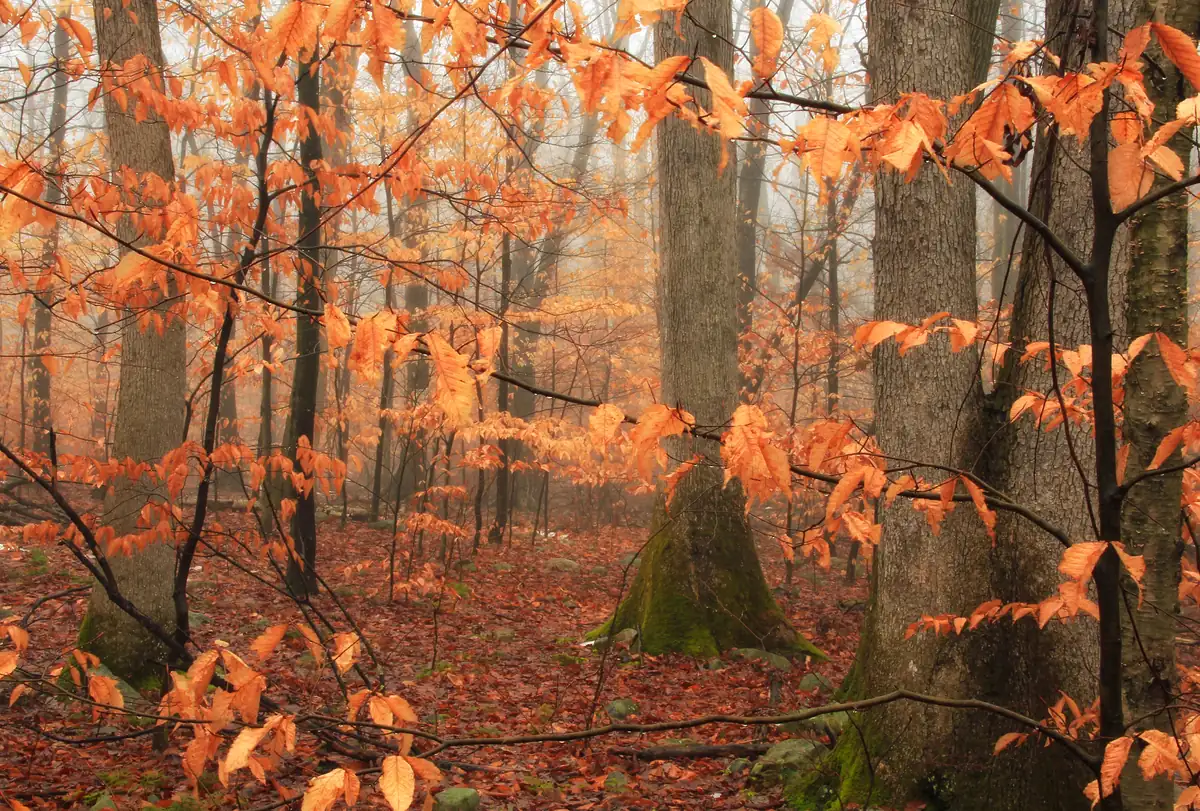
American beech is the one big tree in the forest with smooth, gray bark even when old, and its buds are long, slender and pointed, about an inch long. Young beeches also keep many of their dead, papery leaves until spring, a habit called marcescence that is shared by some oaks. Clemson Extension describes how the leaves stay on because the layer that normally cuts them loose in fall does not finish forming until new growth pushes them off. In January, those pale tan leaves are the brightest color in the woods.
-
Black birch, sycamore and tulip tree
All winter · Black birch on slopes; sycamore along streams; tulip tree in rich woods
A scratched black birch twig smells of wintergreen. Sycamore is easy to spot along creeks by its white, flaking upper bark and the round seed balls that dangle all winter. Tulip trees hold the dried husks of their seed heads upright at the branch tips like little candelabras, high in the canopy.
A stretch of woods visited once in January and again in May makes a good subject for the “same place twice” page of the Naturalist’s Field Journal.
How much daylight does Pennsylvania gain in January?
The evenings are already brightening. In Pittsburgh the sun sets at about 5:04 p.m. on New Year’s Day and about 5:37 p.m. on January 31; in Philadelphia, sunset moves from about 4:46 p.m. to about 5:19 p.m., passing 5 o’clock around mid-month. Mornings barely change: sunrise hangs at its latest through the opening week of the year and then creeps earlier only slowly, so nearly all of January’s gain comes in the afternoon. On Saturday evening, January 2, Earth reaches perihelion and is nearer the sun than at any other time in 2027.
| City | Jan 1 | Jan 31 | Gained | Per day |
|---|---|---|---|---|
| Erie | 9 h 10 m | 9 h 58 m | 48 min | 1.6 min |
| Scranton | 9 h 15 m | 10 h 02 m | 47 min | 1.6 min |
| Williamsport | 9 h 16 m | 10 h 03 m | 47 min | 1.6 min |
| State College | 9 h 18 m | 10 h 05 m | 47 min | 1.6 min |
| Pittsburgh | 9 h 21 m | 10 h 07 m | 46 min | 1.5 min |
| Harrisburg | 9 h 22 m | 10 h 07 m | 45 min | 1.5 min |
| Philadelphia | 9 h 24 m | 10 h 09 m | 45 min | 1.5 min |
The northern cities gain a little faster than Philadelphia, and the pace quickens into February. Your own town’s numbers are on the daylight calculator.
How cold and snowy is January in Pennsylvania, and what might El Niño change?
January is, on average, the coldest month across Pennsylvania. NOAA’s National Centers for Environmental Information found from the 1991 to 2020 normals that most of the East reaches its seasonal low in January, as cold Canadian air spreads south over ground whose snow reflects away what little sunshine there is. Bradford, high on the Allegheny Plateau, averages almost five nights a January at or below zero, while Philadelphia averages none. Snowfall ranges from 31.8 inches at Erie to 7.1 at Philadelphia, and Pittsburgh, at 13.3 inches, gets the most of any station in the table away from the lake.
| Station | High | Low | Nights ≤ 32 °F | Nights ≤ 0 °F | Snowfall | Days with 1 in.+ snowfall |
|---|---|---|---|---|---|---|
| Erie | 35.2 | 21.3 | 26.2 | 1.2 | 31.8 | 8.9 |
| Bradford | 30.7 | 15.6 | 28.7 | 4.7 | n/a | n/a |
| Pittsburgh | 36.3 | 21.4 | 25.4 | 1.3 | 13.3 | 4.4 |
| State College | 33.9 | 20.5 | 26.7 | 1.2 | 11.3 | 3.4 |
| Williamsport | 35.3 | 20.1 | 27.3 | 1.3 | 9.7 | 2.9 |
| Wilkes-Barre/Scranton | 35.7 | 20.3 | 26.7 | 1.5 | 11.7 | 3.5 |
| Harrisburg | 38.6 | 23.0 | 25.6 | 0.3 | 9.1 | 2.3 |
| Philadelphia | 41.3 | 26.0 | 22.5 | 0.0 | 7.1 | 1.5 |
Behind this winter sits a powerful Pacific warm-up: in mid-September, federal forecasters put the chance that El Niño would fall short of very strong strength this winter at under one in ten. A Northeast impacts summary from NOAA’s drought program and the Northeast Regional Climate Center lays out the usual pattern. The northern jet stream runs farther north than normal, the dryness typical of the Midwest often reaches into western Pennsylvania, and storms tend to ride up the coast, wetting the Eastern Seaboard. In the record El Niño of 2015 to 2016, northern Pennsylvania came up short of snow while the southeast got more than usual, and the great blizzard of January 2016 struck during that event. Lake-effect country is the exception to the coastal snow boost, and NOAA’s Climate.gov notes that the low lake ice common in El Niño winters leaves Erie open longer for big lake-effect bursts. A milder January is the better bet, but one nor’easter could still bury the southeast. NOAA refreshes its three-month outlook maps every month; for the coming days see the local forecast, and when spring planting comes around, check the last frost dates for Pennsylvania.
What is in the night sky over Pennsylvania in January 2027?
Times are Eastern Standard Time. It is fully dark by about 6 p.m., and the blackest evenings fall in the days around the January 7 new moon.
-
The Quadrantid meteor shower
Night of Sunday, January 3, into Monday, January 4 · Anywhere dark; face northeast, where the radiant climbs through the night
Its peak is brief, and two predictions are in circulation: about 10:30 p.m. on January 3 from the American Meteor Society, and about 12:47 a.m. on the 4th from EarthSky. From Pennsylvania the best hours are after midnight and before dawn on Monday, when the radiant, in the region of Boötes and Draco, has climbed high in the northeast. Moonlight is minimal: the slender waning crescent clears the eastern horizon just a few hours before sunrise. Under the dark skies of Cherry Springs State Park in Potter County a patient watcher could log several dozen meteors in an hour near the maximum, though city lights cut that sharply.
-
The Wolf Moon, the closest full moon of 2027
Full at 7:17 a.m. Friday, January 22 · Rising in the northeast around sunset on January 21 and 22
Perigee comes less than a day before full, so January’s full moon passes within about 222,000 miles of Earth, closer than any other full moon this year, and every almanac counts it a supermoon. Watch it on Thursday evening, January 21: it comes up around sunset and goes down near sunrise, at its fullest. Two nights later, on the 23rd, the slightly waning moon rides close beside brilliant Jupiter.
-
Planets: Venus at dawn, Jupiter after dark
All month · Venus in the southeast before sunrise; Jupiter in the east in the evening; Saturn in the southwest
Pennsylvania’s morning commuters get Venus at its showiest: the planet hangs high in the southeast at dawn, at maximum elongation on January 3. Jupiter rises in early evening and brightens week by week ahead of its February 10 opposition, while Saturn slips lower in the southwestern twilight. In the last days of January, try for Mercury just above the west-southwest horizon in bright twilight; it is easiest to catch in the first days of February.
| Phase | Date | Time |
|---|---|---|
| New moon | Thursday, Jan 7 | 3:24 p.m. |
| First quarter | Friday, Jan 15 | 3:34 p.m. |
| Full moon, the Wolf Moon | Friday, Jan 22 | 7:17 a.m. (looks full the night of Jan 21 to 22) |
| Last quarter | Friday, Jan 29 | 5:55 a.m. |
Although solar maximum has passed, the sun can still throw off storms strong enough to bring the aurora over the northern counties; NOAA’s Space Weather Prediction Center posts the current outlook. For the moon’s rising and setting where you live, see our moon phase pages, and the cloud identification guide is there for overcast nights.
What can families do outside in Pennsylvania in January?
- Start the year on a trail, January 1. DCNR’s calendar lists New Year’s Day hikes at Ridley Creek State Park in the morning, from the Fuller Lake bathhouse at Pine Grove Furnace at 1 p.m., and at Cowans Gap, where free guided walks at 1 and 2 p.m. need registration. Other parks usually add hikes in December.
- Winter Bird Science, Saturday, January 16. A free ECO101 program at Lackawanna State Park, 10 to 11:30 a.m. at the park office classroom.
- A story stroll for small children, January 20 and 21. Tyler State Park in Bucks County lists a free “Tiny Tots” guided story walk, When Winter Comes, with registration.
- A full moon hike, Saturday, January 23. Vosburg Neck State Park in Wyoming County holds a free evening hike at 7:30 p.m., the night after the Wolf Moon; register in advance.
- Eagle weekends at Lackawaxen. The Delaware Highlands Conservancy’s volunteer eagle watch usually runs on January and February weekends; check its calendar for 2027.
- Count birds from the kitchen. Project FeederWatch runs all winter, and the Great Backyard Bird Count comes around each February, typically mid-month (watch birdcount.org for 2027).
- Track a fox. After new snow, pick one animal’s prints and see where they lead.
Listings come from DCNR’s calendar and organizers’ pages as of early October; confirm with the host, since snow and ice cancel programs. More ideas for every state and month are on the nature guide index.
Safety notes for January in Pennsylvania
- Deer seasons until January 24. Late archery and flintlock deer seasons run statewide through January 24. Those hunters need not wear orange, so be visible yourself. The extended antlerless firearms season continues in units 2B, 5C and 5D around Pittsburgh and Philadelphia until January 24, and in units 4A, 4C, 4D and 5A until January 18; those hunters must wear orange.
- Orange on state game lands through January 31. State regulation (58 Pa. Code § 135.41) requires everyone on game lands except people actively hunting, trapping or fishing to wear an orange hat, or 250 square inches or more of fluorescent orange covering the head, chest and back together and showing from all sides. Wear it on hunted state forest and park trails too.
- Other seasons. The third elk season runs January 9 to 17 and bobcat hunting January 9 to February 3. Rabbit, squirrel and pheasant stay open until February 28, and fox and raccoon hunting until February 21. Bobcat, fisher, mink and muskrat trapping ends January 10; beaver trapping continues to March 31. Duck seasons close January 9 in the North, Northwest and Lake Erie zones and January 18 in the South zone; Canada goose season closes January 18 in the Atlantic Population Zone; in the Resident Population Zone it pauses after January 18 and reopens January 29 to February 20. There is no Sunday hunting for ducks and geese.
- Ice. DCNR asks for 4 inches of solid ice or more for one person, 7 inches for a small group and 6 inches for an iceboat. State parks do not measure it, so check with a spud bar as you go, carry ice picks, wear a life jacket, and never go out alone or onto ice over moving water, including the creeks near Lake Erie.
- Ice dunes. At Presque Isle, admire the dunes from the beach. They are hollow and can collapse beneath a climber.
- Bitter cold. January usually brings the coldest nights of the year. Wind chill speeds frostbite on fingers, ears and cheeks; wear wool or synthetic layers, keep spare gloves dry, and head for the car if a child begins shivering.
- Lake-effect squalls and nor’easters. A lake-effect band can turn I-90 or I-79 white in moments. Look at the forecast before crossing the snowbelt or the mountains, and carry a blanket, shovel and water.
- Short days. Even on January 31, the sun sets before about 5:40 p.m. everywhere in the state. Plan to be off the trail by 4 p.m. and carry a headlamp.
Sources
- Pennsylvania Game Commission: bald eagle watching (Upper Delaware, lower Susquehanna, Conowingo, Raystown)
- Pennsylvania Game Commission: bald eagles (nests, nesting calendar, viewing distance, status)
- Delaware Highlands Conservancy: eagle watching (winter field office, bus tours)
- National Park Service, Upper Delaware Scenic and Recreational River: Delaware Highlands Conservancy eagle watch
- National Park Service: Zane Grey (Lackawaxen) river access
- Pennsylvania Game Commission: wildlife cams (eagle nest cams)
- NASA Earth Observatory: a lake in winter (Lake Erie ice cover)
- NOAA Climate.gov: how warm winters and low ice may affect the Great Lakes
- Tom Ridge Environmental Center Foundation: wildlife watching at Presque Isle (ice dunes in January and February)
- PA DCNR: winter at Presque Isle State Park (ice fishing, iceboating, ice thickness)
- YourErie: ice dunes form on Presque Isle, park rangers urge visitors to stay away
- Presque Isle Audubon: Presque Isle birding brochure (seasonal highlights)
- PA DCNR: fishing at Erie Bluffs State Park (Elk Creek steelhead)
- Pennsylvania Game Commission: black bear (denning, cubs, population)
- Pennsylvania Game Commission: foxes (wildlife note, PDF)
- Pennsylvania Game Commission: eastern coyote (wildlife note, PDF)
- Pennsylvania Game Commission: elk (history, range, winter foods)
- Visit PA Great Outdoors: elk viewing in Elk County (winter herds)
- Elk Country Visitor Center: programs, tours and hours
- Pennsylvania Game Commission: ruffed grouse (wildlife note, PDF; state bird, snow roosts)
- Michael J. Raupp, University of Maryland, Bug of the Week: winter stoneflies
- Penn State Extension: springtails (snow fleas)
- Pennsylvania Game Commission: owls (wildlife note, PDF)
- Finch Research Network: Winter Finch Forecast 2026–2027 (Tyler Hoar)
- National Audubon Society: join the Christmas Bird Count (December 14 to January 5)
- Project FeederWatch: how to participate
- Great Backyard Bird Count
- eBird: explore recent sightings by county
- Venture Outdoors: winter tree identification handout (PDF)
- Clemson Cooperative Extension, Home and Garden Information Center: when leaves don’t let go, marcescence
- NOAA NCEI: 1991–2020 monthly normals, January temperature, freezing and below-zero nights, snowfall (data API)
- NOAA NCEI: when to expect the coldest day of the year
- Climate Prediction Center: ENSO diagnostic discussion, September 10, 2026
- Climate Prediction Center: seasonal outlooks
- NIDIS and Northeast Regional Climate Center: El Niño impacts and outlook, Northeast region (PDF)
- U.S. Naval Observatory: moon phases (data API)
- U.S. Naval Observatory: 2027 seasons and perihelion (data API)
- Fred Espenak: Sky Event Almanac 2027
- American Meteor Society: meteor shower calendar
- EarthSky: Quadrantid meteor shower
- EarthSky: what is a supermoon
- EarthSky: Venus before sunrise, greatest western elongation
- Sea and Sky: astronomy calendar of celestial events 2027
- NOAA Space Weather Prediction Center: aurora 30-minute forecast
- PA DCNR calendar of events: January 1, 2027 (First Day Hikes)
- PA DCNR calendar of events: January 2027
- Pennsylvania Game Commission: final 2026–27 hunting seasons approved (Sundays)
- Pennsylvania Game Commission: seasons and bag limits, 2026–27 (fluorescent orange by season)
- 58 Pa. Code § 135.41: fluorescent orange on state game lands
- PA DCNR: state parks Winter Report (ice and snow conditions)
- Photos via Wikimedia Commons; licenses and photographers are credited under each picture
