What to look for in nature in Pennsylvania this November
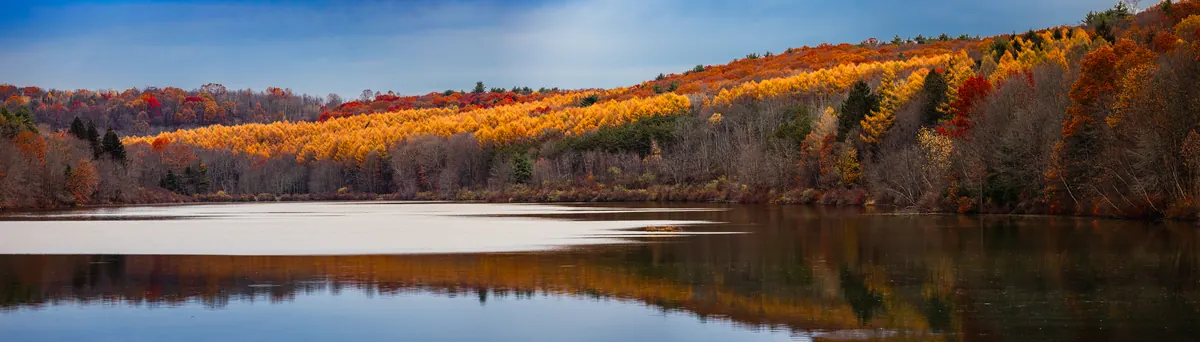
November strips Pennsylvania down to its bones. By the first week the maple color is mostly gone, and what remains is the bronze of oaks and beeches, the gold of a few bog tamaracks and the white of the first lake-effect squalls off Erie. It is the big-bird month: golden eagles ride the ridges of the Allegheny Front, red-tails stream past Hawk Mountain, and tundra swans come down onto the lower Susquehanna. In the woods the whitetail rut reaches its height in the middle of the month, pregnant black bears crawl into their dens, and on the Saturday after Thanksgiving the rifle season opens. Standard time returns on November 1, which puts all of this into short afternoons that end in an early dark.
Other months in Pennsylvania: October, December.
Start here
- Golden eagles on an east wind. The Allegheny Front Hawk Watch on the Bedford–Somerset line counts through December 31 and averages 226 golden eagles a fall, best when the wind blows from the east. At Hawk Mountain the red-tail flight usually tops out in the first week of November and most of the golden eagles pass this month. Eagle Day at Hawk Mountain is Saturday, November 7.
- The rut, and the roads. The Game Commission puts the peak of deer breeding in mid-November. Bucks chase does across fields and highways in the gray light at either end of the day, so drive slowly at dawn and dusk. The regular firearms deer season opens Saturday, November 28; wear orange on game lands from now to January 31.
- The Beaver Moon and the Leonids. The moon is exactly full on Tuesday, November 24 (9:53 in the morning, Eastern time), so Pennsylvanians get a round moon over the ridges on both Monday and Tuesday evening, a little larger than usual because it is a modest supermoon. For the Leonids, which peak around November 17, go out before dawn on Wednesday the 18th, once the half-lit moon is down.
Keep a record: Pennsylvania’s first golden eagle or evening grosbeak of the winter earns its date on the “birds I have seen” plate of the Naturalist’s Field Journal; a fresh buck rub, or a scrape under a low branch, suits the reading-the-signs plate; a tamarack cone can be drawn among the seeds, pods and cones; and the same-place-twice page is for October’s woods, now open and gray. One page a week is plenty.
Regions used below: Northwest and Lake Erie; Allegheny National Forest and the Northern Tier; Laurel Highlands and Pittsburgh; Central Ridge and Valley and State College; Poconos and the Northeast; Susquehanna Valley and Harrisburg; Southeast and Philadelphia.
Where can you see golden eagles and big hawks in Pennsylvania in November?
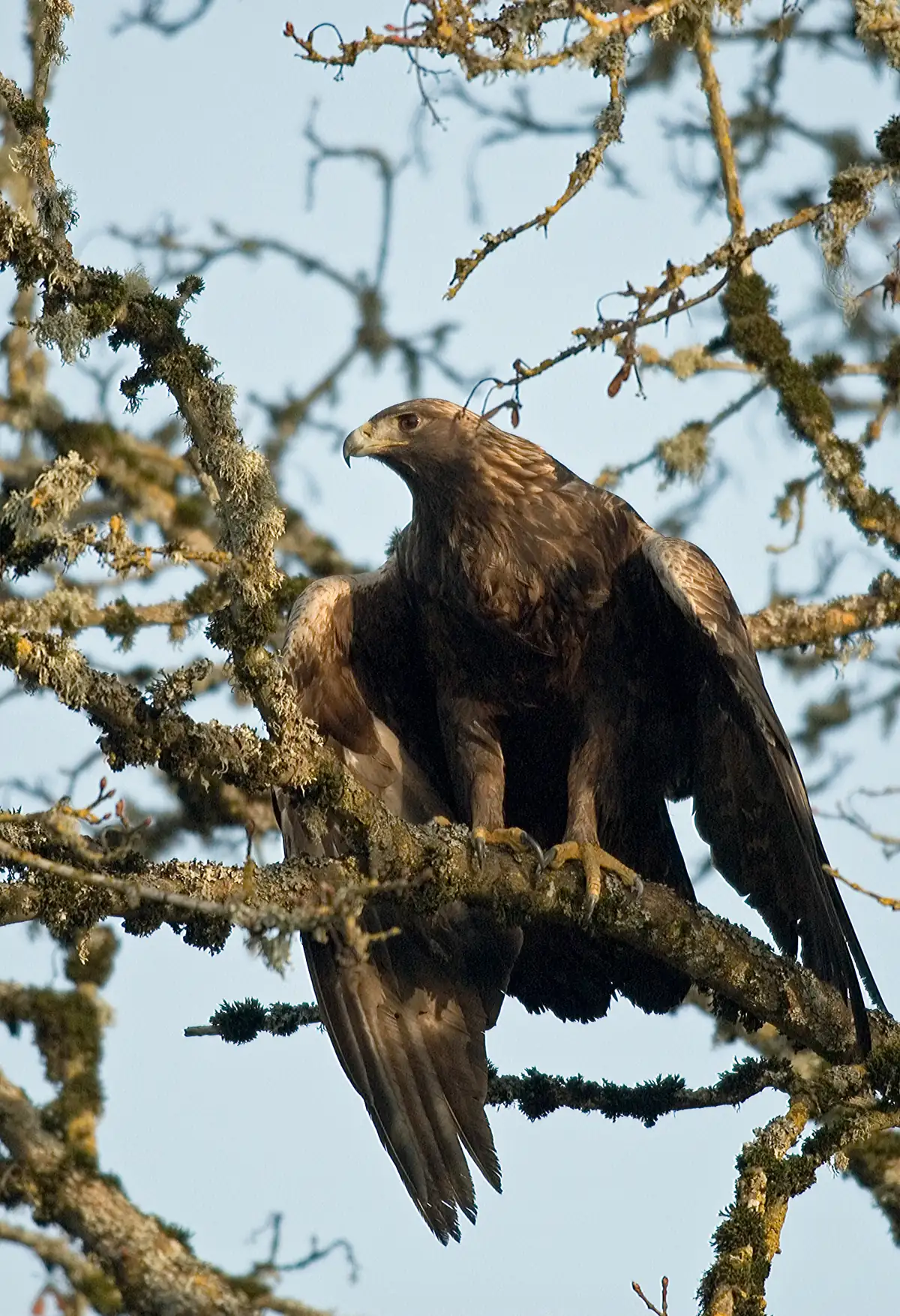
The small, fast hawks of September and October have gone through; November belongs to the heavy birds that need a stiff wind to travel. Pennsylvania sits under one of the main routes of the eastern golden eagle, a population that breeds across Quebec and Labrador and winters in the central Appalachians. Many of them are funneled along the Allegheny Front and the Laurel Highlands, where the Allegheny Front Hawk Watch alone tallies a couple of hundred in an average fall. Camera traps baited with road-killed deer have shown that some of them spend the whole winter in the state’s remote ridges.
-
Allegheny Front Hawk Watch: the golden eagle post
Count runs August 15 to December 31; golden eagles strongest late October through November · Near Central City on the Somerset–Bedford county line, about 2,690 feet up
The Allegheny Plateau Audubon Society keeps this count on the edge of the plateau, where the eagles often pass at eye level. It averages 226 golden eagles a season, and its best season so far was 450 in 2022. Most hawk watches want a northwest wind, but this one does best on an east wind, which pushes the eagles against the escarpment; west winds are the usual ones here, so an east-wind day in November is worth a drive. The site is often fogged in, so check before you drive.
-
Hawk Mountain: red-tails, goshawks and the eagles
Red-tail peak usually the first week of November; count ends December 15 · Hawk Mountain Sanctuary, Kittatinny Ridge near Kempton
Red-tailed hawks are the Sanctuary’s third most numerous migrant, averaging nearly 3,000 a season, and their flight generally crests in the first week of November, with about 90 percent passing between October 9 and December 1. The sanctuary’s species accounts put the bulk of its golden eagle flight in November, and early November is the best chance of a golden and a bald eagle on the same day. The American goshawk, the big gray forest hawk, peaks here in November too, though it averages only about 58 a season; a rough-legged hawk from the Arctic is a rare November or December bonus. The rule that matters most is unchanged: come on the northwest winds in the few days after a cold front passes.
-
Bald eagles on open water
Through the month, wherever water stays open · Upper Delaware River, Middle Creek, the lower Susquehanna, Raystown Lake, Pymatuning, Glendale Lake at Prince Gallitzin
The Game Commission’s eagle-watching guide names the upper Delaware as the biggest winter gathering in the state, 150 to 200 birds, and lists open lakes and rivers in every region. Scan the tallest dead trees along a shoreline, and keep your distance: an eagle flushed in the cold burns energy it cannot easily replace.
HawkCount posts each Pennsylvania watch’s daily totals in the evening, so you can see which ridge had the eagles before you choose one. Note the wind and the temperature beside every big raptor you log; after a few seasons the pattern is your own.
When do tundra swans and diving ducks arrive in Pennsylvania?
The Game Commission describes fall waterfowl migration in Pennsylvania as starting in late August, cresting in October and November and fading by late December or early January. November is when the big white birds and the diving ducks show up together.
-
Tundra swans on the lower Susquehanna
Arriving mid-November to mid-December · Lower Susquehanna River; Middle Creek Wildlife Management Area in northern Lancaster County
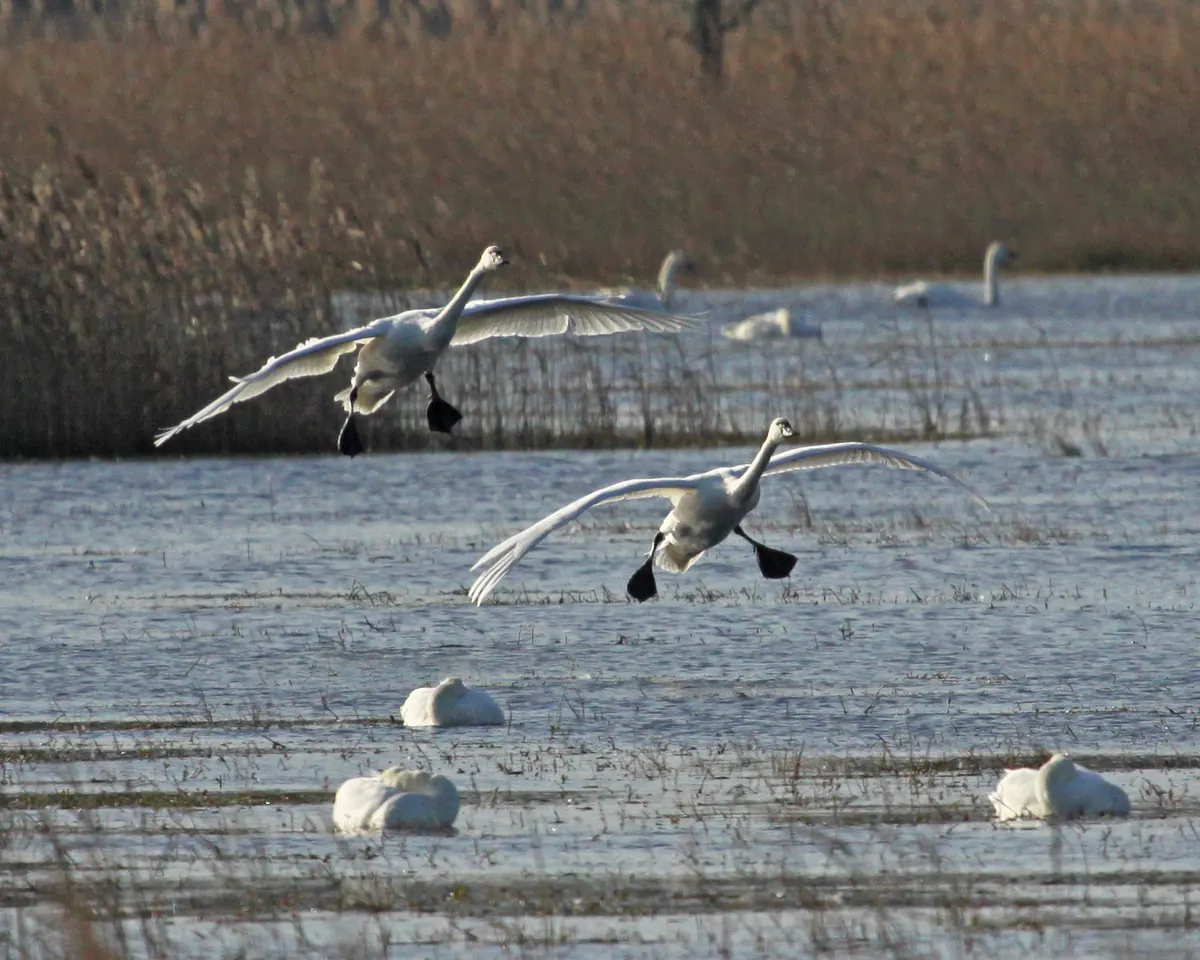
According to the Game Commission, tundra swans reach their wintering grounds between mid-November and mid-December, and most of Pennsylvania’s winter in the lower Susquehanna valley and at Middle Creek; as much as a quarter of the eastern population stops in the Susquehanna valley. Listen before you look: a flock high overhead gives a soft, musical whooping that carries a long way. Middle Creek’s big numbers of swans, and its famous snow goose crowds, build later in winter, peaking in February and March, so November is the quiet first act. The Wildlife Drive closed on September 30, and the visitor center closes from Thanksgiving until the Tuesday after Martin Luther King Day.
-
Diving ducks, loons and grebes at Presque Isle
Late November through December · Presque Isle Bay and the lake side of the peninsula at Erie
The Tom Ridge Environmental Center gives late November through December as Presque Isle’s fall waterfowl season. Audubon’s guide to the park points out that birds flying south across the lake treat the peninsula as their first landfall, and in winter it holds “all manner of waterfowl, loons, grebes, and gulls”; the Game Commission singles out lesser scaup on Presque Isle Bay. Bring a scope and pick a calm morning; whitecaps hide everything on the lake.
-
Reservoirs inland
Through November · Pymatuning, Lake Wilhelm and Shenango in the northwest; Raystown; Lake Ontelaunee and Nockamixon in the southeast
Deep reservoirs collect ring-necked ducks, mergansers, ruddy ducks and the odd long-tailed duck or scoter forced down by weather. The gray, drizzly morning after a storm front, when flocks have been grounded overnight, is often the best of the month.
Duck and goose seasons are open on many of these waters this month (see the safety notes). Snow geese are legal from November 6, which is a reminder that the big flocks, when they come, will be watched and hunted at once.
When is the deer rut in Pennsylvania, and when do bears go to den?
-
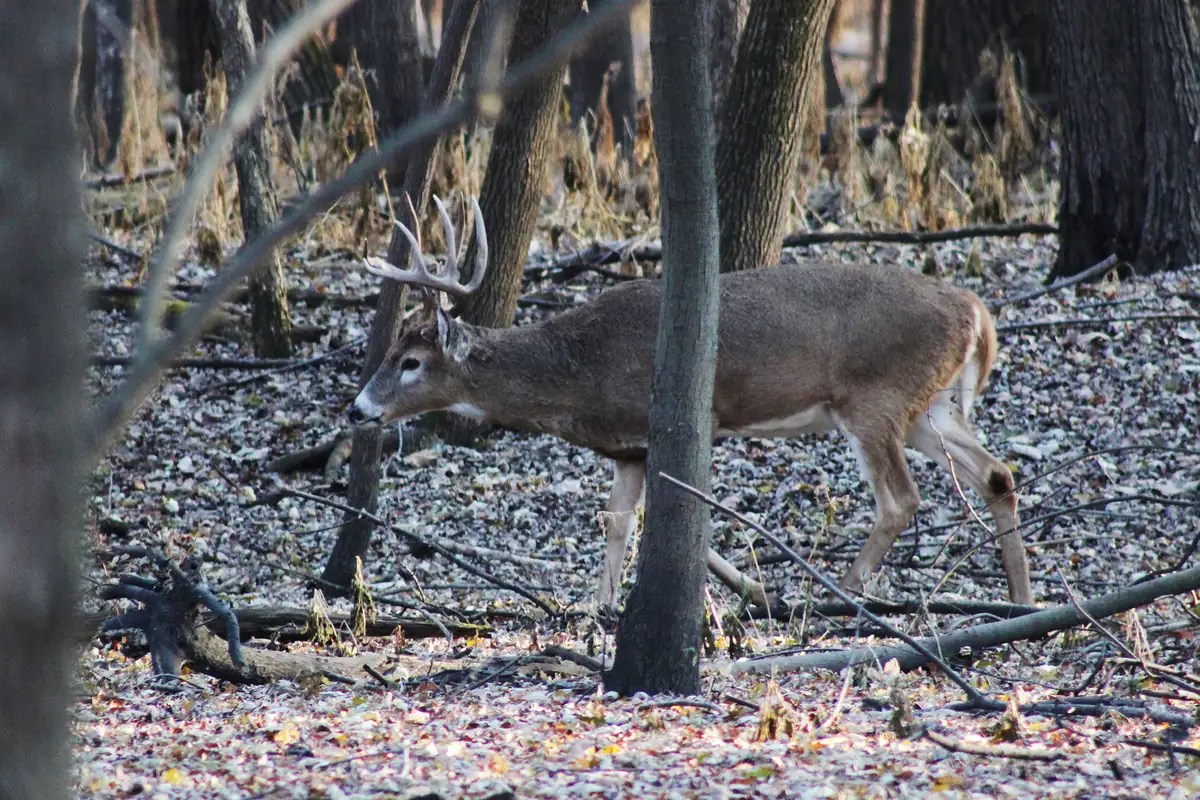
Whitetails at the peak of the rut
Breeding peaks in mid-November · Statewide, including suburbs and farm country
The Game Commission says the breeding season can run from September into late January but that activity “reaches its peak in mid-November,” and most adult does have been bred by the end of December. For two or three weeks the bucks lose their caution: they trail does across open fields at midday, grunt, spar and run roads. Look for fresh scrapes, bare patches pawed under a low branch, and saplings rubbed raw at knee height. The same restlessness puts deer in front of cars. State Farm, which counts insurance claims, rates Pennsylvania drivers’ odds of hitting a large animal at 1 in 64, among the highest in the country, and says November is the worst month nationally, followed by October and December. Its advice is to be most careful between dusk and dawn, and from November 1 dusk falls squarely in the evening commute.
-
Black bears going to den
Pregnant females mid- to late November; males several weeks later · Statewide, densest in the northern tier, the Poconos and the central ridges
Pennsylvania has about 19,000 black bears. The Game Commission says the first bears into dens are pregnant females, typically in mid- to late November; males hold out several weeks longer. A den can be a hollow tree, a dug-out hole like an oversized groundhog burrow, a rock crevice or a nest under the roots of a fallen tree. Bear hibernation is shallow: a denned bear is alert and can wake and leave if disturbed, so give any brush pile or rock ledge with a bear in it a wide berth. Cubs are born in the den in early January.
Around Benezette the elk rut is over and the October crowds are gone. The Elk Country Visitor Center keeps winter hours in November and December, Thursday through Monday, 8 a.m. to dusk.
Will winter finches and evening grosbeaks come to Pennsylvania this year?
Posted on September 25 by Tyler Hoar, this winter’s Finch Research Network outlook describes a split boreal forest: good cone and seed crops in the east and the far west, poor ones across a huge central stretch, which should push finches toward eastern Canada, the Great Lakes and the northeastern United States. The catch for feeder watchers: eastern white pine and northern white cedar have a very good crop, so many of the birds may stay out in the conifers rather than come to sunflower seed.
-
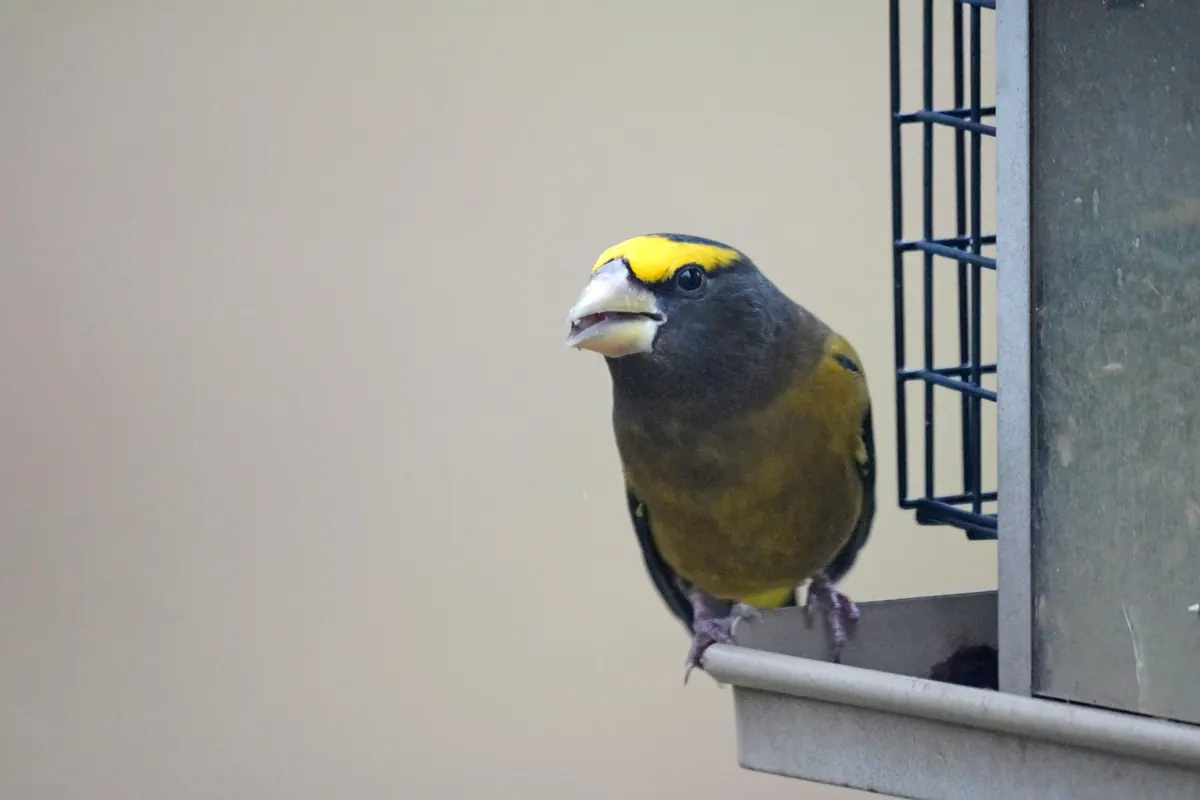
Evening grosbeaks
Any time from November; small flocks if they come · Northern tier feeders first; Poconos, Allegheny National Forest, central ridges
The forecast says “a small movement is quite possible” south of the boreal forest to southern New York, Pennsylvania and Massachusetts, helped by years of spruce budworm outbreaks that have raised grosbeak numbers. A male is unmistakable: yellow body, black and white wings, a heavy pale bill and a yellow eyebrow. They are loud and gregarious and empty a platform feeder of sunflower seed in a morning. Any sighting is worth reporting to eBird.
-
Purple finches and red crossbills
November onward · Purple finches at feeders and in hedgerows; crossbills in white pine and spruce stands
Purple finches should come south and east again this winter; the female, brown-streaked with a bold white eyebrow, is the one most people miss. Red crossbills are the forecast’s big story: western pine crops failed, and Type 2 birds moved east across the continent, so with a heavy white pine crop in the East, crossbills could turn up in Pennsylvania’s pine plantations and old white pine stands. Listen for a hard “kip kip” from the treetops and watch for cone scales drifting down.
-
What not to expect
This winter · Statewide
The forecast does not expect a big redpoll flight, and it sees little movement of pine grosbeaks or Bohemian waxwings and a weaker southward push of red-breasted nuthatches than last year. Blue jays were moving in above-average numbers along the north shores of Lakes Ontario and Erie, so feeders may see plenty of jays.
Project FeederWatch, the Cornell Lab of Ornithology’s winter count, opens November 1 and runs through April. Counters watch on paired days, weekly at most, and log for every species the biggest group seen together. A season of counts from one Pennsylvania yard is exactly the kind of record that shows what an irruption year looks like.
Which trees still have leaves or color in Pennsylvania in November?
By early November the maples, birches and tulip trees are bare almost everywhere but the far southeast. What remains is subtler and lasts longer.
-
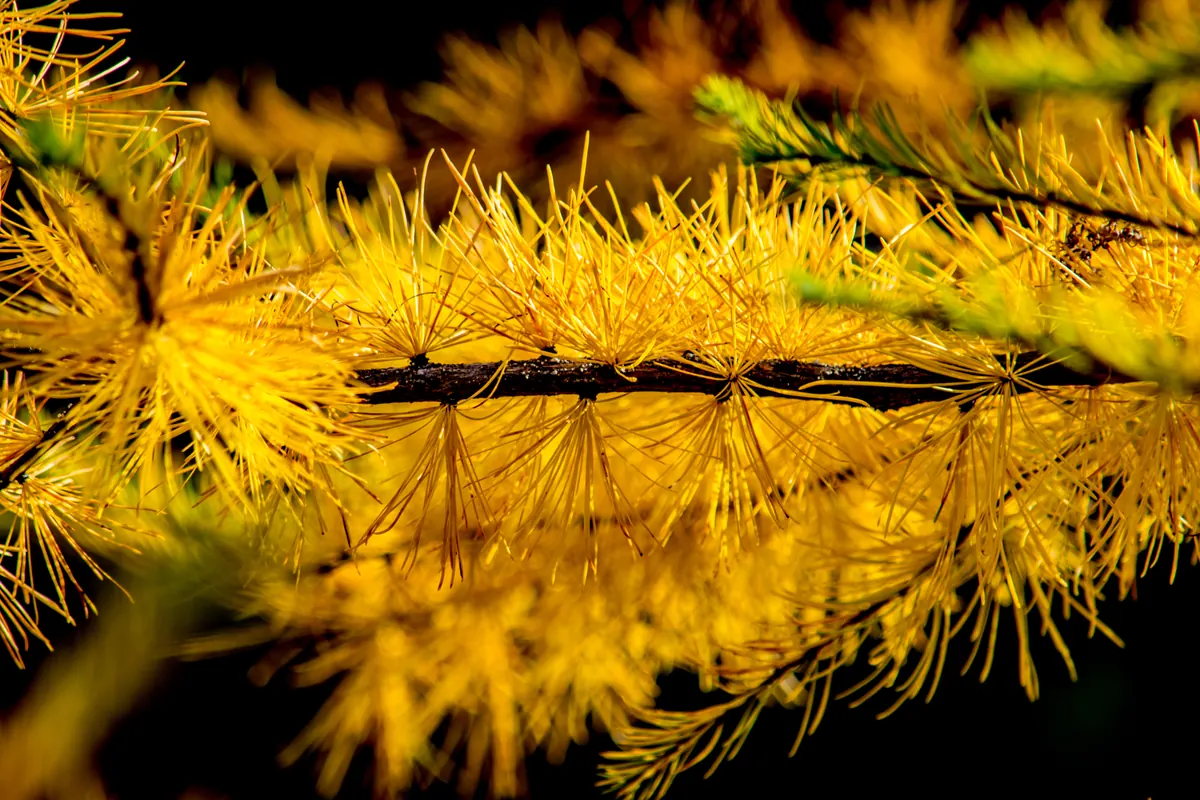
Tamaracks in the bogs
Gold in late October and early November; bare by late November · Tannersville Cranberry Bog in Monroe County; Tamarack Run Natural Area in Loyalsock State Forest; scattered northern-tier wetlands
Few people expect a conifer to go bare, but the tamarack (American larch) turns its needles a clear gold and then sheds them. In Pennsylvania it is a boreal relict at the southern edge of its range. The Nature Conservancy calls its Tannersville Cranberry Bog preserve the southernmost low-elevation boreal bog along the eastern seaboard, and American larch grows there; the boardwalk into the bog is open only on guided walks run by the Monroe County Conservation District’s Kettle Creek Environmental Education Center (registration at 570-629-3061), which the Conservancy lists on Wednesdays through November. Tamarack Run Natural Area near Forksville, in Loyalsock State Forest, protects another stand, though it is boggy and hard going on foot. Elsewhere, look for planted larches in parks and old estates; in early November they glow against the gray hillsides.
-
Oaks and beeches that hold their leaves
Through the winter, until spring growth pushes them off · Young beech in the understory; oaks on dry ridges statewide
Botanists call it marcescence. Northern Woodlands magazine describes it as mostly a juvenile trait, common on young trees and low branches: the leaves die on schedule, but these trees put off the shedding process that would drop them. The papery tan beech leaves and the russet oak leaves rattle all winter. Several explanations have been offered: dead leaves may hide buds from browsing deer, catch snow like a fence, or drop in spring as fresh mulch when it is most useful. Nobody is sure; note which of your trees hold their leaves and which drop them.
With the leaves down, November is the month to learn trees by their bark, buds and shape. Jacobsburg Environmental Education Center near Nazareth offers a Winter Tree ID walk on Saturday, November 7, 1:30 to 3 p.m., with registration through DCNR. The tree-through-the-seasons page in the Naturalist’s Field Journal is meant for this: draw your tree bare and compare it with your October sketch.
Has your part of Pennsylvania had its first freeze yet?
For most of the state the answer by November 1 is yes. In the NOAA normals, the typical (median) first freezing night comes in September on the high plateau around Bradford and in October at Wilkes-Barre/Scranton, Johnstown, Williamsport, Harrisburg, Pittsburgh and State College, and even the late, nine-in-ten dates for those inland stations fall between November 1 and 9. The places still waiting when November begins are the ones warmed by water: Erie, on the lake, has a median first freeze of November 4, and Philadelphia, on the tidal Delaware, has November 7. In one year in ten Philadelphia does not freeze until November 22.
| Station | One year in ten | Median | Nine years in ten |
|---|---|---|---|
| Bradford | Sept 1 | Sept 22 | Oct 5 |
| Wilkes-Barre/Scranton | Oct 1 | Oct 14 | Nov 1 |
| Johnstown | Oct 5 | Oct 21 | Nov 5 |
| Williamsport | Oct 6 | Oct 23 | Nov 5 |
| Harrisburg | Oct 7 | Oct 23 | Nov 7 |
| Pittsburgh | Oct 9 | Oct 23 | Nov 6 |
| State College | Oct 10 | Oct 26 | Nov 9 |
| Erie | Oct 21 | Nov 4 | Nov 17 |
| Philadelphia | Oct 24 | Nov 7 | Nov 22 |
City centers, river valleys near the coast and the Erie lakeshore run later than the airport stations in the table; frost hollows in the mountains run earlier. For a station closer to home, see first and last frost dates across Pennsylvania. Once the freeze has come, the garden is done, but the hardiest weeds, chickweed and dead nettle, keep flowering in sheltered spots on mild days.
How much daylight does Pennsylvania lose in November?
Between 54 minutes at Philadelphia and 59 at Erie, close to two minutes a day, and it feels like much more, because Pennsylvania’s clocks go back an hour overnight into Sunday, November 1. In Pittsburgh the sun sets at 6:18 p.m. EDT on Saturday, October 31 and at 5:17 p.m. EST the next evening; by November 30 it is down at 4:54. Philadelphia’s sunset slides from 4:58 on November 1 to 4:36 on the 30th. Mornings brighten for a while: Pittsburgh’s sunrise jumps back from 7:49 to 6:50 a.m. on November 1, then drifts to 7:23 by the 30th.
| City | Nov 1 | Nov 30 | Lost | Per day |
|---|---|---|---|---|
| Erie | 10 h 21 m | 9 h 22 m | 59 min | 2.0 min |
| Scranton | 10 h 24 m | 9 h 26 m | 58 min | 2.0 min |
| Williamsport | 10 h 24 m | 9 h 27 m | 57 min | 2.0 min |
| State College | 10 h 25 m | 9 h 30 m | 55 min | 1.9 min |
| Pittsburgh | 10 h 27 m | 9 h 31 m | 56 min | 1.9 min |
| Harrisburg | 10 h 27 m | 9 h 32 m | 55 min | 1.9 min |
| Philadelphia | 10 h 28 m | 9 h 34 m | 54 min | 1.9 min |
For your own town, the daylight calculator lists sunrise, sunset and twilight, and shows how early the dark arrives on your street.
How cold and snowy is November in Pennsylvania, and what might El Niño bring this winter?
November is the month the state turns from autumn to the edge of winter. Average highs drop from the 50s into the 40s by Thanksgiving, and the first measurable snow is normal almost everywhere except the southeast. The exception is Erie, where November is the start of the lake-effect season: cold northwest winds crossing the still-warm lake raise bands of snow, and the airport averages 9.6 inches for the month, compared with a fifth of an inch at Philadelphia.
| Station | High | Low | Precipitation | Snow |
|---|---|---|---|---|
| Erie | 50.5 | 36.7 | 3.75 | 9.6 |
| Bradford | 45.7 | 29.9 | 3.20 | n/a |
| Pittsburgh | 50.9 | 34.3 | 2.86 | 2.4 |
| State College | 48.8 | 33.5 | 2.99 | 2.6 |
| Williamsport | 50.6 | 33.2 | 3.25 | 1.7 |
| Wilkes-Barre/Scranton | 51.2 | 34.3 | 2.85 | 3.2 |
| Harrisburg | 53.9 | 35.8 | 2.97 | 0.8 |
| Philadelphia | 55.9 | 38.8 | 2.91 | 0.2 |
Looking past November: the Pacific is warming toward a very strong El Niño, and on September 10 NOAA put the odds of it holding through winter at more than 90 percent. Pennsylvania straddles the line where El Niño’s effects split. A Northeast Regional Climate Center briefing notes that the dry pattern El Niño usually brings to Ohio and the Midwest often reaches into western Pennsylvania, while storms running up the coast tend to make the Eastern Seaboard wetter. The record El Niño of 2015–16 showed both sides: the whole region ran warm, northern Pennsylvania had a thin snow year, and the southeast was buried by the blizzard of January 2016. The Cleveland weather office says a strong El Niño usually means a warm winter in northwest Pennsylvania; Erie still collected 71.2 inches that season, a little under normal. In Harrisburg, the State College office found almost no link between El Niño and total snowfall, though five of the ten snowiest seasons there came in El Niño years. The likely shape, then: milder, the lake belt and northern tier short of snow more often than not, the southeast exposed to a big coastal storm. For NOAA’s official word, watch the three-month outlook maps, where the December–February outlook appears on October 15. Day to day, the local forecast page is the better guide.
What can you see in the night sky over Pennsylvania in November?
All times below are Eastern Standard Time, which begins on November 1. Long evenings mean the sky is dark by about 6 p.m., early enough for children.
-
The Beaver Moon, a supermoon
Full at 9:53 a.m. Tuesday, November 24; looks full the evenings of Monday the 23rd and Tuesday the 24th · Rising in the east-northeast around sunset
Almanacs call November’s full moon the Beaver Moon. It comes about 30 hours before lunar perigee, close enough for EarthSky and others to count it a supermoon, though only slightly enlarged; December’s will be the closest of the year. Overnight from Monday to Tuesday it slides across or beside the Pleiades, though moonlight drowns the cluster, so try binoculars.
-
The Leonids
Peak around November 17; best before dawn on Wednesday, November 18 · Face east or overhead after midnight; the radiant in Leo climbs through the night
The International Meteor Organization expects an ordinary year with no outburst, perhaps 15 an hour in ideal darkness. Moonset comes near midnight; Leo, where the meteors seem to start, rides highest in the last hour before twilight, so set an alarm for 4 or 5 a.m. on the 18th; the 17th and the 19th are close behind. Leonids are fast and often leave glowing trails.
-
Taurid fireballs and the dark new moon
Southern Taurids peak about November 5, Northern Taurids about November 12; new moon 2:02 a.m. Monday, November 9 · Taurus, high in the east by mid-evening
Both Taurid streams come from the dust of Comet Encke and offer few meteors, five or ten in a good hour, but those few crawl across the sky and Taurid fireballs are a November tradition. With the new moon between their peaks, the second week of November has moonless evenings, the best time this month for the Milky Way and faint stars.
-
A crowded morning sky
Before dawn all month; Mars and Jupiter closest November 15–16 · East and south before sunrise
Venus has become the morning star, gaining height daily and peaking in brilliance around Thanksgiving week. Jupiter and Mars are both in Leo near Regulus; at dawn on November 15 and again on the 16th they stand only about a degree apart, Jupiter far the brighter. Mercury joins them low in the east-southeast before sunrise for roughly a week from November 18. After dark, Saturn is the lone planet, in the southern sky. With binoculars, look for Uranus near the Pleiades; it is at opposition on November 25.
| Phase | Date | Time |
|---|---|---|
| Last quarter | Sunday, Nov 1 | 3:28 p.m. |
| New moon | Monday, Nov 9 | 2:02 a.m. |
| First quarter | Tuesday, Nov 17 | 6:48 a.m. |
| Full moon, the Beaver Moon | Tuesday, Nov 24 | 9:53 a.m. (looks full the evenings of Nov 23 and 24) |
| Last quarter | Tuesday, Dec 1 | 1:08 a.m. |
The sun is past its maximum but still active, so a northern-lights display remains possible on a long, clear night, best seen from the dark northern counties. Check tonight’s cloud cover before driving out, and the moon calendar for moonrise and moonset where you live.
What can families do outdoors in Pennsylvania in November?
- Leaf walks on the first day of standard time. Sunday, November 1: “A Hike Through the Leaves” at Evansburg State Park, 10 to 11 a.m., and at Fort Washington State Park at noon (registration for both); a beeswax wrap workshop at Little Buffalo State Park at 2 p.m.
- Eagle Day, Saturday, November 7. Hawk Mountain holds programs at noon and 2 p.m. with a live bald eagle and golden eagle, and an Eagle Discovery Station from 10 a.m. to 3 p.m.; the usual trail fee applies for non-members.
- Stars the same night. Starwatch at Nockamixon State Park’s Tohickon boat launch, Saturday, November 7, 7 to 10 p.m., free with no registration, two nights before the new moon.
- Trees without leaves. Winter Tree ID at Jacobsburg Environmental Education Center, Saturday, November 7, 1:30 to 3 p.m., registration required; “The Beauty of Botany” at Nolde Forest, Saturday, November 21, 1 to 3 p.m.
- Walks in the central valleys and the southeast. Centred Outdoors guided walks at the Poe Paddy tunnel, Sunday, November 8, at 1 and 3 p.m.; a Veterans Family Hike at Vosburg Neck State Park, Saturday, November 14, 9:30 a.m., free.
- The day after Thanksgiving. Pennsylvania’s state parks charge no entrance fee, so Friday, November 27 is a free day outside anywhere. Fowlers Hollow and Colonel Denning lend nature exploration backpacks for children; parks often add #OptOutside hikes closer to the date, so check the DCNR calendar that week. Wear orange: the rifle season opens the next morning.
- Start a winter count. Project FeederWatch opens November 1. Report hawks and eagles to HawkCount and everything else to eBird.
All dates come from the DCNR calendar of events and the organizers’ own pages as of October 2, 2026; programs fill and change, so register early. For more ideas month by month, see the nature guides for every state, and look back at Pennsylvania in October to see how far the season has turned.
Safety notes for November in Pennsylvania
- Orange is required. Hunters in the regular firearms deer season (November 28 to December 13) need 250 square inches of fluorescent orange in total, spread over head, chest and back so a person can see it from any direction; bear hunters in the firearms bear seasons wear the same. Archery hunters in the bow-only weeks are not required to. And on state game lands, from October 1 to January 31, 58 Pa. Code § 135.41 requires anyone who is not hunting, trapping or fishing to wear at least 250 square inches of fluorescent orange, split across head, chest and back so it shows from every direction, or a fluorescent orange hat; only shooting-range users are exempt. Wear it in state forests and in the many state parks that allow hunting, too, and put an orange vest or bandana on the dog.
- Sundays are not quiet any more. The Game Commission’s 2026–27 calendar has most seasons ending on a Sunday, which means Sunday hunting for most game; migratory birds (ducks and geese) are the exception.
- Deer: archery season runs to Friday, November 20 statewide and a week longer, to November 27, around Pittsburgh and Philadelphia (units 2B, 5C and 5D). The regular firearms season opens Saturday, November 28 and runs to December 13, the busiest days in the woods all year.
- Bear: the regular firearms bear season is Saturday, November 21 through Tuesday, November 24, statewide; extended bear seasons in a list of units (2B, 3A–3D, 4C, 4E and 5A–5D) run alongside the deer rifle season from November 28, to December 6 or December 13 depending on the unit.
- Small game and turkey: ruffed grouse and rabbit are open through December 24, pheasant from October 24, squirrel all month; fall turkey dates differ by unit, closing between November 3 and November 20, with a Thanksgiving-week reopening (November 25–27) in some units.
- Waterfowl: duck seasons reopen November 2 in the Lake Erie zone, November 17 in the North zone and November 18 in the South zone; the Northwest zone runs to November 27. Snow geese open November 6. Expect gunfire at dawn on marshes and big lakes.
- Driving at dusk. More deer are hit in November than in any other month. Ease off the gas in the half-light, use high beams on empty roads, and if one deer crosses, expect a second.
- Early dark and cold. By November 20 the sun sets before 5 p.m. in every big Pennsylvania city, from 4:59 in Pittsburgh to 4:41 in Philadelphia. Carry a headlamp on any afternoon hike, start back by 3:30, and pack a warm layer: a 50-degree afternoon can be a 30-degree dusk in the hollows.
- Lake-effect snow falls in narrow bands, so the road near Erie can be white while it is clear a few miles inland; check the forecast before driving the snowbelt.
- Ticks keep biting on mild days all winter; check after walks.
Sources
- HawkCount: Allegheny Front Hawk Watch site profile (count dates, golden eagle averages, winds)
- HawkCount: Hawk Mountain Sanctuary site profile (species averages, goshawk and rough-legged hawk)
- HawkCount: Pennsylvania hawk watch sites
- Hawk Mountain Sanctuary: red-tailed hawk (peak first week of November)
- Hawk Mountain Sanctuary: golden eagle
- Hawk Mountain Sanctuary: a golden opportunity to see golden eagles in November
- Hawk Mountain Sanctuary: Eagle Day
- Hawk Mountain Sanctuary: events and tickets
- Lafayette College: Appalachian golden eagle camera trapping
- Pennsylvania Game Commission: bald eagle watching
- Pennsylvania Game Commission: tundra swan (wildlife note)
- Pennsylvania Game Commission: diving ducks (wildlife note)
- Pennsylvania Game Commission: Middle Creek Wildlife Management Area (drive and visitor center dates)
- Pennsylvania Game Commission: Middle Creek snow goose and tundra swan migration update
- Audubon: birding in Pennsylvania (Presque Isle, Middle Creek, Lake Ontelaunee)
- Tom Ridge Environmental Center Foundation: wildlife watching at Presque Isle (waterfowl late November–December; Gull Point closure)
- Visit Mercer County: waterfowl at Lake Wilhelm and Shenango River Lake
- Pennsylvania Game Commission: white-tailed deer (wildlife note)
- State Farm: how likely are you to have an animal collision (state odds, peak months)
- Pennsylvania Game Commission: black bear (wildlife note)
- Elk Country Visitor Center: programs, tours and seasonal hours
- Finch Research Network: Winter Finch Forecast 2026–2027 (Tyler Hoar, September 25, 2026)
- Project FeederWatch: how to participate (November 1 to April 30)
- The Nature Conservancy: Tannersville Cranberry Bog Preserve (southernmost low-elevation boreal bog on the eastern seaboard; guided walks)
- Monroe County Conservation District: Tannersville Bog walks
- Wikipedia: Tamarack Run Natural Area, Loyalsock State Forest
- Northern Woodlands: why some leaves persist on beech and oak trees into winter
- The Arboretum at Penn State: blooming now, witch hazel
- NOAA NCEI: 1991–2020 first-freeze probability normals (data API)
- NOAA NCEI: 1991–2020 monthly normals, temperature, precipitation and snow (data API)
- Climate Prediction Center: ENSO diagnostic discussion, September 10, 2026
- Climate Prediction Center: seasonal outlooks (winter outlook issued October 15)
- Northeast Regional Climate Center and NOAA: El Niño impacts and outlook, Northeast region (PDF)
- NWS Cleveland: winter 2015–16 snowfall and the strong El Niño
- NWS State College: ENSO (ONI) versus snowfall at Harrisburg
- U.S. Naval Observatory: moon phases (data API)
- International Meteor Organization: 2026 meteor shower calendar (PDF)
- EarthSky: what is a supermoon (2026 list)
- EarthSky: Uranus at opposition
- EarthSky: Mercury before sunrise, greatest western elongation
- NASA JPL Horizons: planetary ephemerides
- NOAA Space Weather Prediction Center: solar cycle progression
- Pennsylvania Game Commission: final 2026–27 hunting seasons
- Pennsylvania Game Commission: 2026–27 migratory game bird seasons
- Pennsylvania Game Commission: seasons and bag limits, 2026–27 (fluorescent orange requirements)
- 58 Pa. Code § 135.41: fluorescent orange on state game lands
- PA DCNR calendar of events: November 2026 programs
- PA DCNR: state parks (no entrance fees)
- University of Rhode Island TickEncounter: blacklegged tick (adults active on mild winter days)
- Photos via Wikimedia Commons; licenses and photographers are credited under each picture
